
Thailand Industrial Park Solar Street Lighting Project
Project at a Glance
At a glance
Project Challenge
High Infrastructure & Energy Costs
Grid-cable trenching and ongoing electricity consumption were important cost considerations across the industrial park.
Tropical Climate Conditions
High temperature, humidity, and seasonal monsoon rain required the proposed lighting configuration to be reviewed against the site environment.
Industrial Safety & Visibility Requirements
The park required a suitable lighting layout for vehicle movement, pedestrian areas, internal roads, and loading zones.
Practical Maintenance Planning
The project required accessible maintenance procedures and clear after-sales support to help reduce operational disruption.
Solution
1. ST2 Solar Star Light
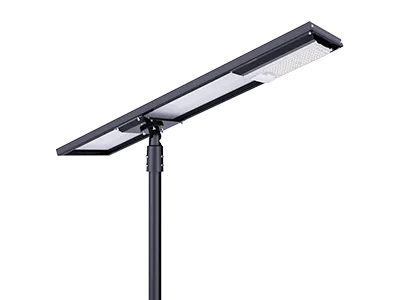
Core configuration: ST2-60 model with a 60 W solar panel, LiFePO4 battery, solar charge controller, and integrated LED lighting unit. The public ST2 specification lists a 240 Wh battery, a mounting range of approximately 6–7 m, and an operating temperature range of −20°C to 60°C with charging above 0°C.
Environmental review: The proposed configuration should be checked against local heat, humidity, rainfall, mounting conditions, and required operating schedule. The applicable ingress-protection rating and any corrosion-protection requirements should be confirmed for the supplied configuration.
Lighting control: Sensor, time-control, and dimming settings can be configured according to the required operating hours and energy-management plan.
2. System Design & Layout
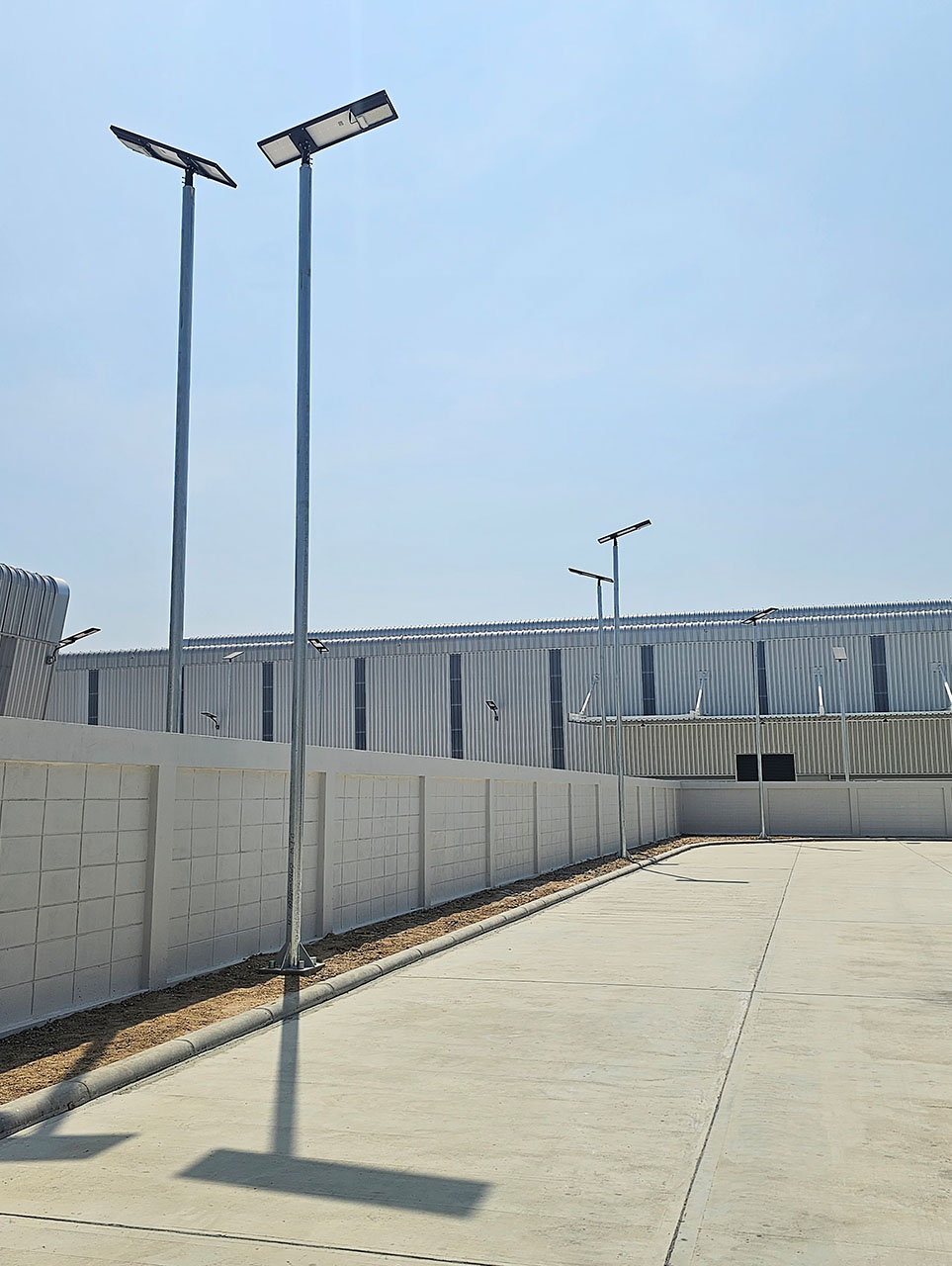
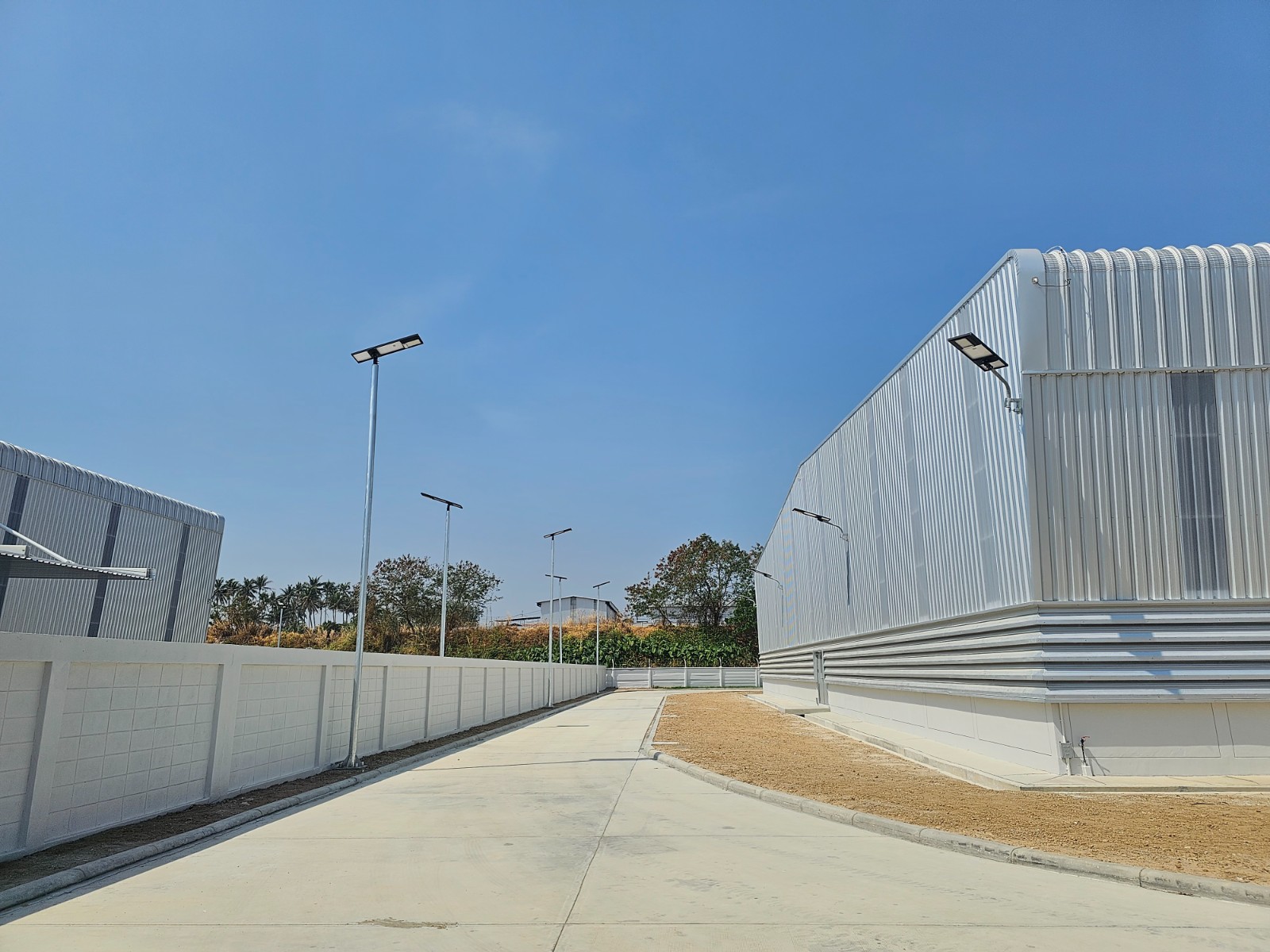
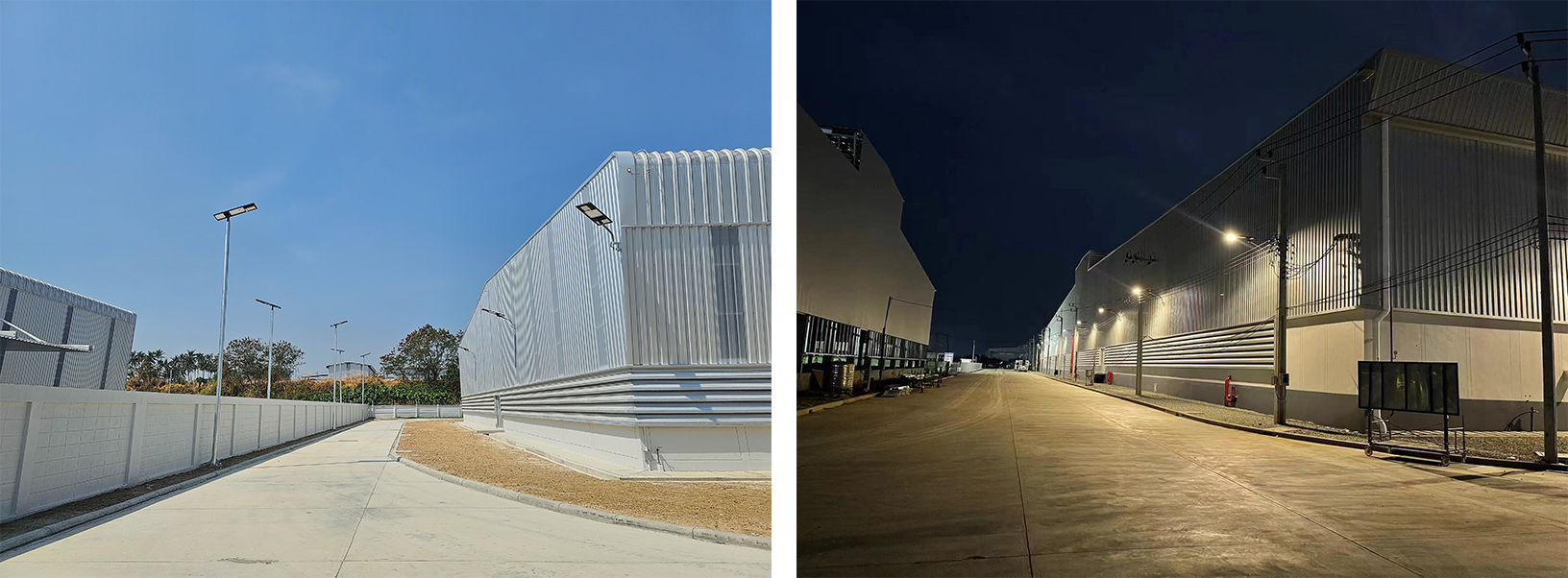
Project layout: The project used approximately 7 m poles and 30 m spacing. Final spacing, illuminance, uniformity, and glare performance should be verified with the selected optic, road geometry, and approved photometric layout.
Solar-panel positioning: Panel orientation and tilt should be reviewed for the site latitude, shading, seasonal solar conditions, and expected rainy-season performance.
Simplified installation: The all-in-one design reduces the need for separate external wiring and grid-cable trenching. Actual installation time and cost depend on foundations, poles, lifting equipment, site access, and local safety requirements.
3. Project Support & Warranty
Pre-project: Project requirements, layout information, and lighting calculations can be reviewed before ordering.
During delivery: Product documentation and installation guidance can be provided according to the agreed scope.
After-sales: Remote technical support and the agreed warranty terms apply to the supplied configuration. Confirm warranty coverage, exclusions, and replacement-part arrangements before ordering.
Project Gallery
Lessons Learned & Best Practices
Industrial-First Design
Review road geometry, pole spacing, traffic movement, target lighting levels, uniformity, and glare before finalizing the configuration.
Climate-Based Configuration
For monsoon or high-humidity locations, confirm the model’s temperature limits, ingress protection, battery configuration, installation environment, and maintenance plan.
Off-Grid Project Planning
All-in-one solar lighting can reduce grid-cable trenching and external connections where the site is suitable for off-grid operation.
Documented After-Sales Support
Confirm the warranty, maintenance instructions, replacement parts, and technical-support process before bulk delivery.
Ready to Start Your Project?
The RoadSmart ST2 all-in-one solar street light can be configured for industrial parks, warehouses, logistics routes, and other off-grid applications. Model selection should be based on the site layout, lighting schedule, solar conditions, and required backup target.
We provide project-based support covering model selection, lighting-layout review, equipment supply, installation guidance, and the agreed warranty scope.
Contact Us to share your road layout, operating schedule, quantity, and project requirements.
FAQs
Can the ST2-60 operate during Thailand’s monsoon season?
Rainy-season performance depends on the solar-panel size, battery capacity, initial charge, nightly lighting hours, dimming schedule, and local solar conditions. The backup target should be confirmed for the selected configuration rather than treated as a guaranteed number of full-brightness days. The proposed ingress-protection rating and environmental requirements should also be checked before ordering.
How do you check whether the lighting is suitable for industrial roads?
We can provide model recommendations, photometric files, and layout support for review against the project’s applicable requirements. Final illuminance, luminance, uniformity, and glare performance should be verified using the approved layout; wattage alone does not establish compliance.
What maintenance is required, and what warranty applies?
Routine maintenance may include solar-panel cleaning, mounting and connection inspections, and battery-condition checks. Maintenance requirements vary with the site and configuration. The agreed warranty terms apply to the supplied products; confirm coverage, exclusions, and replacement-part arrangements before ordering.
Can the lights be adjusted for different operational hours?
Lighting schedules and dimming settings can be reviewed according to the park’s operating hours and energy-management requirements. The available control functions should be confirmed for the selected model and controller configuration.
Is professional installation required?
The all-in-one design reduces separate external wiring and grid-cable trenching. Installation should follow the supplied instructions and local safety requirements, with trained personnel and suitable lifting or work-at-height equipment used where necessary.