Blogs
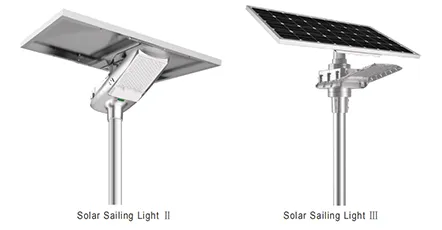
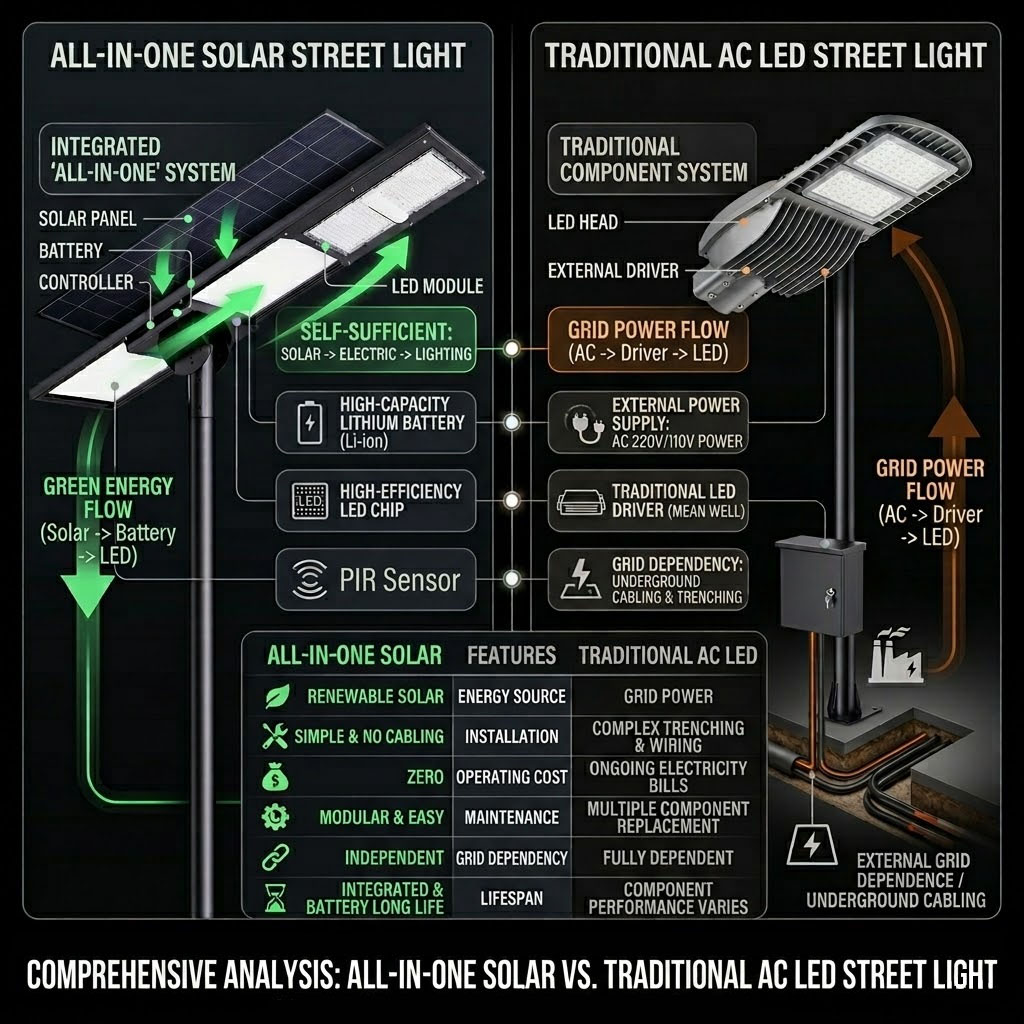
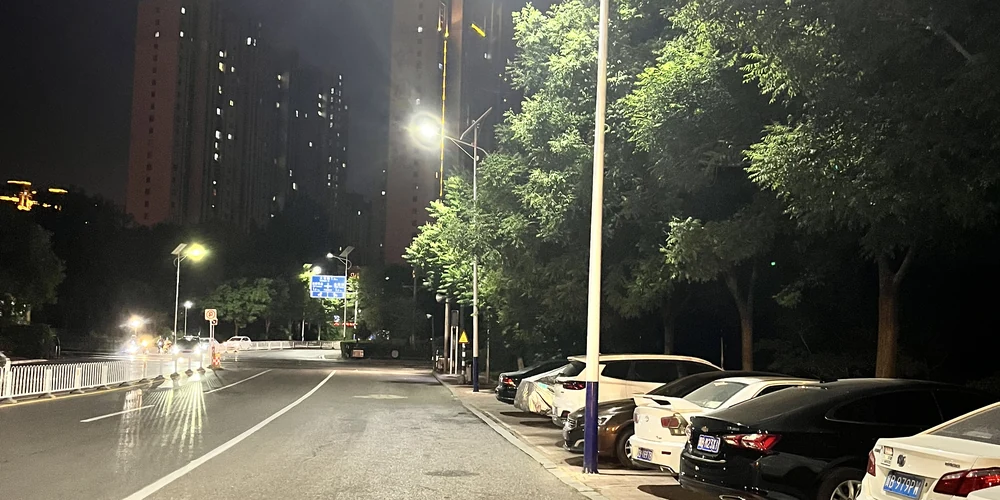
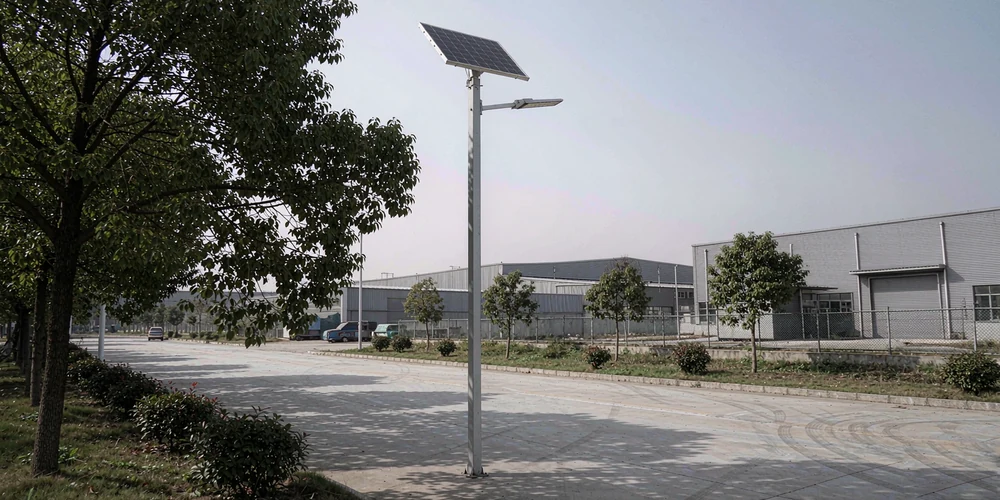
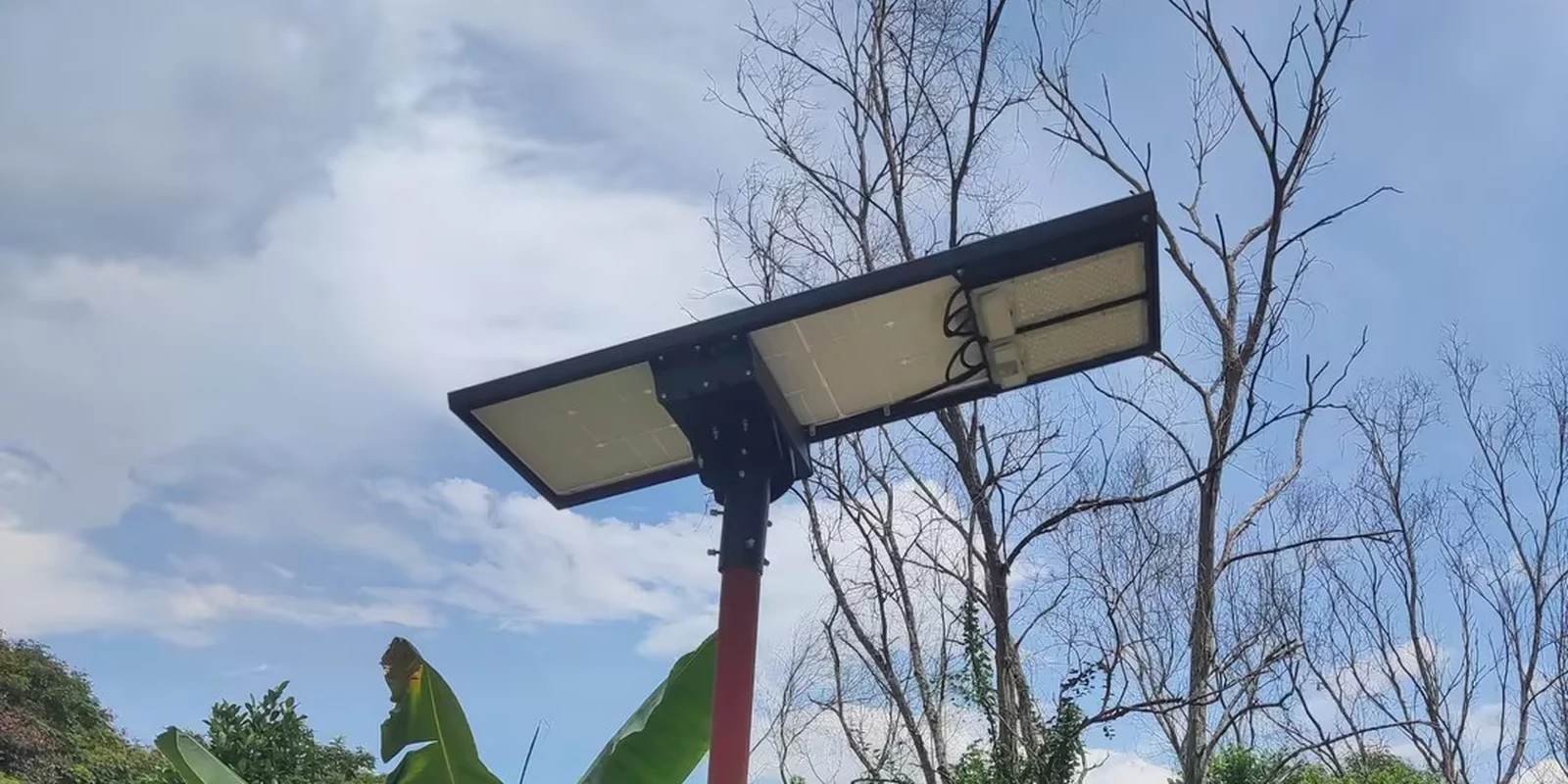
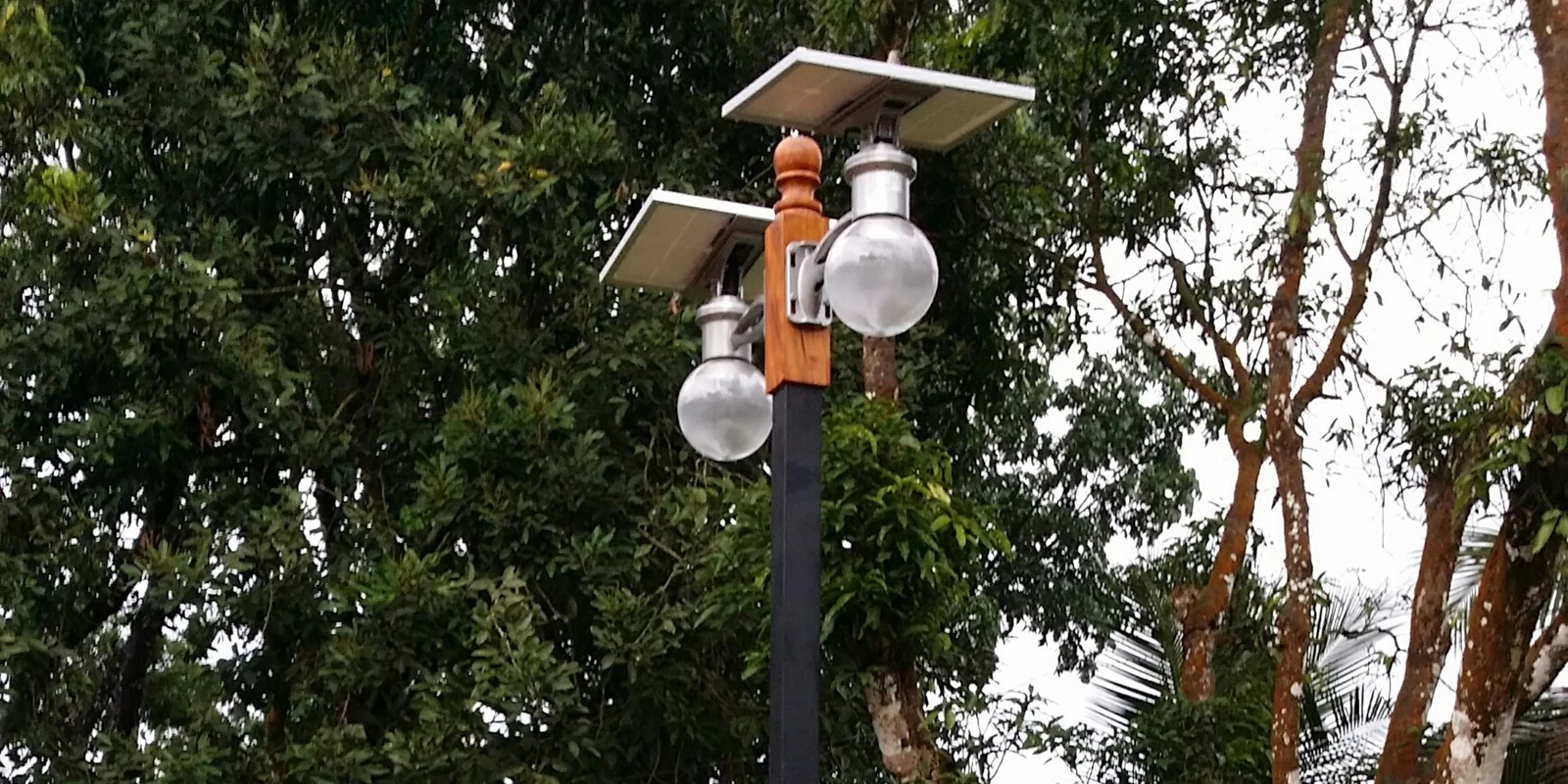
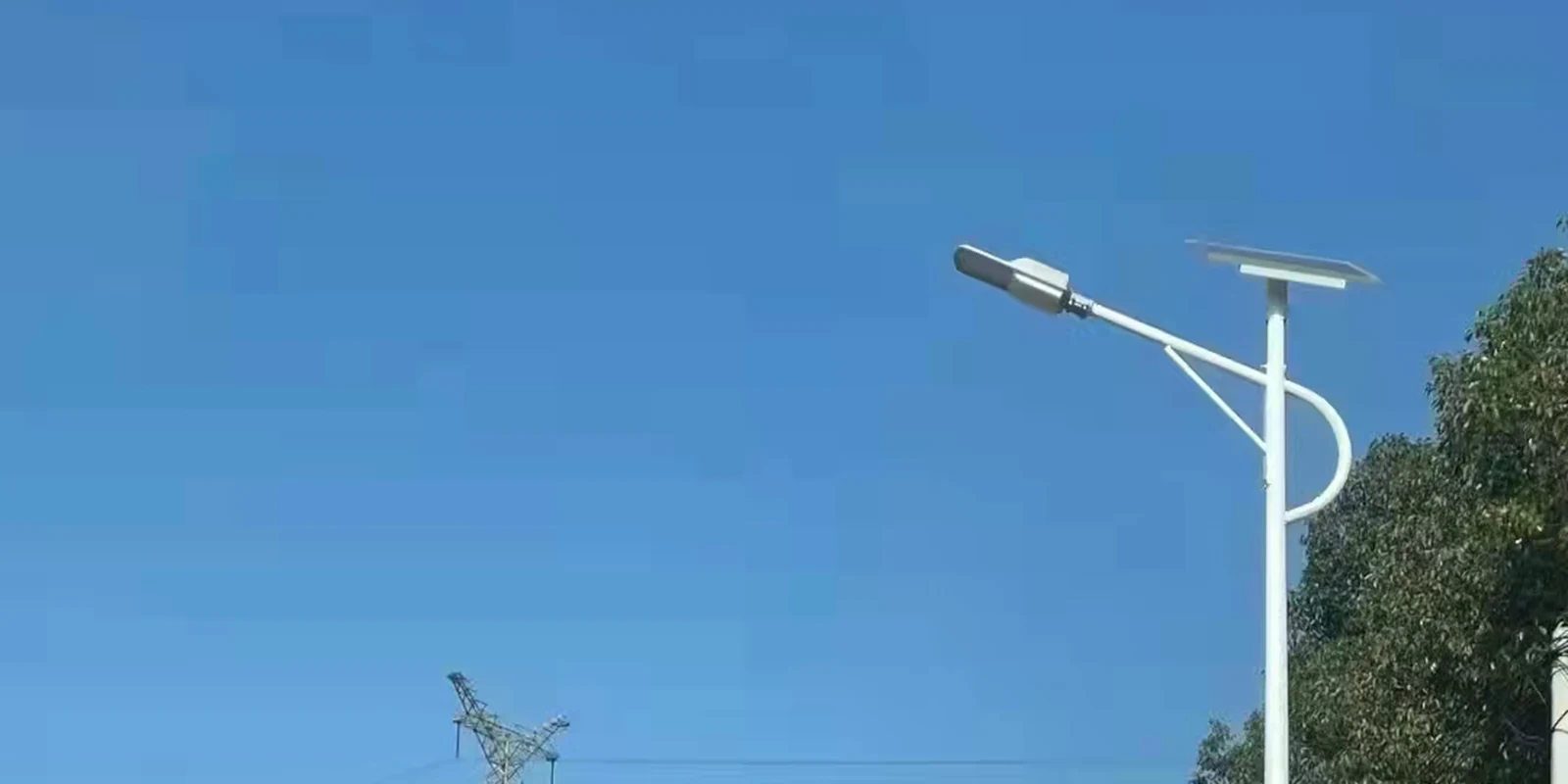
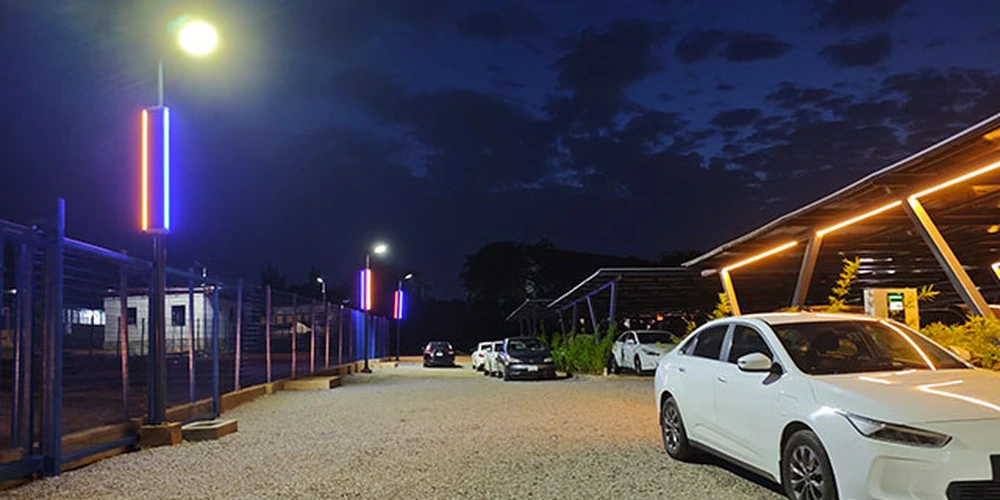
Solar Street Lights Explained 2026 What is Solar Street Light?A solar street light is an outdoor lighting system that uses solar energy to power the light fixture. Unlike traditional street lighting that is powered by electricity from the grid, solar street lights harness energy from the sun during the day through photovoltaic (PV) panels. This energy is stored in a battery and used to power the light at night. Solar street lights are self-sufficient, off-grid systems that are becoming more popular in urban, rural, and remote areas due to their energy efficiency and cost-effectiveness. They provide lighting without the need for trenching, utility bills, or grid access, making them an ideal solution for sustainable urban development.Typically, a solar street light consists of three main components: a solar panel, a battery, and a LED light fixture. These components work together to ensure efficient energy harvesting, storage, and lighting performance throughout the night. Solar street lights are available in different configurations, including all-in-one designs and split-type systems, offering flexibility in installation based on environmental factors and site conditions.How Solar Street Lights WorkThe operation of a solar street light follows a simple, efficient process. Here's how the system works:Energy Harvesting: During the day, the solar panel absorbs sunlight and converts it into electricity. The PV panel typically faces the south (in the Northern Hemisphere) or north (in the Southern Hemisphere) for optimal sunlight exposure. The amount of sunlight captured depends on factors such as weather conditions, shading, and the angle of the panel.Energy Storage: The electricity generated by the solar panel is directed to a battery for storage. In most cases, LiFePO4 (Lithium Iron Phosphate) batteries are used due to their superior safety, longevity, and efficiency compared to other battery chemistries. These batteries store the energy collected during the day, ensuring the light is powered during the night.Energy Distribution: As the sun sets, the controller detects the ambient light levels and switches the light on automatically. The stored energy is then used to power the LED light fixture, which is the primary light source. The system often includes MPPT (Maximum Power Point Tracking) technology to optimize energy conversion from the solar panel to the battery, ensuring maximum efficiency, even under partial shading or variable sunlight.Lighting Control and Efficiency: Many modern solar street lights come equipped with adaptive motion sensors or dimming controls to further conserve energy. For example, the light may dim when no movement is detected and return to full brightness when motion is sensed. This enhances energy efficiency and extends the battery life.Solar Street Light Benefits1.Energy Savings and Sustainability:One of the biggest advantages of solar street lights is their energy independence. Since they run on solar power, they eliminate electricity bills entirely. The energy captured from the sun is free and abundant, reducing the reliance on grid-based electricity. Additionally, solar street lights contribute to sustainability by reducing carbon emissions and supporting the global transition to clean energy.2. Low Maintenance:Solar street lights have minimal moving parts, which significantly reduces the need for frequent maintenance. With LiFePO4 batteries offering longer life cycles and MPPT controllers optimizing energy efficiency, these systems require only periodic cleaning of panels and lens adjustments. The absence of cables and wiring also reduces the risk of wear and tear, lowering maintenance costs.3. Reliability and Resilience:Unlike grid-powered systems, solar street lights continue to operate during power outages. They are also highly durable and can withstand harsh weather conditions such as extreme heat, cold, rain, or snow, especially when equipped with IP-rated enclosures and surge protection. Solar street lights are an excellent option for areas prone to electrical grid disruptions or remote locations without grid access.4. Fast and Easy Installation:Installation of solar street lights is quick and easy since it does not require digging trenches or laying down cables. The system is completely independent, so once the poles are set in place and the solar panels are positioned, the light can start operating without complicated electrical work. This also reduces civil work costs and installation time, making it a more economical solution.5. Flexible Deployment:Solar street lights can be installed virtually anywhere, including areas without access to the electrical grid. This flexibility makes them suitable for use in rural roads, highways, parking lots, parks, residential areas, and even emergency routes.Solar Street Light Applications1.Municipal and Urban Roads:Solar street lights are increasingly used in municipal areas to light streets and roads, especially in cities focusing on green urban planning. These lights help cities meet sustainability goals by using renewable energy to power public infrastructure. Solar street lights are ideal for both main roads and side streets where electricity access may be expensive or logistically challenging.2. Rural Roads and Highways:In rural areas or on highways where the cost of extending grid power is high, solar street lights offer an affordable, reliable solution. By placing solar-powered lighting systems along these routes, municipalities can improve safety for drivers and pedestrians without relying on costly infrastructure.3. Parks and Public Spaces:Public parks and open spaces benefit from solar street lighting due to its ability to provide secure and environmentally friendly lighting. Solar-powered lights illuminate pathways, playgrounds, and recreational areas without the need for external power sources, contributing to a safer and more enjoyable outdoor experience.4. Parking Lots and Campuses:Solar street lights are also ideal for parking lots, campus grounds, and shopping centers. They provide illumination at night to enhance security while ensuring energy savings. Motion-detection features can be employed to boost light output during busy periods while conserving energy during quieter hours.5. Remote and Off-Grid Locations:Solar street lights can be deployed in remote locations or off-grid areas, such as villages, industrial sites, or construction zones, where grid power infrastructure is either unavailable or too expensive to install. With solar lighting, these areas can receive reliable, sustainable lighting at a fraction of the cost of grid-connected systems. See full solar street lighting solutions.Solar Powered Street Lights vs LED Grid Light1.Power Source:Grid-connected LEDs rely on electricity from the power grid, which can be expensive and is subject to outages or restrictions. In contrast, solar street lights are powered by renewable solar energy, which reduces operational costs and eliminates electricity bills.2. Installation Cost and Complexity:Installing grid-powered LEDs often involves costly civil works such as trenching, wiring, and switchgear. Solar street lights, especially all-in-one designs, require minimal installation time and no underground wiring, resulting in lower installation costs.3. Maintenance:Grid-connected lights typically require more frequent maintenance, especially when dealing with power outages, faulty wiring, or broken switches. Solar lights, on the other hand, have low maintenance requirements and long-lasting components, making them a more cost-effective long-term solution.4. Environmental Impact:Solar street lights are more environmentally friendly as they produce no CO2 emissions and rely on renewable energy. Grid-connected lights, though efficient, still contribute to the carbon footprint, especially in areas where power is generated from fossil fuels.Solar Street Light ComponentsThe key components of a solar street light are designed to work together seamlessly for reliable performance. Here's a breakdown of each:Photovoltaic (PV) Panel:The PV panel absorbs sunlight during the day and converts it into electrical energy. The efficiency of the panel is crucial for the overall performance of the system, as it determines how much energy is captured and stored in the battery.Battery:The battery stores the energy generated by the PV panel. Common battery types include LiFePO4 (Lithium Iron Phosphate), which offers longer life cycles, better temperature tolerance, and higher efficiency compared to other battery types like lead-acid batteries.Charge Controller:The charge controller regulates the power flow between the PV panel, battery, and light fixture, ensuring the battery is properly charged while preventing overcharging or deep discharging. MPPT (Maximum Power Point Tracking) controllers enhance energy capture, even under suboptimal conditions like partial shading or dirt buildup.LED Light Fixture:The LED fixture provides efficient and high-quality lighting output. LED lights are known for their longevity and low energy consumption. The fixture is typically designed to provide optimal brightness and beam distribution for the application at hand.Mounting and Pole Structure:The pole and mounting system support the PV panel, battery, and LED fixture. These systems are designed to be sturdy and resistant to weather conditions such as wind and rain, ensuring long-term durability.Optional IoT and Sensors:Some modern solar street lights include Internet of Things (IoT) capabilities for remote monitoring and control. Motion sensors or adaptive dimming can be included for added energy efficiency, ensuring the light adjusts to real-time environmental and traffic conditions.ConclusionSolar street lights offer a powerful, sustainable solution for outdoor illumination in a variety of settings. With benefits like zero electricity bills, low maintenance, reliable performance, and environmental sustainability, they are increasingly being adopted worldwide. Whether in urban streets, rural roads, or public parks, solar street lights provide a cost-effective, eco-friendly way to enhance safety and lighting quality. As technology advances, solar street lights will continue to lead the way in the future of street lighting, especially with the integration of smart controls, IoT, and advanced energy management systems.View Detail
Blogs
101 Guide to Smart Street Lighting System IntroductionCities, campuses, industrial parks, ports, airports, and residential communities are all under pressure to make outdoor lighting more efficient, more responsive, and easier to manage. Traditional street lights can illuminate roads, but they cannot “think.” They do not understand traffic patterns, weather conditions, maintenance needs, or energy priorities. A modern smart street lighting system does all of that and more.This guide explains what smart street lighting is, how it works,core conponents, why it matters, and real projects. It is written for project owners, city planners, contractors, engineers, distributors, and anyone evaluating a smart street light project or a larger intelligent street lighting system project. If you want a practical, structured overview of smart city street lighting, this is the place to start.What Is Smart Street Lighting?Smart street lighting is a connected outdoor lighting approach that combines LED luminaires with controls, sensors, communication, and software management. Unlike conventional street lights that simply switch on at dusk and off at dawn, a smart street lighting system can dim, brighten, report faults, track energy use, and respond to real-time conditions such as traffic flow, pedestrian activity, or weather changes.At a system level, smart city street lighting usually includes four layers: the lighting fixture, the control device, the communication network, and the management platform. Together, these elements allow a smart street light control system to operate lights individually or in groups, execute dimming schedules, receive sensor data, and send performance information back to a central dashboard. This is why intelligent street lighting is not just about efficient luminaires—it is about turning lighting infrastructure into a responsive, manageable, and data-driven network.In practice, a smart led street light can automatically follow time-based or motion-based profiles, support remote maintenance, and integrate with a smart street light management system for asset monitoring and operational analysis. For larger deployments, an intelligent street light control system can also support zoning, adaptive lighting, and future smart-city functions. That is what makes a smart street light project or an intelligent street lighting system project fundamentally different from a basic LED street light upgrade.Why Smart Street Lighting MattersStreet lights are among the most widespread public assets in any city or community. They consume energy every night, require regular maintenance, and directly affect road safety, pedestrian comfort, and security perception. That means even small improvements, when multiplied across hundreds or thousands of poles, create major operational gains.Lower Energy ConsumptionA key reason many municipalities adopt smart city street lighting is the ability to reduce energy use without sacrificing safety. Smart systems combine LED efficiency with scheduled dimming, occupancy-based control, and scene management. Instead of running at full output all night, a smart street lighting system can use lower levels during quiet periods and higher levels only when needed.Better Maintenance EfficiencyIn conventional systems, failures are often discovered only after public complaints or manual inspection. A smart street light management system changes that by reporting faults automatically. Maintenance teams can see which fixture failed, what the probable cause is, and whether the issue is urgent. That reduces night patrols, truck rolls, and response times.Improved Public SafetyLighting quality strongly affects visibility. With intelligent street lighting, cities can target higher output at intersections, pedestrian crossings, and late-night activity zones while keeping lower-risk segments dimmed to save energy. This flexibility is especially useful in a complex intelligent street light project where road use varies by hour and location.Data-Driven OperationsA modern smart street light management system produces usable data: burn hours, dimming profiles, real-time power usage, alarm logs, and communication status. This helps operators improve budgeting, maintenance planning, and energy strategy.Foundation for Smart City ExpansionA smart city street lighting network can become a platform for other urban technologies such as environmental sensors, traffic counters, CCTV integration, emergency buttons, EV charging coordination, and public Wi-Fi nodes. For many cities, street lighting is the easiest distributed infrastructure to upgrade first.Core Components of a Smart Street Lighting System1. Solar Street Light ControllerThe controller is the intelligence center of the system, responsible for energy harvesting, battery protection, power allocation, and operating stability. RoadSmart integrates multiple proprietary control technologies to improve reliability, efficiency, and long-term performance.Multi-Peak MPPT TechnologyAccurately tracks the maximum power point even under partial shading, dust, or panel mismatch, helping the system harvest more solar energy throughout the day.Intelligent Power Control 5.0Dynamically adjusts output based on battery condition and real operating demand, ensuring more stable nighttime lighting and longer runtime during cloudy or rainy periods.ICD TechnologyIntelligent charge and discharge management improves battery safety, balances power flow, and extends overall battery service life.Dual-Core CPU ManagementA dual-core architecture enhances controller response speed and operating reliability, while the backup logic reduces the risk of data loss or control failure.Mode Memory ManagementThe controller stores operating parameters and restores them automatically, ensuring consistent performance after maintenance, transport, or unexpected interruptions.OLC TechnologyOptimizes load control and power distribution to improve system efficiency and protect key components under varying operating conditions.Intelligent Temperature ControlContinuously monitors thermal conditions and adjusts performance accordingly to maintain stability and protect the controller and battery in extreme environments.2.Advantages of the Solar Street Light SourceThe light source determines how efficiently solar energy is converted into usable illumination. RoadSmart combines high-performance LED chips with advanced optical design to deliver brighter, more uniform roadway lighting.High-Efficiency LED ChipsWith the same wattage input, RoadSmart's LED source delivers higher brightness and better lighting efficiency, helping reduce energy consumption while maintaining strong performance.Remote Controller with Six Classic Working ModesMultiple pre-set operating modes allow flexible adjustment for different roads, weather conditions, and traffic patterns, making the system easier to adapt to real project needs.Patent Bat-Wing LensRoadSmart's patented bat-wing lens improves light distribution, enlarges the lighting area, and enhances roadway uniformity while reducing dark spots and glare.3. Solar Street Light Solar PanelThe solar panel is the primary energy source of the system, so both performance and structural reliability are critical. RoadSmart was one of the first brands in the solar street lighting industry to emphasize strength and safety analysis as part of product development.To ensure long-term safety and reliability, each system undergoes a series of validation tests, including:Waterproof testingDustproof testingAnti-corrosion testingTransportation simulation testingThese tests help verify that the solar panels and overall system structure can withstand challenging outdoor conditions and maintain stable field performance.4. Solar Street Light Battery SystemThe battery system is a core factor in autonomy, stability, and lifecycle cost. RoadSmart applies 3.2V MPPT technology up to 160W to improve battery pack reliability and reduce the risks commonly found in conventional multi-string systems.In traditional 12V or 24V multi-string battery structures, differences in cell capacity, voltage, and internal resistance can affect the entire battery pack. If one cell becomes unstable, the overall system life may be significantly reduced.With RoadSmart's 3.2V single-string MPPT technology, the impact of a single-cell issue is greatly isolated, so the whole battery pack is less vulnerable.This design offers several key benefits:Reduces the probability of battery-related problems by 75% compared with traditional 12V systemsImproves overall product stabilityExtends service life by up to 3 timesAs a result, the battery system becomes safer, more durable, and better suited for long-term outdoor solar lighting applications.5. Smart Solar Street Lighting SystemBeyond hardware performance, RoadSmart also focuses on intelligent system integration to create more efficient and secure lighting networks.Internet of Things SystemEnables real-time monitoring, remote data access, and easier centralized management of street lighting assets.Hybrid AC-DC SystemSupports more flexible power supply configurations, improving application adaptability in different project environments.Anti-Theft Alarm SystemAdds an extra layer of security by helping detect unauthorized movement or tampering, protecting valuable system components in the field.Smart Street Lighting vs. Traditional Street LightingComparison AreaSmart Street LightingTraditional Street LightingOperating LogicUses automated schedules, sensor response, and remote commands to adjust lighting in real time.Typically operates with simple on/off control through timers or photocells.Energy EfficiencyOptimizes output through dimming, motion-based control, and zone management to reduce unnecessary energy use.Usually runs at fixed output all night, regardless of traffic or activity levels.Control CapabilitySupports individual, group, or city-wide control through a smart street light control system.Control is generally local only, with limited or no centralized flexibility.Monitoring & DiagnosticsReports power use, communication status, and faults to a smart street light management system.Faults are often discovered only through manual inspection or public complaints.Maintenance ApproachEnables predictive and remote maintenance with alarm logs and asset-level diagnostics.Relies on reactive maintenance after a visible outage or service issue occurs.Lighting AdaptabilityCan brighten or dim based on time, traffic, pedestrian movement, weather, or programmed scenes.Provides static lighting output with little or no adaptability.Data ValueGenerates useful operational data for energy analysis, maintenance planning, and performance reporting.Produces little to no data beyond direct electricity consumption.Integration PotentialCan serve as a platform for broader smart city street lighting functions such as sensors, monitoring, and connected services.Functions only as a lighting asset, with limited ability to support digital infrastructure.Project ValueDelivers both lighting performance and infrastructure intelligence in a smart street light project or intelligent street lighting system project.Primarily delivers basic illumination without networked management benefits.By contrast, smart street lighting adds intelligence, communication, and centralized oversight. The difference is not just energy savings. It is the shift from passive lighting to responsive lighting.How a Smart Street Lighting System WorksTo understand the operational logic of a smart street lighting system, imagine a normal evening in a city district.At sunset, the local light sensor or astronomical schedule triggers the fixtures in a zone to switch on at a predefined brightness. Between 6 PM and 10 PM, the district experiences moderate pedestrian and vehicle traffic, so the lights may remain at 100% output. Later at night, traffic declines. The central system automatically dims the fixtures to 50% or 30%.If a motion sensor detects a pedestrian or a car, nearby lights can brighten temporarily, creating an illuminated path ahead of movement. At the same time, the controller records energy use, node status, and communication quality. If one driver overheats or one luminaire loses power, the platform flags the fault and alerts the maintenance team.That is the operational value of smart street lighting: not just automation, but adaptive, reportable automation.Intelligent Street Lighting Projects & CasesUrban RoadsResidential StreetsCampuses and ParksRural RoadsParking AreasA major smart city street lighting deployment often starts on urban roads where energy savings and maintenance efficiencies scale quickly. Main roads benefit from scheduled dimming, while intersections and crossings may remain brighter for safety.In low-traffic neighborhoods, intelligent street lighting can reduce late-night output without sacrificing security. Motion-responsive lighting is especially valuable where residents want comfort but not constant glare.Universities, hospitals, industrial parks, and large campuses benefit from zone-based lighting scenes and smart path illumination.On low-traffic roads, especially with solar-based systems, adaptive dimming helps preserve battery autonomy. This can be a strong use case for an intelligent street lighting system project in off-grid environments.Smart controls help reduce power usage during low occupancy while preserving visibility for vehicles and pedestrians.Explore Roadsmart's solar street lighting solutions.FAQs about Smart Street Lighting SystemsQ1.Does every smart street light need a sensor?No. Some systems rely only on schedules and remote control. But sensors improve responsiveness and energy efficiency, especially in lower-traffic environments.Q2.Is a smart street lighting system only for large cities?Not at all. A campus, industrial park, township, or residential development can benefit from a smart street light control system just as much as a major city.Q3.How do smart street lights improve public safety?Smart street lights improve public safety by providing better visibility, adaptive lighting where activity occurs, and reliable operation through real-time monitoring and faster maintenance response.Q4.What should I consider before starting a smart street light project?Before starting a smart street light project, consider your energy-saving goals, site conditions, road types, control requirements, communication method, maintenance workflow, and long-term scalability.The EndIf your next intelligent street lighting system project is being planned now, start with clear goals, strong lighting fundamentals, and a control strategy that matches real traffic and community use. That is how smart street lighting moves from a product concept to a long-term infrastructure advantage. Roadsmart is a high-tech enterprise dedicated to intelligent solar street lights. If interested, please let us know anytime!View Detail
Blogs
All-in-One Solar vs Traditional LED Highway Street Lights (2026): Real Performance Data on Energy, Reliability & Cost PrefaceAll in one solar street lights can be applied in many different scenarios, including highway lighting. When it comes to highway lighting, an unavoidable comparison arises with existing traditional LED highway street lights. After all, lighting technology is advancing, and lighting carriers also need to change according to demand. Therefore, this article will compare all in one solar street lights and traditional LED highway street lights, so that everyone can clearly understand the differences between them at a glance.In order to make the comparison between all in one solar lights and traditional LED highway street lights fairer and more objective, and to make the value of the comparison more meaningful and effective, this article will conduct a one-by-one evaluation based on the same lighting effect. It will mainly think about and compare them from three dimensions: power consumption and energy saving, reliability, and service life. If you have a highway lighting project need, you may wish to read this article carefully, as it may give you some new ideas.Alright, without further unnecessary words, let us get to the point and first look at an overall comparison. The conclusion comes first: under the same lighting effect, the comparison between all in one solar street lights and traditional LED highway street lights cannot focus only on power, but also needs to consider other influencing factors, including but not limited to the following sections:Comparison Items All in One Solar Street Light Traditional LED Highway Street LightLight Source TypeLED (160-200 lm/W)LED (120-150 lm/W)Power SupplyPhotovoltaic + Lithium Iron Phosphate + MPPT ControllerMains + Driver Power SupplyRated Power (Equivalent Illumination Effect)80-120W150-250WDaily Power Consumption0 kWh (Self-generated)1.5-3 kWh/lightAnnual Electricity Cost (at $0.12/kWh, 365 days)$0$65-130/lightEnergy Self-sufficiency Rate100% (Independent System)0% (Dependency on Grid)Intelligent DimmingSupported (Time-based/Induction Dimming)Limited (Requires Additional Control System)Ineffective Energy ConsumptionExtremely Low (On-demand Lighting)High (Full Brightness All Night, Ineffective Energy Consumption Exceeds 50%)Key Reliability FactorsBattery lifespan, MPPT efficiency, protection levelGrid stability, cable aging, power supply lifespanAverage lifespan5-8 years (main limitation: battery)3-5 years (main limitation: power supply)Installation costLow (no trenching or wiring required)High (trenching, wiring, transformer)Maintenance costLow (few points of failure)Medium-high (cable aging, continuous electricity costs)*Data based on typical highway lighting requirements (8-10m pole height, 30m spacing, same road surface illuminance ~20 lux). Actual values vary by project.It can be seen that although both can achieve lighting, different carriers will produce different effects during application. The following will explain in detail the situations regarding power consumption, energy saving, reliability, and service life.All in One Solar Lights vs. Traditional LED Highway Street Lights: Comparison of Power Consumption and Energy SavingUnder the condition of meeting the lighting requirements of highway scenarios and achieving the same lighting effect, the required power difference between all in one solar lights and traditional LED highway street lights is obvious. Since both use LED, the level of power consumption depends on the light distribution design. There is a gap in this aspect, but it is not that large.What causes the large difference is the power consumption of the overall system. An all in one solar light is an independent lighting system. Power generation and discharge are both completed autonomously, with no need to consume electricity, and it can also rely on intelligent control to achieve dimming at different time periods. This means that it can be fully bright when traffic flow is heavy, and can be reduced to low power when there is no traffic, greatly saving energy consumption. Traditional LED highway street lights, however, are completely different. They need to rely on the power grid for electricity, and cannot realize intelligent dimming, remaining fully bright throughout the whole night. While electricity costs rise, ineffective energy consumption exceeds 50%.savings example:Consider a 10km highway with 250 street lights (40m spacing).●Traditional LED (200W per light): Annual electricity consumption = 250 × 0.2kW × 12h/day × 365 = 219,000 kWh. At $0.12/kWh = $26,280/year in electricity costs alone.●All-in-one solar (120W equivalent): $0 electricity. The upfront cost premium (if any) is typically recouped within 3-4 years through electricity savings alone.All in One Solar Led Street Lights vs. Traditional LED Highway Street Lights: Reliability ComparisonThe reliability comparison between the two can be viewed from the following two dimensions. First, in terms of lighting stability, traditional LED highway street lights rely on grid power transmission, so their stability is somewhat stronger. All in one solar led street lights, relatively speaking, are more affected by the weather. Under continuous rainy and cloudy weather, the lighting will be relatively weaker. However, their stability does not depend solely on the weather, but more importantly on factors such as the battery, autonomy days, controller, and protection design.Second, in terms of failure rate, the integrated design of all in one solar led street lights gives them strong internal sealing, enabling waterproofing, dustproofing, and high-temperature resistance, which greatly reduces the failure rate. Traditional LED highway street lights, relatively speaking, are affected by many factors, such as wiring and the power grid, so their failure rate increases significantly.Traditional LED highway street lights, relatively speaking, are affected by many factors, such as wiring, the power grid, and so on, so the failure rate increases greatly.All in One Integrated Solar Street Lights vs. Traditional LED Highway Street Lights: Service Life ComparisonThe comparison above covered energy consumption and reliability, which to a certain extent will also affect the service life of street lights. Let us first look at what the main factors affecting the service life of street lights are. Because the structures of all in one integrated solar street lights and traditional LED highway street lights are different, the influencing factors are also different. All in one integrated solar street lights are affected by the LED light source, battery, controller, solar panel, and so on. Traditional LED highway street lights are affected by LED lamps, driver power supply, wiring system, and so on. There is also the external environment, which affects both.It can be seen that the factor that most affects the service life of traditional LED highway street lights is the driver power supply, which generally needs to be replaced every 3–5 years; while for all in one integrated solar street light, it is the battery, with an average service life of 5–8 years.Total Cost of Ownership (TCO) Comparison (10-year horizon)Cost ComponentAll-in-One Solar Street LightsTraditional LED Street LightsInitial purchase (per light)$350-500$150-250Installation (per light)$50-100 (pole mount only)$300-600 (trenching, wiring, transformer)Electricity (10 years)$0$650-1,300Maintenance & replacement (10 years)$100-200 (battery replacement once)$200-400 (driver replacement 2-3x, cable faults)10-year TCO (per light)$500-800$1,300-2,550*Assumptions: 12h/night operation, $0.12/kWh electricity, 250 lights project scale. Actual savings vary by local labor and electricity costs.ConclusionWhether it is an all in one solar street light or a traditional LED highway street light, the above comparison dimensions only look at certain aspects and cannot fully summarize everything. These two types of street lights each have their own strengths. Overall, the advantages of all in one solar street lights are relatively more obvious, and they are also more in line with the global development trend of low-carbon emissions and energy conservation. Therefore, after comprehensively evaluating your project needs, if you are still not quite sure, you can consult RoadSmart, which will provide customized solutions for your specific project and offer you some effective screening and actionable suggestions.View Detail
Blogs
Top Rated All in One Solar Street Lights of 2026: Reviews Based on Durability and Lumens IntroductionWhen you're shopping for an all-in-one solar street light in 2026, two questions matter most: How bright is it? and How long will it last?Many products claim high wattage but deliver poor lumens. Others look durable but fail after one rainy season. Without a clear evaluation framework, you risk wasting your budget on a light that doesn't perform.This article reviews the top rated all-in-one solar street lights based only on durability and lumens – the two most critical factors for real-world project success. You'll learn exactly how to evaluate luminous output and structural endurance, so you can choose a product that truly delivers.How Should the Luminous Output of an All in One Solar Street Light Be Evaluated?As the core indicator for measuring the actual lighting effect of an aio solar street light, luminous output is not something that can be judged simply by looking at how many watts it has. Instead, it is necessary to look at the lumens behind the actual brightness.How can luminous performance be judged? It can be evaluated from the following five points:Scenario matching: This is the foundation of all judgment. Different application scenarios have different lighting requirements. Choosing too low a level cannot meet lighting needs, while choosing too high a level can easily cause waste. Proper matching is the most important.Overall luminous efficacy: How much light the whole lamp emits. The higher the luminous efficacy, the stronger the brightness.Light distribution effect: Different light distribution designs are needed to see how effective the lighting is when it falls on different objects.Road surface uniformity: Attention should be paid to installation and light distribution; otherwise, uneven lighting can easily occur.Glare control: While meeting basic lighting requirements, it is also necessary to consider the lighting experience effect. It should not create glare, but should instead create a good visual experience. Evaluation DimensionsKey IssuesIdeal StandardsScene MatchingHow many lumens are needed?Rural roads: 6,000-10,000 lm; Main roads: 15,000-22,000 lmOverall Luminous EfficacyHow many lumens per watt?≥160 lm/W is high efficiencyLight DistributionIs the light pattern uniform?Batwing lens or asymmetric lensRoad Surface UniformityAre there any dark areas?Uniformity ≥0.4Glare ControlIs it dazzling?No direct glare, meets CIE standardsWhen reviewing specifications, always look for actual lumen values (not just wattage) and ask about optical lens design – these determine real-world visibility.Lumens are generally listed in public specification sheets. For example, in the specification sheets of RoadSmart’s all in one solar street light series products, you can see the lumen parameters of different models. It is also clearly stated that customized solutions can be provided according to different regional markets, including structure, parameters, appearance, and other aspects, and ODM all in one led solar street light services can be offered.What Aspects Should Be Considered When Evaluating the Durability of an All in One Solar Street Light?Lumens reflect the specific lighting effect, while durability reflects the overall performance and service duration of an all in one solar street light. It can be examined from the following aspects:Core configurations: This is the key to durability. It includes the solar panel, battery, LED light source, and controller. For solar panels, monocrystalline silicon can be selected, as it has a high conversion rate and a significantly longer service life than polycrystalline silicon. The battery’s capacity and cycle life directly affect endurance, and lithium iron phosphate is the preferred choice. For the LED light source, it is necessary not only to look at the LED chip configuration, but also at the speed of luminous decay. The controller is the guarantee of overall operating stability, and one equipped with MPPT technology should be preferred, as it can provide effective protection.Core ComponentsRecommended ChoicesWhy They're ImportantSolar PanelMonocrystalline SiliconHigh Conversion Efficiency (19-22%), Lifespan 25+ YearsBatteryLithium Iron Phosphate (LiFePO₄)Cycle Life 2000+ Cycles, Good High-Temperature StabilityLED Chip5050 or 3030 High-Efficiency ChipLuminous Efficiency ≥160 lm/W, Low Light DecayControllerMPPT (Multi-Peak Tracking)Charging Efficiency 20-30% Higher than PWM, Extends Battery LifeCasingDie-cast Aluminum + IP65/IP66Good Heat Dissipation, Waterproof and Dustproof, Corrosion ResistantEnvironmental adaptability: Environmental adaptability: It is necessary to carefully analyze and study the climate characteristics of the area, such as whether it is rainy, has extreme weather, is near the sea.For exmple:1. Coastal areas: Salt spray corrosion testing (e.g., ASTM B117) is required.2. High-temperature areas: The battery must support an operating temperature range of -20°C to 60°C.3. Rainy areas: Battery life must be ≥5 days in rainy weather.Protection rating: The housing material and process of the led solar street light all in one are key to protecting the lamp body. There needs to be clear information on the waterproof rating, housing material, and so on.In view of these specification requirements, RoadSmart’s led solar street light all in one can be used as a reference. Its webpage explains the core configurations in detail. For example, it states that it has a built-in MPPT intelligent control system that can achieve up to 99.9% charging efficiency, and a powerful lithium iron phosphate battery that can ensure lighting for 3–7 consecutive rainy days. It also states that the housing is made of die-cast aluminum with an IP66 waterproof rating, ensuring 8–10 years of maintenance-free operation.Procurement Recommendations and Selection Standards for All in One Led Solar Street LightsNo matter what kind of led solar street light all in one you choose, please remember the most important point—what is the primary requirement of your engineering project? We all know that the same project is made up of different small requirements, and not all requirements can be treated as the primary one, otherwise it is easy to become overwhelmed.Project Primary RequirementsPriority IndicatorsRecommended ConfigurationBrightness PriorityLumen output ≥ 15,000 lm, Luminous efficacy ≥ 160 lm/WHigh-efficiency LED + Professional optical lensDurability PriorityBattery capacity ≥ 600Wh, IP66+, Lithium iron phosphateLarge-capacity battery + die-cast aluminum casing + MPPT controllerCost PriorityStandard model (non-customized), 3-year warrantyChoose mainstream configuration (12,000-15,000 lm) to avoid over-configurationIntelligent Functionality PriorityRemote monitoring, sensor control, IoT platformOptional IPC 5.0 or higher intelligent controllerIn addition to the above, it is also worth checking whether the all in one solar solar street light manufacturer can provide customized solutions, qualification certifications, and project cases.Supplier Qualification Checklist:1. Do you provide CE/RoHS/IP66 certificates?2. Do you have your own factory and R&D team?3. Can you provide DIALux lighting simulations?4. Do you have overseas project cases (especially in your target market)?5. What is your response speed during the warranty period?SummaryFinal Takeaway for 2026 Buyers:Choosing the best all-in-one solar street light doesn't have to be complicated. Just remember:*Brightness = Lumens + Optical Design (ignore fake wattage claims)*Durability = Core Configurations + Environmental Fit (LiFePO₄ + MPPT + IP66)*Value = Price + Warranty + Supplier ReputationReady to specify the right all-in-one solar street light for your project?RoadSmart offers free project consultation, DIALux simulation, and OEM/ODM services with 3 year warranty.Get a quote in 24 hours | View all-in-one product seriesView Detail
Blogs
120W All-in-One Solar Street Light Price & Performance Comparison (2026 Updated)–Which One Is Worth Buying? IntroductionPreviously, we talked about the price comparison and performance evaluation of 60W all in one solar street lights. It is not difficult to see that differences in demand and core configurations can cause huge price gaps. The same is true for 120W all in one solar street lights. As one of the two relatively common specifications of all-in-one solar street lights on the market, 120W products come in many types, with prices ranging from high to low and quality varying greatly. If you do not understand solar street light procurement at all, it is very easy to make costly mistakes.Based on the previous article (price comparison and performance evaluation of 60W all in one solar street lights), this article will explain several key points regarding 120W integrated solar street lights, including product positioning, core parameters, price range, and how to choose. We hope this can provide you with some useful reference and perspectives.What Is a 120W All in One Solar Street Light? As one specification of all in one solar street lights, the structural configuration of a 120W all in one solar street light is the same: it integrates the solar photovoltaic panel, battery, LED light source, and controller into one lamp body. However, compared with a 60W all in one solar street light, it belongs to the medium-to-high-power category of solar street lights, and its lighting brightness is about twice that of the 60W specification. It generally requires poles of 8–10 meters, with a spacing of 20–40 meters between each lamp. Its lighting coverage is larger, which means that stronger parameter configurations, battery endurance, and other requirements are needed to meet the demand.Of course, configuration is one aspect of the difference. Another aspect is that the specific application scenarios are also different. A 60W all in one solar street light is more suitable for areas such as rural roads and residential community roads, while a 120W all in one solar street light is more often used in areas requiring large-scale lighting, such as urban main roads, large parking lots, and industrial parks. However, it should be noted that not all 120W all in one solar street lights can fit every scenario. Different product specifications and parameters still need to be configured according to the specific application.Which Parameters Matter Most When Comparing 120W All in One Solar Street Lights?The comparison of core parameters is quite similar to that of 60W all in one solar street lights. Basically, it also starts from several core configurations, including the solar photovoltaic panel, LED light source, battery, controller, and housing. Since the content mentioned in the previous article will not be repeated here, we will focus on two points that require special attention based on the above configurations of 120Wall in one solar street lights:1.Look at lumens and luminous efficacyThis is a parameter derived from the LED light source. In addition to the LED chip configuration, the lumen value is also an important measurement factor and can determine the lighting effect. The term “120W all in one solar street light” is only a product name and cannot represent the specific brightness. This is an important distinction that needs to be made. What truly determines the road lighting effect are still the lumens, optical lens, and light distribution capability.2.Look at endurance and structureThis involves the important issue of actual implementation. If everything has been selected in the early stage, but it cannot finally be implemented on site, then all previous efforts can easily be wasted. For endurance, the key point is performance during rainy and cloudy days. For structure, the focus should be on whether the material is suitable, whether there is an IP rating, what the housing material mainly is, whether it has high-temperature resistance and corrosion resistance, as well as the specific planning of installation height and spacing. All of these are key factors that determine whether this lamp can truly be applied to an engineering project site.Price Range of Different 120W All in One Solar Street Light Specifications (2026 Latest, Excluding Pole)The table below is not simply copied from the quotation of one supplier, but is a project budget reference range compiled according to public product parameters and public price anchors. It is more suitable for preliminary estimation and not suitable to replace the final inquiry quotation.Specification TierTypical Public Parameter FeaturesTypical application scenariosReference Price RangeBasic engineering model12,000–15,000 lm, battery about 500–600 Wh, IP65/66, 3–5 days of rainy-weather enduranceRural roads, Factory parks $220–280Mainstream balanced model15,000–18,000 lm, battery about 576–640 Wh, MPPT, 5–7 days of enduranceUrban auxiliary roads, Areas around schools $280–340High-configuration smart model18,000–22,800 lm, adjustable solar panel / bifacial power generation / IoT / high-temperature LiFePO4, IP66/67Main roads, Government bidding projects $340–450+Data sources: Compiled from public product specifications and price anchors from major B2B platforms (Alibaba, Made-in-China) and industry procurement databases as of April 2026. Actual prices may vary by order quantity, customization, and shipping terms.What Kind of 120W Integrated Solar Street Light Is More Worth Buying?The above-listed price ranges can only be used for reference, and specific issues still need specific analysis. But after saying so much, when purchasing a 120W all in one solar street light, what kind of product choice is less likely to go wrong? Based on research experience with aio solar street lights, the following points can be used as reference:Do not blindly choose the low-price option:An all in one solar led street light is not a disposable product. It needs to be used for a long time, and what matters is the long-term value of the product. Therefore, the price should be evaluated comprehensively, and you cannot look only at the price, especially when the price is unrealistically low.Core configuration should be based on project needs:All configurations should be based on project requirements. If you are not able to judge by yourself, you can ask the integrated solar street light supplier to provide a corresponding lighting solution and configure a 120W all in one solar led street light suitable for the project. Do not aggressively pursue high configurations. What is suitable is the best.Choose a formal source solar street light all in one manufacturer:Choose a source factory and try not to choose intermediate traders. The all in one solar street light supplier should be able to provide authoritative international certifications such as CE/RoHS, have a clear warranty, and offer fast after-sales response, so as to avoid unbranded and non-compliant products.ConclusionIn summary, it can be seen that the price comparison and performance evaluation of 120W all in one solar led street lights also require consideration from many aspects, and are even more complex and professional than the selection of 60W all in one solar led street lights.Ready to source a reliable 120W all-in-one solar street light for your project? RoadSmart offers free DIALux lighting simulation, ODM branding, and 3 global warranty. Contact our engineering team for a customized quote within 24 hours.View 120W product series | Download specification sheetView Detail
Company News
All-in-One Solar Street Light Featured on VoxCongo Television RoadSmart Featured on VoxCongo TV | All-in-One Solar Street Light{ "@context": "https://schema.org", "@type": "NewsArticle", "headline": "RoadSmart All-in-One Solar Street Light Featured on VoxCongo Television", "description": "RoadSmart solar lighting solution showcased on Congolese national media, reinforcing the brand's commitment to sustainable energy across Africa.", "datePublished": "2026-04-02T08:00:00+01:00", "dateModified": "2026-04-02T08:00:00+01:00", "author": { "@type": "Organization", "name": "RoadSmart", "url": "https://www.roadsmartsolar.com" }, "publisher": { "@type": "Organization", "name": "RoadSmart", "url": "https://www.roadsmartsolar.com", "logo": { "@type": "ImageObject", "url": "https://www.roadsmartsolar.com/logo.png" } }, "mainEntityOfPage": { "@type": "WebPage", "@id": "https://www.roadsmartsolar.com/blog/roadsmart-featured-on-voxcongo-tv.html" }, "image": [ "https://www.roadsmartsolar.com/upload/image/20260421/1776757990256637.jpg" ], "about": { "@type": "Product", "name": "RoadSmart All-in-One Solar Street Light", "brand": { "@type": "Brand", "name": "RoadSmart" }, "manufacturer": { "@type": "Organization", "name": "RoadSmart", "sameAs": "https://www.roadsmartsolar.com" }, "offers": { "@type": "Offer", "price": "0", "priceCurrency": "USD", "availability": "https://schema.org/InStock", "eligibleRegion": { "@type": "Country", "name": "Global" } } }, "mentions": [ { "@type": "Organization", "name": "VoxCongo Television", "address": { "@type": "PostalAddress", "addressLocality": "Brazzaville", "addressCountry": "Republic of the Congo" } } ], "spatialCoverage": { "@type": "Place", "name": "Republic of the Congo", "address": { "@type": "PostalAddress", "addressCountry": "CG" } }, "keywords": "all-in-one solar street light, solar lighting Africa, RoadSmart, VoxCongo, off-grid lighting, renewable energy Congo" }RoadSmart solar lighting solution showcased on Congolese national media, reinforcing the brand‘s commitment to sustainable energy across AfricaBRAZZAVILLE, Republic of the Congo — April 2, 2026 — RoadSmart, a global leader in intelligent solar street lighting solutions, announced that its innovative all-in-one solar street light was featured on VoxCongo Television, one of the Republic of the Congo’s leading private broadcasters.VoxCongo Television feature on RoadSmart's all-in-one solar street light in Brazzaville.The segment, which aired during primetime, spotlighted RoadSmart‘s integrated solar lighting technology and its growing relevance for off-grid and infrastructure development across the African continent. The broadcast serves as a significant endorsement of RoadSmart’s expansion strategy in Central and West Africa.Key Technology FeaturedThe all-in-one solar street light highlighted in the VoxCongo segment represents RoadSmart‘s latest generation of integrated solar lighting technology. Unlike conventional street lighting that requires costly trenching and grid connections, RoadSmart’s all-in-one system combines a high-efficiency solar panel, LiFePO₄ battery, intelligent controller, and LED fixture into a single, pole-top mountable unit.Key technical advantages of RoadSmart‘s all-in-one solar street light include:Multi-peak MPPT Technology: RoadSmart‘s proprietary 3.2V MPPT system reduces battery failure rates by 75% compared to 12V systems, extending product stability and lifetime by three times.ICD Technology: Ensures only 10% power loss after 2,000 charge-discharge cycles, delivering a lifespan up to four times longer than lead-acid batteries.Robust Weather Protection: IP66 protection grade with a working temperature range of -20°C to 60°C, engineered for extreme climates.Factory-Integrated Design: Panel, LiFePO₄ battery, controller, and LED are pre-assembled for rapid deployment, significantly reducing installation time and labor costs.Company Profile and Market PresenceHeadquartered in Shenzhen, China, RoadSmart operates as a high-tech enterprise under its mother brand SRNE, a recognized leader in solar MPPT and PWM controller technology in China. With an annual production capacity of 300,000 solar street lights and a quality system that maintains a product broken rate of just 3‰, RoadSmart has established itself as a trusted manufacturer in the global solar lighting industry.To date, RoadSmart‘s solar lighting solutions have been deployed across more than 120 countries and regions worldwide, continuing to demonstrate reliable performance in diverse environmental conditions. The company offers comprehensive ODM services, IoT system integration, and AC hybrid system optical solutions, supported by in-house R&D, production, sales, and service capabilities.Strategic Importance for AfricThe VoxCongo feature arrives at a critical juncture for energy infrastructure development across Africa. With hundreds of millions of people across the continent still lacking reliable electricity access, solar-powered street lighting offers a cost-effective, rapidly deployable solution for municipalities, communities, and private developments.RoadSmart‘s all-in-one solar street lights are particularly well-suited for African markets due to their ability to operate for up to 5-7 consecutive rainy or cloudy days, backed by field-proven installations in coastal and low-sunlight environments such as Poland and the Netherlands. With over 250 proprietary innovations, including salt-resistant alloys for corrosive coastal conditions, RoadSmart delivers infrastructure-grade lighting where traditional grid power remains unavailable or unreliable.Industry RecognitionRoadSmart’s media recognition on VoxCongo follows the brand‘s ongoing participation in global industry events, including the Global Lighting Forum, where RoadSmart has been recognized for integrating intelligence into advanced LED technology to enable dynamic lighting adjustment based on traffic patterns, weather conditions, and real-time demand.About RoadSmartRoadSmart is a high-tech enterprise dedicated to intelligent solar street lighting solutions, providing excellent intelligent solar light solutions for commercial, municipal, and off-grid applications worldwide. The company integrates research and development, manufacturing, sales, and after-sales service, forming comprehensive capabilities in photovoltaic technology and solar lighting innovation. For more information, visit www.roadsmartsolar.com.View Detail
Blogs
7 Red Flags to Watch for When Buying All in One Solar Street Lights from Overseas Suppliers, to Help You Reduce Procurement Mistakes What should you pay attention to when purchasing all in one solar street lights? This is a question that needs to be considered before procurement.The procurement of all in one integrated solar street light is not a simple choice. It involves not only the selection of a single product, but also a series of considerations behind it, such as the all in one solar street light supplier’s strength, product quality, actual application suitability, after-sales service, and more. It is a comprehensive evaluation.Based on many years of research on outdoor solar street lights, this article will share, from the buyer’s perspective, 7 warning signs that must be noted when purchasing all in one solar street light overseas. These cover several core procurement dimensions, including supplier qualifications, product quality, and after-sales support. The goal is to help you avoid pitfalls, choose a reliable and professional all in one solar street light manufacturer, and minimize procurement mistakes as much as possible.Warning Sign 1: The quotation is very low, but the configuration is not explainedA low quotation is one of the most common warning signs and is highly tempting. Based on your requirements, the supplier gives you a quotation very quickly, far below the average market of all in one solar street light price, but the description of the key configurations is vague and lacks detailed explanation.When facing this kind of issue, one very important point must be made clear—do not take chances just because the price is low. Instead, you should be more alert. You can do research in advance to understand the average range for selecting all in one solar street lights price. Secondly, configuration is the hard guarantee of product quality. Details such as battery type and capacity, controller functions, and housing material need to be clearly written out in detailed parameters, and the actual performance that can be achieved should also be specified.Warning Sign 2: The product parameters are exaggerated, and the actual data does not matchWhen reviewing the product parameter section, if you see a very attractive specification sheet but the data does not correspond consistently, then you need to check whether the product parameters have been exaggerated. For example, if it claims ultra-long battery life, but the battery equipped inside is only of ordinary specification, this is clearly false advertising.Our way of dealing with this is to understand in advance the mainstream product parameters, corresponding functions, and prices of all in one integrated solar street light, and to remain cautious about exaggerated specifications. If you truly do not understand, you can ask the supplier to provide configuration recommendations according to project requirements and application scenarios, as well as third-party test reports, to ensure the consistency of the parameters.Warning Sign 3: Important hardware cannot be explained clearly, and there is no basisCore hardware configuration is the key factor that determines the operating stability of all in one integrated solar streets. Different configurations depend on different application scenarios, regions, environments, and climates. If an all in one solar street supplier provides you with a complete hardware configuration plan, keeps emphasizing its functions, but cannot provide any concrete basis for it, then it is very likely that the configuration is being falsely reported.We should not be misled by appearances, but start from the actual needs of the project itself and determine what kind of configuration is required by the environment. For example, in areas with heavy rainfall, more attention should be paid to the waterproof performance of the materials. As for the battery type, all in one solar street light with LiFePO4 battery has better heat dissipation and stability, which helps extend service life.Warning Sign 4: No sample is provided, and batch control is vagueIn overseas procurement, it is easy to encounter intermediary traders rather than actual all in one solar street light factory. In such cases, some suppliers may refuse to provide samples for various reasons, or provide high-quality samples at the early stage, while the bulk goods later show serious inconsistencies and various quality problems.Based on this type of issue, what we need to focus on is the consistency between the sample and the bulk goods. First, samples must be provided, and the specifications, parameters, materials, and workmanship of the sample should be recorded in detail and agreed upon by both parties, with detailed provisions written into the contract. Second, check whether there are clear service descriptions and commitments, as well as a systematic quality inspection process and standards. If conditions allow, you may request shipment inspection photos or videos. Suppliers who truly value long-term cooperation will not avoid these issues.Warning Sign 5: Unable to provide valid qualifications and overseas project casesWhen it comes to the source basis of product specifications and configuration details, one relatively direct way of verification is to ask the all in one solar street light manufacturer to provide business licenses, production permits, compliance certifications, and other qualifications. If the other party evades the request or speaks vaguely, then this needs to be considered carefully, as they are very likely to be an intermediary or a small workshop.To deal with this kind of problem, in addition to requiring the supplier to provide the necessary qualifications, they also need to be checked one by one, with emphasis on whether the production scope includes all in one solar street lights. You can also ask them to provide overseas project cases of the same type. In this way, you can verify the supplier’s strength from both sides and find a reliable all in one solar street light supplier.Warning Sign 6: Delivery time is unclearAfter clarifying the above factors, whether the supplier can deliver on time is also very important, because this will directly affect the project schedule and delivery timeline. Therefore, after asking about the specific delivery time, you need the supplier to provide a clear delivery schedule, dates, and related arrangements. If they cannot provide such commitments and arrangements, then this requires further consideration.A relatively safe way is to inform the supplier of the project schedule and delivery cycle in advance and provide clear requirements. Secondly, the delivery time, production progress tracking method, transportation method, and other details should be clearly agreed upon in the contract. You can also ask the supplier to provide a production plan and regularly report production progress to avoid delivery delays.Warning Sign 7: The warranty promise sounds good, but the after-sales process is vagueThere is another aspect that needs special attention in overseas procurement—after-sales policy. If a supplier starts by claiming a 3-year or 5-year warranty, but when asked about the specific warranty scope and detailed content, they cannot explain clearly, then you need to be more cautious. This is a very important part of ensuring that the product can continue to receive service afterward and that there is a specific person responsible.The standard for judgment is that you can clearly require the supplier to provide a clear after-sales policy and detailed after-sales terms, including the warranty period for core components, repair response time, return and exchange conditions, and overseas maintenance outlets (if any), and all after-sales commitments should be written one by one into the procurement contract to clarify the responsibilities of both parties.ConclusionIf you need to purchase all in one solar street lights overseas and do not know where to start, you can read the content of this article. I hope it can provide you with some ideas. Of course, this is not something that can be mastered all at once. Only by repeatedly understanding some basic information can you make certain judgments. If you want to save time or improve efficiency, you can directly contact RoadSmart. As a professional all in one solar street light manufacturer in China, with 15 years of industry experience and coverage of all categories of solar street lights, its products sell well in more than 120 countries and regions around the world and have received positive feedback from users worldwide. It can provide you with effective solar street light solutions and reduce procurement mistakes.View Detail
Blogs
Price Comparison and Performance Evaluation of 60W All-in-One Solar Street Lights (Proven Effective in Real-World Testing) As a relatively common model of all-in-one solar street light, 60W all in one solar street light is very familiar to most people. It can be seen everywhere along roadsides, in industrial parks, parking lots, and other places, which also means that the market demand for 60W is somewhat greater than that for other models.However, when you look across the whole market, you will find that although 60W all in one solar street lights seem quite similar on the surface, their prices can vary greatly. 60W is only a model term. Differences in configuration, user experience, and other aspects will not only affect the lighting performance, but also influence the price level.This article will explain the reasons behind these differences, provide reference price ranges, and give examples, in the hope of offering useful guidance when you choose a suitable 60W all-in-one solar street light.Why do 60W all in one solar street lights from different brands vary so much in price?As an innovative solar street lighting solution, the all in one solar street light is very popular in the market because of its integrated design, no need for wiring, and easy installation. Therefore, many of the differences are not in the appearance, but in the internal configuration of the all-in-one solar street light. This is exactly why the prices of 60W all-in-one solar street lights from different brands can differ so much.The key to the price difference lies in the internal hard costs, which are mainly reflected in the following core components:Solar photovoltaic panel: Different materials used will directly affect the service life of the all-in-one solar street light. In publicly available materials, it can be seen that monocrystalline silicon is 20%–30% more expensive than polycrystalline silicon, and its conversion efficiency is also significantly higher, not to mention compared with low-quality panels.Battery: This is the largest fixed-cost component in the entire all in one solar led street light, and it directly determines the endurance capacity, especially during cloudy weather. LiFePO4 batteries are about 30% more expensive than ordinary lithium batteries, but they can significantly increase cycle life, with a service life of 5–8 years.LED light source: This is the key factor that directly affects lighting efficiency. High-quality LED chips can provide leading luminous efficiency. Different lumen ranges support different brightness levels. While meeting the lighting standards required for different scenarios, they can also achieve energy saving and environmental protection. Choosing branded configurations is more secure.Housing material: This is an important component for protecting the internal configuration. Different levels of performance in waterproofing, sun protection, and other properties will directly affect durability.Therefore, when choosing a 60W all in one solar street light, it is necessary to clearly understand the parameters of these core configurations. The price you choose represents a certain level of configuration.What are the main price ranges for 60W all-in-one solar street lights?At this point, it is clear that the core configuration is the key factor affecting the price of an all in one solar led street light. Based on this, we provide a general overview of different configurations and their corresponding price ranges on the market for your reference. There are roughly the following three main tiers:Entry-level 60W: about US$100–120 per unit. This belongs to the basic configuration and can generally meet daily lighting needs. It can be considered for procurement projects without additional requirements.Balanced 60W: about US$120–150 per unit. The solar panel, battery, brightness configuration, and performance are relatively balanced, and can be configured according to specific scenarios.Engineering-grade 60W: about US$150–200 per unit. This tier has different requirements for battery capacity, internal control system, structural components, and more, and the all in one solar led street light is customized according to the application scenario.In addition, there is another case, which is the complete set of lamp and pole. If it includes a full set with a 6m pole, the price range is about US$150–350 per set, and the price can increase depending on the configuration.In what aspects can RoadSmart’s 60W all in one solar street light serve as a reference?There are many kinds of 60W all-in-one solar street lights on the market. Here, RoadSmart’s product parameter description is relatively more comprehensive. The RSK-60 model not only specifies that it uses a 60W/18V monocrystalline solar panel, a 240Wh LiFePO4 battery, 6000 lumens, and 140 LEDs, but also includes the specific installation height, housing material grade, application scenarios and environment, stable operating time, and custom all in one solar street light according to the specific needs of the project. What it provides is a complete solution. Therefore, when comparing parameters and configurations, as well as performance and price, a comprehensive evaluation from multiple aspects is necessary.ConclusionIt can be seen that different prices of 60W all in one solar street light can lead to major differences in performance. It is necessary to carefully evaluate, one by one, what level of performance can actually be achieved. Price should only be treated as one factor in the decision. The most important thing is whether the core configuration can meet the project requirements and ensure stable long-term operation. Only in this way can you choose a suitable and cost-effective all-in-one solar street light product that gives you peace of mind in use.FAQ1. Why can the brightness vary so much even though they are all 60W all in one solar street lights?This depends on differences in LED luminous efficiency, optical distribution design, and driver solutions. The lumen output of 60W products can vary greatly. Some are around 6000 lm, while others exceed 10000 lm. Different specifications result in different brightness levels.2. How many days can a 60W all-in-one solar street light last during rainy or cloudy weather?In publicly available information, the common range is 3–7 days, depending on battery capacity, dimming strategy, controller performance, and local sunlight conditions.3. During procurement, should I look at wattage first or lumens first?Look at the lumens and the overall configuration first, and then look at the wattage. This is because simply comparing “60W” does not represent the same performance level. It is best to compare the panel, battery, LED, light distribution, controller, and installation height together.View Detail
Blogs
Which areas are different all in one solar street lights applicable to?Product selection from the perspective of climate and environment IntroductionAll in one solar street light, as one of the main types of outdoor lighting equipment, have already been widely used. Their functional advantages and features have been explained in detail in the previous article (the hardware and functional advantages of all in one solar street light), so they will not be repeated here in detail.This article mainly discusses the specific application of all in one solar street lights across different regions. Due to the influence of climate, environment, and other factors, different regions have vastly different requirements for all in one solar street lights. So, how do you choose the most suitable all in one solar street light? This requires comprehensive consideration from multiple aspects, and models should not be selected blindly.What factors mainly affect the selection of aio solar street light?Before explaining how to choose all-in-one solar street light for different regions, it is necessary to first understand the main factors that affect the selection. We will focus on the two most influential factors: one is the local climate and environmental characteristics, and the other is the specifications and core parameters of the all in one led solar street light.First, let us look at the local climate and environmental characteristics. This is an important prerequisite for choosing what type of all-in-one solar street light to use. For example, whether your project is located in a tropical region or a temperate region, whether it experiences year-round high temperature and high humidity, or large temperature differences between day and night, will all directly affect the product requirements and selection.Next, let us look at the all in one solar street light specification and core parameters . These need to be determined based on the former factor. In other words, only after a detailed understanding and study of the local climate and environmental characteristics can suitable specifications and parameters be selected to meet the lighting needs, such as the product’s waterproof rating, whether it is resistant to high temperatures, the corrosion resistance strength of the coating, LED lumen intensity, pole height, and so on. Behind these choices, it is not enough to look at whether a single product specification or parameter is met; comprehensive evaluation and weighing are required.In one sentence, climate and environment are the foundation for choosing what kind of all-in-one solar street light is suitable, while whether different parameters and configurations meet the requirements is the key to determining product selection.Selection and adaptation of all in one solar street lights in three major regions The application areas of all in one solar street light are spread all over the world. Next, we will provide a detailed explanation of the adaptation between environmental conditions and product selection in three major mainstream usage regions in the world—Africa, Southeast Asia, and South America—hoping to provide some suitable suggestions for your project selection.Africa: High temperatures and strong sunlight intensityMost parts of Africa belong to tropical and subtropical regions, with abundant sunshine, which means rich solar resources. However, the region spans a large area, from South Africa to North Africa and from coastal to inland areas, resulting in significant internal environmental differences. Most areas have strong wind and sand, and many remote areas are not covered by the power grid, with poor road conditions. In such an environment, the first consideration for all-in-one solar street light is high-temperature resistance, especially battery stability and the heat dissipation design of the lamp body. Secondly, waterproof performance, dustproof and sealing capability, and later maintenance also need to be given priority.For example, in a rural project in Nigeria, RoadSmart was actually faced with these issues. In view of the local climate characteristics and the main project needs, the all in one solar street light for road provided by RoadSmart also took installation and later maintenance factors into consideration, effectively improving nighttime lighting safety.Southeast Asia: High temperature and humidity, with high corrosion risk in coastal areasSoutheast Asia is also a region with relatively complex climate and environmental conditions, and it has strong demand for aio solar street light. Therefore, selection must be made through comprehensive consideration in full combination with local climate characteristics. One of the most prominent climate features is high temperature and high humidity, with frequent heavy rainfall, so waterproof performance needs to be prioritized. Secondly, there are many coastal areas, which leads to varied and complex climate changes, so various extreme situations must be fully considered, and corrosion resistance is very important. These factors should not be considered in isolation; they must be considered together in order to ensure the stable operation of all in one led solar street light.For example, in an urban-rural road project in Thailand, RoadSmart faced not only complex lighting conditions, but also weak grid infrastructure and difficult maintenance management. After comprehensively considering the above challenges, RoadSmart selected high-efficiency, high-temperature-resistant solar panels, optimized the design based on local lighting conditions, and equipped the system with an aio street light control system and energy storage system configuration. On the basis of maintaining stable power supply, this solution reduced carbon dioxide emissions by thousands of tons each year and greatly lowered maintenance costs.South America: Large environmental differences, with selection adapted to local conditionsSouth America spans a large distance from north to south, and the regional climate differences are obvious. Coastal areas have high humidity, and some areas have significant salt spray; tropical regions receive abundant rainfall; some inland areas may have high temperatures and a lot of dust; and the lighting needs of urban and rural projects are also different. For rainy areas, waterproofing and battery stability are the top priorities; for coastal or humid areas, corrosion resistance is the top priority; for rural areas or regions with weak infrastructure, ease of installation and cost are the top priorities. Therefore, multiple factors need to be considered according to local conditions.For example, in RoadSmart’s project in Brazil, lighting infrastructure in rural areas was lacking, resulting in unsafe nighttime driving. RoadSmart selected odm solar led street light all in one as the matching solution. These do not need to rely on the power grid and can operate independently. At the same time, considering the special nature of the local environment, RoadSmart adopted LED chip all in one solar street light, which maintained stable power while effectively saving energy and improving service life.ConclusionAlthough all in one solar street light have a very wide range of applications and are used in many regions, one single product cannot be universally applied around the world. It is necessary to custom all in one solar street light according to specific regional conditions and project requirements. Only through comprehensive consideration can truly suitable all-in-one solar street light be selected for a project, making later use more stable and worry-free. If you have related needs, please feel free to contact RoadSmart.View Detail