Best Outdoor Solar Garden Street Lights for Paths, Parks and Communities (2026 Buyer’ Guide)
Jul 16, 2026
Read:589
PURPOSE OF THIS GUIDEThis guide is designed for park authorities, residential developers, campus facility teams, landscape designers, EPC contractors, distributors, and project buyers who need more than decorative garden lighting. It explains how to match project-grade solar garden street lights to paths, parks, residential communities, campuses, hotels, resorts, and public outdoor spaces. |
Introduction
The best outdoor solar garden lights should do more than decorate a landscape. In a public park, residential community, university campus or hotel garden, the lighting system must help people identify paths, steps, entrances, cyclists and nearby vehicles while still protecting the atmosphere of the outdoor space. It also needs enough solar generation and stored energy to operate through the night without underground cabling or a direct grid connection.
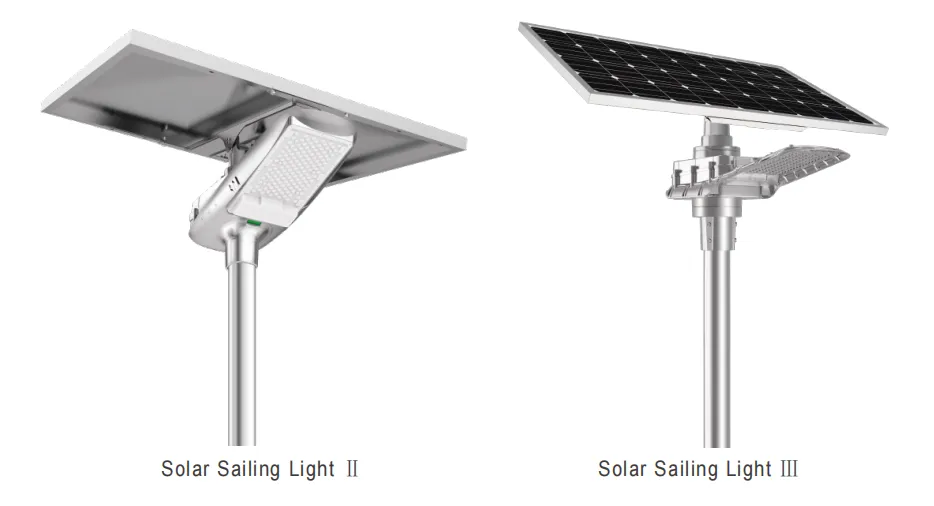
This is where project-grade solar garden street lights differ from small retail stake lights. A pole-mounted solar garden light combines an LED luminaire, photovoltaic panel, lithium battery, charge controller and structural pole into an independent outdoor lighting system. Depending on the project, it may also include timed dimming, motion sensing, camera power, IoT communication or remote fault alerts.
There is no single product that is automatically the best choice for every site. Park paths need comfortable, continuous illumination around trees and curves. Residential communities require low glare and limited light trespass near bedroom windows. Campuses need longer operating hours, security visibility and different schedules during term time and holidays. Hotels and resorts place greater emphasis on warm color, fixture appearance and flexible panel placement.
This buyer’s guide explains how to match solar garden lights to those real application conditions. It covers scene-specific requirements, preliminary brightness and pole-height ranges, battery and solar-panel sizing, optical distribution, weather protection, smart controls, project examples and the technical documents buyers should request before approving an order.
1. What Are Project-Grade Solar Garden Street Lights?
KEY TAKEAWAYProject-grade solar garden lights are pole-mounted, off-grid lighting systems designed to deliver functional pathway illumination and landscape value for public or commercial outdoor spaces—not simply decorative accent light. |
The phrase solar garden lights covers a wide range of products. At one end are small garden lights solar shoppers may buy for flower beds, borders or decorative markers. At the other end are engineered solar LED garden lights used for paths, community roads, campus links and public spaces. The second group must be selected as a complete energy and lighting system.
Decorative garden lights vs. project-grade systems
Selection point | Decorative solar light | Project-grade solar garden street light |
|---|---|---|
Primary purpose | Atmosphere, edging or orientation | Functional path, road and public-space illumination |
Mounting | Stake, wall, step or low bollard | Pole-mounted, typically with foundation or base plate |
Energy storage | Small battery for low output | Battery sized from nightly load and backup target |
Lighting design | Usually selected by appearance | Selected by illuminance, uniformity, glare and coverage |
Controls | Simple dusk-to-dawn switch | Timed dimming, motion sensing, IPC/MPPT, IoT options |
Typical buyer | Homeowner or retailer | Developer, contractor, municipality, campus or distributor |
A decorative product may be suitable when the goal is to mark the edge of a flower bed. It is not automatically suitable for a three-meter-wide public path that must remain safely visible for twelve hours. Buyers comparing the best garden solar lights should therefore begin by separating decorative products from lighting systems intended for continuous public use.
Main system components
· Solar panel: converts sunlight into electricity and must be positioned to avoid predictable shading.
· LiFePO4 battery: stores energy for nighttime operation and provides reserve capacity for cloudy weather.
· LED luminaire and optics: determine usable lumens, beam shape, glare, uniformity and visual comfort.
· Controller: manages charging, battery protection, lighting schedules and sensor-based dimming.
· Pole, arm and foundation: determine mounting height, structural safety, wind resistance and panel orientation.
· Optional smart devices: cameras, motion sensors, IoT gateways and remote monitoring modules add capability but also consume energy.
2. Best Solar Garden Lights for Parks
KEY TAKEAWAYPark lighting should create a continuous, comfortable path of visibility while protecting trees, wildlife, views and the nighttime character of the landscape. |
Parks are among the most demanding environments for outdoor garden solar lights because the site changes throughout the day and across seasons. Tree canopies grow, leaves block sunlight, branches move in the wind, and curved paths create blind corners. A light that performs well in an open plaza may charge poorly under a mature tree or produce uncomfortable glare on a narrow walking trail.
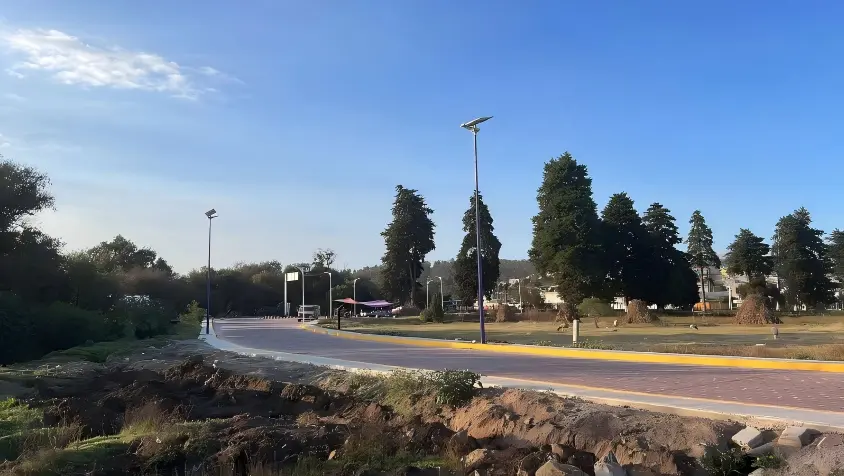
Where park solar garden lights are used
· Main walking and jogging paths
· Secondary garden trails and lakeside routes
· Entrances, gates and information points
· Seating areas, playground approaches and small plazas
· Steps, ramps, bridges and changes in level
· Bicycle paths and shared greenways
Preliminary park selection ranges
Park area | Typical pole height | Preliminary lumen range per light | Primary design concern |
|---|---|---|---|
Small garden path | 2.5-3.5 m | 800-2,000 lm | Comfort, close spacing and low glare |
Secondary park path | 3-4 m | 1,500-3,500 lm | Continuous path visibility |
Main park path | 4-5 m | 2,500-5,000 lm | Uniformity, cyclists and higher activity |
Plaza or activity area | 4-6 m | Site calculation required | Area coverage, faces and vertical visibility |
DESIGN CAUTIONThese ranges help define a starting point only. A 3,000-lumen fixture with a narrow beam can perform very differently from a 3,000-lumen fixture designed for wide path distribution. Final spacing should be checked using the luminaire’s IES file. |
Trees and solar-panel placement
Tree shading is the most common reason a park solar garden light underperforms. The pole location that gives the best illumination is not always the location that gives the panel the best solar exposure. A site assessment should record the height and seasonal spread of nearby trees, the path of the sun and any future planting plans. NREL describes a solar site assessment as an evaluation of orientation, slope, available space and shading; those same principles apply to stand-alone solar lighting.
Where the path must be illuminated beneath a canopy, an all-in-two or split configuration can be more reliable than a fully integrated unit. The luminaire may remain beside the path while the panel is moved to a nearby clear location or mounted at a more favorable angle. Designers should also consider leaf litter, bird droppings and maintenance access when setting the cleaning schedule.
Light quality in ecological and leisure areas
More light is not always better in a park. High-angle light can create glare, reduce the ability to see into adjacent dim areas and send light beyond the path. Downward, shielded optics and the lowest practical lighting level usually produce a more comfortable result. In ecologically sensitive or residential-edge locations, a warmer CCT may also be appropriate. DarkSky’s current luminaire guidance limits approved products to a nominal 3000 K and controls uplight and high-angle output, which provides a useful reference for projects seeking lower glare and reduced light trespass.
Common mistakes in park projects
· Installing integrated solar lights directly under tree canopies without a seasonal shading study.
· Using long spacing based only on pole height, without checking optics and minimum illuminance between poles.
· Leaving curves, stairs and bridge approaches outside the light overlap zone.
· Choosing very cool, high-output light that conflicts with the intended park atmosphere.
· Using motion-only operation on a busy main path, causing distracting brightness changes.
· Ignoring future tree growth and the maintenance access required to clean the panel.
3. Best Outdoor Solar Garden Lights for Residential Communities
KEY TAKEAWAYResidential projects must balance pathway safety and security with low glare, warm visual comfort and strict control of light entering nearby homes. |
Residential solar garden lights outdoor projects include more than private backyards. They may cover internal community roads, apartment pathways, villa driveways, building entrances, small parking areas, gatehouses and shared gardens. The challenge is to provide enough visibility for residents without making the community feel like an industrial yard.
Recommended planning ranges by residential area
Residential area | Typical pole height | Preliminary lumen range | Recommended approach |
|---|---|---|---|
Villa garden path | 2.5-3 m | 500-1,500 lm | Warm light, close spacing, limited spill |
Apartment pedestrian path | 3-4 m | 1,000-2,500 lm | Uniform path light and entrance emphasis |
Internal community road | 4-5 m | 2,000-4,500 lm | Pedestrian plus low-speed vehicle visibility |
Community parking area | 4-6 m | 3,000 lm and above | Area optics and site calculation |
Color temperature and glare control
For villa gardens, quiet courtyards and paths close to apartments, 2700-3000 K often creates a warmer and less intrusive environment. Around internal roads or entrances where visual recognition is more important, 3500-4000 K may provide a practical balance. Color temperature alone, however, does not control glare. The LED source should be shielded from normal viewing angles, and the beam should be aimed toward the path rather than bedroom windows or balconies.
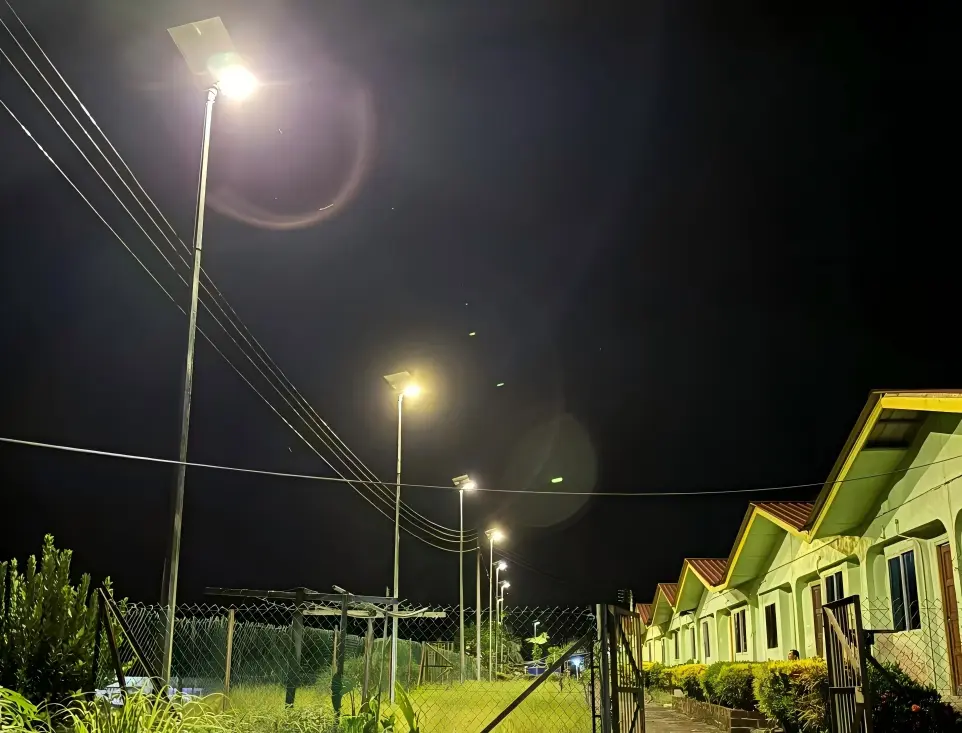
The phrase best outdoor solar garden lights should therefore describe visual quality as well as energy performance. A product that produces high lumens but creates bright hotspots, window spill or harsh contrast may reduce resident acceptance even if it meets a simple wattage specification.
Useful smart functions for communities
· Timed dimming: full output during the evening arrival period, then lower output after midnight.
· Motion-based boost: a moderate background level with temporary higher output when movement is detected.
· Camera integration: useful at gates and parking areas, but camera and communication power must be included in the energy calculation.
· Remote fault alerts: help property managers identify a charging, battery or luminaire problem before residents report a dark area.
· Group control: allows different schedules for roads, gardens, gates and low-traffic paths.
Smart devices are not “free” from an energy perspective. A camera, modem or sensor that operates continuously can materially increase the nightly load. The panel and battery should be resized around the complete system, not just the LED wattage.
Residential design risks
· Placing tall poles too close to façades or windows.
· Using one lighting profile for entrances, roads and quiet garden paths.
· Allowing motion sensors to switch from very low to very high output too abruptly.
· Selecting fixture appearance without checking photometric performance.
· Failing to coordinate the lighting design with security cameras and landscape planting.
4. Solar LED Garden Lights for Campuses
KEY TAKEAWAYCampus lighting must support pedestrians, bicycles, security monitoring and long operating hours across several types of space, often with different schedules during term time, holidays and events. |
Campuses combine the requirements of a park, a residential community and a small road network. Students may walk between libraries, dormitories and teaching buildings late at night. Bicycles and service vehicles share some routes. Security cameras need enough vertical light to identify people, not only horizontal light on the pavement. Outdoor garden solar lights for campuses therefore require a more structured lighting plan than simple decorative products.
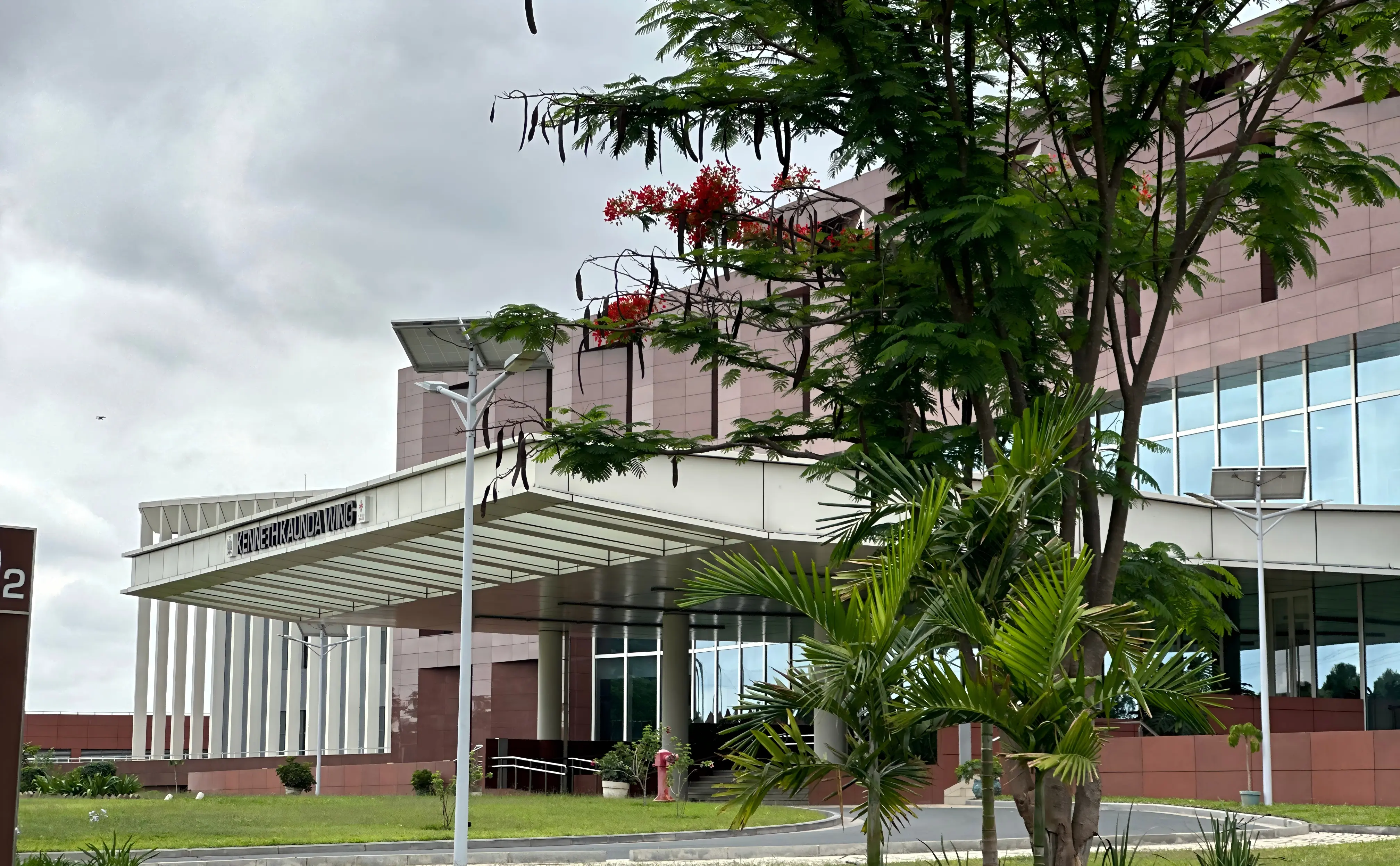
Typical campus zones
· Main entrances and arrival roads
· Dormitory-to-classroom pedestrian routes
· Campus gardens and informal gathering areas
· Bicycle routes and bicycle parking
· Sports-facility approaches
· Staff and visitor parking areas
· Emergency call points and security-camera zones
Preliminary campus selection ranges
Campus area | Typical pole height | Preliminary lumen range | Special requirement |
|---|---|---|---|
Garden or minor footpath | 3-4 m | 1,500-3,000 lm | Pedestrian comfort and low glare |
Dormitory or teaching link | 4-5 m | 2,500-5,000 lm | Long hours and face recognition |
Campus main road | 5-6 m | 4,000-7,000 lm | Pedestrians, bicycles and vehicles |
Parking or sports approach | 5-8 m | Lighting study required | Area coverage and security visibility |
Campus scheduling and control
A campus usually benefits from several schedules rather than one dusk-to-dawn profile. Main pedestrian routes may remain at a higher background level until the library and dormitory movement declines. Garden areas can dim earlier. Sports approaches may follow event schedules. During holidays, the system can reduce output while maintaining security corridors and emergency access.
Remote monitoring is particularly valuable when a campus contains dozens or hundreds of lights. Maintenance teams can identify abnormal charging, low battery voltage or communication failure before a route becomes dark. Group control also allows emergency lighting profiles to be activated for special events or security incidents.
Security cameras and vertical visibility
A path can appear bright on the ground while a person’s face remains difficult to identify. Where cameras are part of the project, designers should check vertical illuminance, light direction and shadowing around entrances, call points and bicycle parking. Camera power, heaters, infrared units and data transmission must also be included in the nightly energy budget.
5. Solar Garden Lights for Hotels, Resorts and Commercial Landscapes
KEY TAKEAWAYHospitality projects need reliable path safety without losing the warm, calm and visually coherent atmosphere expected in a guest environment. |
Hotels and resorts often use solar outdoor garden lights along entrance drives, villa paths, landscape gardens, pool approaches, restaurant routes and remote parking areas. Appearance matters, but the product still needs a defensible energy and lighting design. Guests must be able to recognize steps and route changes, while the lighting should avoid harsh glare across bedrooms, terraces and outdoor dining areas.
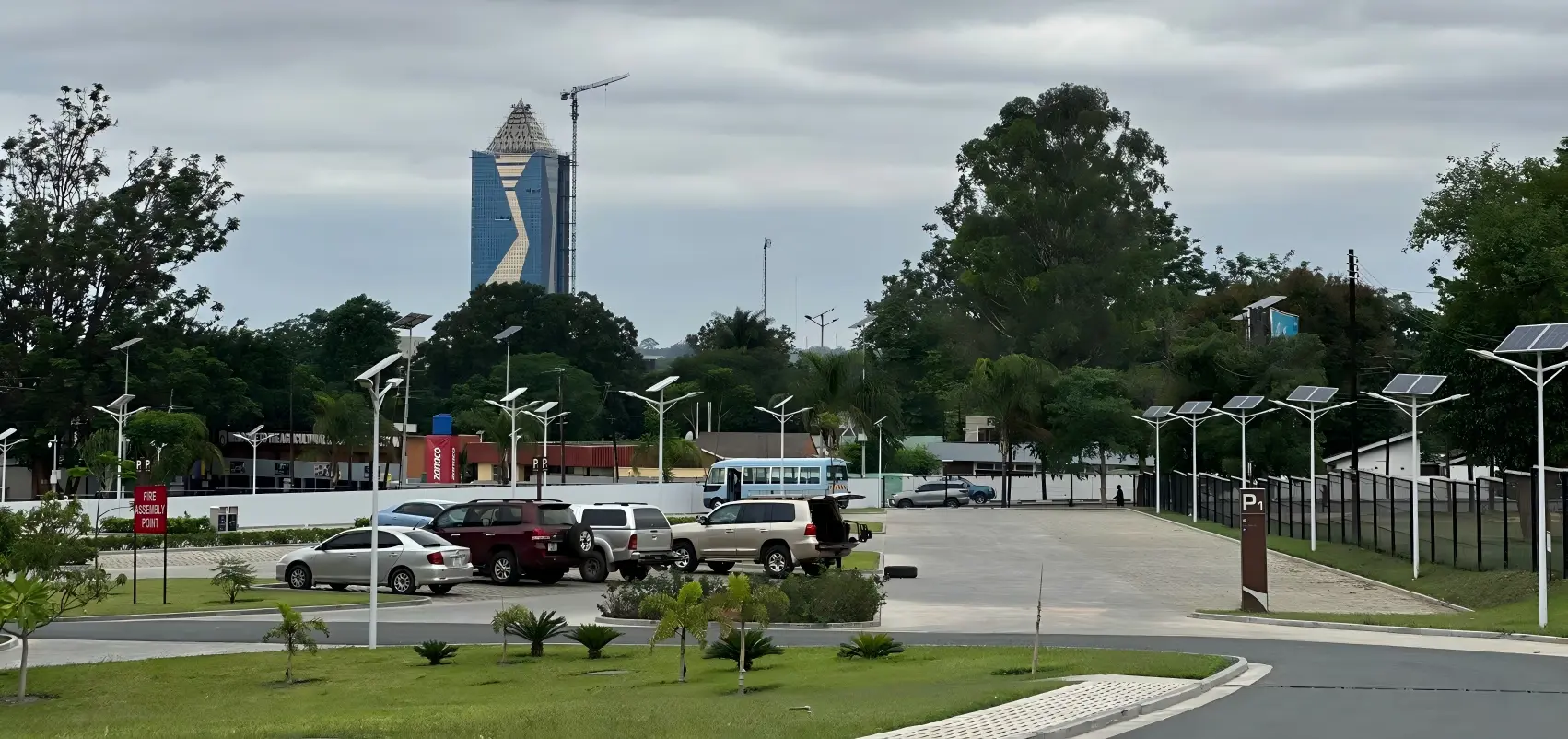
Why split or all-in-two systems can work better
Mature landscaping can make the best lighting position a poor charging position. An all-in-two or split system allows the LED fixture to remain beside the guest path while the solar panel is installed where it receives more sun. This also gives the designer more freedom to select a decorative luminaire and hide or relocate the energy components without compromising charging performance.
Hospitality priorities
· Warm or neutral-warm color temperature appropriate to the architecture and planting.
· Low-glare optics at normal eye level and around seating or dining areas.
· Extra lighting at steps, ramps, intersections and changes in path direction.
· Quiet timed dimming rather than frequent high-contrast sensor changes in busy guest areas.
· Battery reserve based on the local rainy season, not the annual average climate.
· Fixture and pole finishes suitable for coastal humidity, salt spray or pool chemicals where applicable.
6. Outdoor Garden Solar Lights for Public Paths and Community Roads
KEY TAKEAWAYPublic paths and low-speed community roads require reliable minimum visibility, durable structures and consistent light overlap for pedestrians, cyclists and vehicles. |
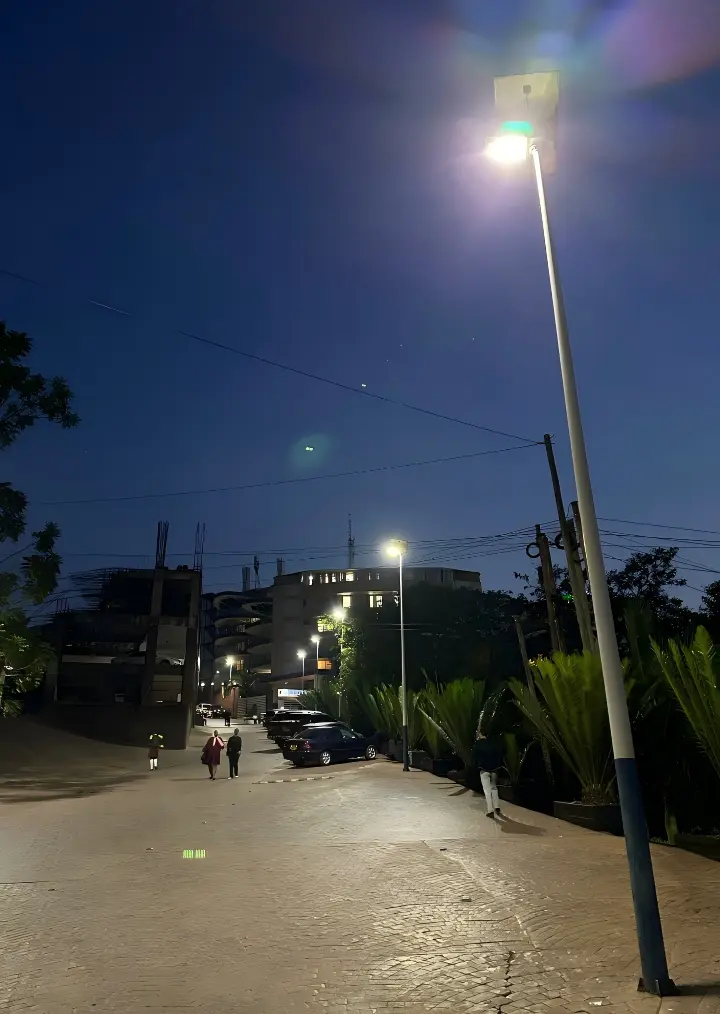
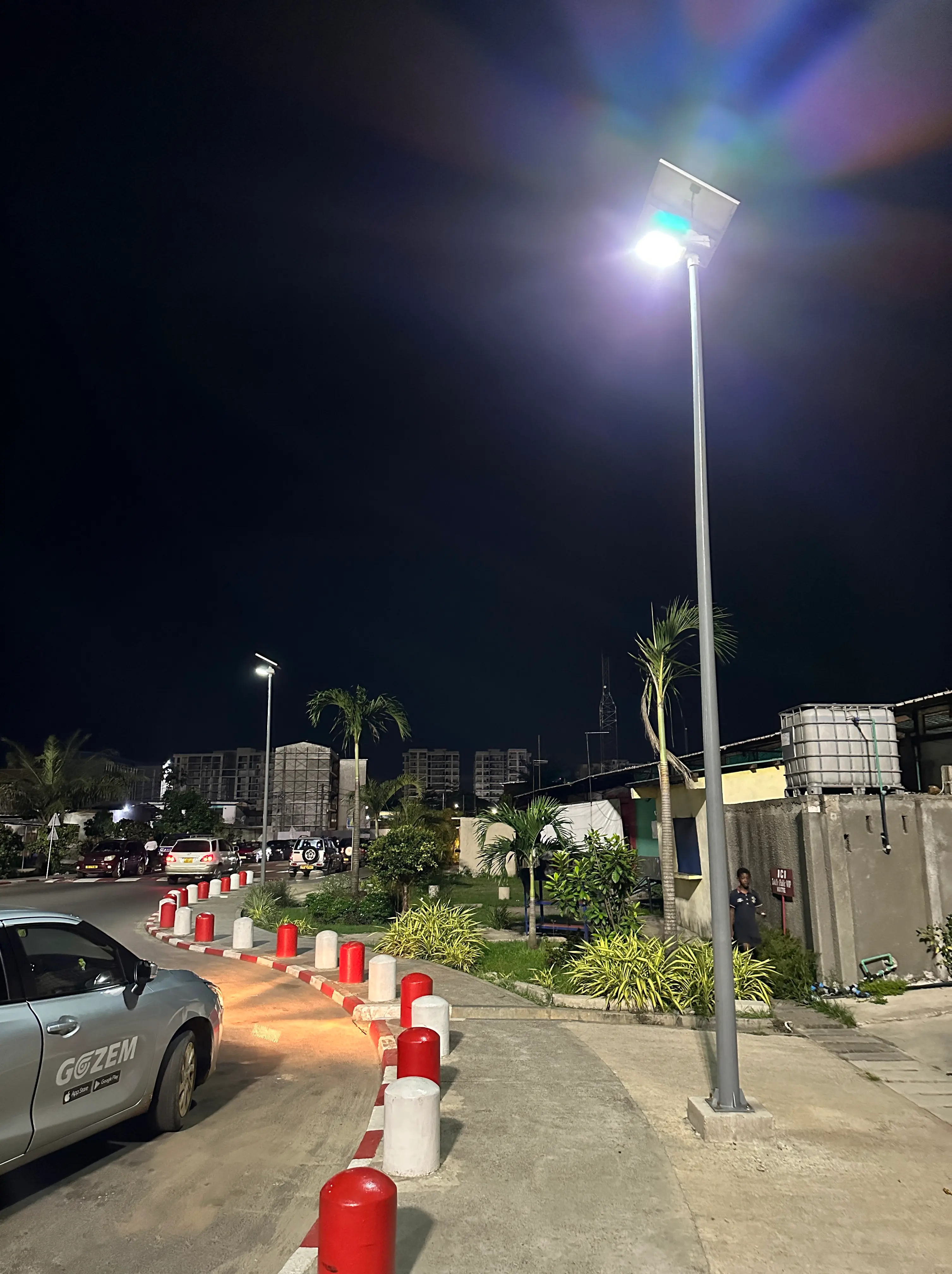
Public pathways, greenways and community roads sit between landscape lighting and roadway lighting. They are more functional than private garden paths but often need a softer visual character than a main municipal road. Selection should begin with path width, user type, operating hours, adjacent properties and whether the route supports bicycles or service vehicles.
Layout choices
· Single-side layout: economical for narrow paths when optics can cover the full width.
· Alternating layout: can improve overlap on wider paths or community roads.
· Opposite layout: useful for wider routes requiring stronger uniformity, but increases equipment count.
· Intersection emphasis: add or reposition lights at crossings, turns, entrances and conflict points.
· Edge control: use shielding where the path borders homes, water, habitat or neighboring property.
Rules such as “spacing equals three times the pole height” are useful only for early concept sketches. Final spacing depends on luminaire optics, mounting height, tilt, path width, maintenance factor and target minimum illuminance. An IES file and lighting simulation are the correct way to verify whether the light overlap is sufficient.
7. Compare Solar Garden Lights by Application
KEY TAKEAWAYThe same product specification can produce different results in a park, community, campus or hotel because the lighting priorities, schedules, shade and surrounding environment are different. |
Application | Core requirement | Typical pole height | CCT direction | Useful controls |
|---|---|---|---|---|
Park | Path continuity and landscape comfort | 3-5 m | 3000-4000 K; warmer in sensitive areas | Timed dimming, selected motion sensing |
Residential community | Low glare, safety and limited window spill | 3-5 m | 2700-4000 K by zone | Dimming, sensors, camera option |
Campus | Long hours, security and mixed users | 4-6 m | Around 4000 K for main routes | Remote monitoring, group schedules |
Hotel or resort | Guest experience and visual integration | 2.5-4.5 m | 2700-3500 K | Quiet timed dimming |
Public pathway | Uniformity and durability | 3-5 m | 3000-4000 K | Fault alerts, scheduled profiles |
Community road | Pedestrians and low-speed vehicles | 4-6 m | Around 4000 K | Night profile and motion boost |
8. How to Choose Brightness, Pole Height and Spacing
KEY TAKEAWAYSelect lumens, optics, mounting height and spacing as one design problem. Wattage alone cannot predict the light that reaches the ground or the uniformity between poles. |
Understand watts, lumens and lux
Watts describe electrical power consumption. Lumens describe the total light leaving the luminaire. Lux describes the light arriving on a surface. A high-watt fixture can still perform poorly if its LED efficacy is low or its optics send light outside the useful area. For procurement, ask for actual luminaire lumens and LM-79 or equivalent photometric test data rather than relying only on a model name.
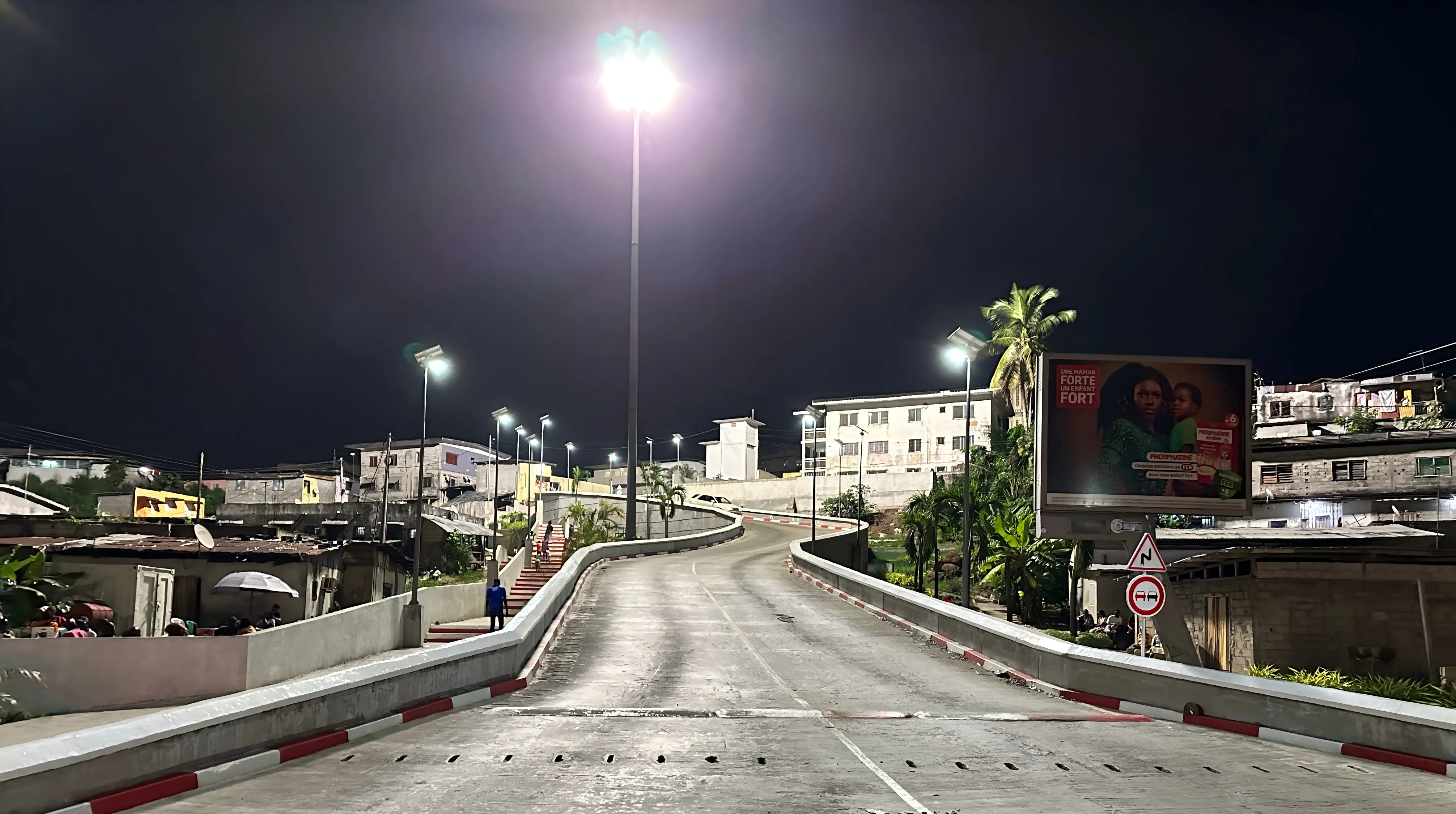
As a useful efficiency reference, current U.S. Federal Energy Management Program guidance uses lumens per watt to evaluate exterior luminaires and lists different minimum efficacy levels for decorative and area/roadway categories. A global project still needs its own applicable standards, but the principle is universal: more usable light per watt reduces the battery and panel burden.
Why uniformity and glare matter
A path can meet an average illuminance target and still contain dark gaps between poles. Those gaps can hide steps, branches, curbs or people. Conversely, very bright spots under each pole can create glare and make adjacent darker areas harder to see. A good design controls maximum-to-minimum contrast, directs light downward and places the overlap where users need it.
How pole height changes the design
· Lower poles create a human-scale landscape appearance but usually need closer spacing and better glare shielding.
· Higher poles cover a wider area but need more lumens, stronger structures and larger foundations.
· Solar panels increase wind area, so the pole and foundation must be checked for the local wind condition.
· Trees, buildings and banners can block either the light beam or the solar panel even when the pole height appears suitable.
Information needed for a lighting layout
· Site plan with path widths, intersections, steps, entrances and adjacent buildings
· Target mounting height and any architectural restrictions
· Required lighting hours and dimming schedule
· IES/LDT file for the selected optic and CCT
· Local lighting requirements or tender criteria
· Tree and building shading information
· Camera locations and areas requiring vertical visibility
9. How to Size the Battery and Solar Panel
KEY TAKEAWAYBattery and panel size should be calculated from the actual nighttime lighting profile, local peak sun hours, system losses, allowable battery depth of discharge and the required cloudy-day reserve. |
A product description such as “40 W solar garden light” does not tell the buyer whether the system will operate through the local rainy season. Energy sizing begins with the real lighting schedule. The following example shows the method; it is not a universal product recommendation.
Step 1: calculate nightly LED energy
Lighting period | Output level | Energy calculation | Energy |
|---|---|---|---|
First 5 hours | 100% | 40 W × 5 h | 200 Wh |
Next 5 hours | 50% | 40 W × 0.50 × 5 h | 100 Wh |
Final 2 hours | 30% | 40 W × 0.30 × 2 h | 24 Wh |
Total LED load | 324 Wh/night |
If the combined controller, wiring, battery and conversion efficiency is estimated at 85%, the system must supply approximately 324 Wh ÷ 0.85 = 381 Wh per night. Any camera, modem or other accessory load must be added separately.
Step 2: estimate battery capacity
For three nights of reserve with no useful charging, the required usable energy is 381 Wh × 3 = 1,143 Wh. With a 12.8 V LiFePO4 battery, that equals about 89 Ah of usable capacity. If the design uses no more than 80% of nominal capacity, the preliminary nominal requirement becomes approximately 111 Ah. Temperature, ageing margin and controller cut-off settings may increase the final value.
Step 3: estimate solar-panel power
Peak sun hours are the equivalent number of hours per day when solar irradiance averages 1,000 W/m². If the project’s worst design month provides 4.5 peak sun hours and the total generation efficiency is estimated at 75%, the panel requirement is approximately 381 Wh ÷ (4.5 h × 0.75) = 113 W. Allowing margin for dust, seasonal conditions and recovery after cloudy weather, a preliminary range of about 130-150 W may be considered.
ENERGY-SIZING CAUTIONUse the project location’s low-sun design period rather than the annual average. Confirm panel orientation, tilt and shading. A larger panel cannot compensate for severe daily shading, and an MPPT controller cannot correct a fundamentally undersized energy system. |
MPPT or PWM?
PWM may be sufficient for a small, low-power solar garden light in a sunny climate with closely matched panel and battery voltage. MPPT is generally more appropriate for commercial parks, communities and campuses where the panel is larger, weather changes significantly or faster recovery charging is important. The decision should consider the complete system voltage and operating profile rather than treating MPPT as a marketing label.
10. Which Solar Garden Light Type Fits Each Project?
KEY TAKEAWAYIntegrated systems suit simple, unshaded paths; all-in-two and split systems provide more flexibility where the lighting position and the best solar-charging position are not the same. |
System type | Best-fit applications | Main advantage | Main limitation |
|---|---|---|---|
Integrated all-in-one | Villa paths, small community paths, open park routes | Fast installation and fewer external connections | Panel angle and energy capacity constrained by integrated structure |
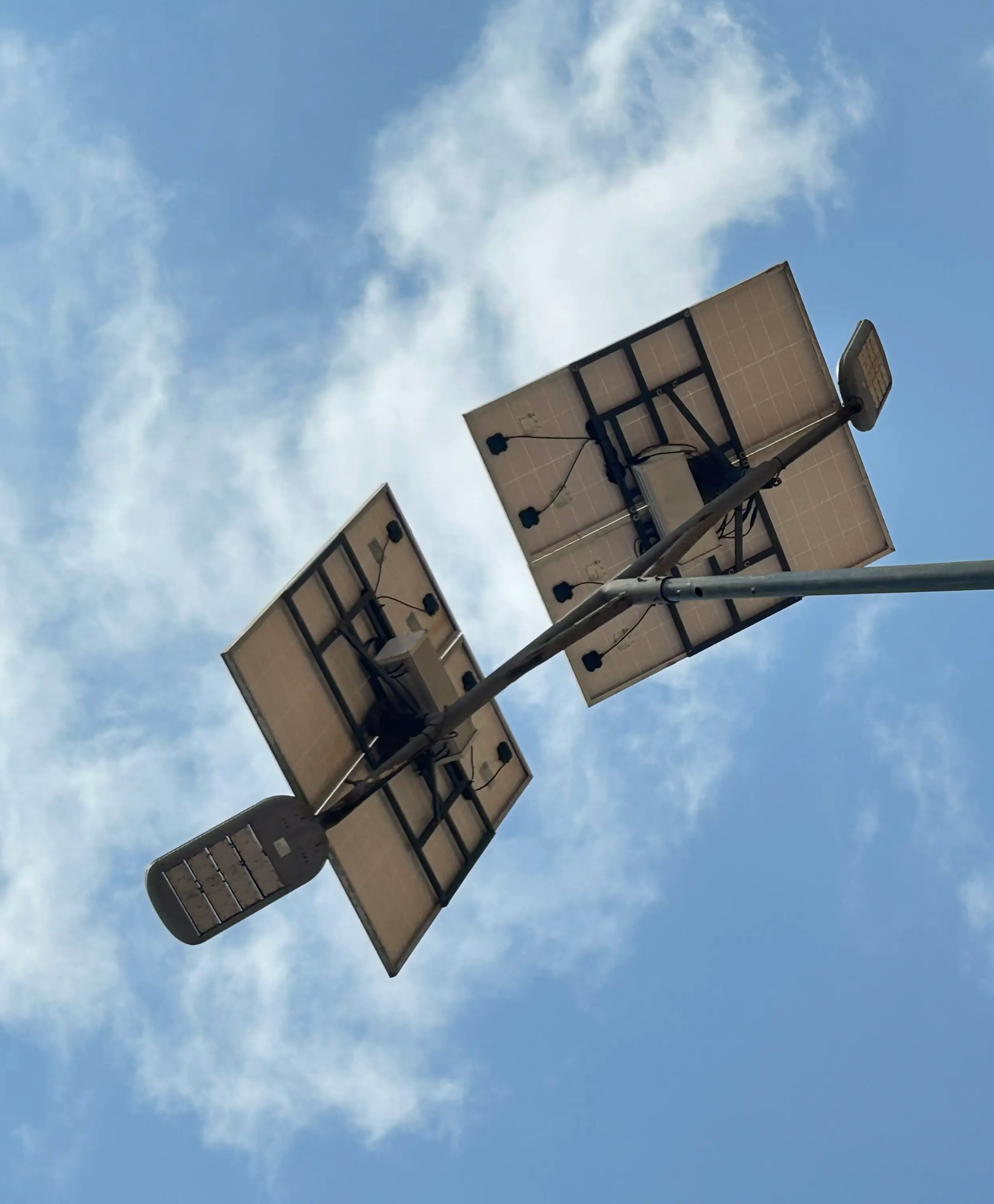
All-in-two | Parks, communities, hotels and campuses | Separate panel improves orientation and configuration flexibility | More installation work than a fully integrated unit |
Split system | Large parks, campus roads, shaded landscapes and high-backup projects | Maximum freedom to size and position each component | More cabling, design and installation coordination |
Smart networked system | Campuses, managed communities and security-focused public areas | Remote status, scheduling and fault visibility | Higher cost and additional communication energy load |
11. Four Practical Solar Garden Lighting Examples
KEY TAKEAWAYProject layout, climate and user behavior influence the system more than the nominal lamp wattage printed in a catalog. |
Example 1: residential community pathway
Project conditions: a three-meter-wide path between apartment buildings, moderate evening activity and bedrooms close to the route. The preferred approach is a 3-4 m pole, low-glare optics, 3000-4000 K by zone and a timed reduction after the main evening period. The design should check window spill and place brighter points at building entrances rather than increasing the entire route to one high level.
Example 2: public park main path
Project conditions: a four-to-five-meter-wide route used by walkers and cyclists, mature trees and several curves. The design priority is continuous overlap, curve visibility and panel locations that remain unshaded. All-in-two units may allow the panel to be moved away from the tree canopy. Motion sensing can be used carefully on low-traffic sections, while the main route keeps a stable background level.
Example 3: university campus link road
Project conditions: a route connecting dormitories, classrooms and bicycle parking, with security cameras and long operating hours. A 4-6 m pole range may be evaluated with area-specific optics. The energy calculation must include cameras and communications. Group schedules can maintain higher output until late study periods end, then reduce noncritical areas while keeping security corridors active.
Example 4: hotel and resort garden
Project conditions: curved guest paths, trees and a strong architectural identity. The design should favor warm light, low glare and decorative fixtures while separating the panel from the luminaire where necessary. Steps, intersections and pool approaches need deliberate emphasis. Timed dimming is usually less disruptive than frequent high-contrast motion changes in occupied guest areas.
12. Weather Protection and Structural Durability
KEY TAKEAWAYIP rating is only one part of outdoor reliability. Materials, sealing, corrosion protection, temperature management, wind loading and maintenance access must match the site environment. |
Environment | Important design checks |
|---|---|
Normal urban park or community | IP65/IP66 luminaire, UV-resistant materials, protected connectors, galvanized or coated pole |
Tropical rain and high humidity | Sealed connectors, drainage, anti-condensation details, controller moisture protection |
Coastal or poolside site | Salt-spray resistance, coating system, corrosion-resistant fasteners and suitable aluminum finish |
Desert or dusty area | Panel cleaning access, thermal derating, sealed electronics and battery temperature limits |
High-wind open campus or park | Pole calculation, panel bracket strength, foundation design and local wind-load review |
Cold or snowy climate | Low-temperature battery behavior, snow shading and accessible panel angle |
An IP66 label does not prove that the pole, fasteners, panel frame, cable glands and battery compartment are all suitable for a coastal or high-temperature project. Request test reports and material specifications for the complete configuration.
13. What Should Buyers Ask a Solar Garden Light Supplier?
KEY TAKEAWAYA reliable supplier should show how the proposed configuration was calculated for the site and provide technical evidence—not only a wattage, battery-Ah number and marketing runtime claim. |
· Actual luminaire power and lumen output, with LM-79 or equivalent photometric data where available.
· IES or LDT file for the exact optic, CCT and power setting being offered.
· DIALux, Relux or equivalent layout using the project’s path width, pole height and spacing.
· Solar-panel electrical specification and the assumptions used for local solar resource.
· Battery nominal voltage, Wh capacity, cell type, allowable depth of discharge and temperature range.
· Nightly energy calculation, dimming profile and cloudy-day reserve calculation.
· Controller type, protections, dimming logic, sensor settings and communication load.
· Pole drawing, material, wall thickness, surface treatment, bracket details and foundation recommendation.
· IP, corrosion, electrical-safety and environmental test documentation applicable to the offered model.
· Warranty scope, spare-parts plan, modular replacement procedure and expected maintenance tasks.
The supplier should also ask the buyer for the project country, site plan, path width, pole height, desired operating hours, backup target, tree shading, local wind conditions and required quantity. A supplier that recommends one standard configuration without these inputs may not be accounting for the actual project risk.
14. Why Choose RoadSmart for Solar Garden Lighting Projects?
KEY TAKEAWAYRoadSmart supports project-based solar lighting selection for parks, residential communities, campuses and public pathways through product configuration, photometric documentation, lighting layout and ODM capability. |
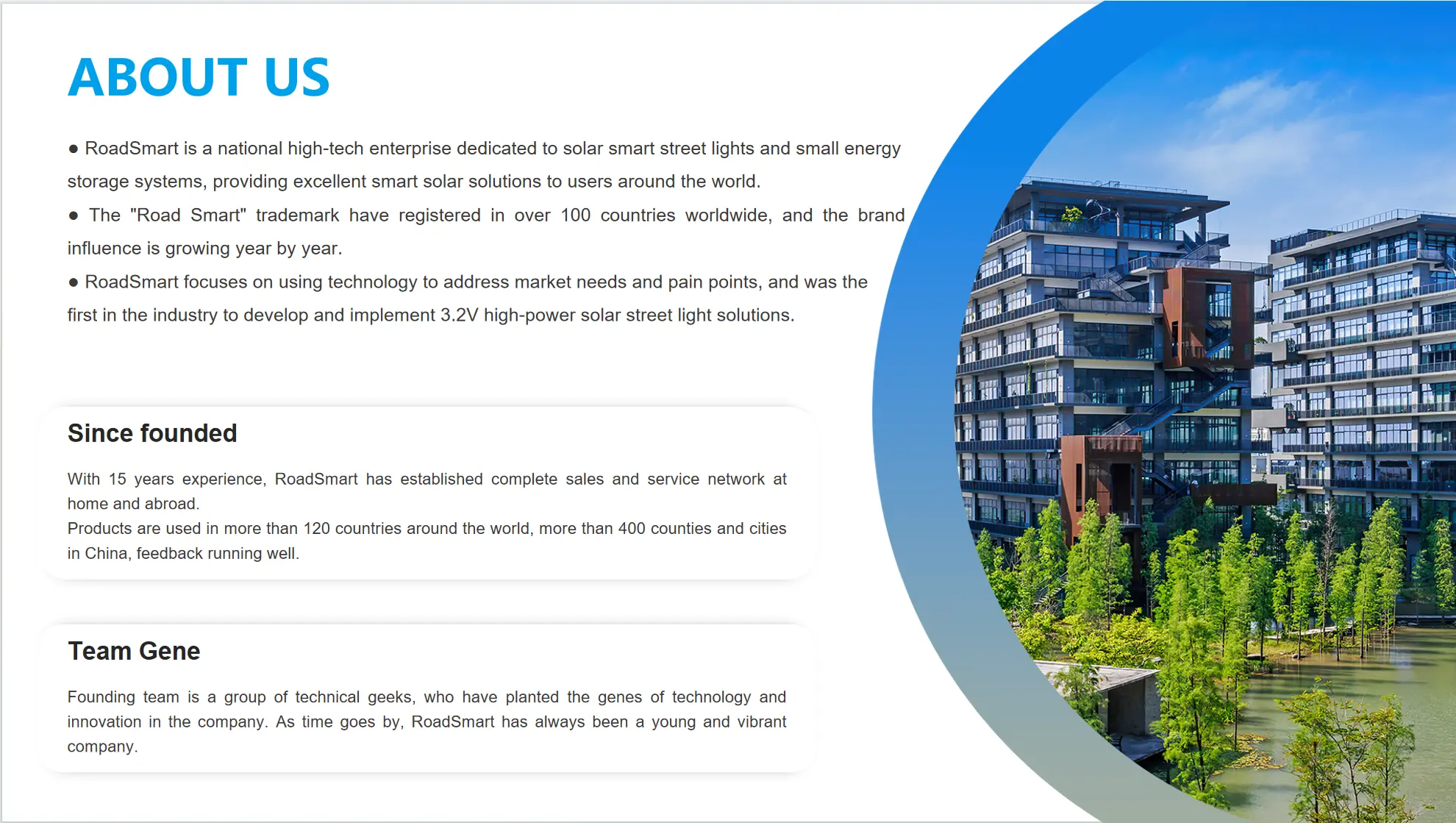
RoadSmart’s 2026 corporate profile describes more than 15 years of solar-lighting experience, products used in over 120 countries, a 100+ person R&D team and more than 250 patents. Its product portfolio includes MPPT all-in-one, all-in-two, split solar street lights and solar pole solutions, allowing the system architecture to be matched to different landscape and public-space conditions.
For a project inquiry, RoadSmart can use road or path width, mounting height, pole spacing, nightly operating time, local climate and cloudy-day target to narrow the model and energy configuration. The company’s official product pages also state that IES/LDT files, DIALux or Relux layouts, drawings, datasheets and BOQ/model mapping are available for project coordination.
This capability is important because the best outdoor solar garden lights are not defined by one standard wattage. A public park under heavy tree cover, a residential path beside windows and a campus route with cameras may all need different optics, CCT, panel placement, battery reserve and control profiles—even when their path widths appear similar.
15. FAQ About Solar Garden Lights
KEY TAKEAWAYUse the project’s real path width, mounting height, shade, lighting schedule and climate to answer common selection questions; catalog wattage alone is not enough. |
What are the best outdoor solar garden lights for parks?
The best option is a project-grade system with suitable path optics, low glare, adequate battery reserve and a panel position that remains unshaded. Integrated lights can work on open paths, while all-in-two or split systems are often better under trees because the panel can be moved to a clearer location.
How bright should solar garden lights be for residential pathways?
A small villa path may begin around 500-1,500 lumens per fixture, while apartment paths may use roughly 1,000-2,500 lumens as an initial planning range. Final selection depends on pole height, spacing, optics, surface reflectance and the minimum visibility required between lights.
What pole height is suitable for solar LED garden lights?
Typical landscape and community applications use roughly 2.5-5 m poles, while wider campus or community roads may use 4-6 m or more. Lower poles need closer spacing and stronger glare control; higher poles require more lumens and stronger structural design.
How far apart should garden solar lights be installed?
There is no universal spacing. Early concepts may use a multiple of pole height, but final spacing should be verified with the exact IES file and a lighting calculation. Curves, intersections, trees, steps and changes in width often require local adjustments.
Can solar garden lights outdoor systems work under trees?
The luminaire can illuminate a path under trees, but the solar panel must receive enough sunlight. Where the pole is shaded, use an all-in-two or split design so the panel can be installed in a clearer location. A seasonal shading assessment is essential.
Are garden solar powered lights suitable for campuses?
Yes, provided the system is designed for long hours, pedestrian and bicycle movement, security visibility and any camera or communication load. Remote monitoring and grouped schedules can improve maintenance and energy management across a large campus.
Which battery is best for a solar garden light?
LiFePO4 is commonly selected for project-grade systems because of its cycle life and thermal stability. The important question is not only battery chemistry but usable Wh capacity, temperature range, depth of discharge, protection settings and the reserve required for the local climate.
Do outdoor garden solar lights work in winter?
They can, but winter design should use the low-sun period, not the annual average. Shorter days, low solar angles, snow shading and low-temperature battery behavior may require a larger panel, more battery reserve or a different operating profile.
What color temperature is best for solar outdoor garden lights?
For hotels, quiet residential paths and ecologically sensitive parks, 2700-3000 K often provides a warmer and less intrusive result. Main community or campus routes may use 3500-4000 K where recognition is more important. Shielding and light direction remain as important as CCT.
Do project-grade solar garden lights need maintenance?
Yes. Typical tasks include cleaning the panel, removing vegetation, checking fasteners and corrosion, reviewing battery and controller status, confirming sensor operation and replacing modular components when required. Maintenance frequency depends on dust, trees, salt, snow and local access.
Is MPPT always necessary?
Not always. PWM may be adequate for a small system in stable, sunny conditions. MPPT is more useful when panel power is larger, voltage conversion is required, weather varies or recovery charging is important. Neither controller type can correct a severely undersized panel or battery.
How can a buyer confirm a claimed three- or five-day backup?
Ask for the nightly Wh calculation, dimming profile, accessory load, usable battery Wh, depth of discharge, system losses and assumed solar input during the cloudy period. A backup-day claim without those assumptions is not technically complete.
Conclusion: Choose Solar Garden Lights by Application, Not by Wattage Alone
KEY TAKEAWAYThe best garden solar lights are the systems that meet the real lighting, energy, structural and environmental requirements of the site with documented calculations and maintainable components. |
For parks, the priority is continuous low-glare pathway visibility and solar access around trees. Residential communities need safety without window spill or harsh nighttime contrast. Campuses need longer operating profiles, security visibility and smart management. Hotels and resorts require functional safety that supports the landscape atmosphere. Public paths and community roads need reliable minimum illumination and durable structures.
For guidance on solar lighting for public spaces — including where it is used, when it suits a park, and how to select a system — see our dedicated overview for parks and public areas.
Across all of these applications, the selection process should connect four decisions: the required light on the ground, the optic and pole layout that can deliver it, the nightly energy the system will consume, and the panel and battery capacity required by the local climate. Product appearance and nominal wattage come after those fundamentals.
Planning a solar garden lighting project for a park, residential community, campus, hotel or public pathway? Contact RoadSmart with the site plan, project location, path width, mounting height, operating hours and backup target to receive a project-based lighting and energy configuration.