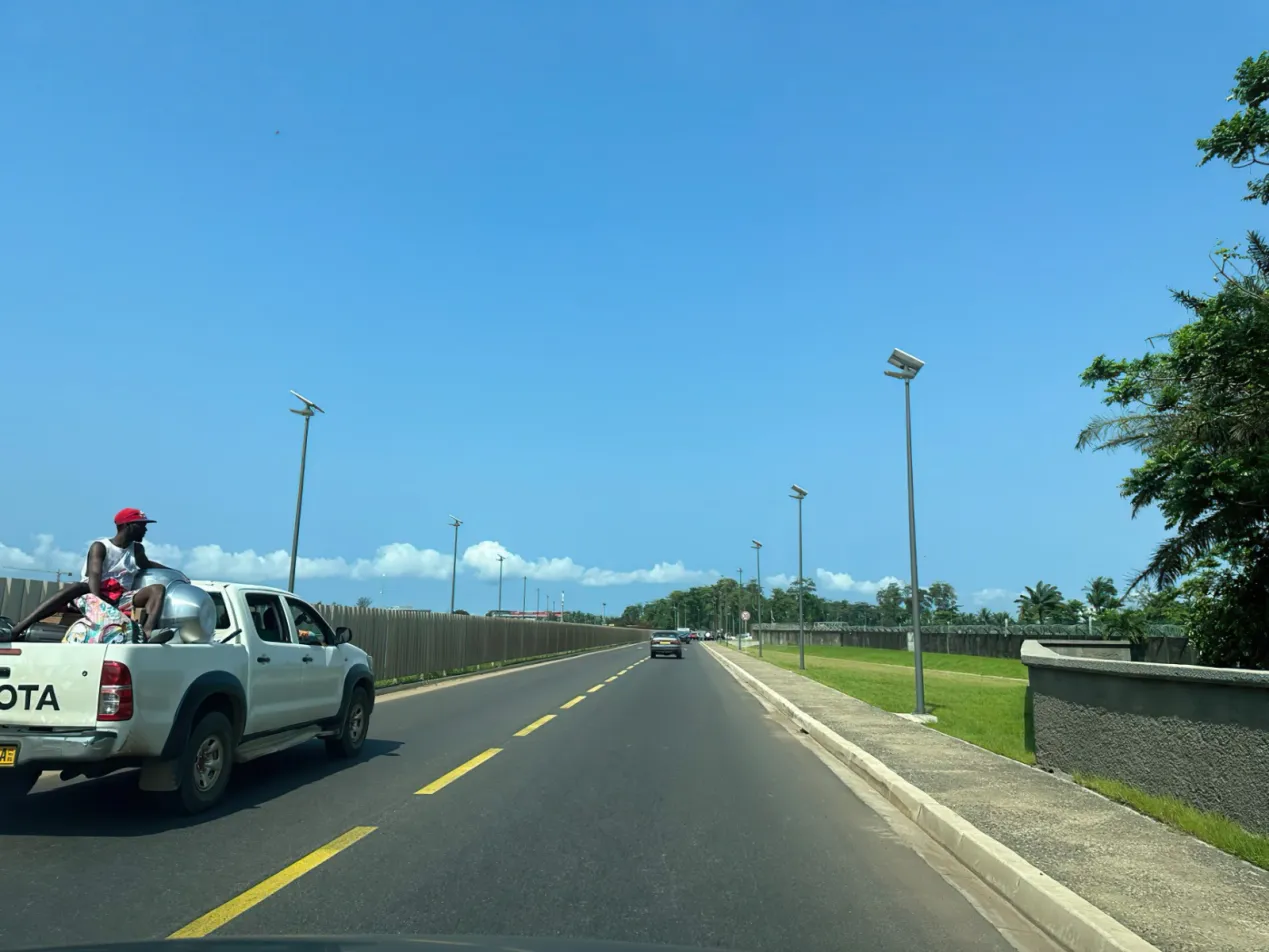
Best Solar Street Lights with Pole for Parking Lots(2026 Buyer's Guide)
Jul 15, 2026
Read:551
Source: Yin Zhenkun
Introduction
Parking lots need more than a bright lamp. A reliable system must help drivers recognize lanes and obstacles, allow pedestrians to be seen between vehicles, support security cameras, limit glare, and maintain useful illumination throughout the night. Traditional parking lot lights can achieve these goals, but grid-connected systems often require trenching, cable, distribution equipment, utility coordination, and recurring electricity costs.
Modern solar parking lot lights combine photovoltaic modules, battery storage, intelligent controls, efficient LED optics, and a purpose-designed pole into an independent outdoor lighting system. This makes solar powered parking lot lights attractive for new developments, remote properties, parking lot expansions, industrial facilities, schools, hospitals, hotels, logistics parks, and other locations where underground wiring is expensive or disruptive.
The challenge is that many products are marketed using only nominal wattage, battery amp-hours, or exaggerated operating times. Those numbers are not enough to determine whether the system will produce suitable ground illuminance, survive several low-solar days, or remain stable after years of battery aging. A useful buyer’s guide must therefore connect the lighting requirement to the energy system and the mechanical structure.
This 2026 guide explains how to define the lighting brief, compare LED parking lot light fixtures, estimate battery and solar panel capacity, choose pole height and optical distribution, evaluate MPPT and PWM controllers, plan installation, and request evidence from a manufacturer before placing an order.
1. Why Choose Solar Street Lights with Poles for Parking Lots?
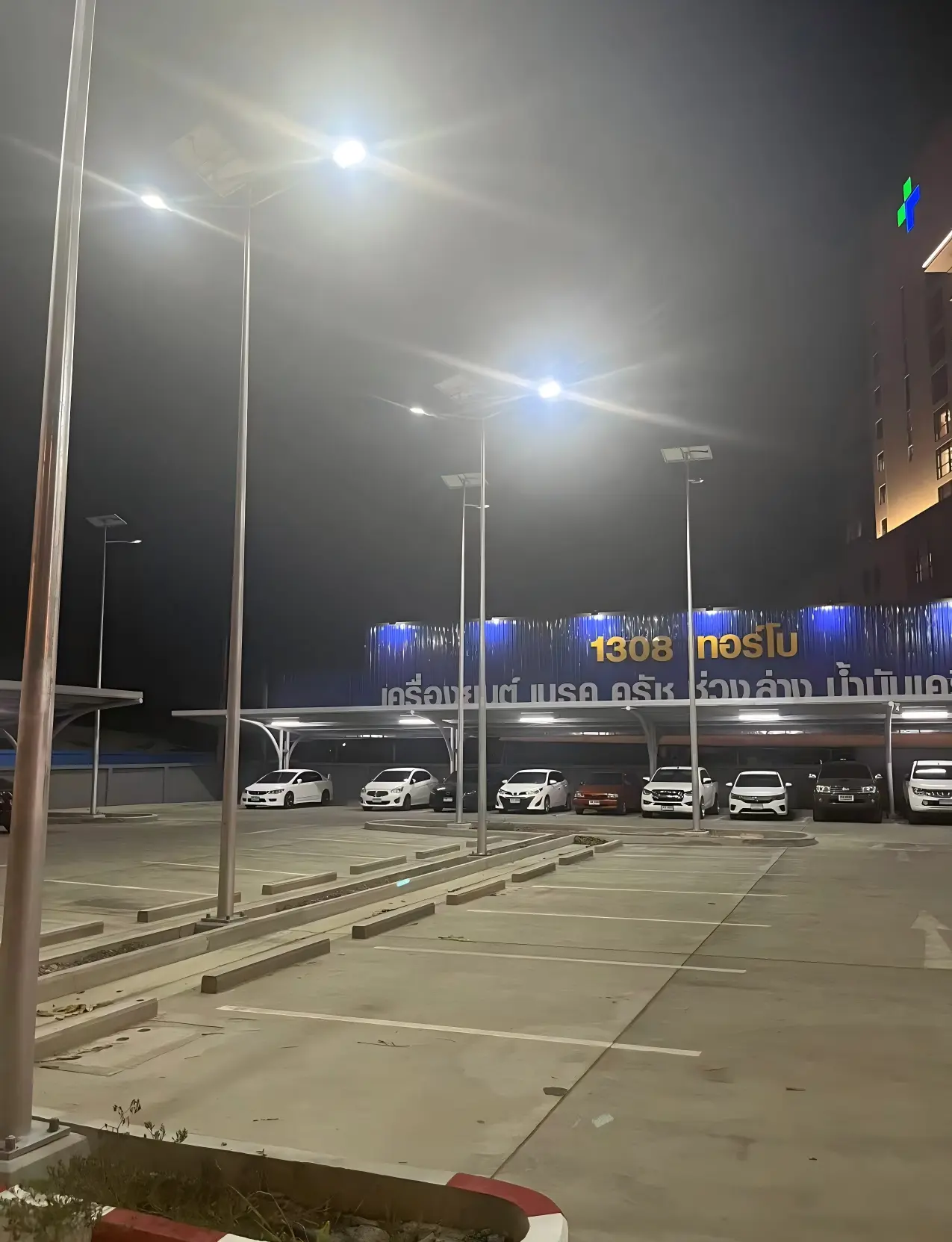
Eliminate or Reduce Underground Electrical Work
A conventional parking lot lighting project may require trenching, conduit, copper cable, junction boxes, electrical panels, protective devices, utility access, and restoration of asphalt or landscaping. The U.S. Department of Energy has noted that trenching, foundations, and poles can represent a major share of a parking-lot project cost, sometimes exceeding the luminaire cost itself. [2]
Each solar unit generates and stores its own energy, so many projects can avoid long cable runs. This advantage is especially important when a parking lot is already paved, separated from the main building, or expanded after the original electrical infrastructure was completed.
Lower Exposure to Electricity Prices and Grid Interruptions
Solar systems do not create a monthly lighting electricity bill, although they still require cleaning, inspection, and eventual battery replacement. Their independent architecture can also maintain local lighting during a grid outage, provided the battery has sufficient charge and the control program has not entered a low-energy protection mode.
Install Lighting Where the Grid Is Difficult to Reach
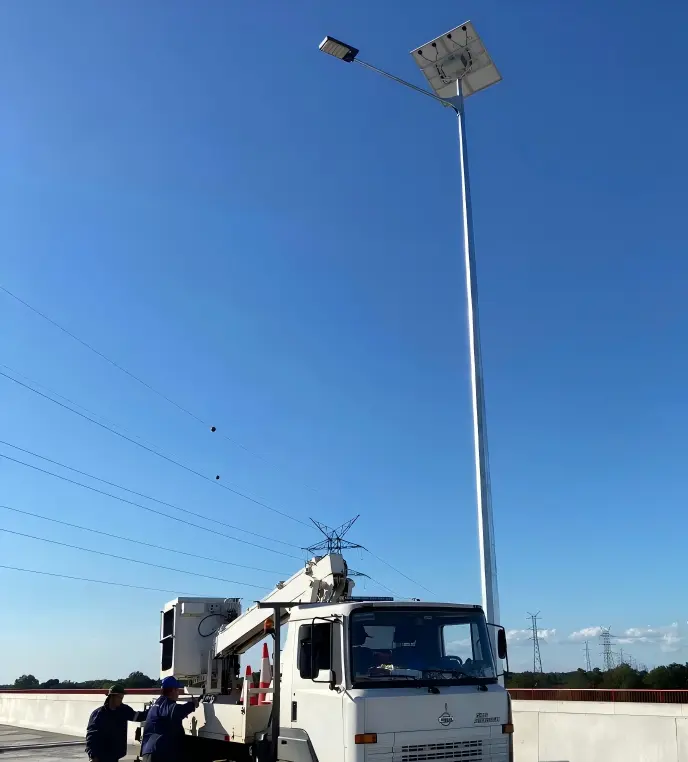
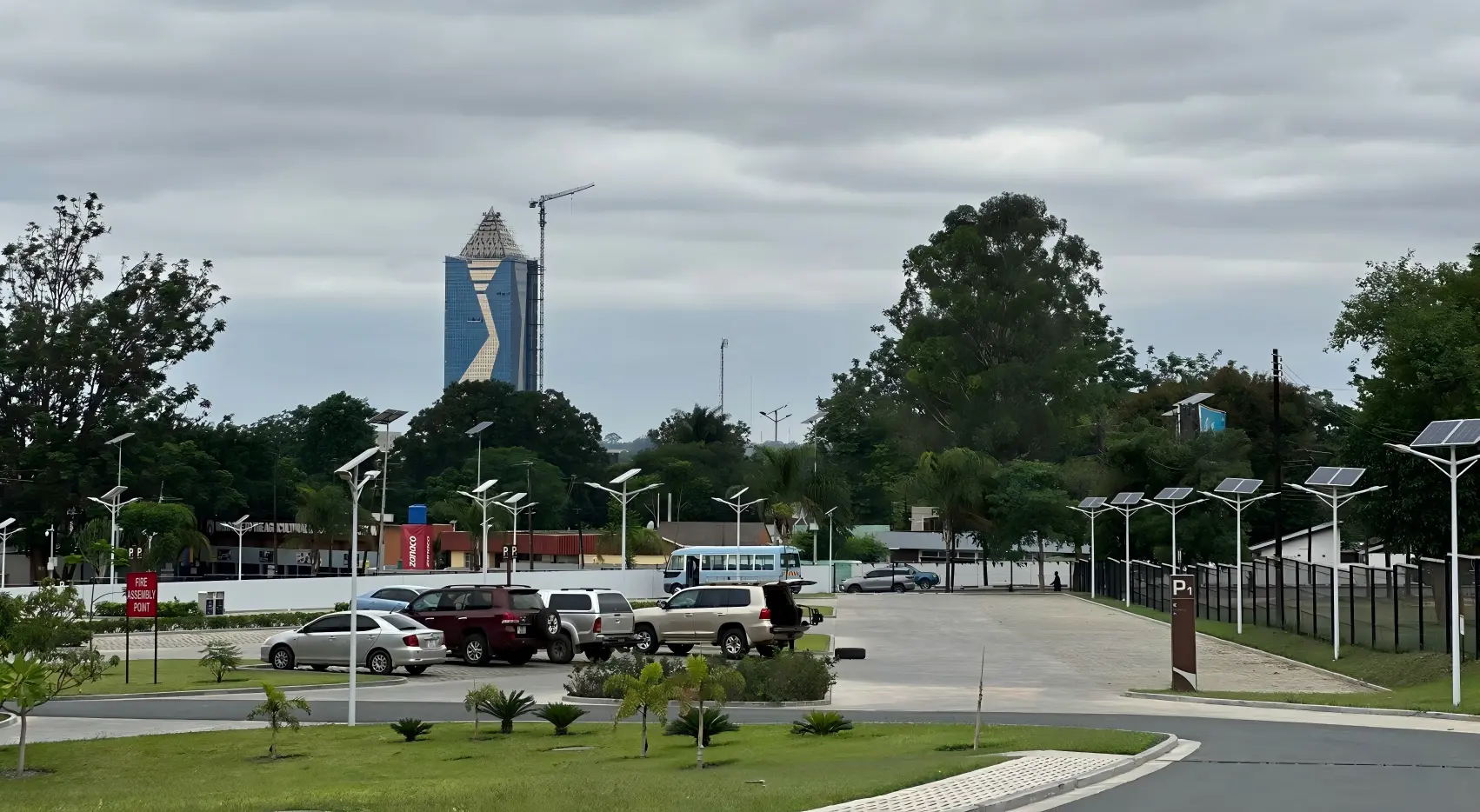
Solar street lights with poles can be placed around rural facilities, construction compounds, mining camps, logistics yards, temporary parking areas, resort properties, and new sections of an industrial site without extending the electrical network to every pole. This flexibility can shorten the deployment schedule, but only when each location has adequate solar access and a structurally suitable foundation.
Improve Safety Through Better Placement, Not Just Higher Brightness
Independent solar poles can be positioned according to the actual parking layout rather than the nearest electrical cable. This allows the designer to focus on entrances, pedestrian paths, payment areas, accessible spaces, loading zones, vehicle turning points, and camera fields of view. The result can be better car parking lightingwith fewer blind spots.
2. How Solar Parking Lot Lights Work as a Complete System?
Solar Module: Generates the Daily Energy Budget
The photovoltaic module converts sunlight into direct-current electricity. Its useful daily output depends on the local solar resource, module orientation, temperature, dust, shading, controller efficiency, wiring losses, and seasonal conditions. Peak sun hours represent the equivalent number of hours per day when solar irradiance averages 1,000 W/m². [3]
A parking lot system should not be sized from annual-average sunshine alone. The designer should review the lowest-solar design month and check whether nearby buildings, trees, signs, or future landscaping will shade the panel during important charging hours.
Battery: Stores Energy for Night Operation and Poor Weather
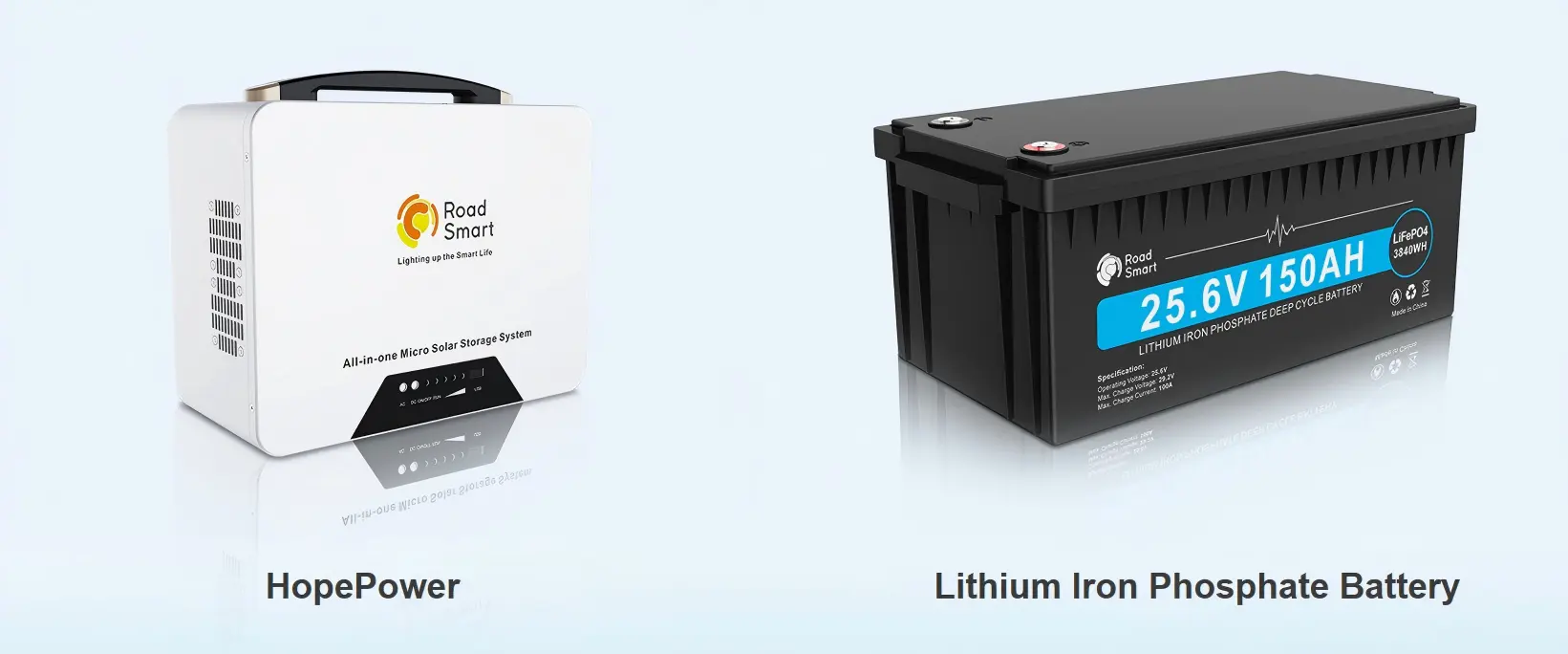
The battery must supply the LED load from sunset to sunrise and preserve enough reserve for low-solar days. LiFePO4 batteries are widely used in commercial solar lighting because they can provide high cycle life and stable operation when correctly managed. Battery quality, however, cannot be confirmed by chemistry name alone. Buyers should verify the cell specification, real pack capacity, protection system, allowable depth of discharge, operating temperature range, and warranty conditions.
LED Parking Lot Light Fixture: Converts Stored Energy into Useful Light
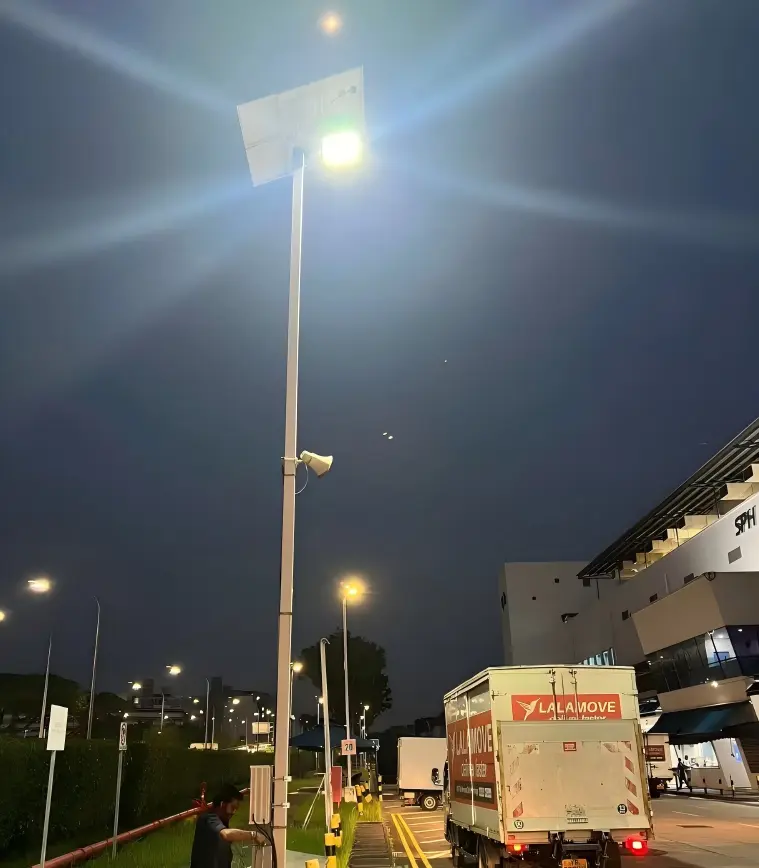
The LED fixture determines how efficiently electrical energy becomes usable illumination on the parking surface. High lumen output alone is not sufficient. The luminaire must distribute light toward driving lanes, spaces, pedestrian paths, and security areas while controlling glare and spill light. DOE guidance emphasizes that efficacy counts lumens in every direction, even when some of those lumens are not useful for the task. [2]
When comparing LED parking lot lamps, request total luminaire lumens, system wattage, luminaire efficacy, IES photometric files, beam distribution, color temperature, surge protection, thermal design, and ingress-protection test information.
Controller: Protects the Battery and Executes the Lighting Program
The controller manages charging, discharge protection, dusk-to-dawn switching, time-based dimming, motion response, and low-energy operating modes. A good controller does not simply turn the lamp on. It actively protects the battery from overcharge and deep discharge while using the available energy according to the project’s priority settings.
Pole, Brackets, and Foundation: Keep the System Safe
The pole supports the luminaire, battery enclosure, solar module, and brackets. Because the solar module adds wind area, the structure cannot be treated like a standard pole carrying only a small lamp. Final selection requires local wind data, pole calculations, bracket loads, foundation design, corrosion protection, and soil conditions.
3. Define Lighting Performance Before Comparing Wattage
Lumens, Lux, and Foot-Candles Measure Different Things
Lumens describe the total visible light emitted by a luminaire. Lux describes the light arriving on one square meter of surface. Foot-candles are commonly used in the United States, where 1 foot-candle is approximately 10.76 lux. A luminaire can produce many lumens but still deliver poor parking-lot performance if the optics concentrate light directly below the pole or send useful light outside the target area.
Average Illuminance Is Not Enough
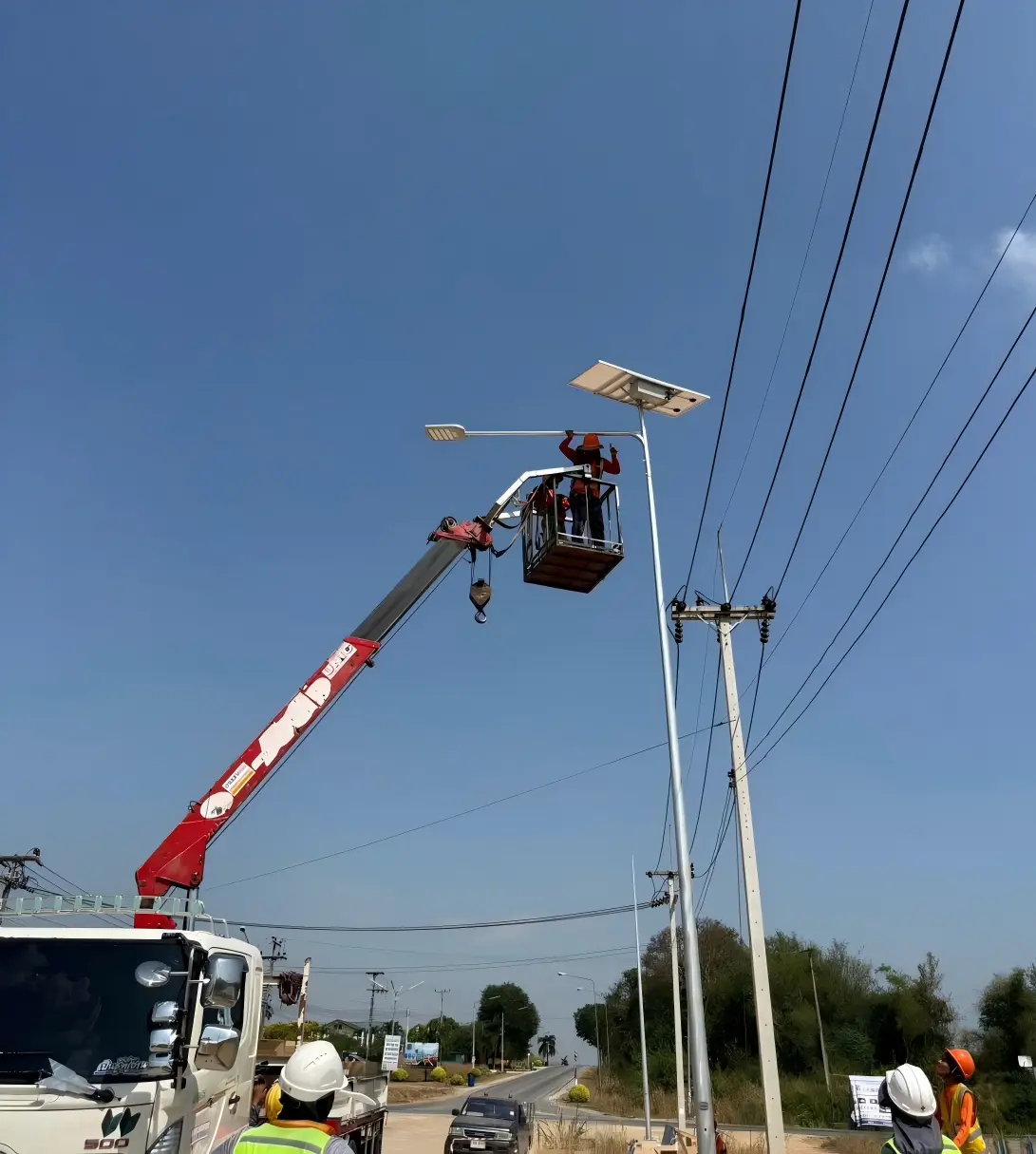
A parking lot can have an acceptable average illuminance while containing dark zones between poles. The lighting brief should therefore include at least:
· Average horizontal illuminanceacross the calculation grid.
· Minimum horizontal illuminanceat the darkest calculated point.
· Uniformity ratio, showing the relationship between average, maximum, and minimum values.
· Vertical illuminancewhere face recognition, vehicle identification, or camera performance matters.
· Glare and light-trespass limitsnear roads, residential windows, and property boundaries.
The current IES reference for roadway and parking-facility lighting is ANSI/IES RP-8-25. It covers parking lots as well as roadway-related facilities and environmental issues such as light trespass and sky glow. [1]The final design should also follow local codes, tender requirements, and the owner’s security brief.
Use the Parking Lot Function to Set the Design Priority
Parking area | Primary visual task | Design emphasis |
|---|---|---|
Small residential lot | Recognize spaces, curbs, and pedestrians | Moderate mounting height, low glare, limited spill toward homes |
Retail or hotel lot | Support customers, vehicles, entrances, and security | Uniformity, pedestrian routes, entrances, attractive appearance |
Factory employee parking | Safe arrival and departure over a wide area | Energy efficiency, uniform coverage, simple maintenance |
Truck or logistics yard | Large vehicles, turning movements, loading interfaces | Higher poles, reduced shadowing, stronger vertical visibility |
Hospital or school lot | Pedestrian priority and clear wayfinding | Crosswalks, accessible spaces, entrances, vertical illumination |
High-security facility | Recognition and camera support | Higher minimum illuminance, reduced contrast, controlled glare |
Why Photometric Simulation Matters?
A photometric simulation uses the actual IES file for the proposed luminaire and places it on the real parking-lot plan. The model can show average, minimum, and maximum illuminance; uniformity; pole locations; and light spill. It is far more reliable than choosing a fixture from wattage alone.
BUYER CHECK:Ask the supplier to provide the simulation file or report with the exact luminaire model, mounting height, tilt, pole coordinates, maintenance factor, and calculation grid. A generic image without these inputs is not sufficient evidence.
4. Select Pole Height, Optics, and Spacing Together
What Happens When the Pole Is Too Low?
· The pool of light becomes smaller, increasing the number of poles required.
· Bright zones can form directly under the luminaire while the spaces between poles remain dark.
· Vehicles, trees, and site furniture can block more of the light.
· Drivers may experience stronger glare because the bright source is closer to eye level.
What Happens When the Pole Is Too High?
· More lumens may be required to reach the target ground illuminance.
· The larger LED load increases battery and solar-panel requirements.
· Pole, bracket, foundation, and lifting costs increase.
· Wind-load and structural requirements become more demanding.
Optical Distribution Determines Where the Lumens Go
Wide, controlled distributions can move light between poles and improve uniformity. Narrow or poorly matched optics may create high readings directly below the pole but leave dark gaps. DOE parking-lot guidance identifies luminaire distribution and placement as important design components, along with the lot geometry and required light levels. [2]
Perimeter poles often need optics that direct light inward. Central poles may use multi-directional distributions. Poles near homes or roads may require shields, lower tilt, or a different lens to limit spill and glare.
Practical Mounting-Height Starting Points
Preliminary range | Typical use | What still must be checked |
|---|---|---|
5-7 m | Small residential, boutique retail, compact parking areas | Glare, number of poles, nearby windows, vehicle shadows |
6-9 m | Standard commercial parking lots, offices, hotels, schools | Uniformity, entry zones, camera needs, solar-panel wind area |
8-12 m | Industrial sites, logistics centers, large open lots | High-output optics, foundation, wind load, maintenance access |
IMPORTANT:These are planning ranges, not universal design rules. A supplier should not promise a fixed pole spacing without the exact photometric file, mounting geometry, site plan, and target criteria.
5. Calculate Battery Capacity and Rainy-Day Autonomy
Step 1: Calculate the Daily LED Energy
Use the actual nighttime program rather than multiplying rated wattage by twelve hours. The general formula is:
FORMULA:Daily LED energy (Wh) = Σ [fixture power × dimming fraction × hours]
Worked Example: 80 W Fixture with Time-Based Dimming
Operating period | Power level | Energy |
|---|---|---|
First 4 hours | 80 W × 100% | 320 Wh |
Next 6 hours | 80 W × 50% | 240 Wh |
Final 2 hours | 80 W × 30% | 48 Wh |
Total LED energy | - | 608 Wh/night |
Assume the combined controller, wiring, battery, and conversion efficiency is 85%. The energy that must be supplied by the storage system is approximately:
CALCULATION:608 Wh ÷ 0.85 = 715 Wh per night
Step 2: Add the Required Autonomy
If the project requires three nights of operation with no meaningful solar charging:
CALCULATION:715 Wh/day × 3 days = 2,145 Wh usable battery energy
If the LiFePO4 battery is designed to use no more than 80% of its nominal energy:
CALCULATION:2,145 Wh ÷ 0.80 = 2,681 Wh nominal battery energy
For a 25.6 V battery pack:
CALCULATION:2,681 Wh ÷ 25.6 V = approximately 105 Ah
A preliminary design may therefore start around 25.6 V, 105-120 Ah, with the upper range providing additional allowance for temperature, aging, tolerance, and control-system reserve. This does not mean every 80 W solar parking lot light requires the same battery. A different dimming program, climate, fixture efficiency, or autonomy target will change the result.
Nominal Capacity Is Not the Same as Usable Capacity
A battery marked 100 Ah does not mean the system should use all 100 Ah every night. Usable energy depends on the permitted depth of discharge, low-voltage cutoff, temperature, battery-management settings, cell balance, and aging. A responsible proposal should distinguish nominal capacity from usable energy.
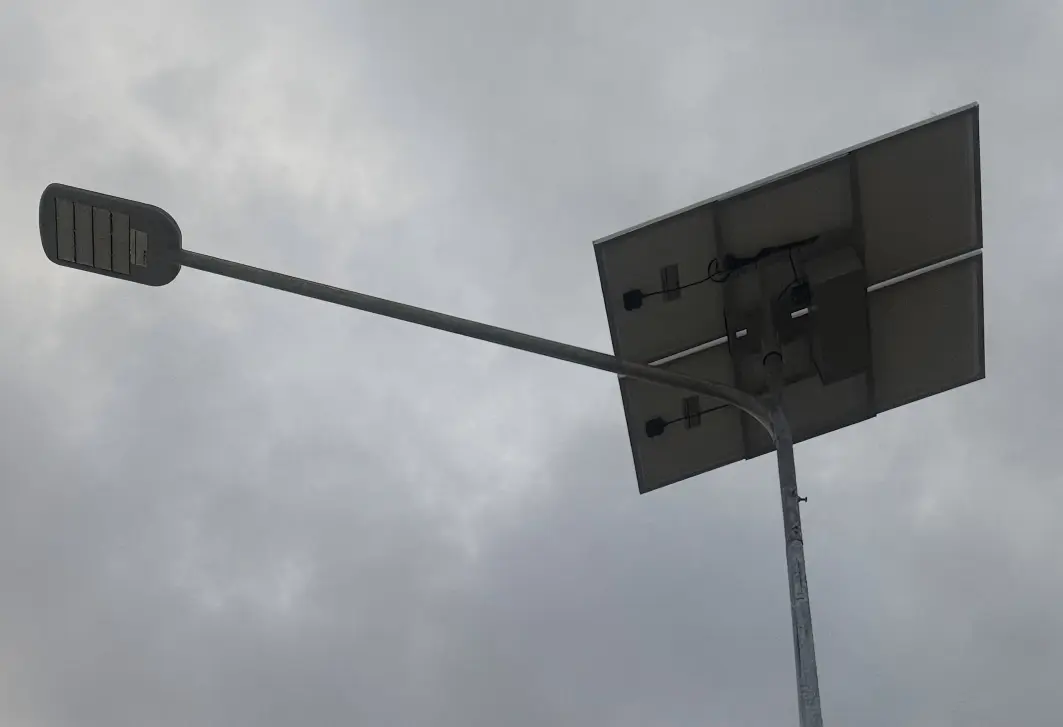
Should Every Project Be Designed for Three to Five Full Days?
Not necessarily. Full-power autonomy for five days can make the battery and panel very large. A more economical project may use staged operation: full output during busy hours, lower output after midnight, motion-boost when activity is detected, and a protected emergency level during extended poor weather. The correct strategy depends on safety requirements and the owner’s risk tolerance.
6. Size the Solar Panel for the Worst Solar Month
Use Peak Sun Hours, Not Daylight Hours
A location may have twelve hours between sunrise and sunset but far fewer equivalent full-power solar hours. NREL defines peak sun hours as the equivalent number of hours per day at an average irradiance of 1,000 W/m². [3] The design should use credible local solar-resource data and the lowest relevant month, not a general statement such as “six hours of sunshine.”
Worked Example Using the 80 W Lighting Schedule
The battery system must receive approximately 715 Wh per day. Assume the worst design month provides 4.5 peak sun hours and the combined PV derating factor is 75% after considering temperature, dust, module tolerance, controller, wiring, and other losses:
CALCULATION:PV power = 715 Wh ÷ (4.5 h × 0.75) = approximately 212 W
Adding 15-25% recovery margin for cloudy periods, aging, and soiling gives a preliminary module size of approximately 240-270 W . The exact value should be checked against local solar data and the required recovery time after the battery has been partially discharged.
Check Shading Before Confirming the Pole Location
Shading from a building, tree, billboard, or adjacent pole can reduce daily energy even when the site appears sunny. The project team should review the sun path, likely future tree growth, and panel orientation. A light installed in a shaded corner may need a remote solar module, a different pole location, or a grid-connected alternative.
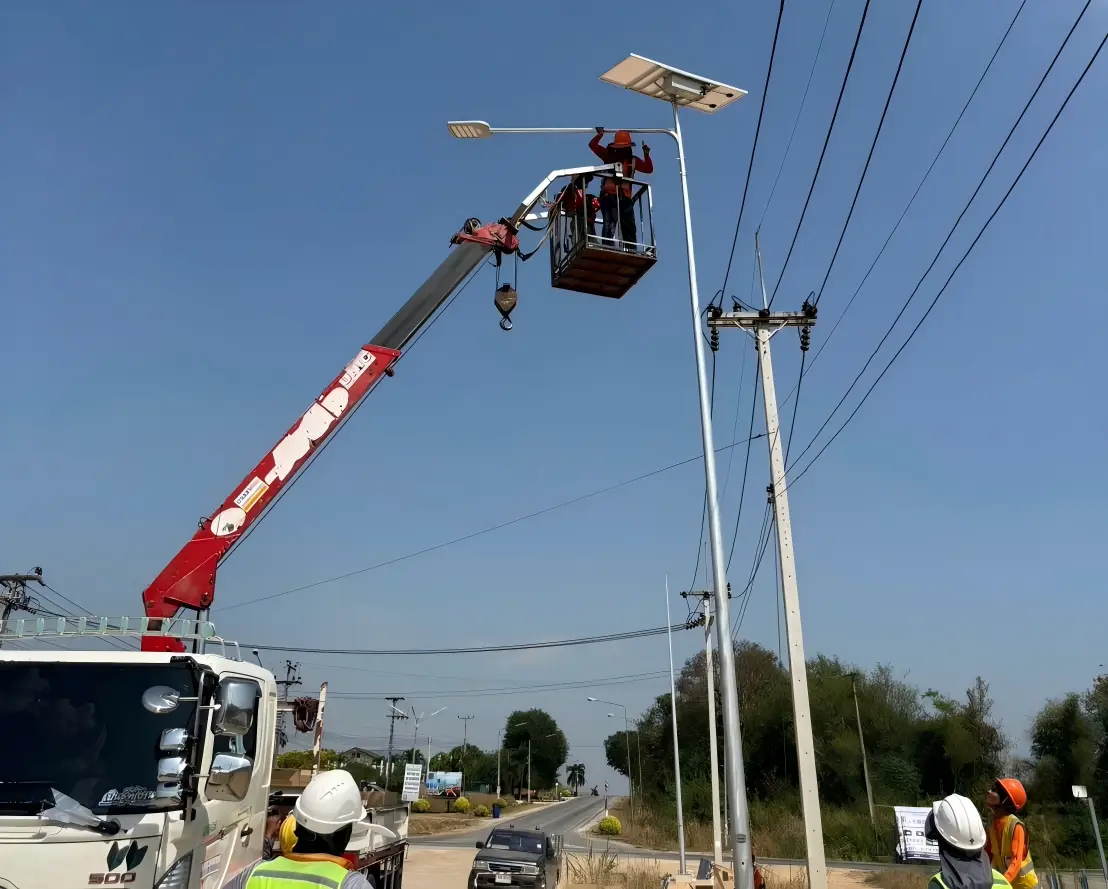
Why the Same Product Configuration Cannot Fit Every Country?
A lamp sold with one fixed solar panel and one fixed battery may work well in a high-solar region but fail in a rainy tropical season, a high-latitude winter, or a location with heavy dust. Commercial projects should be configured from the project location, lighting schedule, and required autonomy rather than from a universal catalog package.
7. MPPT vs. PWM: Which Controller Fits the Project?
PWM Controllers
PWM controllers are relatively simple and economical. They can be suitable for small systems where the module and battery voltage are closely matched, the climate is favorable, and the lighting load has adequate margin. Their lower cost can be attractive for basic parking lot lighting fixtures, but the system designer must still provide battery protection and reliable dimming control.
MPPT Controllers
MPPT controllers continuously adjust the operating point of the photovoltaic module to obtain more available power under changing solar and temperature conditions. They are often preferred for higher-power commercial parking lot lights, larger module arrays, variable weather, winter operation, and projects requiring better recovery after low-solar periods.
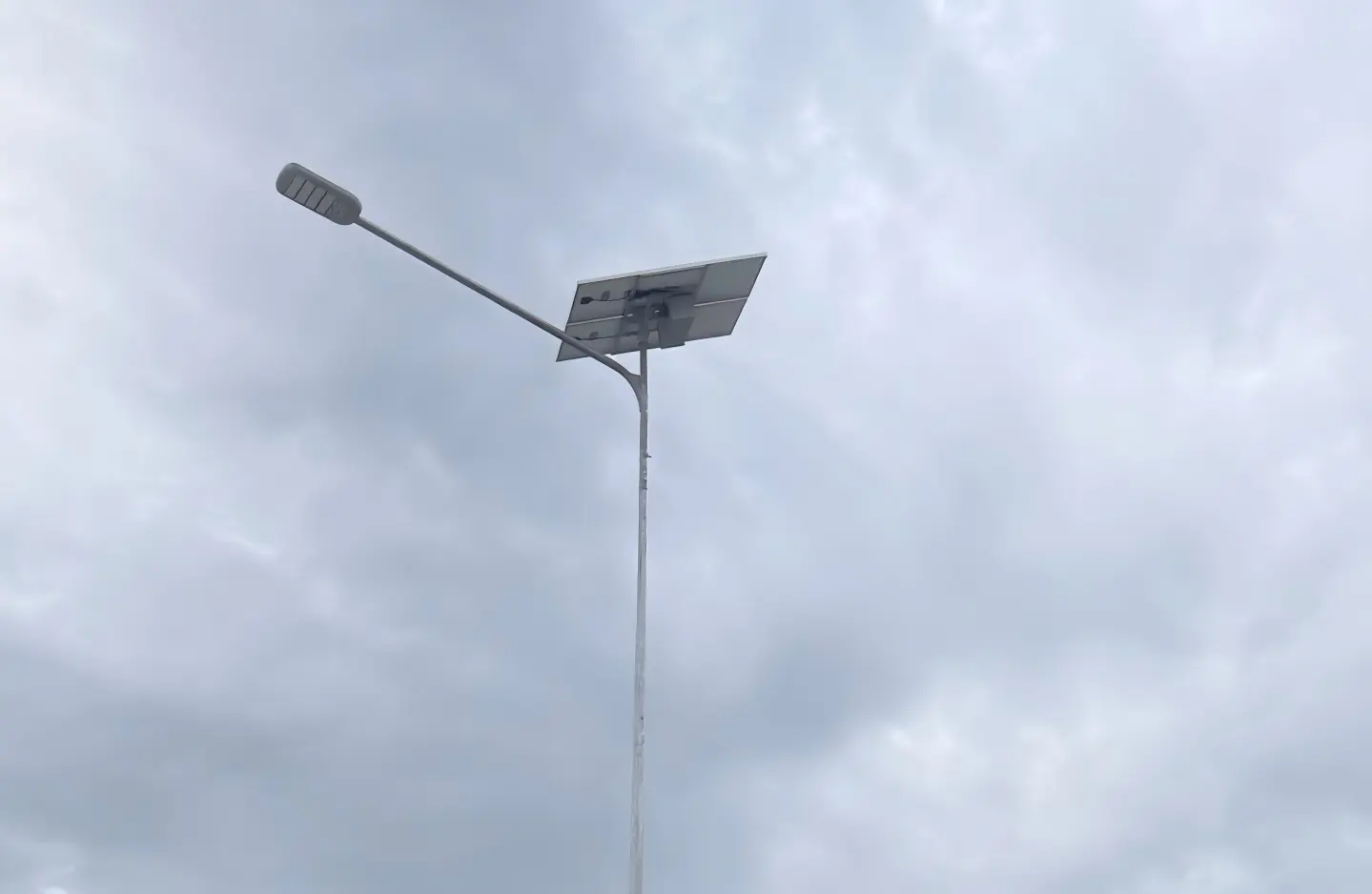
Selection Guide
Project condition | PWM may be sufficient | MPPT is usually preferred |
|---|---|---|
System size | Small, low-load system | Medium or high-power system |
Solar conditions | Stable and strong sunlight | Variable, weak, or seasonal sunlight |
Module/battery voltage | Closely matched | Higher PV operating voltage or wider operating range |
Autonomy requirement | Low or moderate | Higher reliability and faster recovery required |
Project type | Basic residential or low-cost application | Commercial, industrial, EPC, or public project |
REALITY CHECK:If the daily load is 715 Wh but the module can produce only 350 Wh in the design month, changing from PWM to MPPT will not solve the energy deficit. The full system must be resized.
8. Choose the Right Solar Street Light Configuration
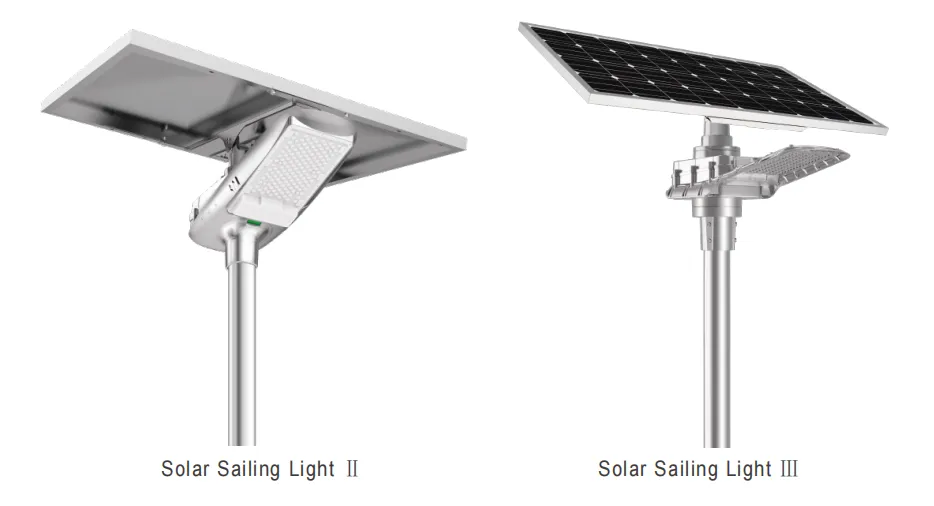
Integrated All-in-One Solar Street Lights
An integrated unit places the solar module, battery, controller, and LED fixture in a compact assembly. It is easy to transport and install, making it suitable for smaller parking areas, community spaces, and applications with moderate lighting and autonomy requirements.
The main limitation is physical space. Panel area and battery volume are constrained by the housing, so buyers should check actual energy capacity instead of assuming that a large-looking fixture can support a high-power lamp all night.
All-in-Two Solar Street Lights
An all-in-two design separates the solar module while integrating the battery, controller, and luminaire. The independent panel can be larger and oriented more effectively, while installation remains simpler than a fully split system. This format is often a strong choice for hotels, offices, schools, retail sites, factory entrances, and standard commercial parking lots.
Split Solar Street Lights
A split system allows the module, battery, controller, and luminaire to be selected and positioned separately. It is well suited to high mounting heights, larger loads, long autonomy, challenging climates, and projects where the panel needs a different orientation from the light. The trade-off is more complex wiring, installation, and maintenance access.
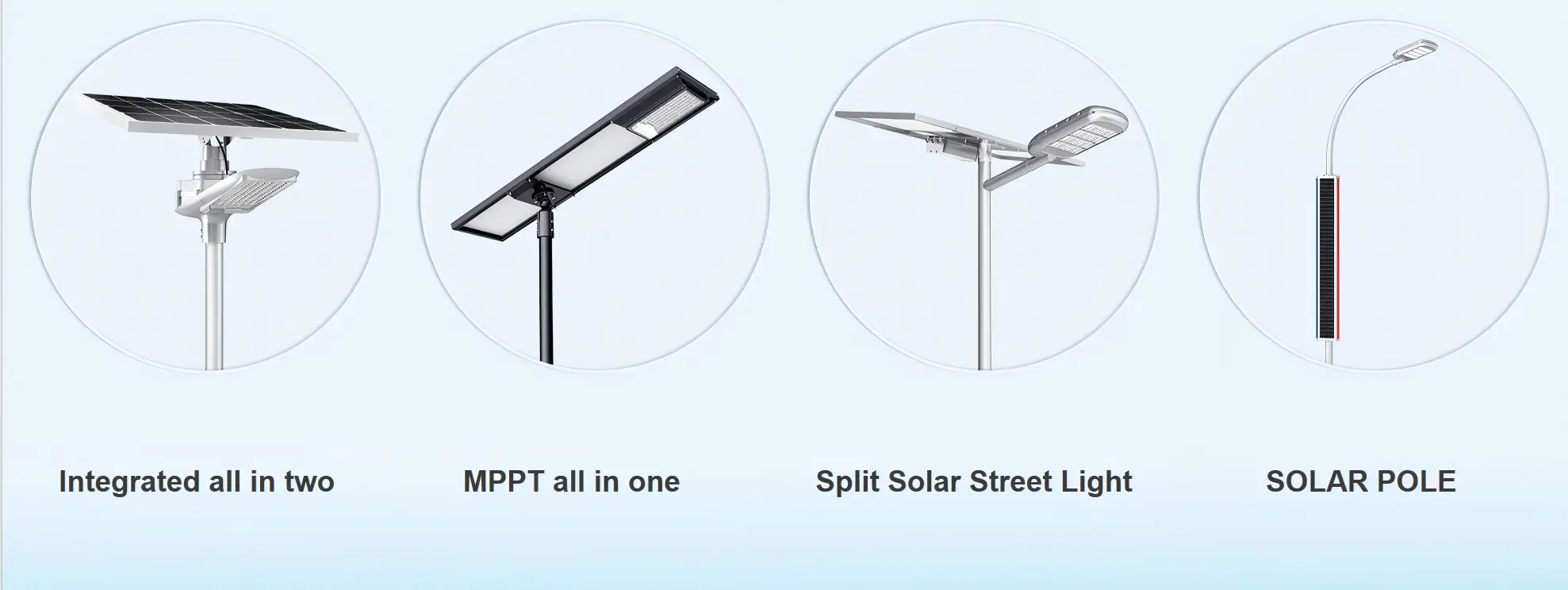
System type | Best fit | Main advantage | Main design caution |
|---|---|---|---|
Integrated | Small to medium areas with favorable solar conditions | Fast installation and compact appearance | Limited panel and battery space |
All-in-two | Most commercial parking applications | Good balance of performance and installation simplicity | Battery temperature and service access |
Split | Large industrial, logistics, airport, and public projects | Maximum configuration flexibility | More site wiring and installation complexity |
9. Recommended Starting Configurations by Parking Lot Type
Application | Preliminary LED range | Typical pole range | Suggested system direction | Design priority |
|---|---|---|---|---|
Small residential or boutique retail lot | 30-60 W | 5-7 m | Integrated or all-in-two | Low glare, simple installation, nearby residences |
Hotel, office, school, or standard retail lot | 50-100 W | 6-9 m | All-in-two or split | Uniformity, entrances, pedestrian routes, appearance |
Factory employee parking | 60-120 W | 7-10 m | All-in-two or split | Wide coverage, maintenance access, operating schedule |
Logistics or truck parking area | 100-180 W | 8-12 m | Split system | Vehicle shadowing, vertical visibility, high wind exposure |
High-security or public infrastructure project | Project-specific | Project-specific | Engineered split or smart system | Current standards, camera performance, controls, documentation |
These ranges describe common starting points, not product guarantees. A high-efficacy 60 W fixture with suitable optics may outperform a poorly designed 100 W fixture. The supplier should use actual photometric data and energy calculations to justify the final recommendation.
10. Match IP Rating and Materials to the EnvironmentWhat the IP Code Means?
IEC explains that the first IP numeral indicates protection against solid objects and dust, while the second numeral indicates protection against liquids. IEC 60529 also defines the test methods used to verify enclosure performance. [4]
Environment-Based Selection
Environment | Recommended focus | Questions for the supplier |
|---|---|---|
Normal urban parking lot | IP65/IP66 enclosure, UV-resistant materials, sealed connectors | Are the luminaire and controller enclosure test reports available? |
Tropical rain and high humidity | IP66, drainage, condensation control, conformal coating where appropriate | How is moisture prevented from collecting inside the battery/controller compartment? |
Coastal or salt-spray area | Hot-dip galvanizing, durable coating, corrosion-resistant fasteners | What salt-spray or corrosion evidence is available for the pole and brackets? |
Desert or dusty industrial site | Dust sealing, thermal management, cleaning access | How are LED and battery temperatures controlled under high ambient temperature? |
Cold climate | Low-temperature battery limits, snow load, winter solar sizing | What charging and discharge behavior is permitted below 0°C? |
A product labeled IP66 may still fail if water enters through a cable gland, if condensation accumulates in a sealed compartment, or if corrosion damages the mounting structure. Evaluate the complete installed system rather than one housing label.
11. Installation and Commissioning Process
Step 1: Collect the Project Inputs
Before quoting, the supplier should request:
· Parking lot plan, dimensions, and number of spaces.
· Project city or coordinates and local solar-resource data.
· Vehicle lanes, pedestrian routes, entrances, loading areas, and security-camera locations.
· Buildings, trees, signs, and other possible shading obstacles.
· Required operating hours, dimming strategy, and autonomy target.
· Preferred pole height, local wind speed, soil or foundation information, and corrosion environment.
· Applicable lighting standard, tender specification, or owner performance target.
· Optional functions such as motion sensing, cameras, IoT monitoring, or remote fault reporting.
Step 2: Complete the Lighting and Energy Design
The supplier should prepare a photometric layout, calculate daily energy consumption, size the battery and module, select the controller, and identify the pole and foundation requirements. The lighting and energy calculations should use the same fixture power and dimming schedule.
Step 3: Construct the Foundation
The foundation must be designed for pole height, panel wind area, bracket geometry, soil capacity, drainage, local wind, and frost or groundwater conditions where relevant. Anchor bolts must match the base flange and remain correctly positioned during concrete placement.
Step 4: Install the Pole and Components
The team should check pole verticality, bolt torque, module orientation, bracket security, cable routing, connector sealing, battery polarity, grounding or bonding requirements, and controller parameters. Heavy poles and large modules may require lifting equipment and a controlled work zone.
Step 5: Commission the System
Commissioning should verify more than whether the lamp turns on. Record:
· Daytime charging voltage and current.
· Battery state, low-voltage cutoff, and charge-protection settings.
· Dusk-to-dawn switching and all scheduled dimming levels.
· Motion-sensor response and timeout, when used.
· Nighttime fixture power and operating duration.
· Measured ground illuminance at the agreed grid points.
· Pole, bracket, fastener, cable, and seal condition.
· Asset identification, controller settings, and warranty records.
HANDOVER DOCUMENTS:Request the as-built layout, product datasheets, controller program, foundation drawing, test reports, warranty terms, spare-parts list, and maintenance instructions before final acceptance.
12. Common Buying Mistakes and How to Avoid Them
Mistake 1: Choosing by Wattage Alone
A 120 W label does not reveal actual power, lumens, efficacy, optics, dimming behavior, or usable energy. Compare test data and photometric results, not the largest number on a brochure.
Mistake 2: Accepting “Three Rainy Days” Without a Calculation
Ask what load profile, battery usable energy, system efficiency, depth of discharge, and solar contribution were assumed. A product cannot have a meaningful autonomy claim without a defined nightly load.
Mistake 3: Using Annual-Average Solar Data
The system may work in the sunny season and fail during the lowest-solar month. Require the design month and source of the solar-resource input.
Mistake 4: Treating Battery Amp-Hours as a Complete Specification
Amp-hours cannot be compared without voltage. A 12.8 V 100 Ah battery stores approximately half the nominal energy of a 25.6 V 100 Ah battery. Compare watt-hours, usable depth of discharge, operating temperature, and cell quality.
Mistake 5: Ignoring Optical Distribution
Two fixtures with the same lumens can produce completely different parking-lot results. Require the exact IES file and simulation for the proposed model.
Mistake 6: Underestimating Pole and Foundation Loads
The solar panel increases wind area. Verify pole calculations, bracket details, anchor bolts, and foundation recommendations for the project location.
Mistake 7: Comparing Only Purchase Price
A low initial price may hide a smaller battery, lower-grade cells, thinner pole, weak coating, inefficient LED optics, limited surge protection, or poor serviceability. Compare the complete system and expected maintenance cycle.
13. How to Evaluate a Solar Parking Lot Light Manufacturer?
Technical Evidence to Request Before Ordering
· IES photometric file and project-specific lighting simulation.
· Actual fixture wattage, lumens, efficacy, color temperature, and surge-protection data.
· Solar-module datasheet and proposed module orientation.
· Battery cell and pack specification, nominal and usable energy, BMS protections, and temperature limits.
· Controller type, charging algorithm, dimming schedule, and communication functions.
· Daily-energy, autonomy, and PV-sizing calculation.
· Pole drawing, material, coating, bracket design, and recommended foundation.
· Ingress-protection, electrical-safety, environmental, and corrosion test evidence relevant to the project.
· Warranty scope, replacement parts, service access, and troubleshooting process.
RoadSmart as a Project-Solution Example
RoadSmart focuses on solar smart street lights and related photovoltaic applications. According to its 2026 corporate profile, the company has approximately 15 years of solar-lighting experience, products used in more than 120 countries, more than 250 patents, and an R&D team of over 100 people. Its portfolio includes MPPT all-in-one, all-in-two, split solar street lights, and solar pole solutions. [5]

For parking projects, the practical value of this capability is the ability to match structure, parameters, appearance, controls, and energy configuration to local solar conditions and project requirements rather than forcing every buyer into one standard package.
Questions That Reveal Supplier Quality
Question | Strong answer should include |
|---|---|
How did you choose the battery? | Nightly load, autonomy, efficiency, depth of discharge, temperature, aging reserve |
How did you choose the solar panel? | Worst-month peak sun hours, derating, shading, recovery margin |
How many poles do we need? | Site plan, exact IES file, mounting height, calculation grid, target criteria |
Will it work during the rainy season? | Local solar data, control strategy, usable battery energy, reduced-output mode |
Is the pole safe? | Wind input, structural drawing, panel area, foundation recommendation |
What happens when the battery needs replacement? | Service access, spare-parts availability, replacement procedure, warranty terms |
14. Three Practical Project Scenarios
Scenario A: Small Retail Parking Lot Near Homes
Project profile: approximately 1,200 m², around 40 spaces, moderate evening traffic, stores close at 10:00 p.m., and residential windows near one boundary.
Design response: use moderate mounting heights and controlled optics to limit glare and spill. Maintain stronger output during business hours, reduce power after closing, and keep the entrance and pedestrian route clearly visible. An all-in-two system may provide enough panel flexibility without the complexity of a large split system.
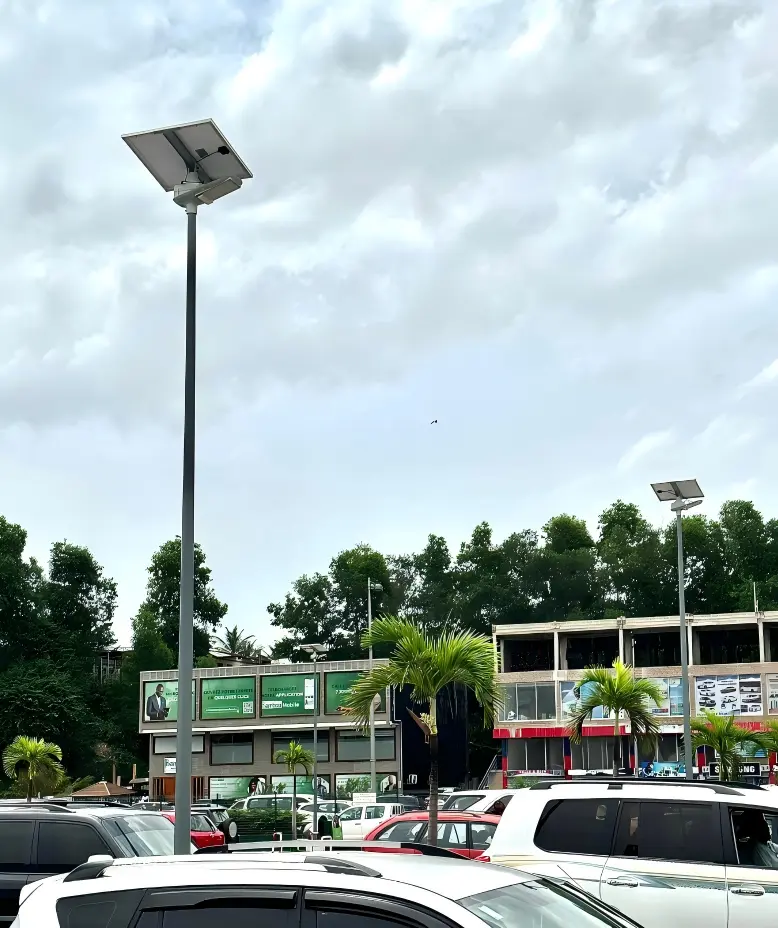
Main risk: selecting a high-wattage fixture with a broad uncontrolled beam can create complaints from nearby residents while still leaving dark areas between poles.
Scenario B: Logistics Center with Trucks and 24-Hour Operation
Project profile: approximately 8,000 m², employee vehicles and trucks, open exposure to wind, continuous operation, and security-camera coverage.
Design response: use higher mounting positions and wide, controlled optics to reduce shadows from large vehicles. Strengthen vertical illumination at pedestrian crossings and loading interfaces. A split system can support a larger panel, higher-capacity battery, and easier component replacement. Structural design must account for the exposed site and module wind area.
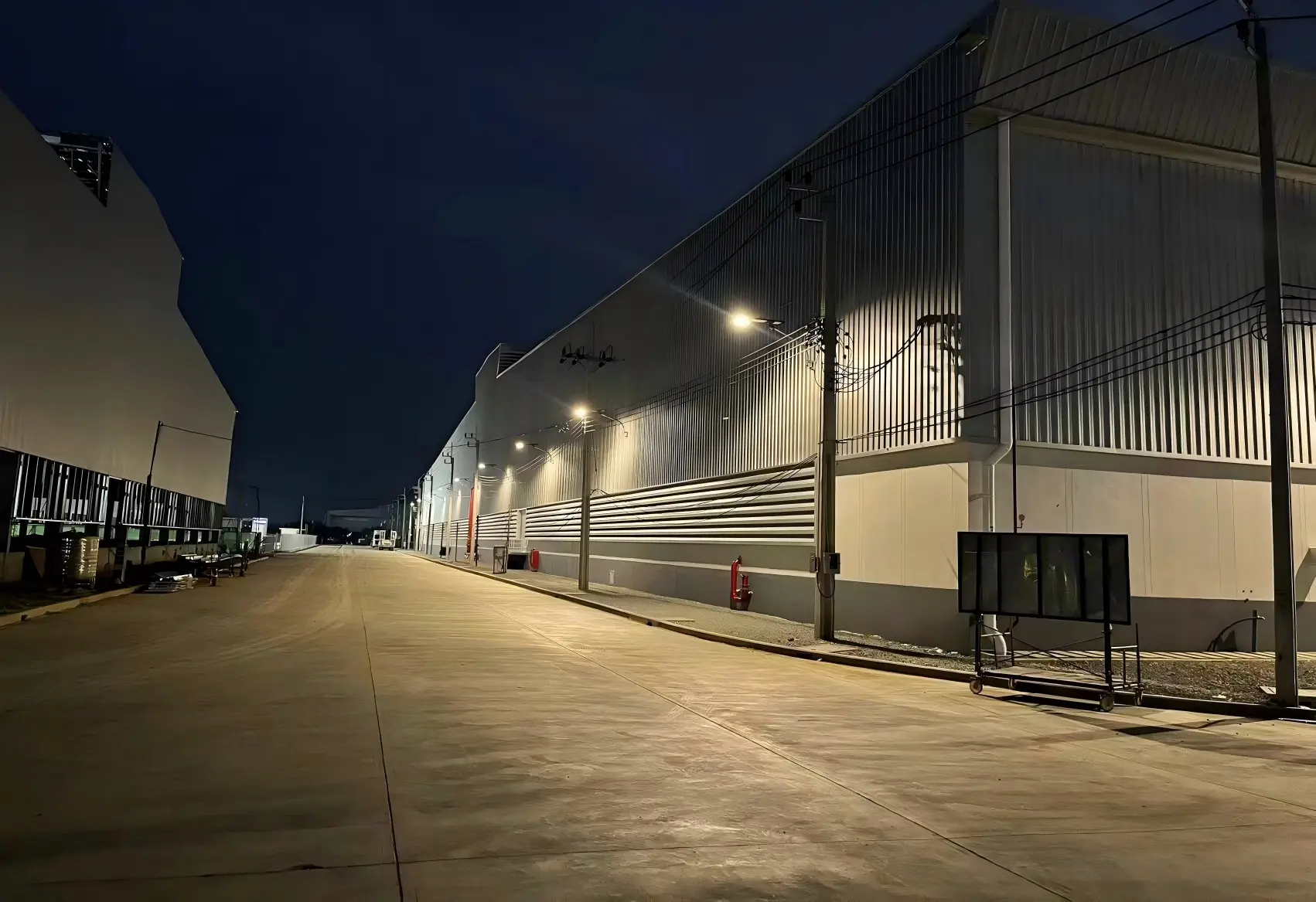
Main risk: designing only for ground lux can overlook driver eye-level visibility, camera performance, and shadowing behind trucks.
Scenario C: Hotel Parking Lot in a Tropical Rainy Climate
Project profile: high humidity, long rainy season, strong appearance requirements, and all-night lighting for guests.
Design response: size the module and battery from the rainy-season solar resource, use MPPT control, provide staged dimming during low-activity hours, and strengthen enclosure sealing, drainage, corrosion protection, and service access. Prioritize entrance, lobby approach, pedestrian routes, and drop-off areas.
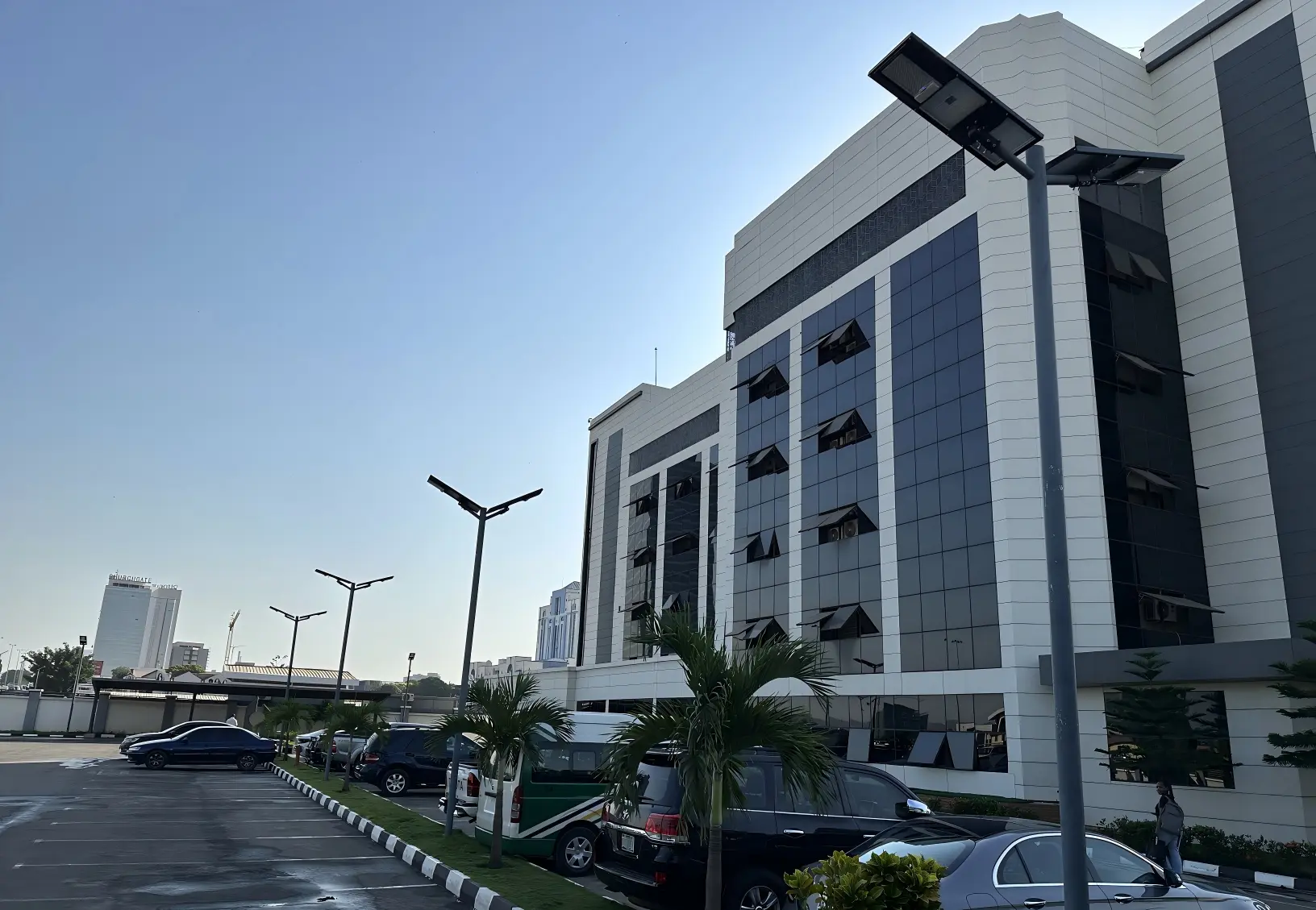
Main risk: using a standard sunny-climate product configuration can cause repeated low-battery operation during the rainy season.
15. Total Cost of Ownership: Solar vs. Grid Lighting
Cost Categories for Grid-Connected Parking Lot Lights
· LED fixtures, poles, brackets, and foundations.
· Trenching, conduit, cable, panels, protective devices, and restoration.
· Utility connection or electrical capacity upgrades.
· Electricity over the analysis period.
· Inspection, controls, repair, and fixture maintenance.
Cost Categories for Solar Parking Lot Lights
· Solar lighting units, poles, brackets, and foundations.
· Installation and commissioning.
· Panel cleaning and periodic inspection.
· Battery replacement during the system life.
· Controller, sensor, or component replacement when required.
When Solar Usually Has the Strongest Business Case?
Solar is often most competitive when trenching is long or disruptive, the parking lot is remote, utility connection is expensive, the site is being expanded, electricity prices are high, or the owner values resilience and renewable-energy visibility. Grid lighting may remain more economical where electrical infrastructure already exists beside every pole and the solar resource is poor or heavily shaded.
A fair comparison should use the same lighting performance, analysis period, maintenance assumptions, battery-replacement plan, and financing basis. Do not compare a properly engineered grid system against an undersized solar product or vice versa.
16. FAQ About Solar Parking Lot Lights
Are solar parking lot lights reliable?
Yes, when the solar resource, nightly load, battery autonomy, optics, pole structure, and controls are correctly matched. Reliability is reduced when the product uses an undersized battery, unrealistic wattage claims, poor thermal management, weak sealing, or a fixed configuration that ignores the project location.
How many solar lights does a parking lot need?
The quantity depends on the lot geometry, mounting height, luminaire distribution, target average and minimum illuminance, uniformity, pedestrian routes, and obstacles. A photometric simulation using the exact LED parking lot light fixturesis the correct way to determine pole quantity and spacing.
What is the best pole height for commercial parking lot lights?
Many projects start between 6 and 10 meters, while compact sites may use lower poles and large logistics areas may use higher poles. The best height is the one that meets lighting performance with acceptable glare, structural cost, energy load, maintenance access, and site constraints.
Do solar powered parking lot lights work on cloudy or rainy days?
Yes. The battery supplies stored energy when solar generation is low. The number of nights depends on usable battery energy, lighting schedule, weather, temperature, and any reduced-output control mode. Ask for the calculation behind the autonomy claim.
What battery is best for solar parking lot lights?
LiFePO4 is widely used, but buyers should compare more than chemistry. Verify actual watt-hours, usable depth of discharge, cycle conditions, cell consistency, temperature range, BMS protections, enclosure design, replacement access, and warranty.
Is MPPT always necessary?
No. PWM can work in small and favorable systems. MPPT is generally more attractive for commercial loads, variable weather, larger modules, wider voltage ranges, and projects where energy recovery matters. Neither controller type can correct a fundamentally undersized system.
How long do solar parking lot lights last?
Different components have different service lives. The pole and solar module can serve for many years when properly specified and maintained; the battery is normally the component most likely to require planned replacement. Actual life depends on climate, depth of discharge, charging control, thermal conditions, corrosion, and maintenance.
What maintenance is required?
Typical maintenance includes cleaning the solar module, trimming vegetation, checking bolts and brackets, inspecting corrosion and seals, reviewing controller alarms, checking battery condition, and confirming that the dimming schedule still matches site needs. Dust, leaves, bird droppings, or snow can reduce charging performance.
Are solar parking lot lights cheaper than grid lighting?
They can be, especially where trenching and utility connection are expensive. The correct comparison is total cost of ownership, including civil work, electricity, battery replacement, maintenance, and system performance over the same period.
Conclusion: How to Select the Best Solar Street Lights with Poles for a Parking Lot?
The best solar street lights with poles are not identified by the highest wattage, the largest battery label, or the lowest unit price. A successful project begins with a clear lighting brief and then matches the LED optics, mounting height, pole layout, nightly energy use, battery reserve, solar resource, controller, environment, and structural design.
For small and favorable sites, an integrated system may provide a fast and economical solution. For hotels, offices, schools, factories, and standard commercial lots, all-in-two systems often provide a strong balance between installation simplicity and energy capacity. For logistics centers, airports, industrial parks, and demanding public projects, a split system usually provides the greatest flexibility.
Before ordering, request the project-specific photometric simulation, energy calculation, battery and module specifications, controller program, pole drawing, environmental test evidence, warranty terms, and maintenance plan. These documents turn a product claim into an engineering proposal that can be reviewed and improved.
RoadSmart provides integrated, all-in-two, MPPT, split solar street light, and solar pole solutions for international projects. For a parking lot proposal, provide the site plan, project location, lighting schedule, target performance, pole requirements, and autonomy expectations so the complete system can be configured around the real application. [5]
References and Calculation Notes
[1] Illuminating Engineering Society
ANSI/IES RP-8-25, Recommended Practice: Lighting Roadway and Parking Facilities. The IES Lighting Library lists RP-8-25 as the current roadway and parking-facility recommended practice.
https://ies.org/standards/lighting-library/
[2] U.S. Department of Energy, Federal Energy Management Program
Guide to FEMP-Designated Parking Lot Lighting. Used for general design-process, efficacy, distribution, and cost-category discussion. This is an older guide and is not presented as the current lighting standard.
https://www.energy.gov/sites/prod/files/2014/02/f7/parking_lots_guide.pdf
[3] National Renewable Energy Laboratory
Procuring Solar Energy: A Guide for Federal Facility Decision Makers. Defines peak sun hours as equivalent hours per day at an average solar irradiance of 1,000 W/m².
https://docs.nrel.gov/docs/fy10osti/47854.pdf
[4] International Electrotechnical Commission
Ingress Protection (IP) Ratings and IEC 60529 overview. Explains the two-number IP code for protection against solids and liquids.
[5] RoadSmart Co., Ltd.
RoadSmart Corporate Profile 2026, internal English edition V1.0. Company experience, product coverage, R&D, patent, and global-project statements used in the manufacturer section.