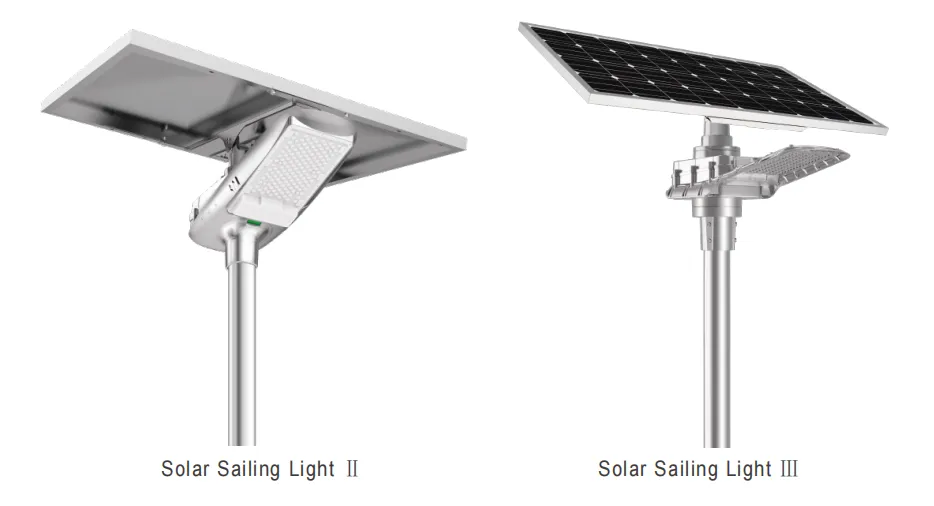
Smart Street Lighting System Guide for Projects
Feb 28, 2026
Read:3222
Source: Yin Zhenkun
Introduction
Cities, campuses, industrial parks, ports, airports, and residential communities are all under pressure to make outdoor lighting more efficient, more responsive, and easier to manage. Traditional street lights can illuminate roads, but they cannot "think." They do not respond intelligently to traffic patterns, maintenance needs, energy priorities, or operating conditions. A modern smart street lighting system is designed to solve those problems.
This guide explains what smart street lighting is, how a smart street lighting system works, what components it includes, and how project owners, contractors, engineers, and distributors can choose the right configuration for roads and city projects. If you are evaluating a smart street light project, this page gives you a practical, structured starting point.
Quick Answer: A smart street lighting system combines LED fixtures, controllers, sensors, communication modules, and a central management platform to support remote monitoring, dimming control, fault alerts, and energy optimization across roads, campuses, industrial parks, and city lighting projects.
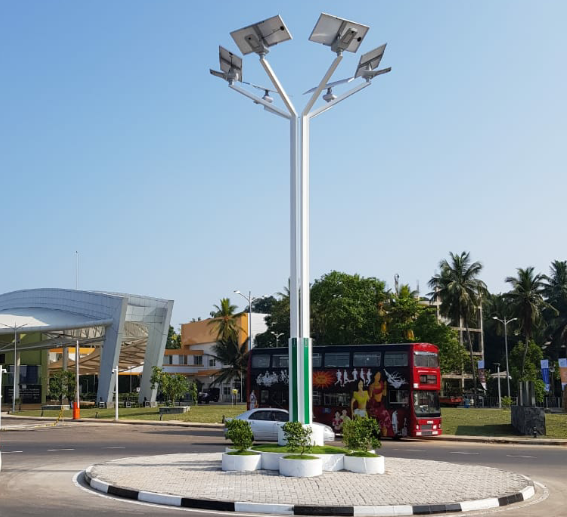
What Is Smart Street Lighting?
Smart street lighting refers to an advanced outdoor lighting approach that combines LED technology with sensors, control devices, and communication systems to improve how street lights operate. Unlike traditional systems that simply switch on at dusk and off at dawn, smart lighting can adjust brightness and respond to real-time conditions such as traffic flow, pedestrian activity, or ambient light levels.
This makes smart street lighting more efficient, more adaptive, and easier to manage in modern road and public-infrastructure environments.
How Is a Smart Street Lighting System Built for Projects?
A smart street lighting system is a connected lighting infrastructure built for centralized control, monitoring, and energy management across multiple roads or zones. In project applications, it is usually organized around four layers: lighting fixtures, control units, communication networks, and a management platform.
This structure allows project owners and operators to manage lighting schedules, dimming logic, fault alerts, and performance data more efficiently across city roads, campuses, industrial parks, ports, airports, and other public lighting networks.
How Does a Smart Lighting System Work?
To understand the operating logic of a smart street lighting system, imagine a normal evening in a city district or industrial park.
At sunset, the local light sensor or astronomical schedule triggers the fixtures in a zone to switch on at a predefined brightness level. During higher-traffic hours, the system may keep lights at a higher output. Later at night, when traffic and pedestrian activity decline, the platform can automatically reduce brightness to save energy.
If a motion sensor detects a pedestrian or vehicle, nearby lights can brighten temporarily to improve visibility. At the same time, the controller records energy use, node status, and communication quality. If one driver overheats or one luminaire loses power, the management platform can flag the fault and alert the maintenance team.
That is the operational value of a smart street lighting system: not only automation, but adaptive and reportable automation.
What Should Buyers Check Before Choosing a Smart Street Lighting System?
Before selecting a smart street lighting system, buyers should confirm the project type, road scenario, pole height, control goals, communication method, and whether the system will be solar-powered, grid-connected, or hybrid.
-
Project scenario
Confirm whether the system will be used for urban roads, campuses, industrial parks, rural roads, ports, parking areas, or mixed-use public spaces. -
Control method
Decide whether the project needs timer-based control, sensor-based dimming, grouped control, or centralized remote management. -
Communication architecture
Check whether the project requires LoRa, Zigbee, NB-IoT, 4G, or another communication solution based on scale, stability, and maintenance conditions. -
Maintenance workflow
Evaluate whether the project team needs remote fault alerts, asset-level diagnostics, and easier maintenance planning. -
Power structure
Confirm whether the lighting system should work with solar street lights, grid-connected fixtures, or a hybrid AC-DC solution.
Why Smart Street Lighting Matters
Street lights are among the most widespread public assets in any city or community. They consume energy every night, require regular maintenance, and directly affect road safety, pedestrian comfort, and security perception. Even small improvements, when multiplied across hundreds or thousands of poles, can create major operational gains.
Lower Energy Consumption
A key reason many municipalities adopt smart city street lighting is the ability to reduce energy use without sacrificing safety. Smart systems combine LED efficiency with scheduled dimming, occupancy-based control, and scene management. Instead of running at full output all night, a smart street lighting system can use lower levels during quiet periods and higher levels only when needed.
For a broader view of demand drivers and regional conditions, see our analysis of solar street lighting market trends across APAC, the United States, Japan, South Korea, Australia and India.
Better Maintenance Efficiency
In conventional systems, failures are often discovered only after public complaints or manual inspection. A smart street light management system changes that by reporting faults automatically. Maintenance teams can see which fixture failed, what the probable cause is, and whether the issue is urgent. This reduces night patrols, truck rolls, and response times.
Improved Public Safety
Lighting quality strongly affects visibility. With intelligent street lighting, operators can apply higher output at intersections, pedestrian crossings, and late-night activity zones while keeping lower-risk segments dimmed to save energy. This flexibility is especially useful in a smart street lighting system project where road use varies by hour and location.
Data-Driven Operations
A modern smart street light management system produces usable data, such as burn hours, dimming profiles, real-time power usage, alarm logs, and communication status. This helps operators improve budgeting, maintenance planning, and long-term energy strategy.
Foundation for Smart City Expansion
A smart city street lighting network can also serve as a platform for other urban technologies such as environmental sensors, traffic counters, CCTV integration, emergency buttons, EV charging coordination, and public Wi-Fi nodes. For many cities, lighting infrastructure is one of the easiest distributed systems to upgrade first.
Core Components of a Smart Street Lighting System
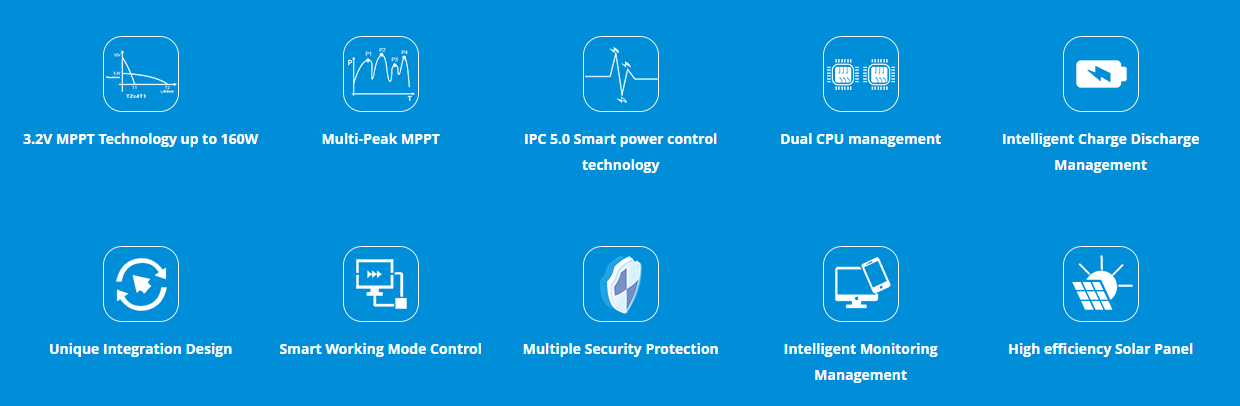
1. Solar Street Light Controller
The controller is the intelligence center of the system, responsible for energy harvesting, battery protection, power allocation, dimming logic, and operating stability. RoadSmart integrates multiple proprietary control technologies to improve reliability, efficiency, and long-term performance.

-
Multi-Peak MPPT Technology
Tracks the maximum power point more accurately under partial shading, dust, or panel mismatch conditions, helping the system harvest more solar energy. -
Intelligent Power Control 5.0
Adjusts output dynamically based on battery condition and actual operating demand to support more stable nighttime lighting. -
ICD Technology
Improves battery safety and charge-discharge management while helping extend battery service life. -
Dual-Core CPU Management
Enhances response speed and system reliability, with backup logic that reduces operational risk. -
Mode Memory Management
Stores operating parameters and restores them automatically after maintenance or interruption. -
OLC Technology
Optimizes load control and power distribution under different operating conditions. -
Intelligent Temperature Control
Monitors thermal conditions and adjusts performance to maintain stability in demanding outdoor environments.
2. Light Source and Optical Performance
The light source determines how efficiently energy is converted into usable illumination. RoadSmart combines high-performance LED chips with advanced optical design to deliver brighter and more uniform roadway lighting.
-
High-Efficiency LED Chips
Deliver stronger brightness and better lighting efficiency at the same wattage input. -
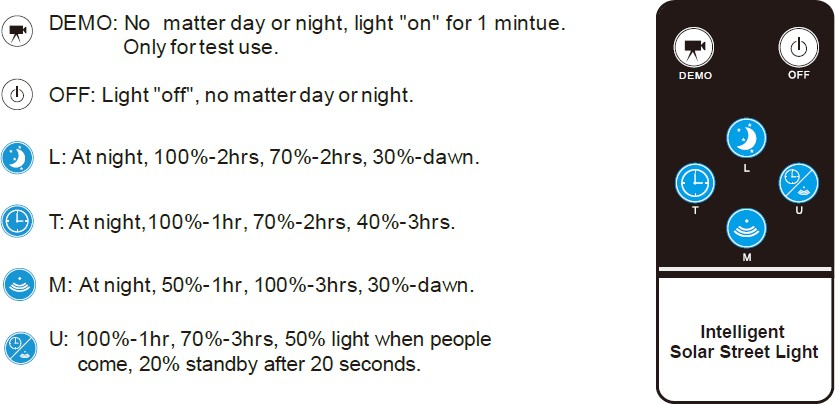
Remote Controller with Six Classic Working Modes
Multiple preset operating modes allow flexible adjustment for different roads, traffic patterns, and project requirements.
-
Patent Bat-Wing Lens
Improves light distribution, enlarges the lighting area, and enhances roadway uniformity while reducing dark spots and glare.
3. Solar Panel and Structural Reliability
The solar panel is the primary energy source in solar-based systems, so both performance and structural reliability are critical. RoadSmart emphasizes strength, safety, and outdoor durability as part of product development.
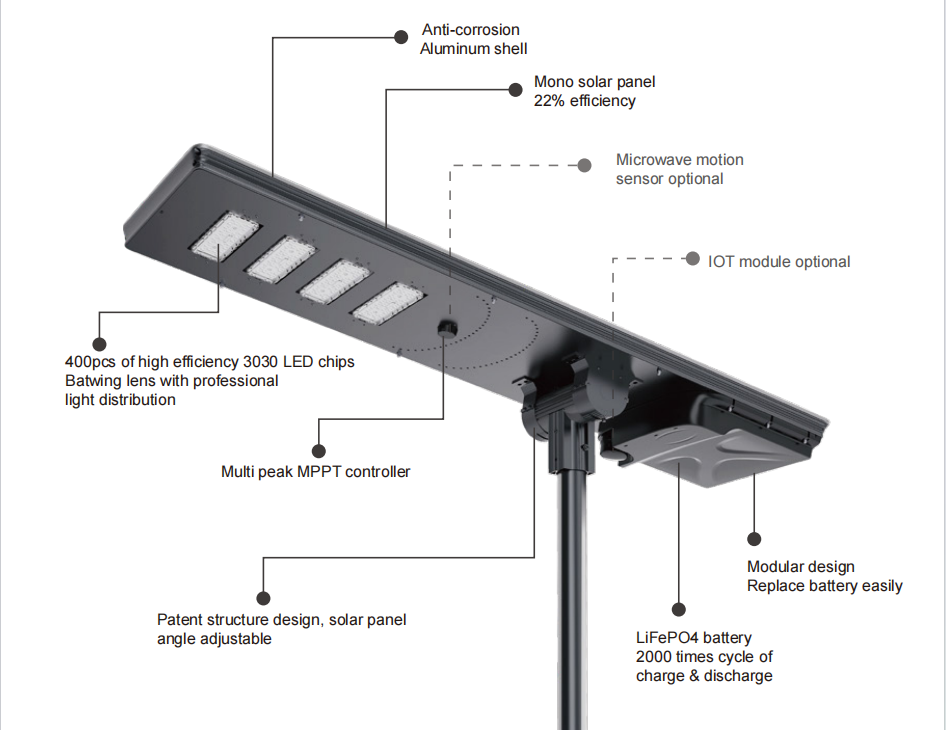
To verify long-term safety and reliability, each system can be evaluated through tests such as:
- Waterproof testing
- Dustproof testing
- Anti-corrosion testing
- Transportation simulation testing



These tests help confirm that the solar panels and overall structure can withstand challenging outdoor conditions and maintain stable field performance.
4. Solar Street Light Battery System
The battery system is a core factor in autonomy, stability, and lifecycle cost. RoadSmart applies 3.2V MPPT technology up to 160W to improve battery pack reliability and reduce risks commonly found in conventional multi-string battery systems.
In traditional 12V or 24V multi-string battery structures, differences in cell capacity, voltage, and internal resistance can affect the entire pack. With RoadSmart's 3.2V single-string MPPT technology, the effect of a single-cell issue is more isolated, so the whole battery pack is less vulnerable.
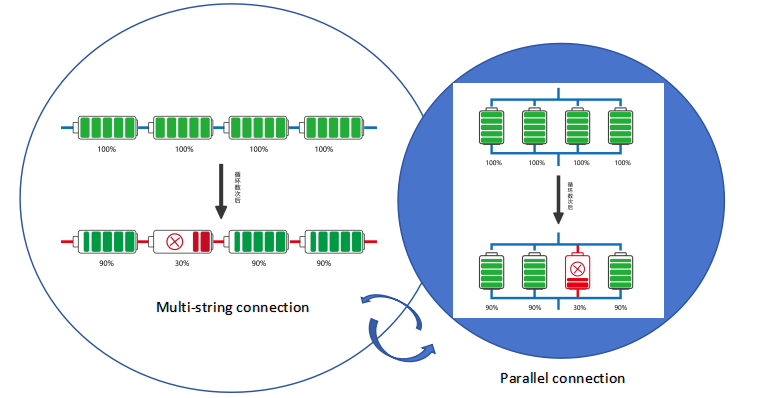
This design offers several practical benefits:
- Reduces the probability of battery-related problems by 75% compared with traditional 12V systems
- Improves overall product stability
- Extends service life by up to 3 times
As a result, the battery system becomes safer, more durable, and better suited for long-term outdoor solar lighting applications.
5. Smart Solar Street Lighting Integration
Beyond hardware performance, RoadSmart also focuses on intelligent system integration to create more efficient and secure lighting networks.
-
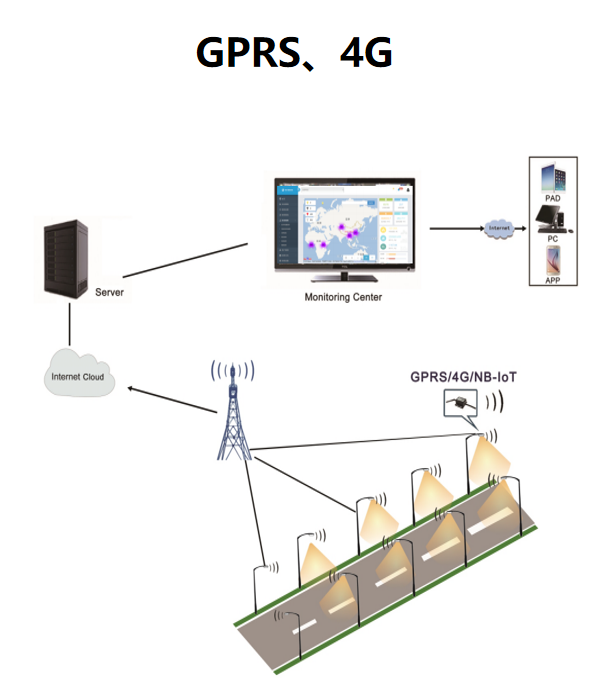
Internet of Things System
Enables real-time monitoring, remote data access, and easier centralized management of street lighting assets.
-
Hybrid AC-DC System
Supports more flexible power-supply configurations for different project environments. -
Anti-Theft Alarm System
Adds security by helping detect unauthorized movement or tampering in field applications.
Smart Street Lighting vs. Traditional Street Lighting
| Comparison Area | Smart Street Lighting | Traditional Street Lighting |
|---|---|---|
| Operating Logic | Uses automated schedules, sensor response, and remote commands to adjust lighting in real time. | Typically operates with simple on/off control through timers or photocells. |
| Energy Efficiency | Optimizes output through dimming, motion-based control, and zone management to reduce unnecessary energy use. | Usually runs at fixed output all night, regardless of traffic or activity levels. |
| Control Capability | Supports individual, group, or city-wide control through a smart street light control system. | Control is generally local only, with limited centralized flexibility. |
| Monitoring & Diagnostics | Reports power use, communication status, and faults to a smart street light management system. | Faults are often discovered only through manual inspection or public complaints. |
| Maintenance Approach | Enables predictive and remote maintenance with alarm logs and asset-level diagnostics. | Relies on reactive maintenance after a visible outage or service issue occurs. |
| Lighting Adaptability | Can brighten or dim based on time, traffic, pedestrian movement, weather, or programmed scenes. | Provides static lighting output with little or no adaptability. |
| Data Value | Generates useful operational data for energy analysis, maintenance planning, and performance reporting. | Produces little to no data beyond direct electricity consumption. |
| Integration Potential | Can serve as a platform for broader smart city street lighting functions such as sensors, monitoring, and connected services. | Functions only as a lighting asset, with limited ability to support digital infrastructure. |
| Project Value | Delivers both lighting performance and infrastructure intelligence in a smart street lighting system project. | Primarily delivers basic illumination without networked management benefits. |
The difference is not only energy savings. It is the shift from passive lighting to responsive lighting.
Intelligent Street Lighting Projects & Cases
Use these scenarios to match road type, traffic level, pole height, and control goals before selecting a configuration.
| Application Scenario | Description |
|---|---|
| Urban Roads | Smart city street lighting deployments often start on urban roads where energy savings and maintenance efficiency can scale quickly. Main roads may use scheduled dimming, while intersections and crossings remain brighter for safety. |
| Residential Streets | In low-traffic neighborhoods, intelligent street lighting can reduce late-night output without sacrificing security. Motion-responsive lighting is especially useful where residents want comfort but not constant glare. |
| Campuses and Parks | Universities, hospitals, industrial parks, and large campuses benefit from zone-based lighting scenes, better management visibility, and more flexible path illumination. |
| Rural Roads | On lower-traffic roads, especially with solar-based systems, adaptive dimming can help preserve battery autonomy and improve operating efficiency. |
| Parking Areas | Smart controls help reduce power usage during low occupancy while preserving visibility for vehicles and pedestrians. |
Explore RoadSmart's solar street lighting solutions.
What Are the Disadvantages of Smart Lighting?
Although smart lighting systems improve efficiency, automation, and energy management, they also introduce several practical challenges that should be considered before large-scale deployment.
1. Higher Initial Installation Cost
Compared with conventional street lighting, smart systems require additional hardware such as sensors, controllers, communication units, and a centralized management platform. These added components increase upfront investment, while the overall return is usually achieved through long-term energy savings and maintenance efficiency.
2. System Complexity
A smart street lighting system combines electrical infrastructure, software platforms, and communication networks. This multi-layer integration makes planning and deployment more complex and often requires coordination across different technical teams.
3. Dependence on Network Connectivity
Since many functions rely on real-time data exchange, system performance is tied to communication stability. Weak coverage or interruption may reduce monitoring accuracy or remote-control efficiency in large installations.
4. Specialized Maintenance Requirements
Maintenance involves both physical electrical components and digital control systems, which may require technicians with cross-disciplinary knowledge in IoT, networking, and software management.
5. Data Security and System Reliability Risks
Because smart lighting systems use connected platforms, they may face risks related to data security, system access, and software reliability. This is why redundancy, access control, and stable system architecture are important in project planning.
FAQs about Smart Street Lighting Systems
No. Some systems rely mainly on schedules and remote control. Sensors improve responsiveness and energy efficiency, especially in lower-traffic environments.
Not at all. Campuses, industrial parks, townships, residential developments, and other project types can also benefit from a smart street lighting system.
Smart street lights improve public safety by providing better visibility, adaptive lighting where activity occurs, and more reliable operation through real-time monitoring and faster maintenance response.
Before starting a smart street lighting project, consider your energy-saving goals, site conditions, road types, control requirements, communication method, maintenance workflow, and long-term scalability. For off-grid solar projects, the same review should include smart solar streetlight energy planning, because battery capacity and backup time depend on the nightly load and local solar conditions.
Need a Smart Street Lighting Solution for Your Project?
If you are planning a road, campus, industrial park, or municipal project, share your road width, pole height, lighting hours, power structure, and site location. RoadSmart can recommend the right smart street lighting configuration and show relevant project cases.
Get Project Recommendation | View Products | View Cases