Types of Solar Street Lights for Different Road Projects
Jan 12, 2026
Read:1576
Source: Yin Zhenkun
Solar street lights are available in different system types, and each type fits different road conditions, installation layouts, budgets, and project goals. From highways and industrial parks to municipal roads, parking lots, and rural upgrades, the right system structure affects installation difficulty, lighting performance, rainy-day backup, and long-term maintenance cost.
This guide explains the main types of solar street lights, compares their structures, applications, advantages, and limitations, and helps project owners, procurement teams, distributors, and contractors choose the right solution for real project conditions.
Quick Answer: The main types of solar street lights include all-in-one, all-in-two, split-type, solar garden street lamps, and MPPT solar pole street lights. The best choice depends on road width, pole height, lighting hours, local weather, installation conditions, and project budget.
What Is Solar Street Lighting?
Solar street lighting is an outdoor lighting system powered by solar energy. Unlike conventional grid-powered lights, it operates independently by collecting sunlight during the day, storing the energy in batteries, and using that stored power for nighttime illumination.
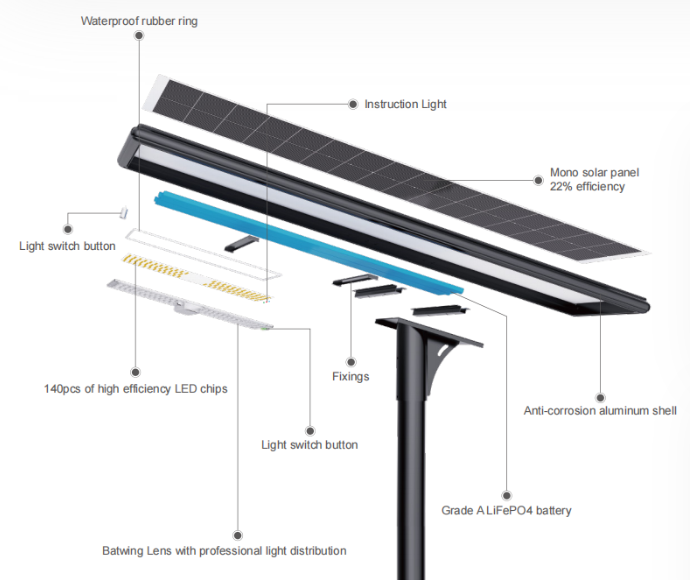
Core Components
Solar panel
LED light source
Rechargeable battery, usually lithium or LiFePO4
Solar controller
Pole and mounting structure
Modern solar street lighting systems are designed for high efficiency, long service life, and lower maintenance, making them suitable for both developed and emerging markets.
Why Understanding Solar Street Light Types Matters for Buyers
Not all solar street lights are the same. From a procurement and ROI perspective, choosing the wrong type can lead to:
Insufficient lighting performance
Poor rainy-day autonomy
Unnecessary installation complexity
Overspending on features that the project does not need
Professional solar street light suppliers usually begin with one key step: matching the system type to the actual application environment.
Classification by System Structure
Solar street lights can be classified by system structure, which directly affects installation complexity, performance stability, scalability, and long-term maintenance cost. As a professional solar street light manufacturer, RoadSmart typically divides solar street lighting systems into the following five categories.
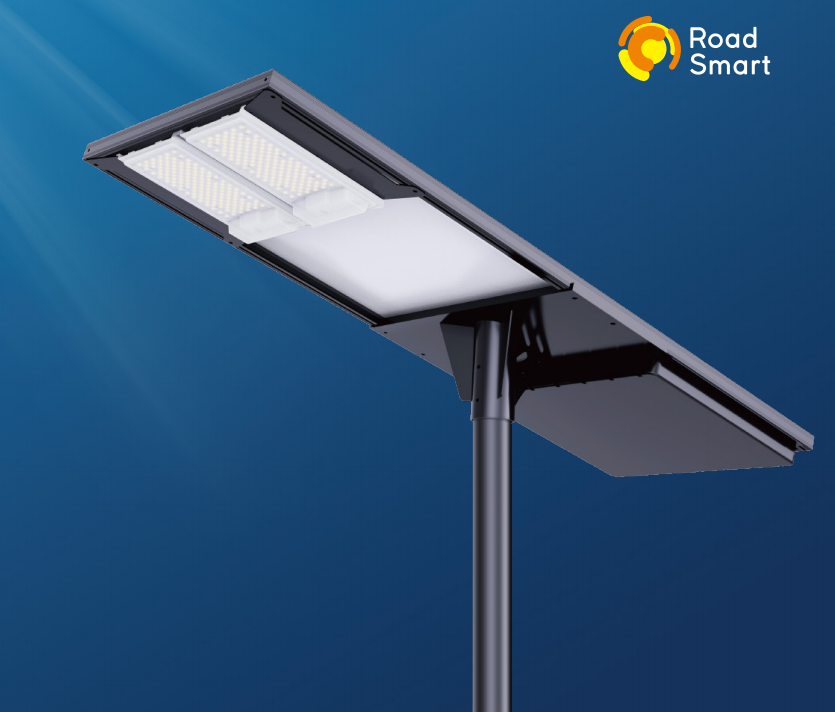
All-in-One Solar Street Light
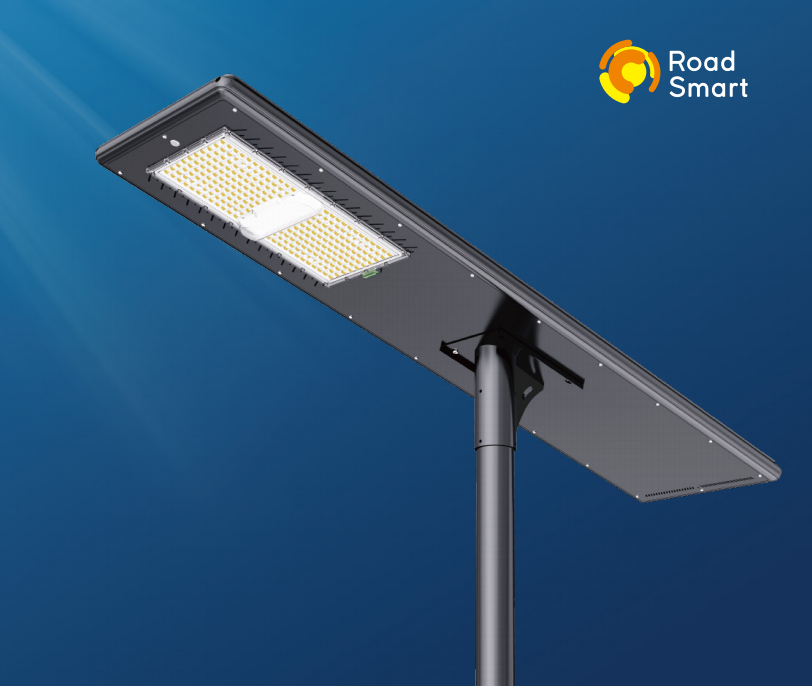
All-in-one solar street lights integrate the solar panel, LED lamp, lithium battery, and controller into one compact unit. They are easier to install and are widely used for residential roads, parking lots, pathways, and community lighting projects.
Integrated Solar Street Light
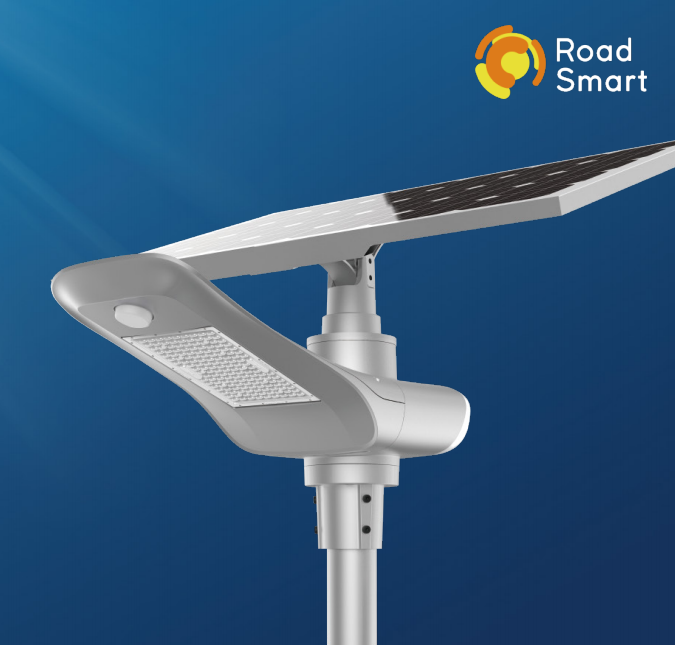
Integrated solar street lights are an upgraded evolution of compact systems, designed with improved structural balance, better heat dissipation, and stronger lighting efficiency. They are often suitable for urban streets, commercial zones, and municipal upgrade projects.
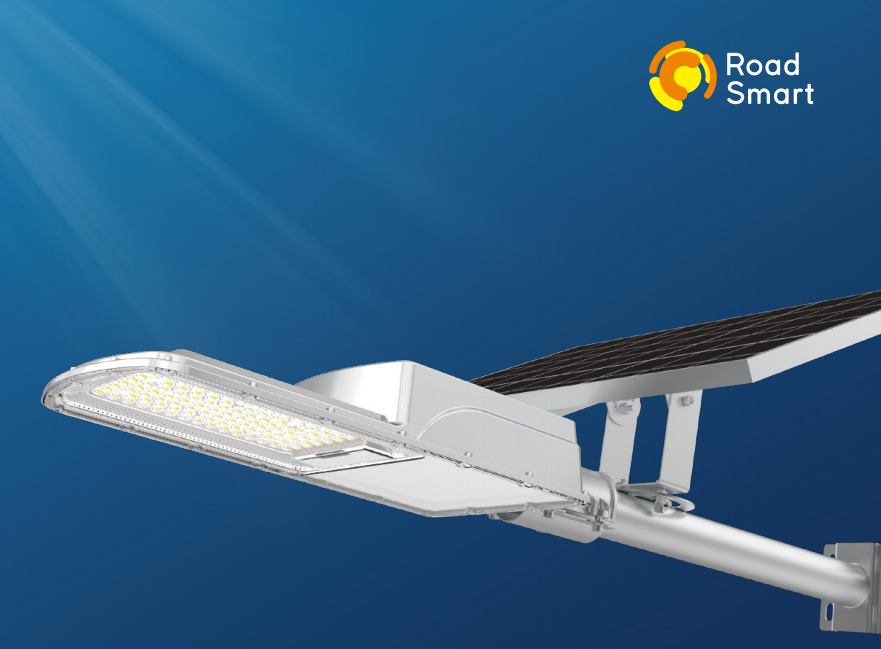
Split Type Solar Street Light
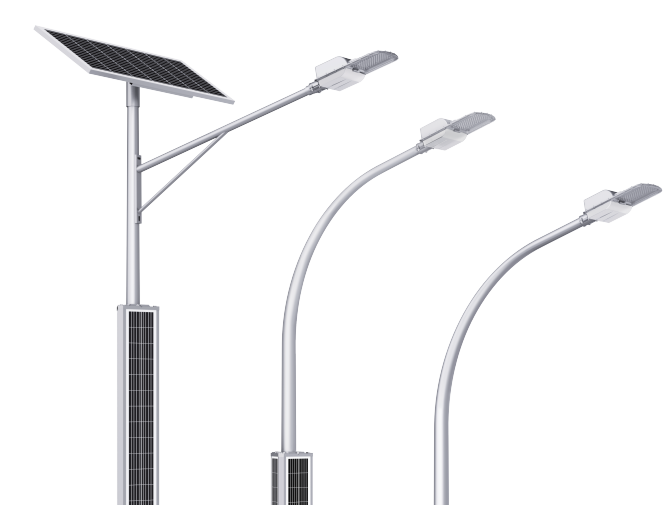
Split-type solar street lights separate the solar panel, LED lamp, battery, and controller for greater layout flexibility. This type is more suitable for highways, industrial parks, government projects, and EPC applications that require higher power and more configurable system design.
Solar Garden Street Lamps
Solar garden street lamps combine decorative appearance with functional outdoor lighting. They are more commonly used for parks, gardens, resorts, villas, pedestrian areas, and landscape projects.
MPPT Solar Pole Street Light
MPPT solar pole street lights integrate MPPT charging technology into the pole-mounted lighting system. They are more suitable for projects that require better charging efficiency, especially in cloudy regions, high latitudes, or long rainy seasons.
Solar Street Light Types by System Structure
| Type | System Structure | Key Advantages | Limitations | Best-Fit Applications | Buyer Recommendation |
|---|---|---|---|---|---|
| All-in-One Solar Street Light | Solar panel, battery, controller, and LED integrated into one unit | Fast installation No wiring Lower labor cost Clean appearance | Fixed panel angle Limited power scalability | Residential roads, parking lots, pathways, community projects | Suitable for standard projects, distributors, and wholesale orders |
| Integrated Solar Street Light | Optimized compact structure with improved heat dissipation | Higher lighting efficiency Longer battery lifespan Better thermal management | Slightly higher cost than basic all-in-one systems | Urban streets, commercial zones, municipal upgrades | Suitable for projects balancing performance and appearance |
| Split Type Solar Street Light | Solar panel, battery, controller, and LED installed separately | Adjustable panel angle Higher power range Longer system lifespan | More complex installation Higher initial cost | Highways, industrial parks, government and EPC projects | Recommended for larger infrastructure and engineering applications |
| Solar Garden Street Lamps | Decorative lamp body with compact solar system | Aesthetic design Easy installation Eco-friendly | Lower power output Limited road coverage | Parks, gardens, villas, resorts, walkways | Best for decorative and pedestrian outdoor lighting |
| MPPT Solar Pole Street Light | Pole-integrated system with MPPT charge controller | Higher charging efficiency Better low-light performance | Higher system complexity Higher unit cost | Cloudy regions, high latitudes, long rainy seasons | Suitable for projects requiring stronger energy efficiency and reliability |
Products Comparative Analysis Form
Why Work Directly with a Solar Street Light Manufacturer
For B2B buyers, choosing who to buy from is just as important as choosing which type of solar street light to use. Working directly with a professional manufacturer instead of a trading company or reseller can provide stronger long-term value.
Factory-Level Cost Control
A manufacturer-owned solar street light factory controls raw material sourcing, production, and quality inspection. This helps buyers:
Reduce unnecessary middleman cost
Obtain more competitive pricing on larger orders
Maintain price stability for repeat or multi-phase projects
This is especially important for government tenders, EPC contractors, and distributors handling repeat purchases.
Customization and Engineering Support
Unlike generic suppliers, a real manufacturer can provide:
Solar panel sizing based on local sunlight conditions
Battery autonomy design for rainy or cloudy regions
Optical lighting simulations for road distribution and project standards
This helps ensure that the selected system structure actually performs as expected after installation.
Consistent Quality and Long-Term Supply
Direct cooperation with a solar street light manufacturer helps ensure:
Consistent product specifications across batches
Stable quality-control standards
Reliable long-term supply for multi-phase projects
For large infrastructure projects, this consistency is critical.
Solar Street Light Wholesale vs. Project-Based Customization
Different buyers use different procurement models. Understanding the difference between wholesale purchasing and project-based customization helps improve both cost control and project performance.
Solar Street Light Wholesale
Wholesale purchasing usually focuses on:
Standardized models
Faster delivery
Bulk pricing advantages
It is usually more suitable for distributors, importers, stock-based resellers, and standard residential or commercial lighting projects. Wholesale models are often all-in-one or integrated systems designed for wider market compatibility.
Conclusion
Understanding the different types of solar street lights is not just a technical exercise. It is a practical project decision that directly affects lighting performance, operating cost, installation efficiency, and long-term reliability.
From all-in-one and integrated systems designed for faster deployment to split-type and MPPT-based solutions built for more demanding environments, each structure serves a different purpose. The key is not to choose the most complex system, but to choose the right solar street light type for the right project application.
If you are comparing options for municipal roads, highways, industrial parks, parking lots, parks, or public lighting projects, contact RoadSmart for a more suitable configuration recommendation based on your actual project requirements.