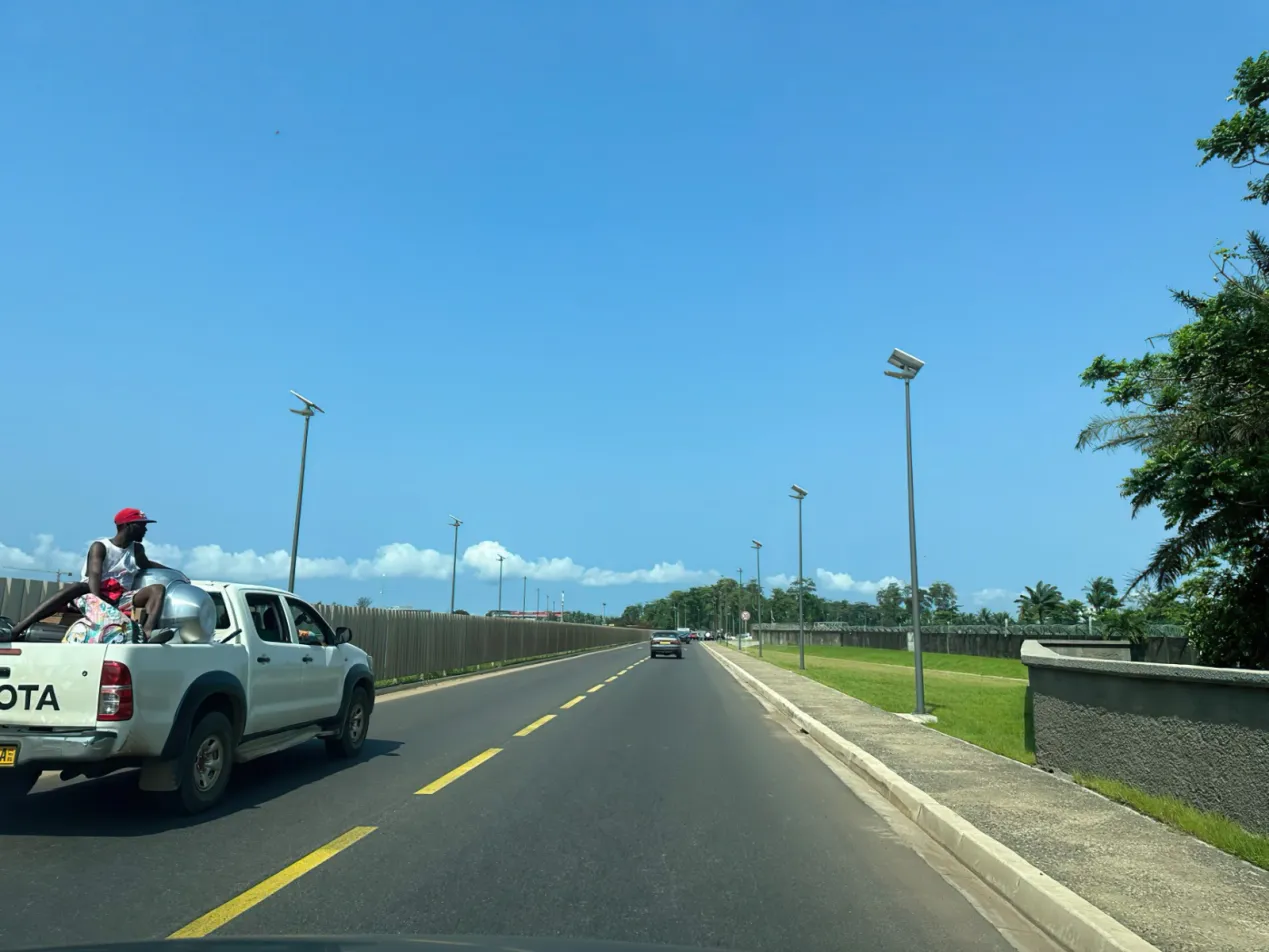
All in Two Solar Street Light Applications,Main Roads , Industrial Parks , Campuses , and Villages
Aug 05, 2026
Read:349
All-in-Two solar street lights are also a relatively common type of solar street light, mainly suitable for main roads, industrial parks, campuses and village roads, but different scenarios have different requirements for lighting coverage, endurance, control methods and maintenance conditions.
This guide will comprehensively explain how to select suitable All-in-Two solar street lights for different scenarios. It is worth noting that when selecting All-in-Two solar street lights, you should not only compare the rated power of the lights, but should carry out a complete configuration based on road conditions, operating time, local sunlight, the number of consecutive rainy days and maintenance conditions.
What Is an All-in-Two Solar Street Light?
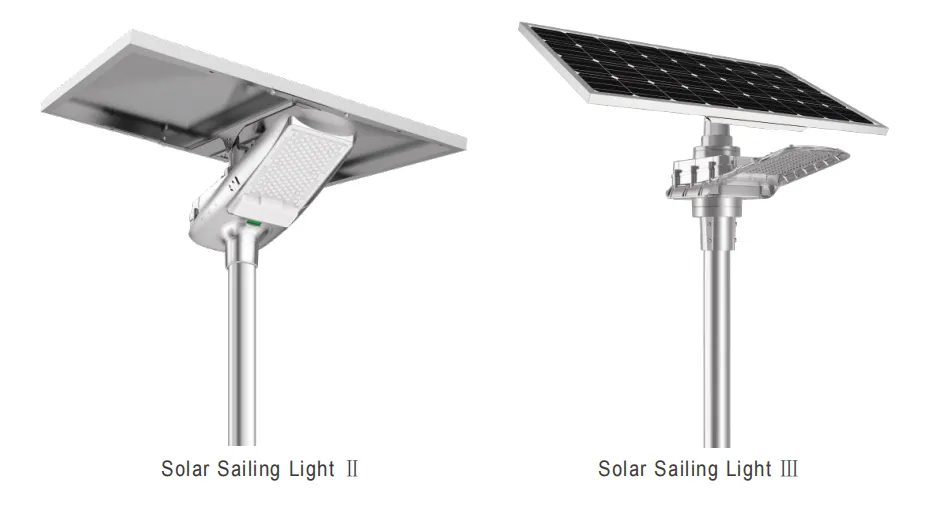
An all-in-two solar street light combines an independently mounted solar panel with a lamp head that typically integrates the LED, battery, and controller. It is often also described as a semi-integrated solar street light.
That structure matters because it gives the project more flexibility than a typical all-in-one product. The panel can be adjusted separately to improve solar collection, while the lamp head remains more compact and easier to install than a fully split system with multiple external boxes and additional wiring.
For many projects, that makes all-in-two systems a practical balance between configuration freedom, installation speed, and maintenance simplicity.[1]
Comparison Item | All-in-One | All-in-Two | Split-Type |
System Structure | All components are highly integrated | The solar panel is independent, while the other components are integrated into the lamp head | Each component is relatively independent |
Panel Adjustment | Relatively limited | Can be adjusted independently | Flexible |
Installation Difficulty | Lower | Medium | Higher |
Configuration Capability | Small and medium-sized projects | Medium- and higher-load projects | High-load and large-scale projects |
Common Applications | Communities, pathways and parking areas | Roads, industrial parks, campuses and villages | Wide roads, ports and large industrial areas |
What Project Conditions Need to Be Confirmed Before Selection?
All-in-Two solar street lights must not only meet nighttime lighting requirements, but also ensure that the electricity collected during the day can cover nighttime consumption. Before selecting a model, the following should be confirmed:
·Road type, width and number of lanes;
·Light pole height, spacing and lighting arrangement;
·Lighting time each night and dimming requirements;
·Solar energy resources during the worst local month;
·Number of consecutive rainy days;
·Nighttime vehicle and pedestrian activity;
·High and low temperatures, dust, salt spray, strong winds and shading conditions.
This information determines the LED light distribution, solar panel size, battery capacity and control program.
Application of All in Two Solar Street Lights on Main Roads
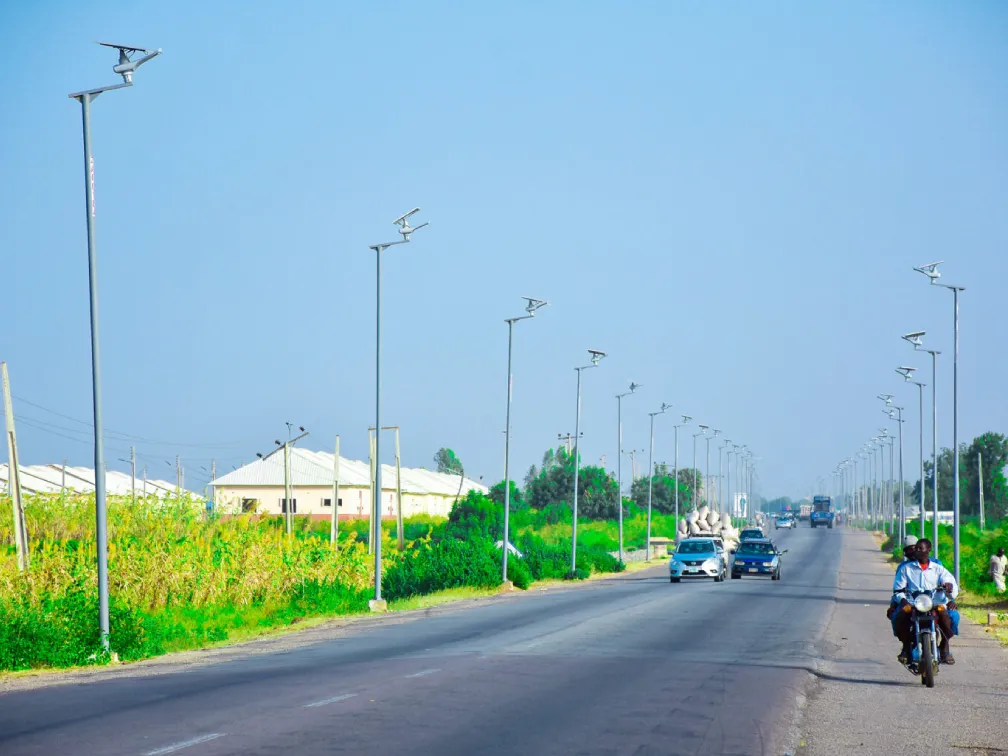
Main roads have heavy traffic and higher vehicle speeds. Lighting must not only be bright enough, but also allow drivers to continuously identify lanes, intersections, pedestrians, obstacles and road boundaries. Therefore, main roads place greater emphasis on coverage, uniformity, glare control and all-night stability.
The all in two solar street light’s structure can independently adjust the direction of the solar panel and configure more suitable panels, batteries and LED output, reducing the impact of road orientation on charging performance. For medium-width municipal roads, regional roads and urban branch roads, this structure does not require long-distance trenching and wiring and can also set basic lighting and time-based dimming according to traffic periods.
Main road projects should conduct lighting simulations based on road width, light pole height, spacing and light distribution, rather than selecting products only according to rated powers such as 100W and 150W. [2]
Application of All-in-Two Solar Street Lamps in Industrial Parks
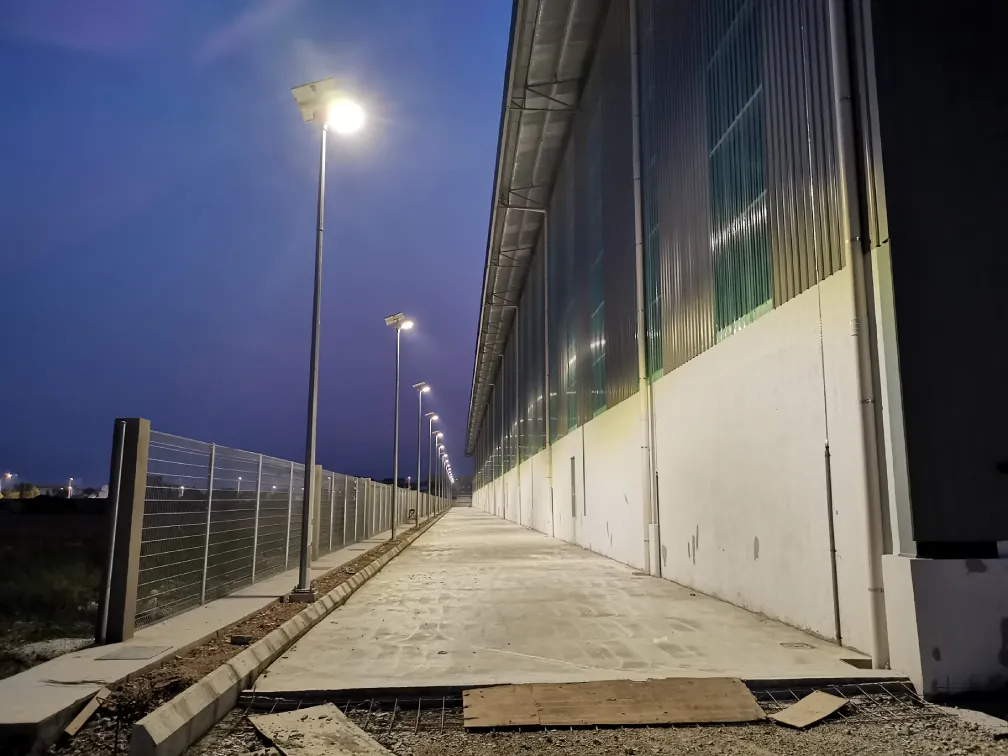
Industrial parks usually include main roads, warehouse entrances and exits, loading and unloading areas, parking lots, gatehouses and employee passages. At night, trucks, forklifts, workers and security vehicles may be active at the same time. Lighting needs to ensure traffic safety, security monitoring and nighttime operations while minimizing the impact of maintenance on park operations.
All in two solar street lamps do not need to rely on the internal power grid of the park and are suitable for newly built factories, expansion areas and roads far from the power distribution system. Different areas can also adopt different configurations: gatehouses, loading and unloading areas and major intersections maintain stable lighting, while ordinary branch roads reduce energy consumption through time-based dimming.
With fewer external wires and devices, they help reduce failure points and maintenance work and are more suitable for industrial parks requiring nighttime logistics, patrols or continuous production. [3]
Application of Integrated Solar Street Lights on Campuses
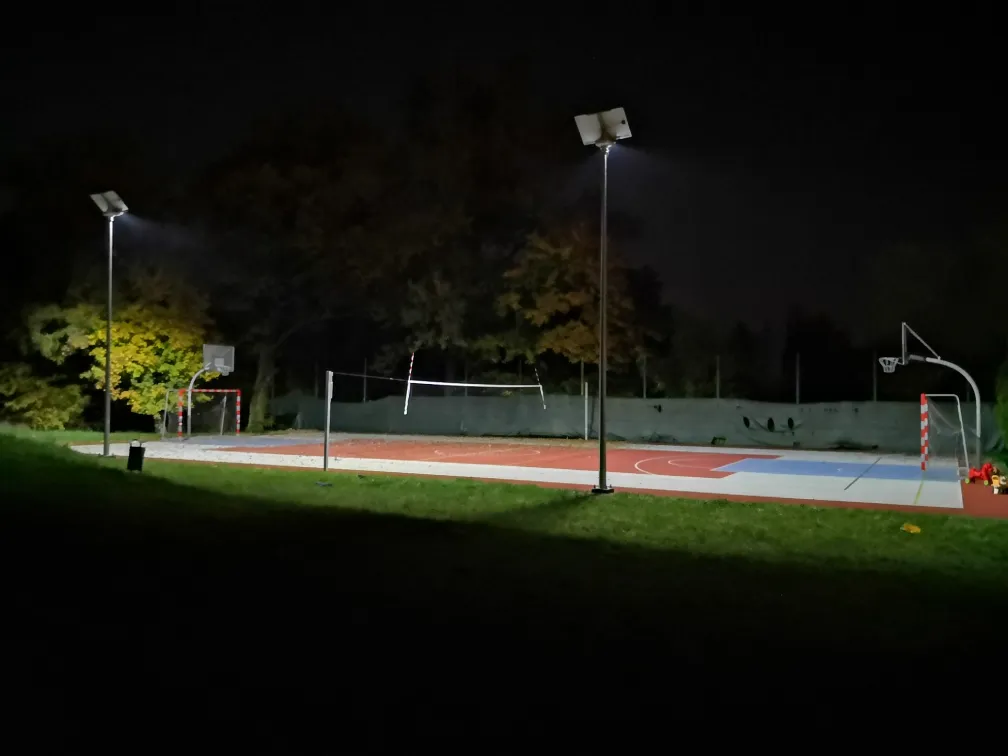
Campus roads serve students, faculty members, bicycles, electric vehicles and vehicles at the same time and also involve dormitories, teaching buildings, sports facilities and parking areas. Campus lighting needs to ensure pedestrian visibility while controlling glare, light-dark contrast and light shining directly into dormitory windows.
The panel of an integrated solar street light can be independently adjusted to avoid shading from trees and buildings, and the external structure of the lamp head is also simpler than that of traditional split-type systems. Campus main roads, walkways, dormitory areas and parking areas can adopt different light distribution and dimming programs according to their usage times.
By providing high brightness during dismissal periods, reducing output late at night and increasing brightness when people pass by, safety, visual comfort and energy-saving management can be balanced. [4]
Application of Integrated LED Solar Street Lights on Village Roads
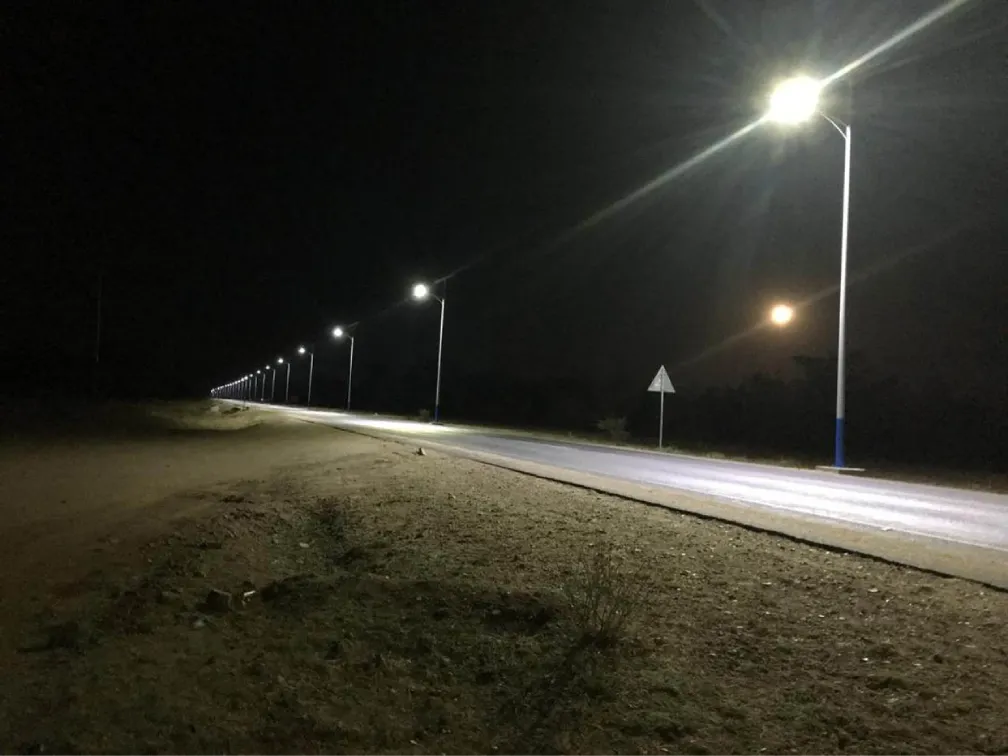
Village and rural roads are usually long, with dispersed lighting points. Some areas lack a stable power grid and may also face long rainy seasons, limited budgets and inconvenient maintenance. Rural lighting needs to operate independently, be simple to install and maintain the necessary lighting time during consecutive rainy weather.
Integrated led solar street lights can operate independently off-grid, reducing trenching, cables, power distribution facilities and long-term electricity costs. Their solar panels and batteries can also be configured according to the local rainy season, sunlight during the worst month and lighting time each night.
Compared with fully split-type systems, the integrated led solar street light structure has fewer external wires and is relatively simple to install and troubleshoot, making it suitable for internal village roads, roads connecting towns and remote communities.
Application Scenario | Main Objective | Configuration Focus | Main Risk |
Main Roads | Road coverage and stable all-night lighting | Light distribution, uniformity, light pole spacing and battery reserve | Only considering power and ignoring lighting simulation |
Industrial Parks | Vehicle, pedestrian and security safety | Zone lighting, durability and low maintenance | Excessive dependence on sensing modes |
Campuses | Pedestrian comfort and environmental coordination | Glare, light intrusion and time-based control | Excessive brightness affecting dormitories |
Village Roads | Off-grid operation and rainy-season endurance | Sunlight, battery capacity and maintenance | Low-cost configurations causing lights to turn off early |
All four scenarios can use all-in-two solar street lights, but they should not directly adopt the same power, battery capacity and lighting program.
How to Configure an All-in-Two Solar Street Light System?
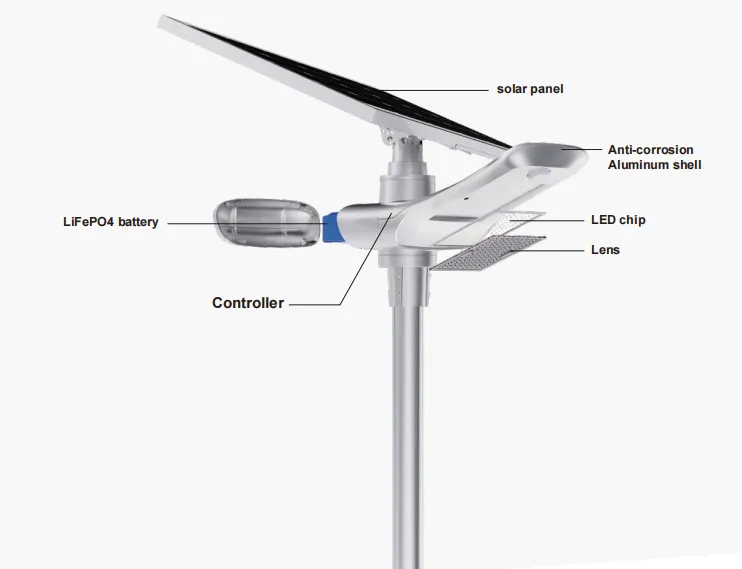
1.LED Luminous Flux and Light Distribution
Luminous flux determines the total light output, while light distribution determines how the light covers the road. Selection should be based on road width, light pole height, installation spacing and lighting arrangement, and the actual effect should be confirmed through IES files and lighting simulation when necessary.
2.Solar Panel
The solar panel size should be determined according to LED power consumption, lighting time, local sunlight and rainy-day requirements. During installation, shading from trees, buildings and lights should be avoided, and the orientation and tilt angle should be adjusted appropriately.
3.Battery Capacity
Battery capacity should be calculated against the nightly load, dimming logic, and rainy-day requirement. LiFePO4 batteries are common in solar street lighting, but actual service life still depends on temperature, discharge depth, and battery aging, which is consistent with broader NREL battery-life research.[5]
4.MPPT Controller
An MPPT controller can improve charging efficiency during cloudy weather, mornings, evenings and changing light conditions, but it cannot compensate for insufficient solar panel or battery capacity. The system still needs to maintain a balance between power generation, energy storage and nighttime load.
5.Light Pole Height and Spacing
Light pole height affects coverage, while spacing affects lighting continuity. Excessive spacing can easily create dark areas, while insufficient spacing will increase project costs, so the design should be based on road width and light distribution.
6.Lighting Modes
Common modes include fixed brightness throughout the night, high brightness during the first half of the night followed by dimming during the second half, timer control and sensing control. Main roads and key areas of industrial parks should retain basic lighting, while campus pathways and village branch roads can use basic brightness with sensor-triggered increases.
Which Projects Are Not Suitable for Integrated Solar Street Lights?
For small community roads, landscape pathways and residential driveways with low lighting loads, good sunlight conditions and an emphasis on quick installation, all-in-one solar street lights are usually simpler and more economical.
For extra-wide roads, high light poles, large industrial areas, ports and logistics centers, if long-term high output is required or larger solar panels and batteries are needed, fully split-type systems provide greater configuration space.
If the local area has insufficient sunlight for long periods, frequent consecutive rainy weather and lighting cannot be interrupted, a hybrid solar and grid power supply solution should be evaluated.
Frequently Asked Questions
Can Integrated Solar Street Lights Be Used on Main Roads?
Yes, but they should be designed according to road width, light pole height, installation spacing, light distribution and all-night energy requirements.
Are All-in-Two Solar Street Lights Suitable for Industrial Parks?
Yes, especially for newly built parks, expansion areas and roads where grid access is inconvenient. Key areas should maintain stable basic lighting.
Can All in Two Solar Street Lights Work on Rainy Days?
Yes, but the operating time during consecutive rainy weather depends on the solar panel, battery capacity, lighting load and dimming program.
How Many Rainy Days of Endurance Are Required for Village Roads?
This should be determined according to the local rainy season, sunlight during the worst month, road importance and maintenance conditions, and there is no uniform number applicable to all regions.
How Are Light Pole Height and Spacing Determined?
They should be determined by comprehensively considering road width, light distribution, luminous flux and lighting arrangement, and important roads are recommended to be confirmed through lighting simulation.
Conclusion
All-in-Two solar street lights are suitable for main roads, industrial parks, campuses and village roads, but different scenarios have different requirements for brightness, endurance, control methods and maintenance conditions. Project selection should reasonably match the LED, solar panel, battery and controller based on road conditions, lighting time, local sunlight and the number of consecutive rainy days.
RoadSmart can provide All-in-Two solar street light configuration recommendations, IES light distribution data and lighting simulation support according to project conditions.
Visit the official website to learn more: https://www.roadsmartsolar.com/
References
- Solar Photovoltaic Cell Basics, U.S. Department of Energy.
- Lighting - Proven Safety Countermeasures, Federal Highway Administration.
- Lighting - Workplace Transport Safety, Health and Safety Executive.
- Design Criteria for Adaptive Roadway Lighting, Federal Highway Administration.
- Battery Life Prediction Method for Hybrid Power Applications, National Renewable Energy Laboratory.