What Are the Advantages of Solar Street Lights for Road Projects?
Dec 17, 2021
Read:2209
A road may need lighting long before it has a convenient electrical connection. On a new access route, a rural road or a developing industrial site, extending grid power can involve trenches, cables, permits and coordination with other construction work. Solar-powered street lights offer another way to provide nighttime visibility, but their value depends on much more than the absence of an electricity bill.
Why Solar Street Lighting Reduces Dependence on the Grid
One of the practical advantages of solar street lighting is that it can operate without a continuous connection to an electricity distribution network. A conventional roadway lighting installation normally relies on such a connection. Where the supply point is distant, bringing power to the site may require underground conductors, protective equipment and civil works over a substantial distance. An off-grid lighting system generates and stores energy close to the fixture, so it can avoid the need for a continuous mains supply along the road.

This difference matters particularly on rural access roads, new development boundaries and isolated stretches where installing a new electrical feeder would be a major part of the project. It can also reduce the number of interfaces between the lighting contractor and utility works. However, each pole still requires a suitable foundation and mounting arrangement, and the photovoltaic panel must receive enough usable sunlight. Eliminating grid wiring does not eliminate all infrastructure requirements.
Easier Installation for Solar-Powered Roadway Lighting
On an undeveloped road, the construction sequence can make as much difference as the lamp itself. Installing mains-powered fixtures may depend on trench excavation, buried cables, inspections and electrical connection schedules. Standalone solar-powered roadway lighting can simplify that sequence by limiting the work between poles, especially where trenching would disrupt finished surfaces or cross difficult ground.

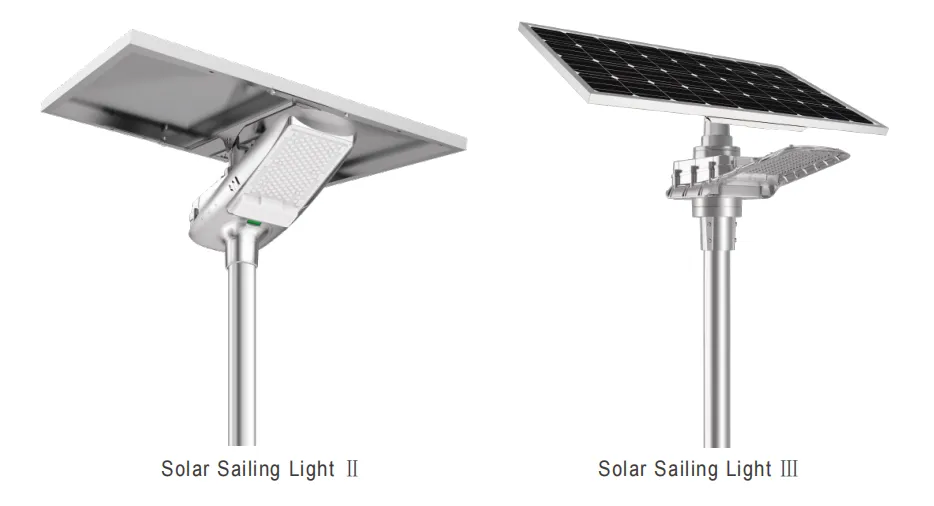
The installation still needs proper structural and electrical design. Pole loading, bracket compatibility, local wind conditions, safe electrical connections and access for future service all remain important. Some integrated fixtures reduce external wiring, while arrangements with a separately mounted solar panel offer more flexibility in panel orientation. Neither layout is automatically the best choice for every site.
Where the Cost Benefits of Solar Street Lighting Come From
The financial benefits of solar street lighting depend on the cost of extending the grid, local electricity tariffs, installation requirements and long-term maintenance. A self-powered fixture does not normally draw electricity from the grid during operation, so avoided electricity use and distribution works can improve project economics in the right setting. Yet electricity is only one part of total ownership cost: initial equipment, poles, installation, cleaning, battery aging, replacement parts and maintenance visits also matter.
This is why an operating-cost advantage should be evaluated against a comparable grid-powered design, not asserted as a fixed percentage or payback period. A location with an existing electrical supply may reach a different conclusion from a remote road where the power connection is expensive. Battery replacement and servicing must remain in the estimate even when the photovoltaic modules and LED fixtures have longer expected service lives.

How Off-Grid Street Lighting Handles Power Outages
Off-grid street lighting can continue operating during utility outages when sufficient energy is available in the battery. Because energy is stored locally, a correctly configured luminaire does not depend on continuous utility service. This can be valuable on access roads, site perimeters and other areas where grid interruptions would otherwise leave stretches of roadway unlit.
Independence from the grid, however, does not mean unlimited lighting time. Nightly energy demand, available battery capacity, charging performance, weather and the control schedule determine how long the system can operate. Projects requiring several consecutive nights of low solar generation need an appropriate energy reserve and a realistic lighting profile. Critical road safety requirements should be verified through engineering calculations rather than an advertised backup-days figure alone.
Smart Solar Street Lighting and Energy Management
Smart solar street lighting can use configurable dimming schedules to manage stored energy, where the selected controller supports these functions. Depending on the product configuration, the system may provide timed dimming, different output levels through the night or occupancy-responsive operation. These functions can help distribute stored energy more effectively instead of assuming full output is required from dusk until dawn.
Controls must be selected around the road's actual function. A low-traffic access path may allow different operating profiles from a busy intersection or a road with prescribed lighting requirements. Lowering output only to extend battery runtime is not an acceptable substitute for meeting the site's illumination and uniformity targets. Buyers should request the operating schedule, power profile and corresponding performance assumptions for the exact luminaire under consideration.
Environmental Benefits of Solar-Powered Lighting Systems
Solar-powered lighting systems use a renewable energy source during normal operation and may avoid some of the cable installation associated with grid-fed networks. These are relevant advantages for projects aiming to reduce reliance on purchased electricity or limit excavation through sensitive or finished areas.
The environmental impact of these systems must nevertheless be considered across manufacturing, operation, maintenance and end-of-life handling. Photovoltaic modules, batteries, electronics, poles and foundations require materials and manufacturing, and batteries eventually need appropriate replacement or end-of-life handling. Environmental benefits should therefore be described in relation to the project's energy supply, service life, maintenance and disposal arrangements—not as a claim that the installation creates no pollution or has zero lifetime emissions.
When Solar Street Lighting Offers Fewer Advantages
The strongest case for off-grid roadway lighting is not always the brightest or largest project. A shaded road beneath dense trees may struggle to generate enough energy, even if the pole locations are otherwise suitable. A route with long full-brightness requirements can demand larger solar and battery capacities. And on a street where dependable electrical infrastructure is already available, the cost of a solar system may not compare as favorably as it does at an isolated site.
The following questions help identify where the benefits are likely to matter most:
| Project question | Why it matters |
| Is the nearest grid connection distant or difficult to install? | Grid-independent lighting may avoid substantial distribution and trenching work. |
| Can the photovoltaic panel receive sufficient sunlight year-round? | Shading and seasonal solar conditions affect battery charging. |
| What light levels and operating hours are required? | Actual energy use must reflect the road's lighting needs, not only the product label. |
| How many low-sunlight nights must the system support? | Battery reserve and charging recovery require project-specific sizing. |
| Can technicians safely reach the equipment later? | Service access and component replacement affect long-term costs. |
These are screening questions, not a substitute for photometric design or a detailed solar-energy assessment. The appropriate answer may be an all-in-one luminaire, a configuration with a separately mounted panel or a grid-connected fixture, depending on the conditions.
Frequently Asked Questions About Solar Street Lighting Benefits
Do solar-powered street lights work when the electricity grid fails?
An off-grid fixture with a sufficiently charged battery can continue operating without utility power. Its runtime still depends on battery energy, the lighting schedule and previous solar charging conditions. It should not be treated as having unlimited backup capacity.
Do solar lighting systems always cost less than conventional street lights?
No. They can avoid electricity consumption and some grid-related construction costs, but the comparison must include equipment, installation, battery replacement and maintenance. Locations with existing mains infrastructure may have a different cost balance from remote roads.
Are integrated solar street lights maintenance-free?
No. Even with fewer external connections, panels may need cleaning, structural fixings require inspection and electrical components or batteries may eventually need service or replacement. Maintenance plans should follow the actual product and site conditions.
Is a brighter luminaire always a better option for a road project?
Not necessarily. Roadway performance depends on optical distribution, mounting height, spacing, uniformity and the applicable lighting requirements. Higher output can increase nightly energy demand, so the lighting and solar-storage design should be evaluated together.
Solar-powered roadway lighting is most useful when it solves a real infrastructure or operating constraint without compromising the required lighting performance. For projects with limited grid access or challenging installation conditions, RoadSmart offers all-in-one solar street lighting models and all-in-two integrated lighting systems. Share the road layout, pole height, operating schedule and local conditions to discuss an appropriate configuration.