What is Integrated Solar Street Light?
Mar 11, 2026
Read:314
Source: Yin Zhenkun
Table:
Introducing Integrated Solar Street Light
Advantages of Integrated Solar Street Lights
Where Can Integrated Solar Street Lights Be Used?
How to Install Integrated Solar Street Lights?
How to Maintain Integrated Solar Street Lights?
How to Choose the Right Integrated Solar Street Light?
Conclusion
With the continuous promotion and application of solar energy, along with the rapid development of solar technology, outdoor lighting methods are undergoing major changes. More and more solar street lights are being seen and chosen. This article introduces integrated solar street lights. As a type of solar street light, they offer unique advantages: they can operate completely independently of the traditional power grid, capture sunlight efficiently, and require very little maintenance while providing stable illumination. They are especially suitable for areas where grid extension is difficult or construction costs are high, such as rural roads and large parks, offering a practical solution for modern infrastructure development.
This article will provide a comprehensive introduction to integrated solar street lights from several perspectives, including what they are, their advantages and features, the kinds of scenarios they are suitable for, key points for installation and maintenance, and how to choose the right solar street light. The aim is to help readers gain a deeper understanding of integrated solar street lights, form an initial impression, and support scientific product selection for project implementation, so as to choose an integrated solar LED street light that is accurately matched to specific project needs.
Introducing Integrated Solar Street Light

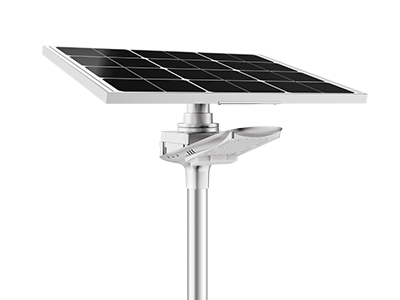
An integrated solar street light is an innovative type of solar street lighting product and also an efficient outdoor lighting solution. Simply put, it features a separate installation of the solar panel and the lamp head. The lamp head contains the LED, battery, and controller, while each component remains independent. This flexible structural design makes installation and disassembly more convenient and is beneficial for later maintenance.
Its design fully considers how to make the most efficient use of solar energy, allowing the orientation and angle of the solar panel to be adjusted to achieve optimal sunlight absorption and energy utilization. This enables it to meet the needs of different projects and application scenarios that require high brightness and long operating time. While providing stable illumination, it also greatly reduces dependence on traditional electrical infrastructure. In addition, although both integrated solar street lights and all-in-one solar street lights may be referred to as integrated solar lighting solutions, there are still some subtle differences between them. Integrated solar street lights offer greater flexibility in installation. A separate explanation of the features and differences between these two types of street lights will be provided later, so please stay tuned.
Returning to integrated solar street lamp, their design reduces the complexity of the components, making them highly suitable for lighting projects that require rapid installation and deployment, as well as distributed or off-grid applications. Their intelligent energy management system can automatically sense operating conditions, effectively improving reliability, extending runtime, and minimizing costs to the greatest extent possible. Overall, the all in two solar street light can not only meet the needs of outdoor engineering projects, but can also be customized according to project requirements, making them an excellent choice for outdoor lighting solutions.
Advantages of Integrated Solar Street Lights
Integrated solar street lights have become highly popular since their introduction, thanks to their innovative design and advanced technology, which significantly improve the performance of solar street lighting systems. Their main features and advantages are as follows:
1. Highly Integrated All-in-One Design
Integrated solar street lights combine multiple core components, such as solar panels, batteries, LEDs, and controllers, into one compact system, forming an efficientintegrated solar LED street light. This design effectively reduces potential points of failure. The wiring process is simple, and there is no need to lay additional grid infrastructure, making installation easier and greatly reducing construction costs. At the same time, the clean and streamlined appearance makes the overall design more attractive, making it especially suitable for outdoor landscapes and commercial lighting applications.
2. Intelligent Power Management
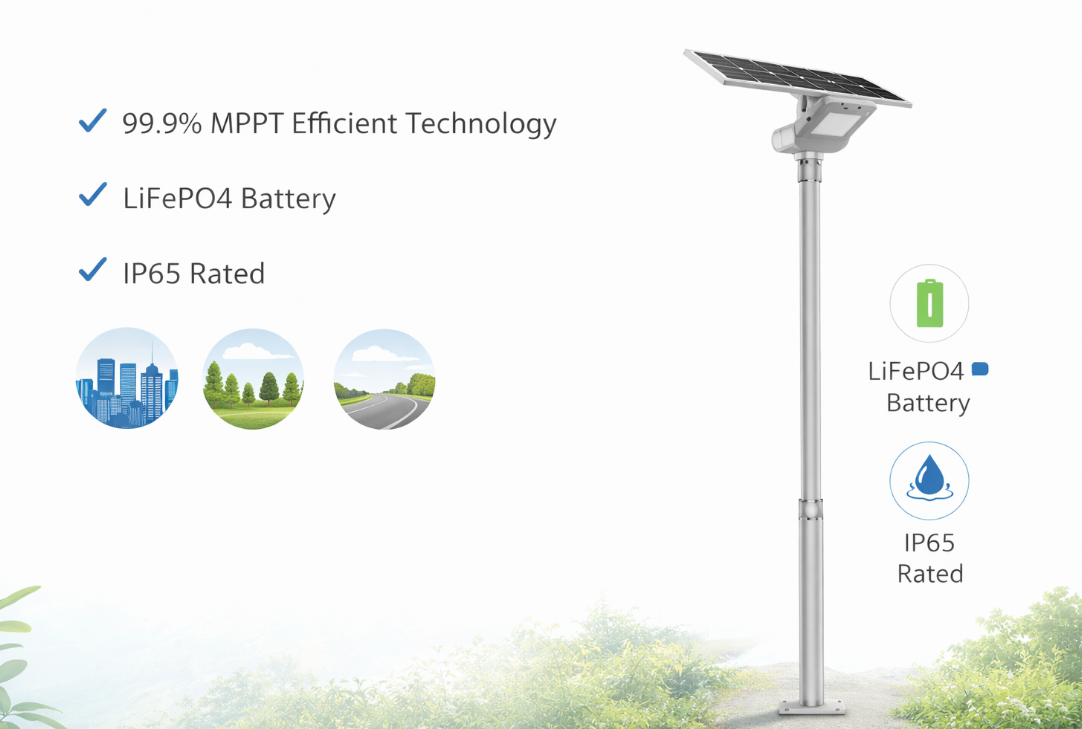
In addition to their innovative design, another major feature of integrated solar street lights is that many models are equipped with advanced power controllers using Maximum Power Point Tracking (MPPT) technology, which can optimize solar energy harvesting efficiency around the clock. For example, RoadSmart’s integrated solar street light specification is equipped as standard with 99.9% MPPT charging technology, with a tracking efficiency of up to 99.9%. Compared with traditional PWM charging, this improves charging efficiency by about 15–30%, effectively extending solar energy collection time. Its IPC 5.0 technology enables AI-driven discharge management, allowing the system to predict weather conditions while still ensuring all-night illumination even under harsh conditions. Some models are also equipped with motion sensors and adaptive lighting modes that support automated operation. When environmental activity is low, the light automatically dims; when movement is detected, it automatically brightens, which helps extend battery runtime.
3. Durable Construction
As solar street lights specially designed for professional outdoor environments, integrated solar street lights are very particular in their choice of materials. Their design fully takes into account the complexity of outdoor conditions, including waterproofing, corrosion resistance, and extreme weather. Material selection is therefore both careful and deliberate. For example, RoadSmart, as a solar street light manufacturer, independently designs and produces integrated solar street lights using high-quality aluminum housings, IP65+ waterproof protection, and corrosion-resistant materials. These features effectively withstand changes in different outdoor natural environments and help improve and extend the stability and service life of outdoor solar street lights.
4. Easy Maintenance and Low Cost
Integrated solar street lights offer many advantages, but the most obvious practical benefits are easy maintenance and cost savings. As an environmentally friendly energy source, solar power can reduce the consumption of traditional electricity when used effectively. Thanks to their simple structural design, these lights are very easy to install and do not require major construction work. On this basis, maintenance is also much simpler. There are fewer exposed cables, and the design effectively reduces potential failure points. Component replacement is also convenient. While keeping costs low, these lights can provide long-lasting and stable illumination and can adapt to a wide range of independent application scenarios.
Where Can Integrated Solar Street Lights Be Used?
As a product specially designed for outdoor lighting, Integrated solar street lamps offer many distinctive features that can meet the needs of a wide variety of lighting scenarios. Their most common applications are as follows:
Urban and Suburban Roads
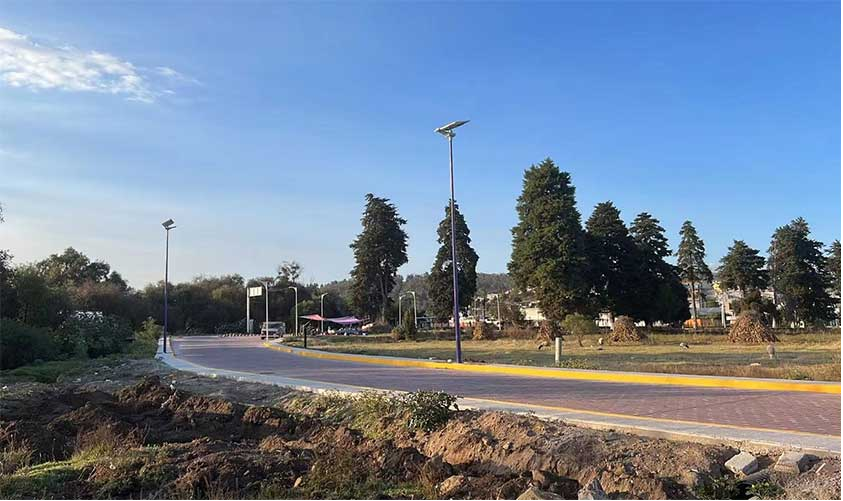
With their clean and modern design, integrated solar street lights can adapt well to different areas of a city, blend naturally into urban environments, and match modern city aesthetics. They are suitable for city streets, residential areas, and community roads, providing nighttime illumination and meeting the lighting needs of different urban zones.
Parks, Gardens, and Public Spaces
Integrated solar street lights do not rely on the traditional power grid, nor do they require trenching, wiring, or electrical connection work. They also have fewer exposed cables, making them especially suitable for landscaped areas and pedestrian zones where wiring is impractical or too costly. While maintaining aesthetic appeal, they also offer improved safety.
Rural Roads and Highways
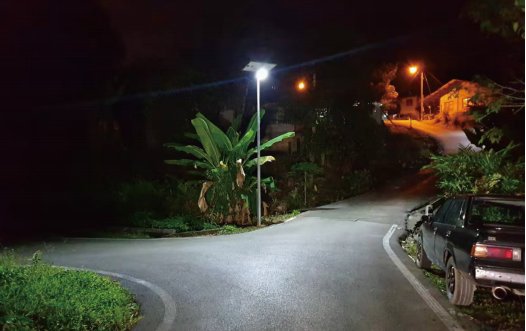
Rural areas are often far from cities, with homes and roads spread out over large areas. If conventional wiring is required, the cost can be very high and often difficult to afford, especially in areas where electrical infrastructure has not yet been installed. For this reason, integrated solar street lights are particularly suitable for regions with weak or nonexistent grid infrastructure. They can provide nighttime lighting without any grid connection, making daily life more convenient for local residents.
Parking Lots and Commercial Areas
Because their solar panels can be adjusted according to the sun’s angle, integrated solar street lights can maximize solar energy utilization. This helps ensure stable lighting while also extending illumination duration. Therefore, for large-scale lighting scenarios such as parking lots, campuses, industrial parks, and surrounding security areas, where both lighting stability and operating costs must be considered, all in two solar street lights offer an excellent solution by ensuring reliable lighting and effectively reducing operating costs.
The scenarios listed above are only some of the most common applications, but they are far from the only ones. In fact, there are many more situations where integrated solar street lamps can be used, including extreme climate environments. They can also be customized according to your specific needs. Therefore, if you have a demand for solar street lighting, especially for outdoor or specialized applications, integrated solar street lights are well worth considering, as they can help you achieve the lighting performance you want.
How to Install Integrated Solar Street Lights?
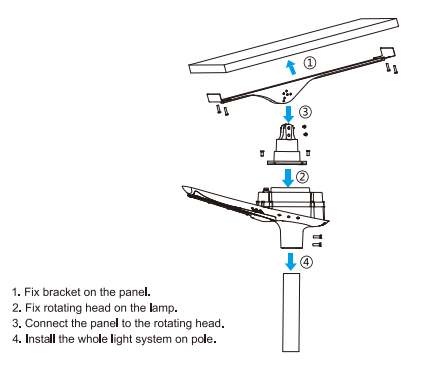
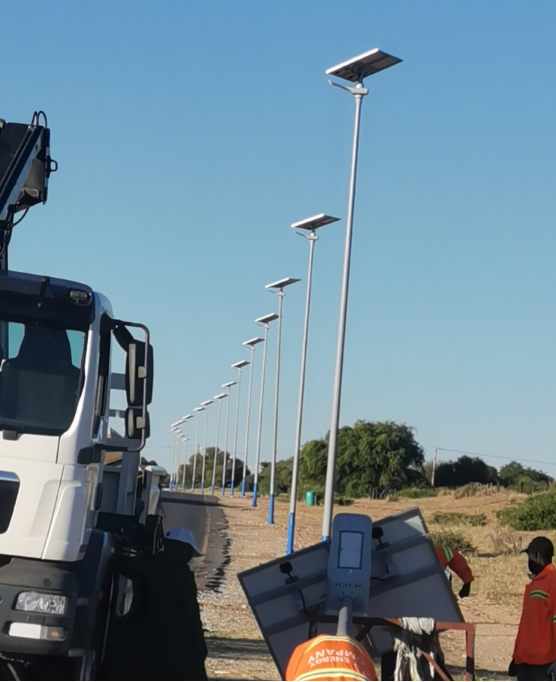
The above shows a simple installation method for integrated solar street lights. As we can see, the installation process for integrated solar LED street lights is simple and convenient, with very clear advantages over traditional solar street lights. In addition, thanks to their highly integrated all-in-one design, the installation time is much shorter than that of grid-powered lighting systems, and each unit can usually be installed in less than 30 minutes.
How to Maintain Integrated Solar Street Lights?
While designed for low maintenance, some basic upkeep ensures long-term performance:
Basic Maintenance Tips
·Clean Solar Panels Regularly – Dust, dirt, and debris reduce energy absorption. Cleaning every few months helps maintain efficiency.
·Check Battery Health – Built-in lithium batteries last long, but periodic inspection helps anticipate replacement needs.
·Inspect for Physical Damage – Check for cracks, corrosion, or loose fittings, especially after severe weather.
·Firmware or Controller Settings – Some smart models may require occasional software updates or mode adjustments to adapt to seasonal changes.
Integrated solar systems have fewer failure points than traditional grid-connected lights, reducing overall lifecycle maintenance costs.
How to Choose the Right Integrated Solar Street Light?

Selecting the best integrated solar street light involves matching product features to your specific needs. There are many models on the market, and the choice depends on project requirements, installation environment, and lighting needs. Based on 15 years of global project experience, RoadSmart recommends the following factors:
Key Selection Criteria
·Solar Panel Output and Battery Capacity – Choose based on local sunlight conditions and required lighting duration.
·LED Brightness and Beam Distribution – Higher lumen output and wider coverage ensure sufficient illumination.
·Smart Controls – For optimized energy use, look for motion sensors, adaptive dimming, and remote management.
·Durability and IP Rating – Waterproof, corrosion-resistant, and robust housing ensures longevity outdoors.
·Application Requirements – Consider location (highway vs. park) to determine ideal wattage and mounting height.
·Common Question: What’s the difference between an integrated solar street light and a split system?
—Integrated lights house all components in one unit, making installation and maintenance simple, while split systems separate batteries and panels, allowing higher customization but requiring more complex wiring. For dual-function needs, the all in two solar street light provides enhanced flexibility while maintaining simplified installation.
In addition to the factors mentioned above, the following points should also be taken into consideration:
Local climate conditions
This is a factor that is often overlooked, but it is extremely important. Different climate environments create different requirements for solar street lights. For example, in regions with frequent cloudy or rainy weather, factors such as the size of the solar panel and the battery capacity need to be carefully considered. Addressing these issues in advance will make the actual implementation much smoother later on.
Power selection and price considerations
In common thinking, we often assume that the higher the power, the better. In reality, that is not necessarily the case. The power must match the overall system design; otherwise, even a high-power configuration may be of little practical value. Likewise, the cheapest option is not always the best choice. Instead, it is important to make a comprehensive assessment based on project suitability, battery capacity, solar panel quality, and other related factors. Pursuing low upfront costs while facing frequent problems later will only result in greater losses in the long run.
Sustainability and environmental value
Energy conservation and environmental protection are long-term development trends. Although solar energy itself is a green and environmentally friendly resource, it would be counterproductive if the equipment used to convert it were not energy-efficient or eco-friendly. Therefore, when choosing solar street lights, it is advisable to select products that use high-efficiency solar panels and lithium batteries, as this can help reduce carbon emissions and support the development of green infrastructure.
Conclusion
Integrated solar street lights are intelligent, sustainable, and cost-effective lighting solutions suitable for a variety of outdoor environments. All components are housed in a durable system, minimizing installation time and maintenance, leveraging advanced power management, and operating independently of the electrical grid.
Whether for urban sidewalks, rural roads, parks, or commercial areas, integrated solar street lamps offer scalable, eco-friendly options for modern infrastructure.
RoadSmart’s all in two solar street light and integrated solar LED street light models, as premium options in the integrated category, feature 99.9% MPPT technology, IPC 5.0 intelligent power management, Class A LiFePO4 batteries, and IP65-rated housings, setting the industry standard for performance and reliability. Upgrading outdoor lighting with minimal civil works and long-term cost savings is easy with these solutions. Integrated solar street light specifications ensure optimal brightness, efficiency, and durability for every project.
For future-proof, sustainable, and smart outdoor lighting, integrated solar street lights and all in two solar street light solutions are ideal for your next outdoor project.
Frequently Asked Questions
1.What are the advantages of integrated solar street lights?
—They are easy to install, grid-independent, low-maintenance, and environmentally friendly.
2.What’s the difference between an integrated solar street light and a split system?
—Integrated lights house all components in one unit, making installation and maintenance simple, while split systems separate batteries and panels, allowing higher customization but requiring more complex wiring. For dual-function needs, the all in two solar street light provides enhanced flexibility while maintaining simplified installation.
3.Why intelligent Solar Street Light do not light on?
A: 1.Make sure waterproof connector is connected.
2.Activating charge when first installation.Connect solar panel to light body and make sure solar panel face to sunlight directly at least 5s,then check is it light on at night.
3.If it cann't light on after several days using,you can raed controller atatus instructions part on this manual.
If above information still can't solve your problem,please contact sales team directly.we will happy to serve you all the time.
4.Q: Does it need clean surface of panel?
A: Yes it is needed to clean surface regularly according to the gravity of the dust in
local city.
5.Q: Does the lamp light on automatically?
A: Yes it will light on automatically at darkness no matter which mode except “OFF”.