Solar Street Lighting Market: Demand Drivers and Regional Trends
Oct 22, 2021
Read:1333
Updated: September 29, 2026
The solar street lighting market is supported by demand for off-grid road lighting, public infrastructure upgrades and lighting in locations where grid extension or underground cabling is difficult. Municipal roads, highways, rural communities, parks, parking areas and industrial sites create different product and procurement requirements.
Market estimates vary because research providers do not always use the same scope. Some reports count complete solar street lighting systems, while others include individual components, general outdoor solar lighting or the broader smart street lighting market. Market-size figures are only comparable when their product definitions, base years and geographic coverage are disclosed.
This article examines the demand drivers, project applications and regional conditions shaping the solar street lighting industry. It does not present an unsupported global market valuation or treat national photovoltaic capacity as solar street light sales.
What Is Included in the Solar Street Lighting Market?
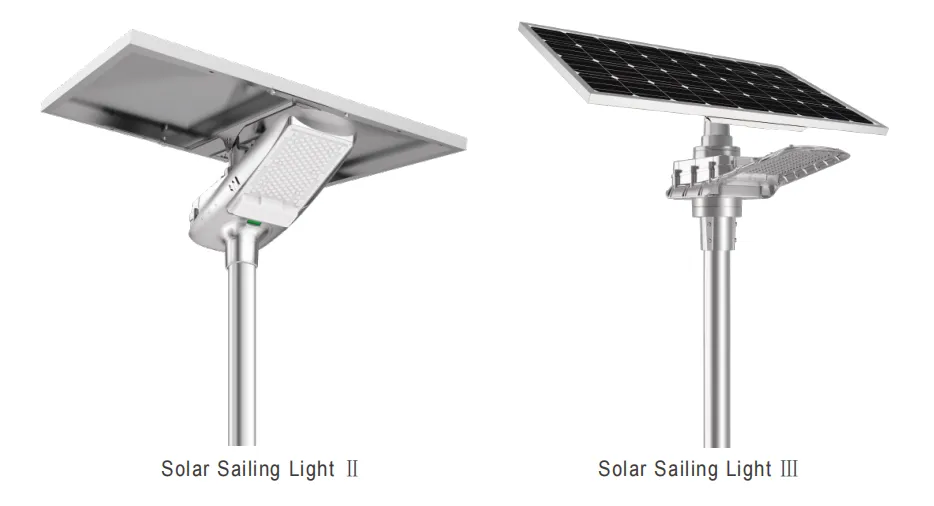
The solar street lighting market covers lighting systems that use photovoltaic panels, battery storage, LED luminaires and controllers to provide outdoor illumination without continuous grid power. Products may use all-in-one, all-in-two or split configurations depending on installation, energy and maintenance requirements.
Common applications include municipal roads, highways, rural roads, residential communities, parks, campuses, parking areas and industrial sites. These applications do not use one universal configuration. Road width, operating schedule, climate, required backup time, pole layout and local procurement requirements affect product selection.
Solar street lighting also overlaps with the smart street lighting systems when systems include programmed dimming, motion sensing, remote monitoring or communication functions. However, the wider smart street lighting market also includes grid-connected LED networks and city-management platforms, so figures from the two markets should not be treated as equivalent.
What Is Driving Solar Street Lighting Demand?
Off-Grid and Grid-Constrained Infrastructure
Solar street lighting can serve roads and public spaces where grid access is unavailable, unreliable or expensive to extend. Each lighting point generates and stores its own energy, reducing dependence on a continuous electrical connection along the road.
This is relevant to rural roads, remote communities, industrial sites and public infrastructure that would otherwise require long cable routes or additional electrical distribution work.
Reduced Cabling and Civil Works
For suitable projects, solar street lights can reduce the amount of trenching, underground cabling and grid-connection work required during installation. The actual economic benefit varies according to site conditions, equipment configuration, foundation work, maintenance and battery-replacement requirements.
A valid comparison therefore uses the complete installed and lifecycle cost rather than comparing only the purchase price of a solar luminaire with a grid-connected LED fixture.
Municipal Roads and Public Spaces
Municipal roads, parks, campuses, parking areas and community spaces create demand for lighting that can be installed without major disruption to existing infrastructure. These projects may also require photometric files, technical drawings, battery data, structural information and tender documentation.
Improved Energy Storage and Lighting Control
Changes in LED efficacy, battery systems and controller functions have expanded the range of conditions in which solar street lighting can be considered. Timed dimming and sensor-based operation can reduce nighttime energy use, while model-specific energy management can help coordinate lighting output with available battery capacity.
How the Wider Off-Grid Solar Sector Supports Public Lighting
The solar street lighting market is only one part of the wider off-grid solar sector. The World Bank and GOGLA's 2024 Off-Grid Solar Market Trends Report discusses the role of off-grid solar in electricity access, businesses and public services. Its figures should not be presented as solar street light market size, but the report provides useful context for the continuing role of decentralized solar systems. The report covers the wider off-grid solar sector and is not a dedicated solar street lighting market-size report.
For street lighting analysis, wider off-grid solar data needs to be combined with road programs, municipal procurement, public tender activity and verified project deployment information.
Regional Solar Street Lighting Market Signals
Regional demand is shaped by infrastructure investment, road conditions, electricity access, climate, procurement systems and local technical requirements. The following comparison describes project conditions rather than claiming a verified market ranking.
| Region | Observed demand context | Project considerations |
|---|---|---|
| APAC | Municipal infrastructure, rural roads, industrial areas and public-space projects create several forms of solar lighting demand. | Countries differ significantly in climate, lighting requirements, procurement rules and certification needs. |
| United States | Potential applications include parking areas, communities, public spaces, remote sites and resilience-focused infrastructure. | Projects may require careful review of photometric performance, structural requirements, glare, light spill and local approval processes. |
| Japan | Public-space lighting, disaster-preparedness applications and space-constrained infrastructure may create relevant project demand. | Product quality, documentation, visual integration, installation space and local project requirements need to be confirmed. |
| South Korea | Solar lighting can overlap with public-space, landscape and smart-city lighting initiatives. | Winter charging conditions, intelligent controls, visual design and applicable technical requirements affect selection. |
| Australia | Remote roads, parking areas, industrial sites and locations with difficult grid access can provide suitable applications. | High temperature, ultraviolet exposure, wind conditions, corrosion risk and remote maintenance need attention. |
| India | Road, rural infrastructure and public-lighting projects can support demand for independent solar lighting. | High temperature, monsoon conditions, dust, project budgets, procurement requirements and maintenance capacity influence configuration. |
APAC Solar Street Lighting Market
APAC contains several different solar street lighting demand environments rather than one uniform market. Large urban infrastructure programs, rural-road development, industrial expansion and public-space projects may all create demand, but the relevant applications and procurement conditions vary by country.
Japan and South Korea often appear in searches that combine solar lighting with smart street lighting. These markets should not automatically be described as the largest solar street lighting markets. Their relevance may instead come from interest in intelligent controls, public-space design, resilience and urban infrastructure.
Australia presents a different demand profile, including remote access roads, parking areas, industrial and mining environments, while India combines municipal, rural and public-infrastructure requirements. China is significant to solar and lighting manufacturing, but general photovoltaic manufacturing or capacity data cannot be used as a direct measure of domestic solar street lighting demand.
US Solar Street Lighting Market Considerations
In the United States, solar street lighting may be considered for parking areas, pathways, public spaces, residential developments, remote roads and sites where trenching or grid connection would be disruptive. Project decisions can be influenced by installation cost, resilience objectives, maintenance responsibilities and local lighting requirements.
The market cannot be evaluated using national demand alone. State and municipal requirements, environmental conditions, pole and foundation design, photometric criteria and restrictions on glare or light spill may differ by project location.
Factors That Limit Solar Street Lighting Market Adoption
Incomplete Technical Specifications
Projects can underperform when procurement documents specify only nominal wattage or battery capacity. A usable specification also needs lighting output, optical distribution, operating schedule, battery energy, solar-panel capacity, temperature range, pole arrangement and required backup time.
Financing and Lifecycle Cost
Upfront cost remains important for large public projects, but the comparison should also include installation, avoided cabling work, foundation construction, inspection, cleaning, battery replacement and service in remote locations. Purchase price alone does not represent total project cost.
Policy and Procurement Environment
Public infrastructure budgets, renewable-energy policies, tender procedures and import requirements can influence project activity. Their effect should be evaluated using current official programs and tender information for the target country.
Quality and After-Sales Capacity
Buyer confidence depends on whether product specifications are verifiable and whether replacement components, technical documents and after-sales responsibilities are defined. Low initial prices do not compensate for unsuitable energy sizing, poor light distribution or inaccessible replacement parts.
How to Evaluate Solar Street Lighting Market Data
Different research reports can produce different market values because they may use different product definitions, geographic coverage, currencies, base years and forecast periods. Before quoting a figure, verify whether the report covers complete street lighting systems, separate components, general solar outdoor lighting or the wider smart lighting market.
Useful evidence may include public tender records, infrastructure plans, verified shipment or sales data, municipal budgets and documented project installations. General solar capacity, LED adoption or smart-city investment can provide background, but none of these measures solar street light sales directly.
When the original methodology is unavailable, the figure should not be presented as an established market fact.
What Market Trends Mean for Solar Street Light Buyers
Regional market interest does not create one universal product specification. The required product structure, solar-panel capacity, battery energy, optical distribution, pole arrangement and control schedule depend on the road, climate, operating hours and procurement requirements of each project.
RoadSmart's solar street lighting systems include different configurations for municipal roads, highways, communities, parking areas and industrial sites. Model-specific specifications, photometric files and project documents need to be confirmed for the proposed application.
For a preliminary review, buyers can provide the project location, road width, pole height, spacing, required lighting hours, backup requirement and estimated quantity. These inputs allow the product and energy configuration to be assessed against the actual project conditions.
Conclusion
The solar street lighting market is connected to off-grid infrastructure, municipal lighting, rural development and projects seeking to reduce dependence on continuous grid cabling. The strength and form of demand vary by application and region.
APAC, the United States, Japan, South Korea, Australia and India present different project conditions rather than one shared market pattern. Climate, road layout, procurement requirements, technical documentation and lifecycle responsibilities influence which systems are suitable.
Market analysis is most useful when its scope and data sources are clear. For individual projects, verified site information and engineering requirements remain more important than a general market-size forecast.
For a project-specific assessment, you can review the project requirements with RoadSmart's technical team.