How to Size a Small Off-Grid Solar Power System
Jul 29, 2022
Read:1679
A small off-grid power system may only need to run lights, networking equipment and a few appliances, but choosing the equipment still involves more than adding up the wattage printed on their labels. The solar array must replace the energy used each day, the battery must cover the hours without sunlight, and the inverter and charge controller must safely handle the electrical demands placed on them.
The approach below is intended for initial sizing of a modest remote workstation, cabin utility circuit or similar small load—not for producing construction-ready electrical drawings. It uses one hypothetical 1 kWh-per-day example throughout, so the calculations can be followed and checked.
Calculate Daily Energy Use Before Sizing Your System
In off-grid solar system sizing, the first useful number is energy consumed per day, not the peak wattage of a solar panel. A 60 W device running for one hour consumes 60 Wh; the same device running for ten hours consumes 600 Wh. Record the devices to be powered, their measured or nameplate input power and their expected daily operating hours.
For a hypothetical small remote workstation, assume the following loads. The values are illustrations, not a measured customer project or specifications of RoadSmart equipment.
| Hypothetical load | Input power | Hours per day | Daily consumption |
| LED lighting | 20 W | 6 h | 120 Wh |
| Small fan | 35 W | 8 h | 280 Wh |
| Network equipment | 15 W | 24 h | 360 Wh |
| Laptop | 60 W | 4 h | 240 Wh |
| Total | 1,000 Wh/day |
Daily energy (Wh) = device power (W) × operating hours (h). Here the load requires 1,000 Wh, or 1 kWh, per day before accounting for conversion losses. That number does not indicate the inverter's required continuous output: several devices can run simultaneously, and motor-driven equipment may demand a higher startup power than its normal operating value.
If some equipment uses DC power directly, separate those loads from appliances supplied through an AC inverter. This distinction matters because inverter losses do not necessarily apply to the whole system in the same way.
How Much Battery Storage Does an Off-Grid System Need?
Off-grid solar battery sizing starts with the energy required during periods when the array cannot produce enough electricity. Battery capacity is normally expressed as energy (Wh or kWh), while amp-hours (Ah) only describe charge capacity at a specified nominal voltage. When comparing storage options, use Wh along with permitted depth of discharge (DoD), temperature limits and the battery management system's operating restrictions.
Suppose the workstation needs two days of autonomy and, for simplicity, all 1,000 Wh/day of the example loads are served through an inverter operating at an assumed 90% conversion efficiency. With a hypothetical 80% usable DoD allowance, an initial nominal battery-energy estimate is:
Nominal battery storage ≈ (1,000 Wh/day × 2 days) ÷ (0.90 × 0.80) ≈ 2,778 Wh (2.78 kWh).
This is a teaching calculation, not a recommendation to buy a 2.78 kWh battery. The assumed DoD and conversion efficiency are not universal battery specifications. Real designs should also consider standby losses, battery ageing, permissible discharge power, temperature effects and the manufacturer's reserve and charging limits. If part of the load is supplied directly as DC, use separate efficiencies rather than applying the AC assumption to everything.
Two days of battery autonomy does not by itself mean that a two-day cloudy period will be followed by a fully charged battery. The solar array must eventually replenish energy removed from storage while continuing to support daily demand.
Sizing Solar Panels for an Off-Grid Power System
Solar panel sizing for an off-grid system requires an estimate of energy available at the installation site. Peak sun hours (PSH) express the daily solar resource as equivalent hours at 1,000 W/m², rather than the number of hours between sunrise and sunset. For a year-round site, the limiting month can matter much more than the annual average.
For a separate preliminary daily-energy illustration, assume the example must replace 1,000 Wh per day, the site receives 4 PSH per day and the combined conversion/operating factor from array rating to delivered daily load energy is 75%. The initial array estimate is:
PV array rating ≈ 1,000 Wh/day ÷ (4 h/day × 0.75) ≈ 333 Wp.
This formula illustrates an average daily energy balance; 333 Wp is not a guaranteed or project-ready array size. The 75% factor is a single simplified allowance and must not be combined with the same losses again. Winter irradiance, shading, panel tilt, soiling, temperature, charge limits and energy needed to recover after cloudy days may require a substantially larger array. A more detailed design should model the energy path for each load and avoid mixing efficiency assumptions between the battery and PV calculations.
Use location-specific irradiation data, preferably monthly rather than only annual figures. For remote installations, confirm whether nearby trees, buildings or mounting geometry can shade the modules during the hours that matter most.
How to Choose the Right Off-Grid Inverter Size
Off-grid inverter sizing is a power problem as well as an energy problem. The inverter's continuous AC rating must support the appliances that can operate at the same time. Its surge capability must also support compatible motor or compressor startup demands without exceeding the manufacturer's limits.
For the 1 kWh/day illustration, the listed running powers total 130 W if all four operate together. This does not establish a suitable inverter rating: actual peak usage, power factor, standby demand, surge characteristics and any future loads still need checking. A refrigerator or pump could change the requirement much more than its share of daily Wh suggests.
Confirm output voltage and frequency, expected duty cycle, the battery's voltage range and protection requirements. Pure-sine-wave output is commonly appropriate for sensitive AC equipment, but a small system serving only compatible DC devices might not require an AC inverter at all. Do not select an inverter from daily energy consumption alone.
Matching the Charge Controller to the Solar Array and Battery
A charge controller connects the photovoltaic array to compatible battery charging. Solar charge controller sizing means verifying more than a headline wattage number: check permitted PV open-circuit voltage at the lowest expected temperature, the operating MPPT voltage window, allowable input/output current, battery nominal voltage and charging profile.
The solar module string configuration must stay within the controller's published voltage limits under expected site conditions. Likewise, maximum charging current must not exceed the battery manufacturer's permitted rate or the BMS constraints. Cable size, fusing, isolation, earthing and other electrical protection measures must follow applicable local codes and qualified system-design requirements.
An integrated solar generator may already include an appropriate charging stage and inverter. In that case, evaluate its published solar input range, AC output rating and battery energy instead of assuming an external controller or inverter should be added.
A Worked Example of Off-Grid Solar System Sizing
The same hypothetical workstation can now be reviewed as one coherent set of assumptions. The table is deliberately a preliminary worksheet, not a bill of materials or a tested RoadSmart configuration.
| Design input or result | Example value | What it means |
| Daily load energy | 1,000 Wh/day | Sum of listed example appliances |
| Battery autonomy target | 2 days | Storage goal without adequate solar replenishment |
| Assumed inverter efficiency for AC loads | 90% | Used only in battery illustration |
| Assumed usable DoD | 80% | Hypothetical operating allowance |
| Initial nominal battery energy | ≈2.78 kWh | Before ageing, temperature and standby adjustments |
| Assumed daily peak sun hours | 4 h | Illustration only; must use site data |
| Assumed PV-to-daily-load factor | 75% | One simplified factor for initial PV estimate |
| Initial array rating | ≈333 Wp | Replaces average daily load under stated assumptions; not recovery sizing |
| Inverter and controller | Not selected | Require simultaneous/starting load and actual equipment specifications |
The two estimates serve different design questions. The 2.78 kWh figure concerns stored energy for a two-day reserve, whereas 333 Wp concerns an assumed average daily generation requirement. It would be incorrect to present them as a complete, validated off-grid package. The system still requires equipment compatibility checks and assessment of the least favorable season, recharge time and applicable electrical safeguards.
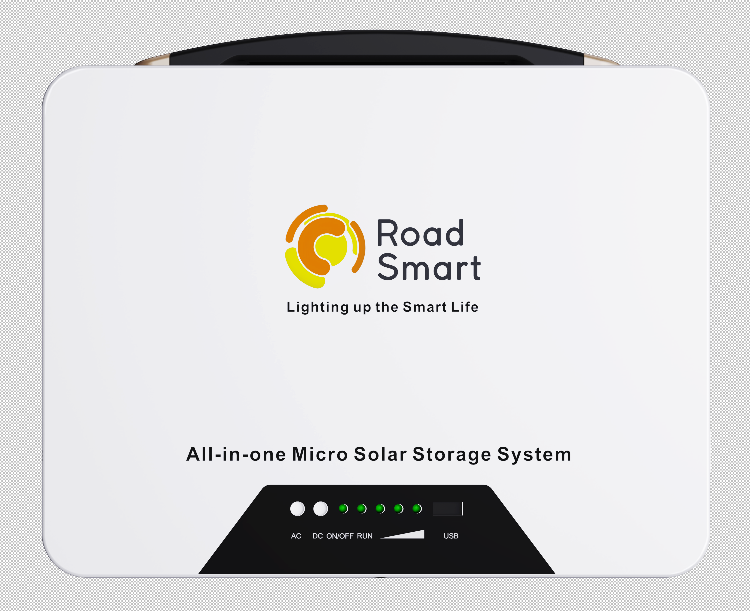
RoadSmart's micro solar storage and generator range includes integrated HopePower solar generators as well as standalone LiFePO₄ battery options. Their AC outputs, battery energies and solar charging limits vary by model. An integrated generator and a standalone battery are not interchangeable products: the latter requires compatible charging and conversion equipment to supply AC loads. Use the sizing worksheet to define what must be checked against a specific product datasheet, rather than assuming a model will meet the example automatically.
Why Real-World Off-Grid Performance May Differ
A calculation completed with a single sunny-day estimate may perform poorly in a shaded or seasonal location. Solar harvesting changes with the month and installation geometry; batteries may deliver less usable energy in cold or hot conditions; and inverters can consume electricity even when connected loads are small. Real loads also rarely follow exactly the same schedule every day.
A useful design review therefore tests more than a typical day. Check low-sun months, the longest expected operating night, battery recovery following poor weather, and simultaneous load peaks. For essential equipment, define the required service continuity and a suitable backup or load-shedding plan rather than treating an average-energy worksheet as a guarantee.
Frequently Asked Questions About Off-Grid System Sizing
Can I size the entire system using only the total wattage of my appliances?
No. Watts indicate power at a moment in time, while Wh measures energy used over time. Daily operating hours determine storage and charging requirements; simultaneous loads and startup surges determine relevant inverter limits.
Is two days of autonomy enough for every off-grid location?
No. The required reserve depends on seasonal sunlight, critical-load requirements, acceptable interruption risk and whether backup charging is available. Two days is only the assumption used in the worked example.
Do I always need an inverter for a small off-grid solar system?
Not necessarily. Compatible DC-only loads may be powered through appropriately designed DC equipment. An inverter is required when the system must supply AC loads, unless an integrated unit already provides the relevant AC output.
Can I connect any solar panel to a solar generator or charge controller?
No. Panel voltage, current, connector arrangement and array configuration must match the device's published input limits. Voltage under cold conditions and the battery's charging requirements also matter; do not make modifications without manufacturer-approved guidance.
Why might a system with enough battery capacity still shut down?
Possible causes include excessive simultaneous power, surge demand, BMS limits, low battery state of charge, temperature restrictions or incompatible electrical settings. Stored Wh alone cannot establish that a load can run safely.
Conclusion
A useful small-system estimate begins with energy demand, then connects battery reserve, solar production and the electrical limits of the equipment. The calculations above show how to build an initial worksheet, while also making clear where assumptions stop and datasheet-based engineering begins. For a proposed project, share the daily load schedule, installation location and expected backup time when discussing compatible RoadSmart solar storage options.
Technical references: Renogy, Beginner's Guide: Sizing Your Off-Grid Solar System; VeraSol, Component-Based Off-Grid Solar Energy Systems — System Design Guidelines (PDF).