All-in-One Solar Street Lights for Off-Grid Highways
Jun 22, 2026
Read:498
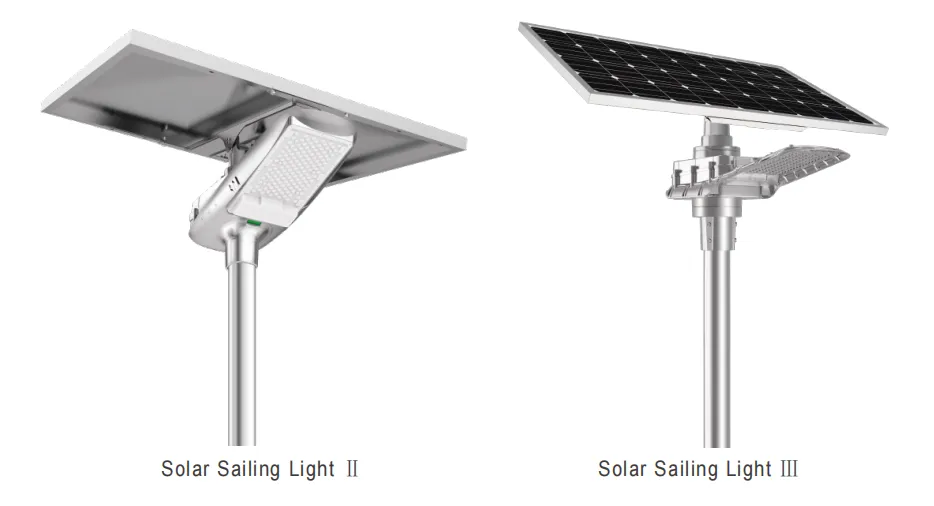
Off-grid highways need lighting systems that can operate independently, install efficiently, and reduce long-term maintenance pressure. For remote roads, desert routes, mountain highways, coastal sections, and temporary road projects, all-in-one solar street lights are often considered because they combine solar power generation, battery storage, LED lighting, and controller functions in one integrated unit.
This guide explains why all-in-one solar street lights are used in off-grid highway projects, what advantages they offer for remote road deployment, and what buyers should check before selecting a system for highway lighting conditions.
Quick Answer: All-in-one solar street lights can be suitable for off-grid highway sections because they do not rely on grid power, require less trenching and wiring, support faster deployment, and simplify maintenance in remote locations. Their actual suitability still depends on road width, pole height, sunlight conditions, battery autonomy, and project lighting requirements.
Why Is Off-Grid Highway Lighting So Challenging?
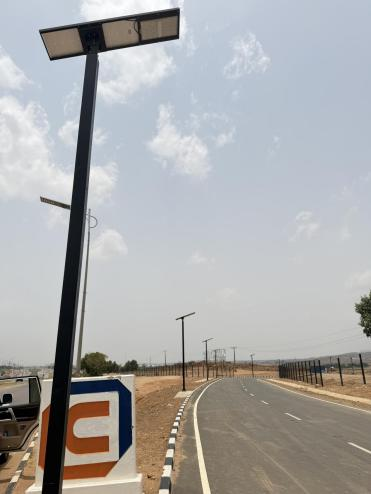
Lighting off-grid highways is challenging because the road section has no stable access to grid electricity, while the project still needs reliable nighttime illumination, manageable installation, and acceptable long-term operating cost. In remote areas, traditional grid-powered lighting often means cable trenching, distribution equipment, and additional electrical infrastructure, which can make the project significantly more expensive and slower to deploy.
Construction conditions can also be more difficult. Off-grid highway sections are often located in mountainous areas, deserts, hills, coastal zones, or other regions where terrain, sunlight conditions, wind, dust, salt spray, and access limitations affect both installation and later maintenance.
Maintenance is another concern. If the lighting system is far from cities or service centers, fault inspection and replacement can take more time and cost more. For highway operators, this means the ideal solution should reduce wiring complexity, support stable performance, and simplify future maintenance work.
Faced with these challenges, all-in-one solar street light solutions can offer an option for off-grid highway sections that need independent power supply, simpler deployment, and easier maintenance planning.
Why Are All-in-One Solar Street Lights Used for Off-Grid Highways?
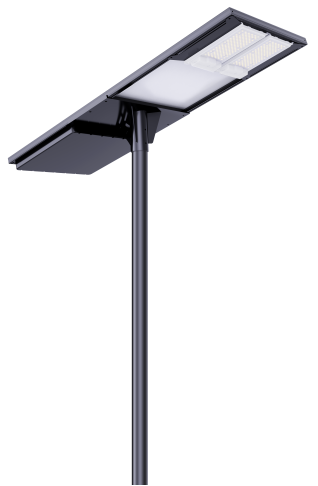
There are many types of solar street lights, but all-in-one systems are often considered for off-grid highway projects because they combine power generation, storage, control, and lighting in one compact structure. This makes them easier to deploy where grid connection is unavailable or uneconomical.
First, all-in-one solar street lights operate as independent lighting units. The solar panel charges the battery during the day, and the controller manages discharge for nighttime lighting. This reduces reliance on traditional grid infrastructure.
Second, they can support flexible deployment for different highway sections. Areas such as service zones, checkpoints, ramps, parking areas, or other key sections may need denser lighting, while other road sections may use a more standard layout based on project requirements.
Third, all-in-one solar street lights can help reduce long-term operating complexity. Without trenching and grid cabling, installation can be simpler, and maintenance teams can focus on periodic inspection, cleaning, and component checks rather than managing a larger electrical infrastructure network.
What Application Advantages Do All-in-One Solar Street Lights Have for Highways?
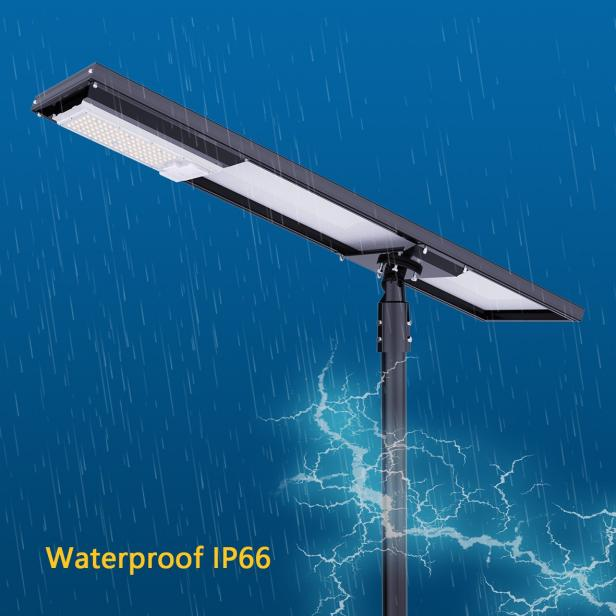
For many off-grid highway sections, all-in-one solar street lights offer practical advantages in deployment, operation, and maintenance.
1. Less Trenching and Simpler Deployment
Due to the integrated design, all-in-one solar street lights usually require less trenching, less cabling, and fewer external electrical accessories than traditional grid-powered highway lighting. This can help shorten deployment time and reduce on-site installation complexity, especially for remote roads, newly built road sections, temporary construction roads, and emergency lighting scenarios.
2. Adaptability for Different Project Environments
Off-grid highway environments can vary widely. Desert roads may need attention to high temperature, dust, and panel cleaning. Coastal roads may need stronger corrosion resistance. Mountain roads may require careful evaluation of sunlight conditions, pole position, and maintenance access. Because of this, product selection should be based on actual project conditions rather than only wattage or price.
Buyers can also work with a professional supplier such as RoadSmart to evaluate suitable configurations for highway, remote-road, and public-lighting projects.
3. Lower Operating Complexity and Smarter Control
Many all-in-one solar street lights support dimming strategies, time-based operation, and other controller settings that help balance brightness and battery usage. In suitable project configurations, these functions can support longer runtime and more stable lighting behavior during different traffic periods.
For projects that require additional management visibility, remote monitoring or smart control options may also help maintenance teams check operating status and reduce manual inspection pressure across long highway sections.
As part of green infrastructure development, solar street lights can also help reduce dependence on traditional electricity and support lower long-term energy consumption in appropriate highway applications.
What Should Buyers Check Before Choosing All-in-One Solar Street Lights for Highways?
Before selecting an all-in-one solar street light for an off-grid highway project, buyers should check the following points carefully.
1. Road Width and Lighting Target
Confirm whether the project needs lighting for a narrow road section, a service area, a ramp, a checkpoint, or a wider highway lane arrangement. Lighting target affects model selection and layout.
2. Pole Height and Spacing
Pole height and spacing influence lighting coverage and brightness uniformity. The selected model should match the actual installation layout.
3. Sunlight Conditions and Shading
The panel must receive enough daily sunlight. Mountain shadows, roadside structures, and seasonal sunlight changes should all be considered.
4. Battery Autonomy
Check how many cloudy or rainy days the system is expected to support, and whether the battery configuration matches the local weather pattern.
5. Maintenance Access and Control Requirements
For long-distance or hard-to-reach highway sections, it is useful to confirm whether easier replacement, remote monitoring, or project-specific controller settings are needed.
Project Selection Tips for Off-Grid Highway Lighting
For off-grid highway solar street light projects, buyers should compare road width, pole height, lighting hours, rainy-day backup, installation environment, and maintenance access before choosing an all-in-one solar street light model. Remote roads, desert highways, mountain routes, coastal sections, service areas, and checkpoints may require different brightness levels, battery autonomy, corrosion resistance, and controller settings.
For B2B procurement, it is also important to confirm project quantity, installation schedule, local sunlight conditions, and whether DIALux lighting layout, IES files, OEM/ODM support, or customized configuration is needed. If you need to compare wattage and structure options, view our all-in-one solar street light solutions for project-based model selection.
Conclusion
Providing reliable lighting for highways without access to grid electricity has traditionally been difficult and expensive. All-in-one solar street lights for off-grid highways offer a practical option by combining independent operation, simpler deployment, reduced wiring complexity, and easier maintenance planning.
For desert highways, mountain roads, coastal routes, service areas, bridges, and other remote road sections, the right configuration depends on road width, pole height, sunlight conditions, battery autonomy, and project maintenance goals. When these factors are matched correctly, all-in-one solar street lights can support safer and more efficient highway lighting deployment.
If you are planning an off-grid highway, remote road, or public lighting project, explore our solar street light products or contact RoadSmart for project-based model selection and technical support.
FAQ
Q1: Can all-in-one solar street lights work in remote desert areas with high temperatures?
A: They can be used in desert projects when the product configuration matches the actual environment. Buyers should confirm battery temperature range, sealing quality, dust conditions, solar panel cleaning frequency, and the required autonomy for the local site.
Q2: What should buyers check for sandstorms or extreme weather?
A: Performance during sandstorms or extreme weather depends on product configuration, sealing quality, battery design, controller settings, and local environmental conditions. For challenging environments, buyers should confirm the required protection level, temperature range, and project-specific configuration before deployment.
Q3: How long does it take to install solar lights on a highway project?
A: Installation time depends on road length, pole quantity, foundation status, site access, and the local construction plan. In many off-grid projects, all-in-one solar street lights can reduce installation complexity because they require less trenching and cabling than traditional grid-connected lighting.
Q4: Can the solar panel angle be adjusted for different latitudes?
A: Depending on product structure, some systems can support angle adjustment to improve solar capture under different local sunlight conditions. Buyers should confirm this point according to the selected model and project location.
Q5: What maintenance is usually needed for off-grid highway solar lights?
A: Typical maintenance may include panel cleaning, visual inspection of lamp housing and poles, checking connectors and brackets, and reviewing battery or controller condition based on the project environment and operating cycle.
Q6: Does RoadSmart offer project-based customization for different environments?
A: Yes. RoadSmart can support OEM and ODM requirements for project-based configurations, such as different battery options, corrosion-resistant treatment, lighting output, and other technical adjustments based on actual road and environment conditions.