Cut Commercial Lighting Energy Costs by 40% with All-in-One Solar Street Lights (2026 ROI Guide)
Jun 10, 2026
Read:373
Many outdoor lighting applications require continuous, long-hour operation, which creates a substantial lighting expense. This is especially true in commercial scenarios, where a large number of lighting fixtures are needed, lighting hours are long, and the maintenance coverage is wide. Naturally, operating costs tend to remain very high, and this can also easily lead to resource consumption.
For a typical commercial parking lot with 100 traditional 200W lights running 12 hours per night, annual electricity costs exceed $10,000. Add frequent lamp replacements and cable repairs, and the 10-year total approaches $150,000.
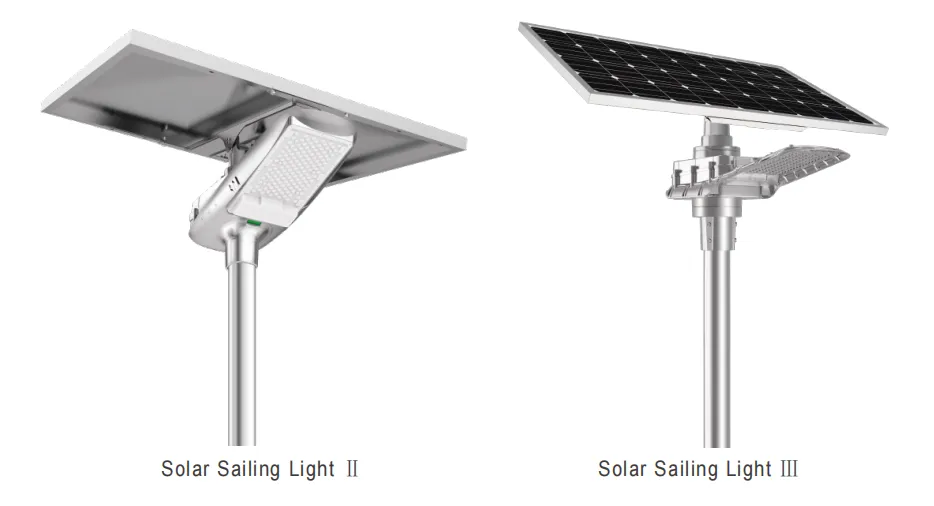
The emergence of outdoor all in one solar street light commercial lighting systems provides a new option for traditional outdoor commercial lighting. With its own independent solar street lighting system, it can effectively help outdoor commercial scenarios reduce mains electricity consumption and lower operating costs. In particular, under a reasonable design, it can effectively reduce energy costs by 40%.
After reading this guide, you will understand exactly where the 40% savings come from – and how to calculate the ROI for your own commercial project.
What are the Pain Points Faced by Outdoor Commercial Lighting?
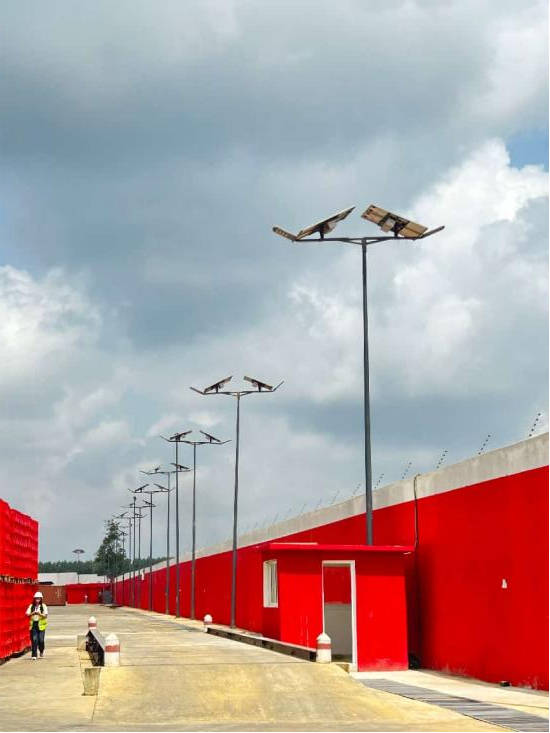
Outdoor commercial lighting scenarios mainly include commercial parks, parking lots, factory roads, logistics centres, schools, scenic areas, and public areas. They all face several common pain points:
1.Long night-time lighting hours and high electricity consumption
Most traditional outdoor commercial lighting is powered by conventional mains electricity. Commercial areas involve the needs of pedestrian flow, vehicle flow, and business operations, so lighting is almost required throughout the night. Accumulated over time, the lighting hours are very long. In addition, it is not lighting for a single site only; the number of fixtures is large, and the brightness requirements are high. Over the long term, high electricity bills become a fixed cost.
Take a commercial park with 200 traditional 250W lights operating 12 hours per night. Annual energy consumption ≈ 200 × 0.25kW × 12h × 365 = 219,000 kWh. At $0.12/kWh, that’s $26,280 per year in electricity costs alone – and this does not include demand charges or future rate increases.
2. High construction and maintenance costs
Traditional mains-powered lighting requires a large amount of manpower and resources for trenching and cable laying. Construction is difficult, the construction cycle is lengthened, and the normal operation of commercial sites is affected. In addition, once lighting problems occur, such as cable ageing or electrical leakage, the large maintenance coverage makes it difficult to investigate quickly, which is both time-consuming and labour-intensive.
Trenching and cabling for traditional grid-tied lights typically costs $300–600 per light, which is 3–5 times higher than the installation cost of an all-in-one solar light ($50–150). For a 100-light project, that adds $25,000–45,000 to the upfront budget. Later, cable aging and lamp replacement add 5–8% of initial investment in annual maintenance, plus weeks of troubleshooting time.
3. Unable to achieve intelligent control
Many existing outdoor commercial lighting systems still use traditional methods for simple switch control. They cannot automatically and intelligently adjust according to actual conditions. This causes energy waste and also generates a large amount of ineffective electricity consumption.
Without smart dimming, traditional lights run at 100% output all night – even when no people or vehicles are present. This creates over 50% ineffective energy consumption, such as from midnight to dawn. Over a year, that wasted electricity equals $13,000+ for the 200-light example above, enough to pay for several solar fixtures.
4. Unstable lighting and vulnerability to power outages
Due to the influence of traditional mains electricity, such systems rely on the power grid. If a sudden power outage occurs, the entire outdoor commercial lighting system will be affected. This not only affects the normal operation of commercial sites, but also affects night-time safety and security management.
In many commercial areas, grid voltage fluctuations or unexpected outages occur several times per year. A 2-hour blackout may cost a retail park $5,000–20,000 in lost sales and safety risks. Solar lights operate independently, providing 100% lighting stability during grid failures. The avoided loss alone can justify the investment.
How do All in One Solar LED Street Lights Reduce Energy Costs?
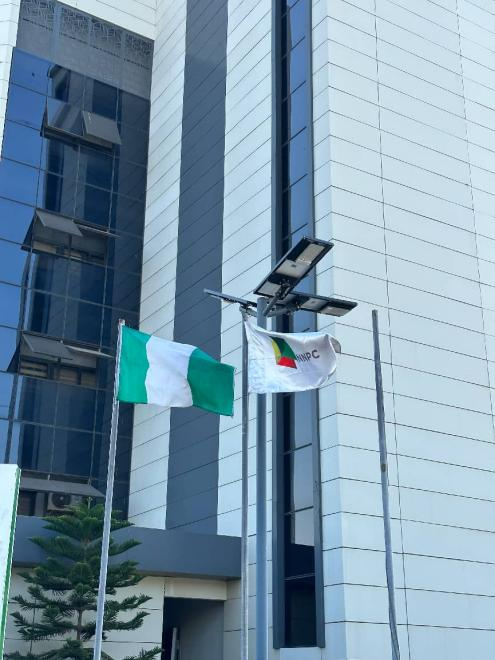
Facing the pain points of outdoor commercial lighting, what advantages do all in one solar led street lights have, and from which aspects can they solve these problems?
First, solar independent power generation reduces mains electricity consumption.
As an outdoor commercial solar street lights product, an all in one solar led street light has its own independent solar street lighting system. During the day, it uses solar photovoltaic panels to absorb sunlight for power generation and energy storage. At night, it discharges electricity for lighting, without relying on mains power generation. This achieves independent night-time lighting and zero electricity bill consumption, effectively reducing operating costs.
Second, high-luminous-efficiency LED reduces unit lighting power consumption.
All in one solar street lights usually adopt light sources such as those used in RoadSmart’s all in one solar led street light series products. All of them use high-quality LED chips. While achieving effective lighting, they can also minimise energy loss and further extend the service life of the entire fixture.
Third, the smart system enables intelligent dimming.
Lighting requirements in commercial scenarios constantly change, and the needs vary across different time periods. All in one solar led street lights are equipped with a built-in intelligent control system, which can effectively combine light control, time control, human body sensing, vehicle sensing, and remote management. This enables time-segmented lighting, truly achieves effective sensing, manages lighting according to actual needs, and reduces manual management costs.
Fourth, construction is convenient and maintenance is simple.
One of the main advantages of outdoor all in one solar street lights is simple and convenient construction. As a commercial solar street lights product,their integrated design is very installation-friendly. Construction does not require large-scale trenching and wiring, and off-grid layout can also be achieved, reducing dependence on mains electricity. At the same time, later maintenance is more targeted, without the need for large-scale inspection, making maintenance simple and convenient.
How Is the 40% Energy Saving Calculated? – 10-Year TCO Comparison (Example: 100-Light Commercial Parking Lot)
The table below compares a traditional 200W grid‑tied LED system with an all‑in‑one 120W solar street light system (equivalent brightness thanks to 160+ lm/W efficacy). Assumptions: 12 hours of nightly operation, electricity rate $0.12/kWh, 10-year lifecycle.
Traditional Grid Tied LED (200W) | All in One Solar LED (120W) | |
Equipment cost | $200 | $400 |
Installation (trenching / pole mount) | $500 | $100 |
Annual electricity cost | 200W × 12h × 365 ÷ 1000 = 876 kWh → $105 | $0 |
10-year electricity cost | $1,050 | $0 |
Annual maintenance (lamp replacement, cable checks) | $30 | $10 |
10-year maintenance cost | $300 | $100 |
10-year total cost (per light) | $2,050 | $600 |
10-year total cost (100 lights) | $205,000 | $60,000 |
Energy cost saving per light over 10 years: $1,050 (electricity) + $200 (lower maintenance) = $1,250
Total saving for 100 lights: $125,000
Percentage saving: ($2,050 – $600) / $2,050 = ~71%
He 40% figure cited in the title is a conservative industry benchmark. As shown above, actual savings often exceed 40%, especially in regions with higher electricity rates ($0.15–0.25/kWh) or longer nightly operation. Payback period for the higher upfront cost of solar is typically 3–5 years – after that, the system delivers free energy for its remaining 5–10 year lifespan.
Note: Actual savings vary by local electricity rates, sunlight hours, installation conditions, and project scale. RoadSmart provides a free, site‑specific TCO analysis for commercial projects.
Conclusion
The core pain points of outdoor commercial lighting are the cost and maintenance pressure caused by long-term operation. Therefore, all in one solar led street lights, as the best commercial solar lights,with their independent solar street lighting system, can effectively reduce mains electricity consumption and save operating costs. High-luminous-efficiency LED reduces the power consumption of each fixture, intelligent dimming reduces ineffective lighting, and the integrated structure lowers wiring and maintenance costs. The 40% reduction in energy costs comes from all these aspects; it is the result of the entire system working together. Therefore, if you have outdoor commercial lighting project requirements, you may wish to give priority to considering commercial all in one solar street light lighting system.
FAQ
Q1: How is the 40% energy saving calculated? Is it guaranteed?
A: The 40% is a typical conservative estimate based on zero electricity bills + high-efficiency LEDs + smart dimming. Actual savings vary by local electricity rates, sunlight hours, and project scale. RoadSmart provides a free TCO analysis for your specific site.
Q2: How long does it take to recover the higher upfront cost of solar lights?
A: Payback period is typically 3-5 years. After that, the system delivers free energy for the remaining 5-10 years. For projects with high electricity rates ($0.15+/kWh), payback can be under 3 years.
Q3: Can solar lights work in shaded commercial areas (e.g., under trees or buildings)?
A: Partial shade reduces charging efficiency. For shaded sites, consider split-type systems where the solar panel can be placed in a sunnier location, or request a site assessment from RoadSmart.
Q4: What happens during extended rainy periods? Will the lights go dark?
A: Quality all-in-one solar lights have 5-7 days of battery autonomy. During consecutive rainy days, the intelligent controller automatically dims to extend runtime. Lights will not go completely dark.
Q5: Is there government funding or tax incentives for commercial solar lighting?
A: Yes. Many countries offer tax credits, accelerated depreciation, or grants for solar infrastructure. For example, the US Investment Tax Credit (ITC) covers 30% of solar project costs. RoadSmart can help you identify local incentives.
Q6: Can RoadSmart provide a turnkey solution for my commercial project?
A: Yes. RoadSmart offers end-to-end service: site assessment, DIALux simulation, product selection, installation guidance, and after-sales support. Contact us with your project details for a customized quote.