
solar street light,solar street lights,solar powered street light,solar led street light,led solar street light,all-in-one solar street light,integrated solar street light

Blogs

From design ideas and installation guides to expert insights and real-world case studies—you'll find the knowledge you need to light up your next project with confidence.

Solar Street Lights Explained 2026

Blogs

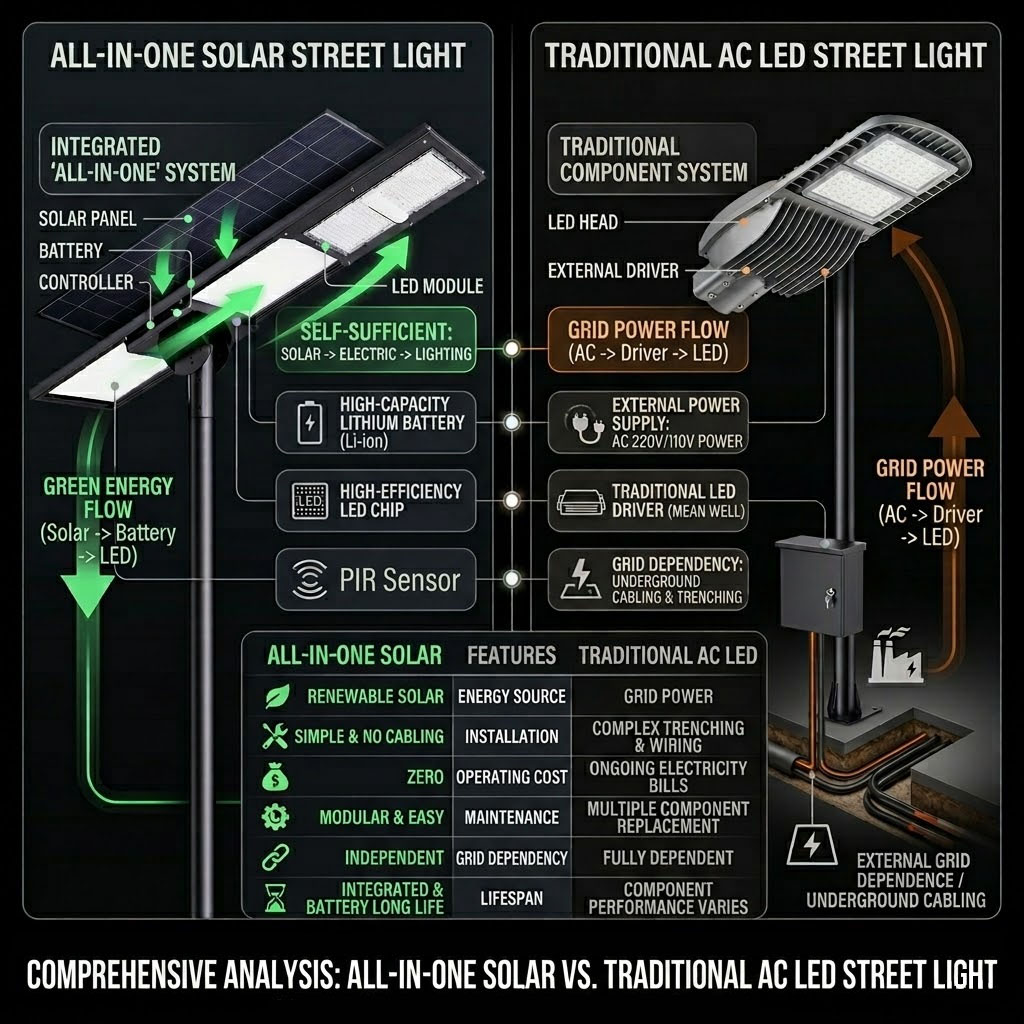
Solar Street Lights Explained 2026 What is Solar Street Light?A solar street light is an outdoor lighting system that uses solar energy to power the light fixture. Unlike traditional street lighting that is powered by electricity from the grid, solar street lights harness energy from the sun during the day through photovoltaic (PV) panels. This energy is stored in a battery and used to power the light at night. Solar street lights are self-sufficient, off-grid systems that are becoming more popular in urban, rural, and remote areas due to their energy efficiency and cost-effectiveness. They provide lighting without the need for trenching, utility bills, or grid access, making them an ideal solution for sustainable urban development.Typically, a solar street light consists of three main components: a solar panel, a battery, and a LED light fixture. These components work together to ensure efficient energy harvesting, storage, and lighting performance throughout the night. Solar street lights are available in different configurations, including all-in-one designs and split-type systems, offering flexibility in installation based on environmental factors and site conditions.How Solar Street Lights WorkThe operation of a solar street light follows a simple, efficient process. Here's how the system works:Energy Harvesting: During the day, the solar panel absorbs sunlight and converts it into electricity. The PV panel typically faces the south (in the Northern Hemisphere) or north (in the Southern Hemisphere) for optimal sunlight exposure. The amount of sunlight captured depends on factors such as weather conditions, shading, and the angle of the panel.Energy Storage: The electricity generated by the solar panel is directed to a battery for storage. In most cases, LiFePO4 (Lithium Iron Phosphate) batteries are used due to their superior safety, longevity, and efficiency compared to other battery chemistries. These batteries store the energy collected during the day, ensuring the light is powered during the night.Energy Distribution: As the sun sets, the controller detects the ambient light levels and switches the light on automatically. The stored energy is then used to power the LED light fixture, which is the primary light source. The system often includes MPPT (Maximum Power Point Tracking) technology to optimize energy conversion from the solar panel to the battery, ensuring maximum efficiency, even under partial shading or variable sunlight.Lighting Control and Efficiency: Many modern solar street lights come equipped with adaptive motion sensors or dimming controls to further conserve energy. For example, the light may dim when no movement is detected and return to full brightness when motion is sensed. This enhances energy efficiency and extends the battery life.Solar Street Light Benefits1.Energy Savings and Sustainability:One of the biggest advantages of solar street lights is their energy independence. Since they run on solar power, they eliminate electricity bills entirely. The energy captured from the sun is free and abundant, reducing the reliance on grid-based electricity. Additionally, solar street lights contribute to sustainability by reducing carbon emissions and supporting the global transition to clean energy.2. Low Maintenance:Solar street lights have minimal moving parts, which significantly reduces the need for frequent maintenance. With LiFePO4 batteries offering longer life cycles and MPPT controllers optimizing energy efficiency, these systems require only periodic cleaning of panels and lens adjustments. The absence of cables and wiring also reduces the risk of wear and tear, lowering maintenance costs.3. Reliability and Resilience:Unlike grid-powered systems, solar street lights continue to operate during power outages. They are also highly durable and can withstand harsh weather conditions such as extreme heat, cold, rain, or snow, especially when equipped with IP-rated enclosures and surge protection. Solar street lights are an excellent option for areas prone to electrical grid disruptions or remote locations without grid access.4. Fast and Easy Installation:Installation of solar street lights is quick and easy since it does not require digging trenches or laying down cables. The system is completely independent, so once the poles are set in place and the solar panels are positioned, the light can start operating without complicated electrical work. This also reduces civil work costs and installation time, making it a more economical solution.5. Flexible Deployment:Solar street lights can be installed virtually anywhere, including areas without access to the electrical grid. This flexibility makes them suitable for use in rural roads, highways, parking lots, parks, residential areas, and even emergency routes.Solar Street Light Applications1.Municipal and Urban Roads:Solar street lights are increasingly used in municipal areas to light streets and roads, especially in cities focusing on green urban planning. These lights help cities meet sustainability goals by using renewable energy to power public infrastructure. Solar street lights are ideal for both main roads and side streets where electricity access may be expensive or logistically challenging.2. Rural Roads and Highways:In rural areas or on highways where the cost of extending grid power is high, solar street lights offer an affordable, reliable solution. By placing solar-powered lighting systems along these routes, municipalities can improve safety for drivers and pedestrians without relying on costly infrastructure.3. Parks and Public Spaces:Public parks and open spaces benefit from solar street lighting due to its ability to provide secure and environmentally friendly lighting. Solar-powered lights illuminate pathways, playgrounds, and recreational areas without the need for external power sources, contributing to a safer and more enjoyable outdoor experience.4. Parking Lots and Campuses:Solar street lights are also ideal for parking lots, campus grounds, and shopping centers. They provide illumination at night to enhance security while ensuring energy savings. Motion-detection features can be employed to boost light output during busy periods while conserving energy during quieter hours.5. Remote and Off-Grid Locations:Solar street lights can be deployed in remote locations or off-grid areas, such as villages, industrial sites, or construction zones, where grid power infrastructure is either unavailable or too expensive to install. With solar lighting, these areas can receive reliable, sustainable lighting at a fraction of the cost of grid-connected systems. See full solar street lighting solutions.Solar Powered Street Lights vs LED Grid Light1.Power Source:Grid-connected LEDs rely on electricity from the power grid, which can be expensive and is subject to outages or restrictions. In contrast, solar street lights are powered by renewable solar energy, which reduces operational costs and eliminates electricity bills.2. Installation Cost and Complexity:Installing grid-powered LEDs often involves costly civil works such as trenching, wiring, and switchgear. Solar street lights, especially all-in-one designs, require minimal installation time and no underground wiring, resulting in lower installation costs.3. Maintenance:Grid-connected lights typically require more frequent maintenance, especially when dealing with power outages, faulty wiring, or broken switches. Solar lights, on the other hand, have low maintenance requirements and long-lasting components, making them a more cost-effective long-term solution.4. Environmental Impact:Solar street lights are more environmentally friendly as they produce no CO2 emissions and rely on renewable energy. Grid-connected lights, though efficient, still contribute to the carbon footprint, especially in areas where power is generated from fossil fuels.Solar Street Light ComponentsThe key components of a solar street light are designed to work together seamlessly for reliable performance. Here's a breakdown of each:Photovoltaic (PV) Panel:The PV panel absorbs sunlight during the day and converts it into electrical energy. The efficiency of the panel is crucial for the overall performance of the system, as it determines how much energy is captured and stored in the battery.Battery:The battery stores the energy generated by the PV panel. Common battery types include LiFePO4 (Lithium Iron Phosphate), which offers longer life cycles, better temperature tolerance, and higher efficiency compared to other battery types like lead-acid batteries.Charge Controller:The charge controller regulates the power flow between the PV panel, battery, and light fixture, ensuring the battery is properly charged while preventing overcharging or deep discharging. MPPT (Maximum Power Point Tracking) controllers enhance energy capture, even under suboptimal conditions like partial shading or dirt buildup.LED Light Fixture:The LED fixture provides efficient and high-quality lighting output. LED lights are known for their longevity and low energy consumption. The fixture is typically designed to provide optimal brightness and beam distribution for the application at hand.Mounting and Pole Structure:The pole and mounting system support the PV panel, battery, and LED fixture. These systems are designed to be sturdy and resistant to weather conditions such as wind and rain, ensuring long-term durability.Optional IoT and Sensors:Some modern solar street lights include Internet of Things (IoT) capabilities for remote monitoring and control. Motion sensors or adaptive dimming can be included for added energy efficiency, ensuring the light adjusts to real-time environmental and traffic conditions.ConclusionSolar street lights offer a powerful, sustainable solution for outdoor illumination in a variety of settings. With benefits like zero electricity bills, low maintenance, reliable performance, and environmental sustainability, they are increasingly being adopted worldwide. Whether in urban streets, rural roads, or public parks, solar street lights provide a cost-effective, eco-friendly way to enhance safety and lighting quality. As technology advances, solar street lights will continue to lead the way in the future of street lighting, especially with the integration of smart controls, IoT, and advanced energy management systems.

View Detail

101 Guide to Smart Street Lighting System

Blogs

101 Guide to Smart Street Lighting System IntroductionCities, campuses, industrial parks, ports, airports, and residential communities are all under pressure to make outdoor lighting more efficient, more responsive, and easier to manage. Traditional street lights can illuminate roads, but they cannot “think.” They do not understand traffic patterns, weather conditions, maintenance needs, or energy priorities. A modern smart street lighting system does all of that and more.This guide explains what smart street lighting is, how it works,core conponents, why it matters, and real projects. It is written for project owners, city planners, contractors, engineers, distributors, and anyone evaluating a smart street light project or a larger intelligent street lighting system project. If you want a practical, structured overview of smart city street lighting, this is the place to start.What Is Smart Street Lighting?Smart street lighting is a connected outdoor lighting approach that combines LED luminaires with controls, sensors, communication, and software management. Unlike conventional street lights that simply switch on at dusk and off at dawn, a smart street lighting system can dim, brighten, report faults, track energy use, and respond to real-time conditions such as traffic flow, pedestrian activity, or weather changes.At a system level, smart city street lighting usually includes four layers: the lighting fixture, the control device, the communication network, and the management platform. Together, these elements allow a smart street light control system to operate lights individually or in groups, execute dimming schedules, receive sensor data, and send performance information back to a central dashboard. This is why intelligent street lighting is not just about efficient luminaires—it is about turning lighting infrastructure into a responsive, manageable, and data-driven network.In practice, a smart led street light can automatically follow time-based or motion-based profiles, support remote maintenance, and integrate with a smart street light management system for asset monitoring and operational analysis. For larger deployments, an intelligent street light control system can also support zoning, adaptive lighting, and future smart-city functions. That is what makes a smart street light project or an intelligent street lighting system project fundamentally different from a basic LED street light upgrade.Why Smart Street Lighting MattersStreet lights are among the most widespread public assets in any city or community. They consume energy every night, require regular maintenance, and directly affect road safety, pedestrian comfort, and security perception. That means even small improvements, when multiplied across hundreds or thousands of poles, create major operational gains.Lower Energy ConsumptionA key reason many municipalities adopt smart city street lighting is the ability to reduce energy use without sacrificing safety. Smart systems combine LED efficiency with scheduled dimming, occupancy-based control, and scene management. Instead of running at full output all night, a smart street lighting system can use lower levels during quiet periods and higher levels only when needed.Better Maintenance EfficiencyIn conventional systems, failures are often discovered only after public complaints or manual inspection. A smart street light management system changes that by reporting faults automatically. Maintenance teams can see which fixture failed, what the probable cause is, and whether the issue is urgent. That reduces night patrols, truck rolls, and response times.Improved Public SafetyLighting quality strongly affects visibility. With intelligent street lighting, cities can target higher output at intersections, pedestrian crossings, and late-night activity zones while keeping lower-risk segments dimmed to save energy. This flexibility is especially useful in a complex intelligent street light project where road use varies by hour and location.Data-Driven OperationsA modern smart street light management system produces usable data: burn hours, dimming profiles, real-time power usage, alarm logs, and communication status. This helps operators improve budgeting, maintenance planning, and energy strategy.Foundation for Smart City ExpansionA smart city street lighting network can become a platform for other urban technologies such as environmental sensors, traffic counters, CCTV integration, emergency buttons, EV charging coordination, and public Wi-Fi nodes. For many cities, street lighting is the easiest distributed infrastructure to upgrade first.Core Components of a Smart Street Lighting System1. Solar Street Light ControllerThe controller is the intelligence center of the system, responsible for energy harvesting, battery protection, power allocation, and operating stability. RoadSmart integrates multiple proprietary control technologies to improve reliability, efficiency, and long-term performance.Multi-Peak MPPT TechnologyAccurately tracks the maximum power point even under partial shading, dust, or panel mismatch, helping the system harvest more solar energy throughout the day.Intelligent Power Control 5.0Dynamically adjusts output based on battery condition and real operating demand, ensuring more stable nighttime lighting and longer runtime during cloudy or rainy periods.ICD TechnologyIntelligent charge and discharge management improves battery safety, balances power flow, and extends overall battery service life.Dual-Core CPU ManagementA dual-core architecture enhances controller response speed and operating reliability, while the backup logic reduces the risk of data loss or control failure.Mode Memory ManagementThe controller stores operating parameters and restores them automatically, ensuring consistent performance after maintenance, transport, or unexpected interruptions.OLC TechnologyOptimizes load control and power distribution to improve system efficiency and protect key components under varying operating conditions.Intelligent Temperature ControlContinuously monitors thermal conditions and adjusts performance accordingly to maintain stability and protect the controller and battery in extreme environments.2.Advantages of the Solar Street Light SourceThe light source determines how efficiently solar energy is converted into usable illumination. RoadSmart combines high-performance LED chips with advanced optical design to deliver brighter, more uniform roadway lighting.High-Efficiency LED ChipsWith the same wattage input, RoadSmart's LED source delivers higher brightness and better lighting efficiency, helping reduce energy consumption while maintaining strong performance.Remote Controller with Six Classic Working ModesMultiple pre-set operating modes allow flexible adjustment for different roads, weather conditions, and traffic patterns, making the system easier to adapt to real project needs.Patent Bat-Wing LensRoadSmart's patented bat-wing lens improves light distribution, enlarges the lighting area, and enhances roadway uniformity while reducing dark spots and glare.3. Solar Street Light Solar PanelThe solar panel is the primary energy source of the system, so both performance and structural reliability are critical. RoadSmart was one of the first brands in the solar street lighting industry to emphasize strength and safety analysis as part of product development.To ensure long-term safety and reliability, each system undergoes a series of validation tests, including:Waterproof testingDustproof testingAnti-corrosion testingTransportation simulation testingThese tests help verify that the solar panels and overall system structure can withstand challenging outdoor conditions and maintain stable field performance.4. Solar Street Light Battery SystemThe battery system is a core factor in autonomy, stability, and lifecycle cost. RoadSmart applies 3.2V MPPT technology up to 160W to improve battery pack reliability and reduce the risks commonly found in conventional multi-string systems.In traditional 12V or 24V multi-string battery structures, differences in cell capacity, voltage, and internal resistance can affect the entire battery pack. If one cell becomes unstable, the overall system life may be significantly reduced.With RoadSmart's 3.2V single-string MPPT technology, the impact of a single-cell issue is greatly isolated, so the whole battery pack is less vulnerable.This design offers several key benefits:Reduces the probability of battery-related problems by 75% compared with traditional 12V systemsImproves overall product stabilityExtends service life by up to 3 timesAs a result, the battery system becomes safer, more durable, and better suited for long-term outdoor solar lighting applications.5. Smart Solar Street Lighting SystemBeyond hardware performance, RoadSmart also focuses on intelligent system integration to create more efficient and secure lighting networks.Internet of Things SystemEnables real-time monitoring, remote data access, and easier centralized management of street lighting assets.Hybrid AC-DC SystemSupports more flexible power supply configurations, improving application adaptability in different project environments.Anti-Theft Alarm SystemAdds an extra layer of security by helping detect unauthorized movement or tampering, protecting valuable system components in the field.Smart Street Lighting vs. Traditional Street LightingComparison AreaSmart Street LightingTraditional Street LightingOperating LogicUses automated schedules, sensor response, and remote commands to adjust lighting in real time.Typically operates with simple on/off control through timers or photocells.Energy EfficiencyOptimizes output through dimming, motion-based control, and zone management to reduce unnecessary energy use.Usually runs at fixed output all night, regardless of traffic or activity levels.Control CapabilitySupports individual, group, or city-wide control through a smart street light control system.Control is generally local only, with limited or no centralized flexibility.Monitoring & DiagnosticsReports power use, communication status, and faults to a smart street light management system.Faults are often discovered only through manual inspection or public complaints.Maintenance ApproachEnables predictive and remote maintenance with alarm logs and asset-level diagnostics.Relies on reactive maintenance after a visible outage or service issue occurs.Lighting AdaptabilityCan brighten or dim based on time, traffic, pedestrian movement, weather, or programmed scenes.Provides static lighting output with little or no adaptability.Data ValueGenerates useful operational data for energy analysis, maintenance planning, and performance reporting.Produces little to no data beyond direct electricity consumption.Integration PotentialCan serve as a platform for broader smart city street lighting functions such as sensors, monitoring, and connected services.Functions only as a lighting asset, with limited ability to support digital infrastructure.Project ValueDelivers both lighting performance and infrastructure intelligence in a smart street light project or intelligent street lighting system project.Primarily delivers basic illumination without networked management benefits.By contrast, smart street lighting adds intelligence, communication, and centralized oversight. The difference is not just energy savings. It is the shift from passive lighting to responsive lighting.How a Smart Street Lighting System WorksTo understand the operational logic of a smart street lighting system, imagine a normal evening in a city district.At sunset, the local light sensor or astronomical schedule triggers the fixtures in a zone to switch on at a predefined brightness. Between 6 PM and 10 PM, the district experiences moderate pedestrian and vehicle traffic, so the lights may remain at 100% output. Later at night, traffic declines. The central system automatically dims the fixtures to 50% or 30%.If a motion sensor detects a pedestrian or a car, nearby lights can brighten temporarily, creating an illuminated path ahead of movement. At the same time, the controller records energy use, node status, and communication quality. If one driver overheats or one luminaire loses power, the platform flags the fault and alerts the maintenance team.That is the operational value of smart street lighting: not just automation, but adaptive, reportable automation.Intelligent Street Lighting Projects & CasesUrban RoadsResidential StreetsCampuses and ParksRural RoadsParking AreasA major smart city street lighting deployment often starts on urban roads where energy savings and maintenance efficiencies scale quickly. Main roads benefit from scheduled dimming, while intersections and crossings may remain brighter for safety.In low-traffic neighborhoods, intelligent street lighting can reduce late-night output without sacrificing security. Motion-responsive lighting is especially valuable where residents want comfort but not constant glare.Universities, hospitals, industrial parks, and large campuses benefit from zone-based lighting scenes and smart path illumination.On low-traffic roads, especially with solar-based systems, adaptive dimming helps preserve battery autonomy. This can be a strong use case for an intelligent street lighting system project in off-grid environments.Smart controls help reduce power usage during low occupancy while preserving visibility for vehicles and pedestrians.Explore Roadsmart's solar street lighting solutions.FAQs about Smart Street Lighting SystemsQ1.Does every smart street light need a sensor?No. Some systems rely only on schedules and remote control. But sensors improve responsiveness and energy efficiency, especially in lower-traffic environments.Q2.Is a smart street lighting system only for large cities?Not at all. A campus, industrial park, township, or residential development can benefit from a smart street light control system just as much as a major city.Q3.How do smart street lights improve public safety?Smart street lights improve public safety by providing better visibility, adaptive lighting where activity occurs, and reliable operation through real-time monitoring and faster maintenance response.Q4.What should I consider before starting a smart street light project?Before starting a smart street light project, consider your energy-saving goals, site conditions, road types, control requirements, communication method, maintenance workflow, and long-term scalability.The EndIf your next intelligent street lighting system project is being planned now, start with clear goals, strong lighting fundamentals, and a control strategy that matches real traffic and community use. That is how smart street lighting moves from a product concept to a long-term infrastructure advantage. Roadsmart is a high-tech enterprise dedicated to intelligent solar street lights. If interested, please let us know anytime!

View Detail

7 Red Flags to Watch for When Buying All in One Solar Street Lights from Overseas Suppliers, to Help You Reduce Procurement Mistakes

Blogs

7 Red Flags to Watch for When Buying All in One Solar Street Lights from Overseas Suppliers, to Help You Reduce Procurement Mistakes What should you pay attention to when purchasing all in one solar street lights? This is a question that needs to be considered before procurement.The procurement of all in one integrated solar street light is not a simple choice. It involves not only the selection of a single product, but also a series of considerations behind it, such as the all in one solar street light supplier’s strength, product quality, actual application suitability, after-sales service, and more. It is a comprehensive evaluation.Based on many years of research on outdoor solar street lights, this article will share, from the buyer’s perspective, 7 warning signs that must be noted when purchasing all in one solar street light overseas. These cover several core procurement dimensions, including supplier qualifications, product quality, and after-sales support. The goal is to help you avoid pitfalls, choose a reliable and professional all in one solar street light manufacturer, and minimize procurement mistakes as much as possible.Warning Sign 1: The quotation is very low, but the configuration is not explainedA low quotation is one of the most common warning signs and is highly tempting. Based on your requirements, the supplier gives you a quotation very quickly, far below the average market of all in one solar street light price, but the description of the key configurations is vague and lacks detailed explanation.When facing this kind of issue, one very important point must be made clear—do not take chances just because the price is low. Instead, you should be more alert. You can do research in advance to understand the average range for selecting all in one solar street lights price. Secondly, configuration is the hard guarantee of product quality. Details such as battery type and capacity, controller functions, and housing material need to be clearly written out in detailed parameters, and the actual performance that can be achieved should also be specified.Warning Sign 2: The product parameters are exaggerated, and the actual data does not matchWhen reviewing the product parameter section, if you see a very attractive specification sheet but the data does not correspond consistently, then you need to check whether the product parameters have been exaggerated. For example, if it claims ultra-long battery life, but the battery equipped inside is only of ordinary specification, this is clearly false advertising.Our way of dealing with this is to understand in advance the mainstream product parameters, corresponding functions, and prices of all in one integrated solar street light, and to remain cautious about exaggerated specifications. If you truly do not understand, you can ask the supplier to provide configuration recommendations according to project requirements and application scenarios, as well as third-party test reports, to ensure the consistency of the parameters.Warning Sign 3: Important hardware cannot be explained clearly, and there is no basisCore hardware configuration is the key factor that determines the operating stability of all in one integrated solar streets. Different configurations depend on different application scenarios, regions, environments, and climates. If an all in one solar street supplier provides you with a complete hardware configuration plan, keeps emphasizing its functions, but cannot provide any concrete basis for it, then it is very likely that the configuration is being falsely reported.We should not be misled by appearances, but start from the actual needs of the project itself and determine what kind of configuration is required by the environment. For example, in areas with heavy rainfall, more attention should be paid to the waterproof performance of the materials. As for the battery type, all in one solar street light with LiFePO4 battery has better heat dissipation and stability, which helps extend service life.Warning Sign 4: No sample is provided, and batch control is vagueIn overseas procurement, it is easy to encounter intermediary traders rather than actual all in one solar street light factory. In such cases, some suppliers may refuse to provide samples for various reasons, or provide high-quality samples at the early stage, while the bulk goods later show serious inconsistencies and various quality problems.Based on this type of issue, what we need to focus on is the consistency between the sample and the bulk goods. First, samples must be provided, and the specifications, parameters, materials, and workmanship of the sample should be recorded in detail and agreed upon by both parties, with detailed provisions written into the contract. Second, check whether there are clear service descriptions and commitments, as well as a systematic quality inspection process and standards. If conditions allow, you may request shipment inspection photos or videos. Suppliers who truly value long-term cooperation will not avoid these issues.Warning Sign 5: Unable to provide valid qualifications and overseas project casesWhen it comes to the source basis of product specifications and configuration details, one relatively direct way of verification is to ask the all in one solar street light manufacturer to provide business licenses, production permits, compliance certifications, and other qualifications. If the other party evades the request or speaks vaguely, then this needs to be considered carefully, as they are very likely to be an intermediary or a small workshop.To deal with this kind of problem, in addition to requiring the supplier to provide the necessary qualifications, they also need to be checked one by one, with emphasis on whether the production scope includes all in one solar street lights. You can also ask them to provide overseas project cases of the same type. In this way, you can verify the supplier’s strength from both sides and find a reliable all in one solar street light supplier.Warning Sign 6: Delivery time is unclearAfter clarifying the above factors, whether the supplier can deliver on time is also very important, because this will directly affect the project schedule and delivery timeline. Therefore, after asking about the specific delivery time, you need the supplier to provide a clear delivery schedule, dates, and related arrangements. If they cannot provide such commitments and arrangements, then this requires further consideration.A relatively safe way is to inform the supplier of the project schedule and delivery cycle in advance and provide clear requirements. Secondly, the delivery time, production progress tracking method, transportation method, and other details should be clearly agreed upon in the contract. You can also ask the supplier to provide a production plan and regularly report production progress to avoid delivery delays.Warning Sign 7: The warranty promise sounds good, but the after-sales process is vagueThere is another aspect that needs special attention in overseas procurement—after-sales policy. If a supplier starts by claiming a 3-year or 5-year warranty, but when asked about the specific warranty scope and detailed content, they cannot explain clearly, then you need to be more cautious. This is a very important part of ensuring that the product can continue to receive service afterward and that there is a specific person responsible.The standard for judgment is that you can clearly require the supplier to provide a clear after-sales policy and detailed after-sales terms, including the warranty period for core components, repair response time, return and exchange conditions, and overseas maintenance outlets (if any), and all after-sales commitments should be written one by one into the procurement contract to clarify the responsibilities of both parties.ConclusionIf you need to purchase all in one solar street lights overseas and do not know where to start, you can read the content of this article. I hope it can provide you with some ideas. Of course, this is not something that can be mastered all at once. Only by repeatedly understanding some basic information can you make certain judgments. If you want to save time or improve efficiency, you can directly contact RoadSmart. As a professional all in one solar street light manufacturer in China, with 15 years of industry experience and coverage of all categories of solar street lights, its products sell well in more than 120 countries and regions around the world and have received positive feedback from users worldwide. It can provide you with effective solar street light solutions and reduce procurement mistakes.

View Detail

Price Comparison and Performance Evaluation of 60W All-in-One Solar Street Lights (Proven Effective in Real-World Testing)

Blogs

Price Comparison and Performance Evaluation of 60W All-in-One Solar Street Lights (Proven Effective in Real-World Testing) As a relatively common model of all-in-one solar street light, 60W all in one solar street light is very familiar to most people. It can be seen everywhere along roadsides, in industrial parks, parking lots, and other places, which also means that the market demand for 60W is somewhat greater than that for other models.However, when you look across the whole market, you will find that although 60W all in one solar street lights seem quite similar on the surface, their prices can vary greatly. 60W is only a model term. Differences in configuration, user experience, and other aspects will not only affect the lighting performance, but also influence the price level.This article will explain the reasons behind these differences, provide reference price ranges, and give examples, in the hope of offering useful guidance when you choose a suitable 60W all-in-one solar street light.Why do 60W all in one solar street lights from different brands vary so much in price?As an innovative solar street lighting solution, the all in one solar street light is very popular in the market because of its integrated design, no need for wiring, and easy installation. Therefore, many of the differences are not in the appearance, but in the internal configuration of the all-in-one solar street light. This is exactly why the prices of 60W all-in-one solar street lights from different brands can differ so much.The key to the price difference lies in the internal hard costs, which are mainly reflected in the following core components:Solar photovoltaic panel: Different materials used will directly affect the service life of the all-in-one solar street light. In publicly available materials, it can be seen that monocrystalline silicon is 20%–30% more expensive than polycrystalline silicon, and its conversion efficiency is also significantly higher, not to mention compared with low-quality panels.Battery: This is the largest fixed-cost component in the entire all in one solar led street light, and it directly determines the endurance capacity, especially during cloudy weather. LiFePO4 batteries are about 30% more expensive than ordinary lithium batteries, but they can significantly increase cycle life, with a service life of 5–8 years.LED light source: This is the key factor that directly affects lighting efficiency. High-quality LED chips can provide leading luminous efficiency. Different lumen ranges support different brightness levels. While meeting the lighting standards required for different scenarios, they can also achieve energy saving and environmental protection. Choosing branded configurations is more secure.Housing material: This is an important component for protecting the internal configuration. Different levels of performance in waterproofing, sun protection, and other properties will directly affect durability.Therefore, when choosing a 60W all in one solar street light, it is necessary to clearly understand the parameters of these core configurations. The price you choose represents a certain level of configuration.What are the main price ranges for 60W all-in-one solar street lights?At this point, it is clear that the core configuration is the key factor affecting the price of an all in one solar led street light. Based on this, we provide a general overview of different configurations and their corresponding price ranges on the market for your reference. There are roughly the following three main tiers:Entry-level 60W: about US$100–120 per unit. This belongs to the basic configuration and can generally meet daily lighting needs. It can be considered for procurement projects without additional requirements.Balanced 60W: about US$120–150 per unit. The solar panel, battery, brightness configuration, and performance are relatively balanced, and can be configured according to specific scenarios.Engineering-grade 60W: about US$150–200 per unit. This tier has different requirements for battery capacity, internal control system, structural components, and more, and the all in one solar led street light is customized according to the application scenario.In addition, there is another case, which is the complete set of lamp and pole. If it includes a full set with a 6m pole, the price range is about US$150–350 per set, and the price can increase depending on the configuration.In what aspects can RoadSmart’s 60W all in one solar street light serve as a reference?There are many kinds of 60W all-in-one solar street lights on the market. Here, RoadSmart’s product parameter description is relatively more comprehensive. The RSK-60 model not only specifies that it uses a 60W/18V monocrystalline solar panel, a 240Wh LiFePO4 battery, 6000 lumens, and 140 LEDs, but also includes the specific installation height, housing material grade, application scenarios and environment, stable operating time, and custom all in one solar street light according to the specific needs of the project. What it provides is a complete solution. Therefore, when comparing parameters and configurations, as well as performance and price, a comprehensive evaluation from multiple aspects is necessary.ConclusionIt can be seen that different prices of 60W all in one solar street light can lead to major differences in performance. It is necessary to carefully evaluate, one by one, what level of performance can actually be achieved. Price should only be treated as one factor in the decision. The most important thing is whether the core configuration can meet the project requirements and ensure stable long-term operation. Only in this way can you choose a suitable and cost-effective all-in-one solar street light product that gives you peace of mind in use.FAQ1. Why can the brightness vary so much even though they are all 60W all in one solar street lights?This depends on differences in LED luminous efficiency, optical distribution design, and driver solutions. The lumen output of 60W products can vary greatly. Some are around 6000 lm, while others exceed 10000 lm. Different specifications result in different brightness levels.2. How many days can a 60W all-in-one solar street light last during rainy or cloudy weather?In publicly available information, the common range is 3–7 days, depending on battery capacity, dimming strategy, controller performance, and local sunlight conditions.3. During procurement, should I look at wattage first or lumens first?Look at the lumens and the overall configuration first, and then look at the wattage. This is because simply comparing “60W” does not represent the same performance level. It is best to compare the panel, battery, LED, light distribution, controller, and installation height together.

View Detail

Which areas are different all in one solar street lights applicable to?Product selection from the perspective of climate and environment

Blogs

Which areas are different all in one solar street lights applicable to?Product selection from the perspective of climate and environment IntroductionAll in one solar street light, as one of the main types of outdoor lighting equipment, have already been widely used. Their functional advantages and features have been explained in detail in the previous article (the hardware and functional advantages of all in one solar street light), so they will not be repeated here in detail.This article mainly discusses the specific application of all in one solar street lights across different regions. Due to the influence of climate, environment, and other factors, different regions have vastly different requirements for all in one solar street lights. So, how do you choose the most suitable all in one solar street light? This requires comprehensive consideration from multiple aspects, and models should not be selected blindly.What factors mainly affect the selection of aio solar street light?Before explaining how to choose all-in-one solar street light for different regions, it is necessary to first understand the main factors that affect the selection. We will focus on the two most influential factors: one is the local climate and environmental characteristics, and the other is the specifications and core parameters of the all in one led solar street light.First, let us look at the local climate and environmental characteristics. This is an important prerequisite for choosing what type of all-in-one solar street light to use. For example, whether your project is located in a tropical region or a temperate region, whether it experiences year-round high temperature and high humidity, or large temperature differences between day and night, will all directly affect the product requirements and selection.Next, let us look at the all in one solar street light specification and core parameters . These need to be determined based on the former factor. In other words, only after a detailed understanding and study of the local climate and environmental characteristics can suitable specifications and parameters be selected to meet the lighting needs, such as the product’s waterproof rating, whether it is resistant to high temperatures, the corrosion resistance strength of the coating, LED lumen intensity, pole height, and so on. Behind these choices, it is not enough to look at whether a single product specification or parameter is met; comprehensive evaluation and weighing are required.In one sentence, climate and environment are the foundation for choosing what kind of all-in-one solar street light is suitable, while whether different parameters and configurations meet the requirements is the key to determining product selection.Selection and adaptation of all in one solar street lights in three major regions The application areas of all in one solar street light are spread all over the world. Next, we will provide a detailed explanation of the adaptation between environmental conditions and product selection in three major mainstream usage regions in the world—Africa, Southeast Asia, and South America—hoping to provide some suitable suggestions for your project selection.Africa: High temperatures and strong sunlight intensityMost parts of Africa belong to tropical and subtropical regions, with abundant sunshine, which means rich solar resources. However, the region spans a large area, from South Africa to North Africa and from coastal to inland areas, resulting in significant internal environmental differences. Most areas have strong wind and sand, and many remote areas are not covered by the power grid, with poor road conditions. In such an environment, the first consideration for all-in-one solar street light is high-temperature resistance, especially battery stability and the heat dissipation design of the lamp body. Secondly, waterproof performance, dustproof and sealing capability, and later maintenance also need to be given priority.For example, in a rural project in Nigeria, RoadSmart was actually faced with these issues. In view of the local climate characteristics and the main project needs, the all in one solar street light for road provided by RoadSmart also took installation and later maintenance factors into consideration, effectively improving nighttime lighting safety.Southeast Asia: High temperature and humidity, with high corrosion risk in coastal areasSoutheast Asia is also a region with relatively complex climate and environmental conditions, and it has strong demand for aio solar street light. Therefore, selection must be made through comprehensive consideration in full combination with local climate characteristics. One of the most prominent climate features is high temperature and high humidity, with frequent heavy rainfall, so waterproof performance needs to be prioritized. Secondly, there are many coastal areas, which leads to varied and complex climate changes, so various extreme situations must be fully considered, and corrosion resistance is very important. These factors should not be considered in isolation; they must be considered together in order to ensure the stable operation of all in one led solar street light.For example, in an urban-rural road project in Thailand, RoadSmart faced not only complex lighting conditions, but also weak grid infrastructure and difficult maintenance management. After comprehensively considering the above challenges, RoadSmart selected high-efficiency, high-temperature-resistant solar panels, optimized the design based on local lighting conditions, and equipped the system with an aio street light control system and energy storage system configuration. On the basis of maintaining stable power supply, this solution reduced carbon dioxide emissions by thousands of tons each year and greatly lowered maintenance costs.South America: Large environmental differences, with selection adapted to local conditionsSouth America spans a large distance from north to south, and the regional climate differences are obvious. Coastal areas have high humidity, and some areas have significant salt spray; tropical regions receive abundant rainfall; some inland areas may have high temperatures and a lot of dust; and the lighting needs of urban and rural projects are also different. For rainy areas, waterproofing and battery stability are the top priorities; for coastal or humid areas, corrosion resistance is the top priority; for rural areas or regions with weak infrastructure, ease of installation and cost are the top priorities. Therefore, multiple factors need to be considered according to local conditions.For example, in RoadSmart’s project in Brazil, lighting infrastructure in rural areas was lacking, resulting in unsafe nighttime driving. RoadSmart selected odm solar led street light all in one as the matching solution. These do not need to rely on the power grid and can operate independently. At the same time, considering the special nature of the local environment, RoadSmart adopted LED chip all in one solar street light, which maintained stable power while effectively saving energy and improving service life.ConclusionAlthough all in one solar street light have a very wide range of applications and are used in many regions, one single product cannot be universally applied around the world. It is necessary to custom all in one solar street light according to specific regional conditions and project requirements. Only through comprehensive consideration can truly suitable all-in-one solar street light be selected for a project, making later use more stable and worry-free. If you have related needs, please feel free to contact RoadSmart.

View Detail

Disassembly of the hardware and functional advantages of all in one solar street light(A Detailed Guide)

Blogs

Disassembly of the hardware and functional advantages of all in one solar street light(A Detailed Guide) Table of ContentsPrefaceWhat Is an All in One Solar Street Light?What Is an All in One Solar Street Light Made Of?What Advantages Do All in One Led Solar Street Light Have?How to Choose a Good All in One Led Solar Street Light?ConclusionFrequently Asked QuestionsPrefaceAs solar energy has come into widespread use, a wide variety of solar street lights have been invented and developed. Among them, all in one solar street lights, as one of the most important categories, have attracted more and more users with their notable advantages such as integrated design, simple installation, worry-free use, and durability.Why are they becoming more and more popular? This article will focus on all in one solar street light and explain their core hardware components, functional advantages, and what to consider when choosing one, so that you can fully understand the value behind all in one solar street lights from both hardware and functionality perspectives, helping you choose a more suitable solar street light.Before talking about its core components, let us first understand the meaning and characteristics of all in one solar street light.What Is an All in One Solar Street Light? Introduction to All-in-one Solar Street LightAn all in one solar street light is an independent outdoor lighting system that integrates the solar panel, lamp head, battery, and controller into one single lamp body. With its integrated structural design, no later assembly is required, and it can be installed directly. Compared with other types of solar street lights, it has obvious advantages and represents a major breakthrough in design. There is no need to separately install a solar panel or battery box. Powered by solar energy, it can operate completely off the grid.Features of All in One Solar Street LightsCompact structure: The integrated design simplifies installation, with a compact size that is convenient for transportation. Later maintenance is simple, and the product is reliable and durable.Autonomous operation: It relies on solar energy to generate electricity independently, charging during the day and providing lighting at night. This reduces manual intervention, does not depend on grid electricity, and requires no wiring.Wide application: No wiring required,suitable for outdoor lighting scenarios such as urban roads, remote off-grid areas, industrial parks, parks and scenic spots, commercial plazas, parking lots, and landscape footpaths.What Is an All in One Solar Street Light Made Of?Composition of an All-in-one Solar Street LightSimply put, an all in one led solar street light can be understood as a small automatic lighting system. Like the mobile phones and computers you use every day, it is also composed of two major parts: hardware and software. The visible and tangible part is the hardware, while the invisible internal command part is the software.The hardware part mainly includes physical components such as the solar panel, LED module, lithium battery, controller mainboard, sensor, housing, and mounting structure. The software part mainly refers to the internal program and logic of the controller, which is used to manage charging and discharging, automatic light switching, brightness adjustment, sensor response, and battery protection.Breakdown of Core Hardware and FunctionsAll in one solar street lights are made up of many different hardware components. Overall, the following five major core hardware parts are the most important. Let us break them down one by one to look at their hardware and corresponding functions.1. Solar PanelThis is the first major core hardware component of a solar street light. As the main carrier for converting light energy into electrical energy, it is also the large component that can be seen most directly. In an all in one led solar street light, the power generation module is directly installed on the lamp body, so there is no longer any need to separately fix the solar panel and connect wires, greatly simplifying the installation steps.2. LED Light Source ModuleIf the solar panel is the carrier that converts light energy into electrical energy, then the LED light source module is the carrier of the lighting effect. It directly affects brightness, illumination range, and energy consumption performance. With the integrated design of the lamp body, there is no need for separate wiring and installation, which reduces energy consumption and helps ensure the stability of long-term lighting.3. Lithium BatteryIf the solar panel and LED light source module are visibly obvious in appearance, the lithium battery is relatively less noticeable. It is placed inside the lamp body and is the component used by the street light for energy storage. Simply put, it stores the solar energy absorbed during the day and provides power for lighting at night. Therefore, battery performance is very important. Its quality directly affects lighting performance and the use of the street light. All in one solar street lights equipped with lithium iron phosphate batteries can solve these problems well and extend service life.4. Controller and SensorBuilt into the lamp body, in addition to the battery, are the controller and sensor. Here, these refer to physical components. Through combined use with the system, they can achieve automation and intelligence. The controller enables automatic charging and discharging, while the sensor automatically detects light to switch the lamp on and off, or make the light brighter or dimmer. An all in one solar street light with MPPT controller can effectively track and achieve reasonable power allocation, prevent overcharging and over-discharging, protect the battery, and also distribute power efficiently.5. Housing and Structural PartsThis is a part that is easily overlooked, but it is closely related to the durability and quality of the solar street light. High-quality all in one solar street lights usually use aluminum alloy or die-cast aluminum lamp bodies, which can not only protect the internal electronic components, but also meet requirements for heat dissipation, waterproofing, and corrosion resistance. Especially for outdoor environments, the use of these materials seriously affects whether the street light can withstand changes in environmental and climatic conditions.What Advantages Do All in One Led Solar Street Light Have? Based on the understanding of the core hardware, it can be seen that all in one solar street light has the following two obvious advantages:Simple and Convenient InstallationThe integrated design is highly beneficial for installation. It is simple and easy to operate, not prone to installation errors, helps reduce dependence on professional installers, and lowers labor costs. It generates and uses electricity independently, without relying on grid power, trenching, or buried wiring. It is very friendly to areas without electricity, rural roads, and similar locations, making it an effective lighting solution.Reliable, Stable, and DurableAn all in one solar street light works as a complete coordinated system rather than as isolated individual parts. Each section has a clear division of work, which helps ensure stable operation. Considering its main application scenarios, high-quality materials are required for the photovoltaic panel, lithium battery, LED light source, housing, and other components, which helps it withstand different environmental tests, minimize component failures as much as possible, and make later maintenance easier.How to Choose a Good All in One Led Solar Street Light? Earlier, we roughly understood the hardware composition and advantages of all in one solar street lights. So how do you choose an all-in-one solar street light suitable for your own project? The following factors can be used as references:First, check whether the solar panel and battery are properly matched. If the power generation capacity and energy storage capacity do not match, the street light is likely to have insufficient lighting time or resource waste, and its stability can also be affected. An all in one solar street light with LiFePO4 battery is more in line with needs.Second, check the LED luminous efficiency and control system. Brightness is not the only standard. Stability and energy-saving logic are equally important. An all in one solar street light with MPPT controller will be a better choice.Third, check the housing material and protection capability. Outdoor environments are complex, and structural strength, waterproof performance, and corrosion resistance are directly related to the later user experience.Fourth, check the application scenario. Different road widths, installation heights, and usage durations have different requirements for product configuration. Customized solutions can be provided for different scenarios. Choosing a manufacturer of odm solar led street light all in one will usually mean they have project experience.Conclusion In summary, the advantages of all in one solar street light is obvious. They are different from traditional solar street lights as well as other types of solar street lights. A comprehensive consideration can be made according to the specific project requirements. In the next article, we will focus on the main application scenarios of all-in-one solar street lights, as well as how to choose the right type of solar street light for each scenario. If you would like to learn more in detail, you may follow along.Frequently Asked Questions1. All in one solar street lights do not need to be connected to electricity. Can they still light up on rainy or cloudy days?Answer: Yes, they can. This depends on the performance of the street light. Well-designed equipment equipped with a large-capacity battery and MPPT controller can store enough power to maintain full-load operation for 10–15 days during continuous cloudy weather. The solar controller equipped in RoadSmart’s all-in-one solar street lights adopts multi-peak MPPT (Maximum Power Point Tracking) technology, which can track the maximum power point in time and improve the conversion efficiency of the solar panel.2. Is installation really that simple? Are professional tools required?Answer: It is very simple. No professional tools are needed. Installation can be completed using the supplied wrench. Two people working together can complete the installation of one set in 5 minutes, with no need for trenching, wiring, or a professional electrician.RoadSmart as a professional all in one solar street light factory,they can provide user manual of installation to help you.3. How long can an integrated solar street light last? Does it require frequent maintenance later?Answer: For an all in one solar street light equipped with a lithium iron phosphate battery and all in one solar street light specification , the battery life can reach 8–10 years. Under normal use, it requires almost no maintenance. If a fault occurs, modules can be replaced individually, and the operation is simple. RoadSmart’s all-in-one solar street lights use Grade A lithium iron phosphate batteries, high-efficiency MPPT controllers, high-quality LED modules, and IP66 weather-resistant housings, enabling them to withstand extreme climates ranging from tropical monsoons to desert heat and operate stably for more than 10 years.

View Detail

Integrated Solar Street Lights: A "Golden Solution" for Cost Reduction and Efficiency Improvement in Overseas Projects

Blogs

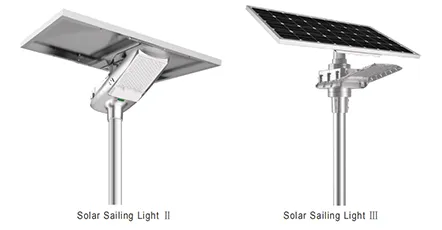
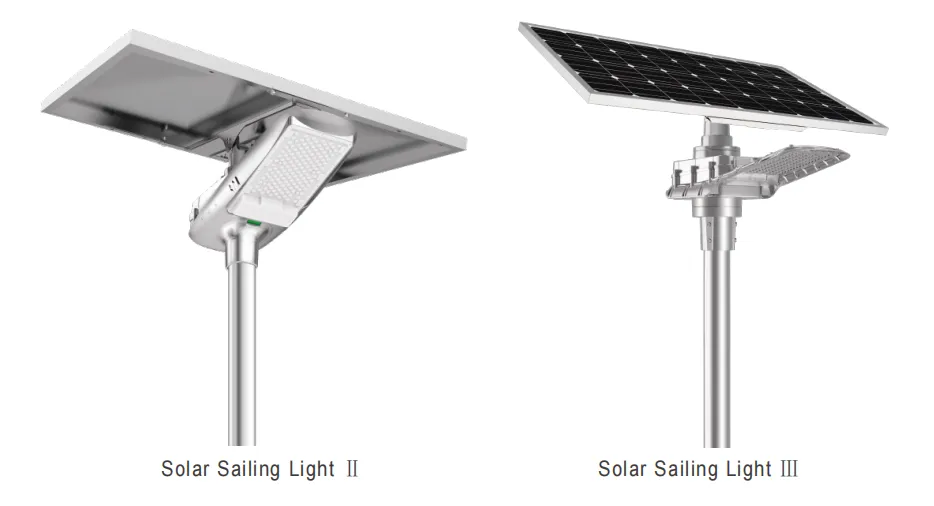
Integrated Solar Street Lights: A "Golden Solution" for Cost Reduction and Efficiency Improvement in Overseas Projects An integrated solar street lamp is a modified version of the traditional split-type solar street lamp with integrated components, making it more convenient for transportation and installation.The common design approach involves the high integration of photovoltaic panels, light sources, batteries and controllers, achieving modular design to varying degrees. This makes the product more efficient and convenient throughout the entire process of transportation, installation and maintenance, and is particularly suitable for the needs of overseas projects.There are two common types of such products:One is the flat panel lamp, which integrates the photovoltaic panel, controller, light source and battery into a single unit. This ultra-simplifies transportation and installation, making it highly suitable for the overseas market.The other type features a photovoltaic panel connected to the lamp head via a structural component, with the battery, controller and light source integrated as a single module. This design also greatly addresses the issues of high overseas transportation costs and complex installation. Adopting a fully modular design, it enables easy maintenance in case of after-sales issues. Meanwhile, the photovoltaic panel can be rotated at multiple vertical and horizontal angles, effectively meeting the installation requirements of different latitudes and road types.Core Advantages of Integrated Solar Street Lamps for Overseas ProjectsCost Reduction in the Whole Industry ChainIntegrated structure reduces packaging and transportation volume, cuts down cross-border logistics costs and transportation loss rates; modular installation saves a lot of labor costs, and independent power supply realizes zero electricity cost in the later operation, comprehensively reducing the overall cost of overseas projects.Efficiency Improvement in Project ImplementationUltra-simple installation process without complex wiring and on-site assembly, small construction teams can complete quick installation, significantly shortening the project construction period and accelerating the project delivery and commissioning efficiency.Convenient Overseas Operation and MaintenanceModular design supports independent replacement of faulty components, no need to disassemble the whole lamp body, which greatly lowers the technical threshold and labor cost of after-sales maintenance in overseas regions with uneven technical levels.Strong Scenario AdaptabilityIt can operate stably in diverse overseas scenarios including rural roads, municipal engineering, desert Gobi and island areas; with wind and sand resistance and easy cleaning characteristics, it adapts to different natural environmental conditions of various countries and regions, and blends well with the surrounding environment.Compatibility with Cross-Border LogisticsCompact and integrated structure is highly compatible with mainstream cross-border logistics transportation modes and overseas warehouse storage models, solving the problems of large volume and difficult transportation of traditional split-type solar street lamps in overseas projects.ConclusionAs a "golden solution" for cost reduction and efficiency improvement in overseas lighting infrastructure projects, integrated solar street lamps are not only a simple product upgrade of traditional solar street lamps, but also a tailored solution based on the pain points of cross-border transportation, on-site construction and later operation and maintenance in overseas projects.With the continuous advancement of global clean energy transformation and the expansion of overseas infrastructure construction scale, the demand for integrated solar street lamps with high integration, high adaptability and high cost performance will continue to rise. It will not only help all parties in overseas projects realize the dual goals of cost reduction and efficiency improvement, but also contribute to the construction of clean energy infrastructure in various countries and regions, and become an important carrier for the global popularization and application of solar energy lighting.Frequently Asked Questions (FAQ)Q1: What is the difference between integrated and traditional split-type solar street lamps?A: Integrated models highly combine PV panels, batteries, controllers and light sources into one unit, reducing transportation costs, installation time and labor fees for overseas projects.Q2: Why are they more suitable for overseas projects?A: They feature easy transportation, simple installation, modular maintenance and wide adaptability to different latitudes, climates and road conditions.Q3: How long does installation take per lamp?A: No wiring needed. A small team can finish installation in 10–15 minutes per lamp, greatly shortening project period.Q4: What is the service life and maintenance method?A: Service life is 5–8 years. Modular design allows individual component replacement, reducing overseas after-sales difficulty.Q5: Can they work without power grid?A: Yes. They use independent solar power supply, suitable for islands, mountains, deserts and off-grid areas.

View Detail

How to choose a suitable solar street light manufacturer?

Blogs

How to choose a suitable solar street light manufacturer? Table of ContentslIntroductionlWhat B2B Buyers Should Evaluate FirstlWhat Technical Questions Should Buyers Ask?lHow to Verify Product Quality?lWhy Provider Experience Matters?lCan the Manufacturer Customize for Your Project?lWhat Certifications and Compliance Documents Matter?lWhat After-Sales Support Should a Reliable Supplier Provide?lA Practical Evaluation Checklist for B2B BuyerslRecommended Supplier Example: RoadSmartlConclusion IntroductionChoosing the right solar street light manufacturer is one of the most consequential decisions in any outdoor lighting project. For B2B buyers, supplier selection affects far more than the opening purchase order. It shapes product consistency, technical performance, lead time, installation results, warranty execution, and long-term maintenance cost. When a lighting system is expected to perform for years in demanding outdoor conditions, the weakest link is often not the concept of solar lighting itself, but the quality of the manufacturer behind it.This guide is written for professional buyers who need a structured way to compare suppliers instead of relying on price sheets or broad marketing claims. It focuses on the practical factors that actually matter in procurement: product specialization, component quality, engineering judgment, export readiness, project experience, technical documentation, customization capability, and after-sales support. In other words, the goal is to help you separate a supplier that can quote from a supplier that can truly deliver.A good decision usually comes from asking better questions early. The best solar street light manufacturer for one project may not be the best fit for another. A municipal road package, a rural road deployment, a distributor order, and a parking lot retrofit all place different demands on configuration, compliance, packaging, and service. That is why buyers should evaluate solar street light manufacturers as long-term project partners, not just product vendors.What B2B Buyers Should Evaluate First?Before comparing prices, B2B buyers should confirm whether the supplier is genuinely aligned with the product type and project category in question. Many companies sell outdoor lighting; fewer are deeply specialized in solar street lighting. On a website, a company offering integrated solar lights, split solar systems, smart solar control products, and general outdoor fixtures may appear comparable to a specialist. In practice, however, the difference in technical depth can be substantial.A specialized solar street light manufacturer is more likely to understand the relationship between panel sizing, battery capacity, controller logic, local irradiation conditions, and nightly autonomy. That knowledge matters because an apparently acceptable model on paper can fail in the field if the configuration is not built around real operating conditions. Buyers should therefore begin with one question: does this supplier truly understand the type of system my project requires, or are they simply reselling a generic model?Is the Product Line Truly Specialized?Product specialization has a direct influence on configuration quality. A company focused on solar street lighting usually has stronger control over system matching: solar panel output, battery storage, LED efficacy, controller settings, and lighting schedules are designed to work together rather than assembled around a headline wattage. That is very different from a general lighting company that has added a few solar models to its catalog simply to meet market demand.Buyers should look beyond product names and check the actual performance indicators behind the model. Ask about luminous efficacy, energy management logic, battery backup days, and environmental durability. A light advertised as 100 W may still fail to meet project needs if the beam distribution is poor, the battery is undersized, or the controller strategy is simplistic. A professional solar street light manufacturer should be able to explain not just what the product is called, but why a certain configuration works for a certain road width, traffic level, or climate.Application fit is equally important. A product suited to a municipal road is not automatically suitable for a residential community, parking lot, rural access road, or commercial perimeter. Top solar street light manufacturers usually discuss the project in application terms and explain which system architecture works best for broad roads, low-traffic zones, or sites with limited sunlight. That project-first mindset often signals stronger engineering capability.Understand the Supplier’s Business RoleBuyers should also clarify whether the supplier is a factory, a trading company, or a hybrid operation. A factory usually offers better production control, more direct technical communication, and stronger customization ability. A trading company may be useful for mixed sourcing, language support, or coordination, but it adds another layer between the buyer and the production line.A hybrid model can also work well if the supplier is transparent about what is produced in-house and what is outsourced. That transparency matters because it affects delivery time, price clarity, communication speed, and the ability to resolve specification changes quickly. In practical procurement terms, knowing the supplier’s business role helps buyers estimate how problems will be handled once the order moves from quotation to production.Check Export Experience and Project HistoryManufacturer experience should be assessed through operational evidence, not vague claims. Start with years in business, then look at export markets and the customer types they serve. A company that has supplied distributors, participated in government tenders, worked with EPC contractors, or handled large commercial installations is usually better prepared in documentation, packaging, compliance, and delivery coordination.Export experience is especially important because overseas projects demand more than shipment alone. The supplier needs to understand destination-market standards, prepare complete documentation, and pack products appropriately for long-distance transport. Among solar street light manufacturers, those with a record of successful international delivery often have stronger internal processes and a more realistic understanding of project risks.Case studies are useful here. Product catalogs show what a company wants to sell; case studies show what it has actually delivered. Review project photos, application types, countries, climates, and system configurations. A best solar street light manufacturer should be able to point to comparable projects, not just offer generic brochures.What Technical Questions Should Buyers Ask? 1. Battery and energy storage questionsFor most solar street lighting projects, battery performance determines whether the system will operate reliably after installation. Ask what battery chemistry is used. In many cases, LiFePO4 batteries are preferred because they offer better safety, longer cycle life, and more stable performance than many alternatives. Buyers should also ask about cycle life, expected replacement intervals, backup days, and whether the battery system is suitable for high- or low-temperature environments. These are not minor details. They directly affect maintenance cost and field reliability.2. Controller and charging efficiency questionsThe controller is the center of the system’s energy management. Buyers should ask whether the light uses MPPT or PWM charging logic. In most projects, MPPT delivers higher charging efficiency and more stable performance. It is also worth asking whether dimming profiles can be adjusted and whether the system supports remote monitoring or smart control. On projects with dispersed installations, remote diagnostics can reduce maintenance effort and shorten fault response time.3. Lighting performance questionsLighting quality should never be judged by wattage alone. Ask for actual lumen output, beam angle, recommended pole height, and coverage width. Poor optical distribution can create bright spots and dark patches even when the nominal power looks adequate. For professional projects, buyers should ask whether the supplier can provide Dialux simulations and a lighting layout. That allows the procurement team to verify performance before ordering instead of discovering shortfalls after installation.4. Structural durability questionsOutdoor lighting only proves itself in real environmental conditions. Buyers should confirm the IP rating for waterproof and dustproof performance, the housing material, corrosion resistance, and wind resistance. This becomes especially important for coastal roads, industrial environments, humid climates, open highways, and storm-prone areas. A responsible solar street light manufacturer should be willing to confirm whether a standard model is suitable for harsh conditions or whether a reinforced specification is needed.How to Verify Product Quality?Check the real component configurationQuality verification should begin with the actual bill of materials. Review the solar panel type and conversion efficiency, battery chemistry and expected life, controller type, LED chip quality, lumen output, housing material, and IP rating. Larger or higher-efficiency panels can improve charging in lower-irradiation regions. MPPT controllers typically outperform PWM controllers in demanding applications. Good LED configuration influences brightness stability as much as the nameplate label does.Serious buyers compare real component data rather than relying on declared wattage or appearance. In many purchasing decisions, the configuration details reveal more about quality than the front-page quotation.Ask for technical documents, not only quotationsA quotation shows price. It does not prove quality. Reliable solar street light manufacturers should be able to provide product datasheets, battery test reports, photometric files, waterproof test reports, salt spray reports, and certification documents. These records help buyers verify whether the product meets project standards and site conditions. For example, photometric files are valuable during lighting design review, while salt spray testing is essential for coastal installations.If a supplier cannot provide this level of technical evidence, the problem may be limited engineering support, weak quality control, or both. For procurement teams, written proof is usually far more useful than polished sales language.Why Provider Experience Matters? Experienced manufacturers tend to design systems that perform in reality, not only in a catalog. For B2B buyers, that matters because solar lighting success depends on configuration discipline. A seasoned supplier is more likely to size the system around local sun conditions, balance lighting hours with autonomy, and match design assumptions to actual site conditions instead of relying on a generic template.Experience also improves problem-solving. A supplier that has delivered in coastal zones, hot climates, rainy regions, or remote off-grid areas usually understands the conditions that influence performance and maintenance. The same applies to adapting systems for different road classifications, mounting heights, and local standards. For buyers, that experience lowers the risk of specification errors and expensive post-installation corrections.Can the Manufacturer Customize for Your Project?In project procurement, standard models are often only a starting point. Many buyers need the supplier to adjust wattage, pole height, bracket design, battery capacity, lighting schedules, sensor options, or smart-control features. These are not cosmetic changes. They shape lighting performance, installation cost, and suitability for the actual site.Commercial customization matters too. Distributors and importers often need brand labeling, packaging adjustments, manuals in local languages, or market-specific product positioning. A top solar street light manufacturers shortlist should therefore include suppliers that can handle both technical and commercial customization with reasonable speed and documentation discipline.Customization is critical because many projects do not fit a standard product template. Tender specifications may need to be matched exactly. A local market may require a different look, battery reserve, or price-performance balance. Even when the initial quotation is competitive, a supplier that can only offer fixed models may not be a strong fit for project-based procurement.What Certifications and Compliance Documents Matter? Technical capability alone is not enough in overseas procurement. Buyers also need documentation that supports shipping, customs clearance, market acceptance, and tender compliance. Common requirements include CE, RoHS, IEC-related reports, and battery transport documentation where applicable.At the factory level, ISO 9001 remains one of the most relevant quality-management certifications. Buyers may also request internal QC documents and, when possible, factory inspection or audit records. These materials help procurement teams judge whether the supplier has process control, not just presentation skills.For B2B projects, documentation often matters as much as product performance. Incomplete certification packages can delay shipment, create tender issues, or even block project acceptance. A dependable solar street light manufacturer should be ready to provide these materials early in the evaluation stage.What After-Sales Support Should a Reliable Supplier Provide? Clarify warranty terms in detailA warranty is more than a number on a quotation. Buyers should confirm warranty periods component by component for the LED fixture, battery, controller, and solar panel. They should also ask about replacement conditions, exclusions, claim procedures, and whether technical failure analysis is included when faults occur. Many disputes come from unclear terms rather than product failure alone.Post-delivery technical supportA reliable manufacturer should continue to provide practical support after shipment. That can include installation guidance, troubleshooting assistance, spare-parts supply, and clear response-time expectations. For some projects, remote technical support is particularly valuable, especially when on-site teams need help adjusting controller settings or diagnosing energy-management issues.Why after-sales matters even more in export projectsAfter-sales capability is especially important in overseas projects because the cost of failure is higher. Longer transport cycles slow replacement, and field repairs are usually harder than in domestic work. In public or commercial installations, downtime can lead to safety concerns, complaints, and extra labor costs. This is one reason why the best solar street light manufacturer is rarely the one with the lowest quote alone; strong support saves real money after delivery.A Practical Evaluation Checklist for B2B BuyersSupplier Shortlisting CriteriaWhen comparing different solar suppliers, the goal should be clear: assess not only the product but also project delivery and long-term service. Beyond price, buyers should carefully consider factors such as the supplier’s years of experience, main product categories, actual factory production capacity, certifications, sample quality, customization capabilities, warranty terms, technical support, and delivery timelines. From these, it is useful to identify primary and secondary factors to guide a comprehensive evaluation.First, from a procurement perspective, a supplier’s experience reflects their level of professionalism. Experienced suppliers have a clear advantage over those who only provide products without broader project support. Second, a factory’s production capacity—including factory size, actual output, production lead times, internal engineering support, and quality control systems—is especially important when orders involve strict project timelines or repeated procurement. Third, sample quality is critical. Strong suppliers generally provide samples and confirm specific product requirements with clients before mass production, ensuring product quality while verifying controller settings, charging characteristics, and packaging protection. Finally, customization capabilities are the clearest demonstration of a supplier’s R&D and design strength. In many B2B projects, standard products alone cannot meet all requirements. Customization may involve adjustments to pole height, battery capacity, lighting modes, sensor options, and even packaging to meet tender specifications or local market expectations. This level of customization reflects substantial production capabilities, which smaller companies often cannot provide.Below is a concise screening table that can be copied into internal evaluation forms.CategoryWhat to CheckWhy It MattersPrioritySpecializationSolar-only or mixed catalog?Shows technical depthHighComponentsPanel, battery, LED, controller detailsDetermines actual performanceHighDocumentationDatasheets, tests, certificationsReduces compliance riskHighCustomizationPower, pole, battery, smart controlImproves project fitMediumAfter-salesWarranty, spare parts, response timeLowers lifecycle riskHigh Recommended Supplier Example: RoadSmart Applying the same evaluation logic, RoadSmart demonstrates several advantages that align closely with B2B project requirements. As a professional solar street light manufacturer, RoadSmart has over 15 years of industry experience, with sales and service networks covering more than 120 countries worldwide and over 400 cities and counties in China. Its broad experience allows it to provide solar lighting solutions tailored to any client need. In terms of product portfolio, RoadSmart offers a mature and comprehensive range, including integrated solar street light systems, MPPT integrated solar lights, split-type solar street lights, solar poles, as well as solar controllers and energy storage products. This nearly covers all solar street light product lines, allowing clients to find almost any desired product or have solutions customized for specific projects.RoadSmart’s product expertise reflects its manufacturing and R&D capabilities. The company employs 400 staff members, including over 100 in-house R&D and innovation teams, representing about 30% of the total workforce. To date, the company has secured more than 250 patents across solar street lighting technologies, leading in many technical areas, such as 3.2V high-power solar street light solutions, 99.9% multi-peak MPPT efficiency, IPC 5.0 intelligent power control, and smart monitoring via apps or PC. Its 40,000 m² production base produces up to 300,000 street lights annually, maximizing service delivery reliability.Another key highlight is RoadSmart’s customization and export capabilities. The company’s recently released global strategy emphasizes ODM support for parameters, structure, and appearance, particularly targeting markets in Africa, Southeast Asia, and South America. Coupled with ISO9001, ISO14001, ISO45001, CE, RoHS, FCC, CQC, and IEC certifications, this provides buyers with clear evidence for evaluating product compliance and supplier credentials.ConclusionChoosing asolar street light manufacturer should be treated as a strategic supplier decision, not just a product comparison. For B2B buyers, the priorities are clear: reliable quality, relevant project experience, transparent specifications, workable customization, complete documentation, and dependable after-sales support. The safest process is to build a shortlist, request samples, compare technical and commercial details one by one, and judge suppliers by total project value rather than headline price alone.That approach gives buyers a better chance of selecting a partner that can support the project before delivery, during production, and after installation. Among solar street light manufacturers, the strongest suppliers are the ones that combine engineering realism with responsive service. If your team is planning an outdoor lighting project, use this framework to compare options carefully and identify the best solar street light manufacturer for your specific application, budget, and operating environment.

View Detail

What is Split Type Solar Street Light?

Blogs

What is Split Type Solar Street Light? Table of ContentsIntroductionUnderstanding Split Type Solar Street LightHow Split Type Solar Street Lights Work?Advantages of Split Type Solar Street Lights Limitations of Split Type Solar Street LightsApplications of Split Type Solar Street LightsChoosing the Right Split Type Solar Street LightConclusionFrequently Asked Questions IntroductionSplit type solar street lights have emerged as an increasingly popular solution for outdoor lighting projects, offering greater flexibility, efficiency, and longevity than conventional integrated solar street lights. This article explores what split type solar street light systems are, their working principles, differences from all-in-one systems, advantages, limitations, applications, and provides guidance for installation and purchasing. The content is designed for users researching, comparing, or selecting solar street lighting systems for urban, rural, or industrial environments.Understanding Split Type Solar Street Light Basic DefinitionA split type solar street light is a modular lighting system where the core components—solar panel, LED lamp, battery, and controller—are installed separately rather than integrated into a single enclosure. This separation allows for better optimization of energy capture, easier maintenance, and flexible placement to suit various lighting needs. Among industry options, the split solar street light configuration is particularly valued for projects requiring independent panel and lamp positioning.Main Components:ComponentFunctionSolar PanelConverts sunlight into electricity and can be positioned for optimal sun exposure.LED Lamp HeadProvides illumination with high energy efficiency, suitable for streets, pathways, and commercial areas. Split LED solar street light options offer extended lifespan and controlled light distribution.BatteryStores energy for nighttime use and ensures consistent operation during cloudy days.ControllerManages charging, discharging, and optional smart features such as motion sensing or dimming. Smart controllers in smart split solar street light systems enable remote monitoring and programmable scheduling.Pole/BracketSupports and positions the solar panel and lamp at the correct height and orientation.Why is it Called “Split Type”?The term “split type” reflects the physical separation of the solar panel, battery, and lamp head. Unlike integrated systems, where all components are combined, split type designs allow:Placement of the solar panel in the sunniest location regardless of the lamp position.Proper housing of batteries for temperature management and protection.Customized LED lamp installation for optimal lighting coverage.This modular approach provides significant flexibility in layout and design, particularly for streets with irregular shapes, shaded areas, or complex urban environments. Sourcing split solar street light for sale from reputable split solar street light manufacturers and suppliers ensures that the system meets design and durability standards.How Split Type Solar Street Lights WorkDaytime Charging ProcessDuring daylight hours, the system captures and stores energy:Solar panels absorb sunlight and convert it into electrical energy.The electricity is stored in high-capacity batteries for use after sunset.The controller ensures efficient charging, prevents overcharging, and maintains battery health. Advanced split solar street light models incorporate features that optimize energy conversion and distribution.(h3) Nighttime Illumination ProcessAt night, stored energy powers the LED lamp:The battery provides power to the lamp.The controller manages energy distribution, lighting schedules, and optional features such as:Dimming to conserve energy.Motion sensors to increase brightness upon detecting movement. Smart split solar street light solutions often integrate these capabilities with remote management.Timers for programmed lighting periods.This energy management ensures reliable and efficient operation even in areas with inconsistent sunlight.Advantages of Split Type Solar Street LightsInstallation FlexibilitySplit type systems allow solar panels and lamps to be positioned independently. This is especially beneficial for urban streets with shading from buildings or trees, and for irregular road layouts where optimal sunlight exposure is not aligned with lamp placement. Choosing split solar street light suppliers with design expertise can further optimize placement and system performance.Improved Efficiency and Energy ManagementThe use of MPPT (Maximum Power Point Tracking) controllers ensures that solar panels operate at peak efficiency. Batteries can be arranged for optimal charge and discharge cycles, enhancing energy utilization and extending component lifespan. This capability is a key reason why split type solar street light solutions are preferred for energy-conscious projects.Longer Lifespan and Maintenance BenefitsModular components can be replaced individually, reducing maintenance costs. LED lamps, when separated from batteries and controllers, experience less thermal stress, contributing to longer operational life. Many high-quality split LED solar street light systems provide over 50,000 hours of reliable illumination. Procuring products from certified split solar street light manufacturers ensures that each component adheres to stringent quality standards.Limitations of Split Type Solar Street LightsMore Complex InstallationThe modular nature of split type systems requires additional wiring, proper alignment of components, and skilled labor, making installation more demanding compared to integrated systems.Risks from Poor Design or CraftsmanshipIncorrect wiring, inadequate waterproofing, or improper battery placement can compromise performance and safety. Professional design and installation, ideally from an experienced split solar street light supplier, are essential to avoid operational issues. Less Compact AppearanceThe separation of components can result in a bulkier appearance, which may not align with aesthetic requirements for certain urban projects or decorative applications.Requires Careful PlanningSuccessful implementation demands careful consideration of solar panel orientation, battery housing, pole height and placement, and cable routing to ensure both safety and optimal performance.Applications of Split Type Solar Street LightsUrban Streets and RoadsIdeal for streets with tall buildings or trees that cast shadows, allowing panels to be installed in optimal sunlight areas independently of the lamp head. Split solar street light systems excel where flexibility and tailored illumination are necessary.Rural Roads and HighwaysOff-grid applications benefit from split systems as they can cover long distances and provide reliable lighting in remote areas without connection to the electrical grid. Many split solar street light for sale units are designed for highway-grade durability.Industrial and Commercial SpacesWarehouses, parking lots, campuses, and security zones can use split type systems for high-power and tailored lighting needs, often integrating smart features for monitoring and control. Smart split solar street light implementations allow real-time performance tracking and energy efficiency optimization.Choosing the Right Split Type Solar Street LightSolar Panel Efficiency and Battery CapacityEnsure that the panel output aligns with energy demand and include sufficient battery capacity for cloudy days or periods of low sunlight. Consulting with split solar street light manufacturers helps match system specifications to the intended site.LED SpecificationsBrightness, color temperature, beam angle, and light uniformity should match the intended application, ensuring safety and visibility. Selecting split LED solar street light models from reputable suppliers guarantees consistent quality.Controller Features and Smart FunctionsAdvanced controllers can include motion sensors, dimming options, and remote monitoring capabilities, making them suitable for smart lighting projects. Smart split solar street light solutions offer integration with IoT-based energy management platforms.Durability and IP RatingWaterproof, dustproof, and corrosion-resistant components are essential for long-term outdoor operation, typically with IP65 or higher ratings.Certification and WarrantyLook for ISO, CE, and RoHS certifications to ensure quality and safety, and confirm the warranty coverage for critical components like LED lamps, batteries, and controllers. Working with recognized split solar street light suppliers ensures compliance with industry standards.ConclusionSplit type solar street lights provide flexible, efficient, and project-oriented solutions for outdoor lighting. They are particularly advantageous for high-power or complex applications. Key considerations include understanding the modular structure, comparing with integrated systems, matching the system to the site and energy needs, and confirming reliable installation and maintenance support. Selecting the right split type solar street light system, from certified split solar street light manufacturers, guarantees performance and long-term reliability.Frequently Asked Questions1. What is the difference between split type and all-in-one solar street lights?Split type systems separate the solar panel, battery, and lamp, offering greater flexibility, energy efficiency, and easier maintenance compared to integrated units. Split solar street light configurations are ideal for projects with variable sunlight exposure and complex layouts.2. Are split solar street lights more expensive?They typically have higher upfront costs but provide longer lifespan, better performance, and lower long-term maintenance costs. Availability of split solar street light for sale units allows competitive sourcing.3. Can an all-in-one solar street light be upgraded to a split type system?Upgrading is not straightforward, as split type systems require separate components and installation planning.4. How long do split solar street lights last?With proper installation and maintenance, core components such as LED lamps, batteries, and solar panels can last 10 years or longer. Quality split LED solar street light products from trusted suppliers extend operational longevity.5. What applications benefit most from split type systems?Urban streets with shading, remote rural roads, highways, industrial facilities, and commercial properties with high lighting demands or smart monitoring needs benefit the most from smart split solar street light systems.

View Detail

1 2 3 4 5

Let's Build Your Product

Thank you for your interest in our products. Leave your email and message below to get the detailed data sheet and we will respond to your requirements shortly.

Please enter a valid Name

Please enter a valid phone number

Please enter a valid Company

Please enter a valid Email

Please enter a valid Country

Please enter a valid Message
Please select a valid file (Max 5MB)

I have read and understood Roadsmart's Privacy Policy.

Please agree to the privacy agreement