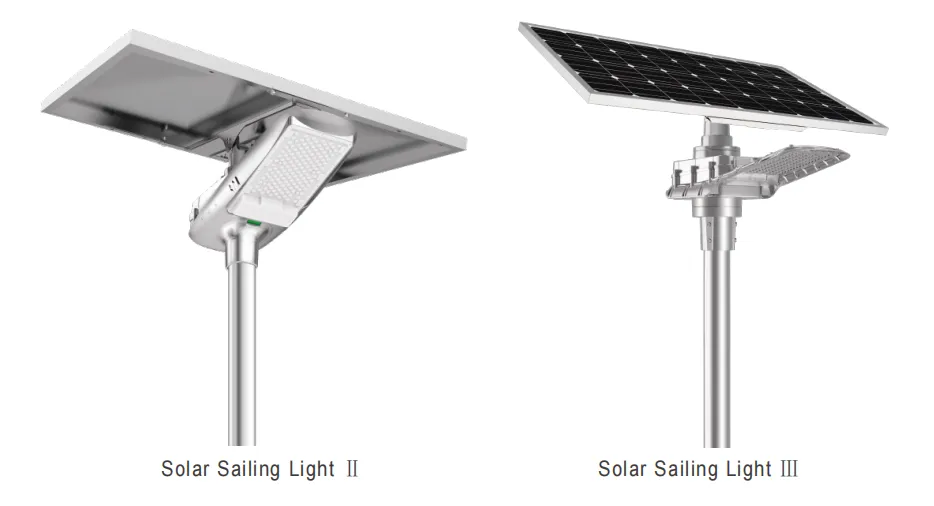
60W-260W All-in-One Solar Street Lights: High Brightness with Lower Total Project Cost
Jul 08, 2026
Read:479
When buyers search for all-in-one solar street lights, they are usually trying to answer three questions at once: which wattage fits the project, whether the lamp will be bright enough, and how to keep total procurement cost under control. For roads, parking lots, parks, and industrial areas, the right 60W-260W configuration often matters more than chasing the lowest unit price.
If your team is also comparing supplier capability, engineering support, and long-term project fit, you can review our top solar street light manufacturers guide before finalizing the model shortlist.
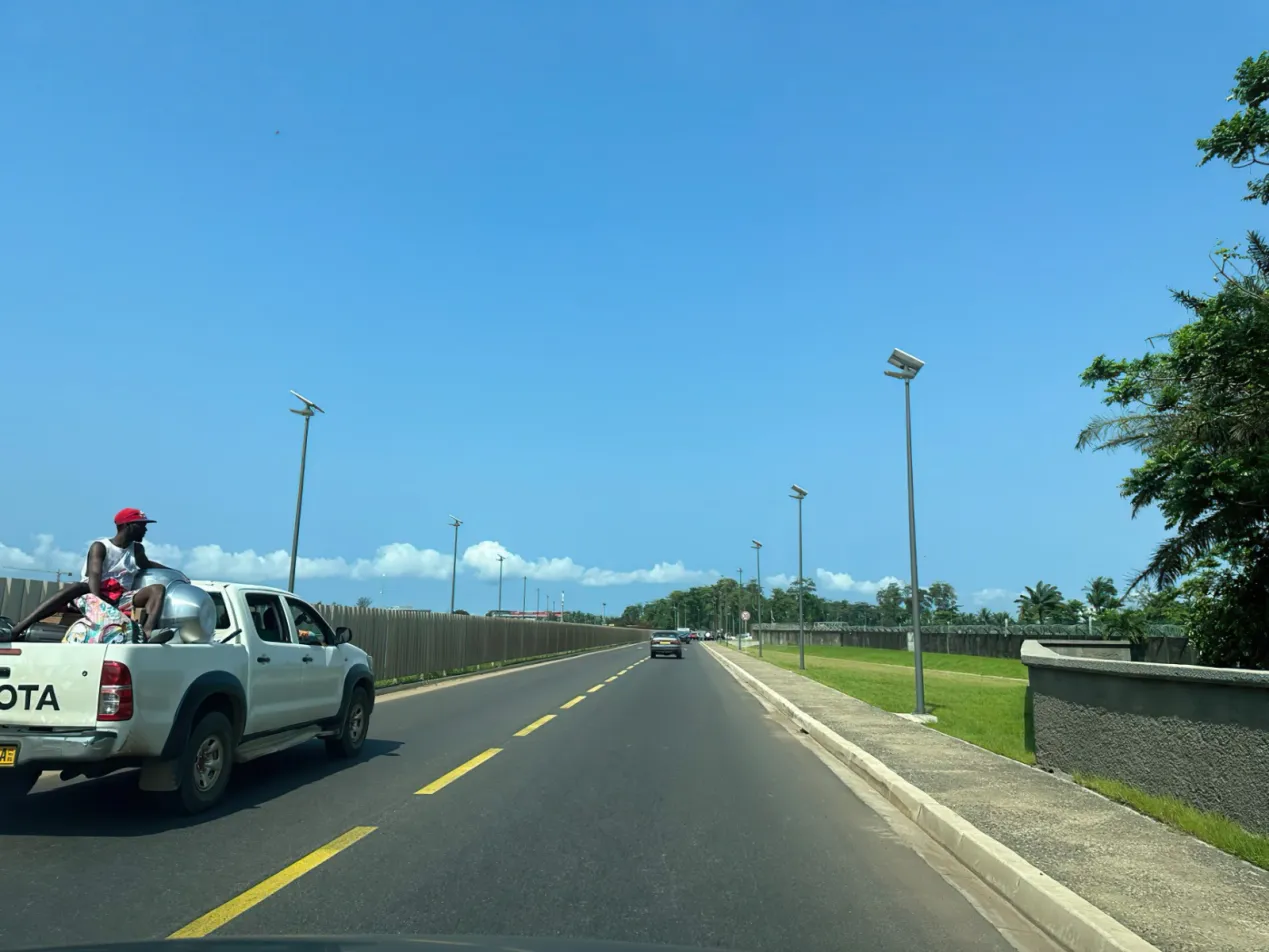
Compared with traditional grid-powered lighting, solar street lighting can reduce trenching, cabling, distribution equipment, grid-connection work, and long-term electricity costs. In suitable off-grid or weak-grid projects, this is why 60W-260W all-in-one solar street lights are often shortlisted for faster deployment and better budget control. [1]
Under reasonable project conditions, buyers can sometimes reduce total procurement-related costs by around 15%. This saving does not come from lowering the price of a single fixture alone. It usually comes from fewer accessories, less civil work, faster installation, and more accurate system sizing based on the road width, pole height, sunshine hours, and backup-day requirement.
Which 60W-260W All-in-One Solar Street Light Specifications Fit Different Projects?
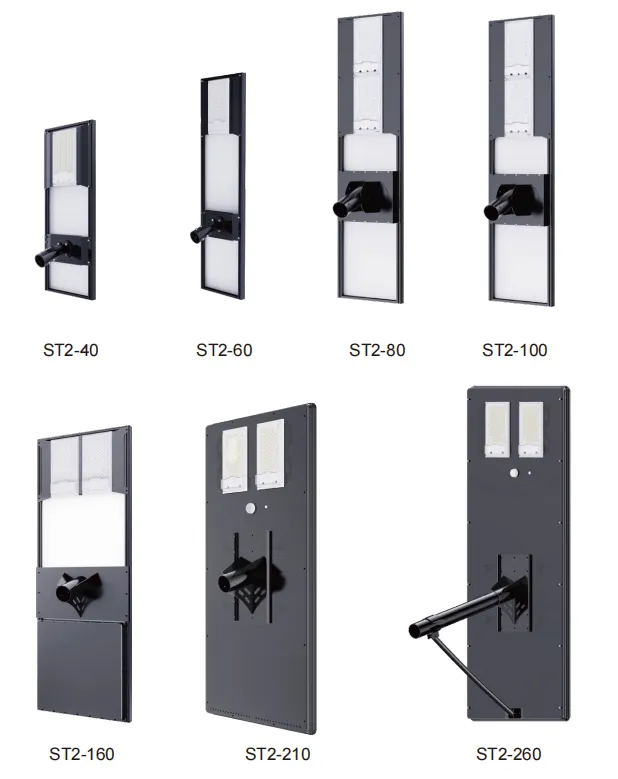
As a practical buying reference, the 60W-260W range covers everything from pedestrian roads to wide logistics lanes. Buyers can first shortlist a wattage range based on application type, pole height, spacing, and required lighting hours, then ask the supplier to confirm the final configuration.
Power range | Suitable application scenarios | Typical project areas | Procurement focus |
60W-80W all-in-one solar street light | Walkways, village roads, community side roads | Parks, rural roads, residential areas | Basic brightness, fast installation, budget control |
100W-120W all-in-one solar street light | Local roads, parking areas, park internal roads | Schools, communities, small factories | Balanced brightness, runtime, and cost |
150W-180W all-in-one solar street light | Wider roads, industrial park roads, commercial parking lots | Industrial zones, public facilities, factory roads | Higher lumen output, battery capacity, and coverage |
200W-260W all-in-one solar street light | Main roads, logistics lanes, large outdoor spaces | Ports, logistics parks, wide roads | High brightness, wider coverage, and system stability |
Use the table below as an initial selection guide, not as a substitute for project lighting design. The same 150W model can perform very differently on a 6-meter pole versus an 8-meter pole, and regions with long rainy seasons may require more solar-panel and battery reserve. [2]
Why Low Energy Consumption Does Not Mean Low Brightness?
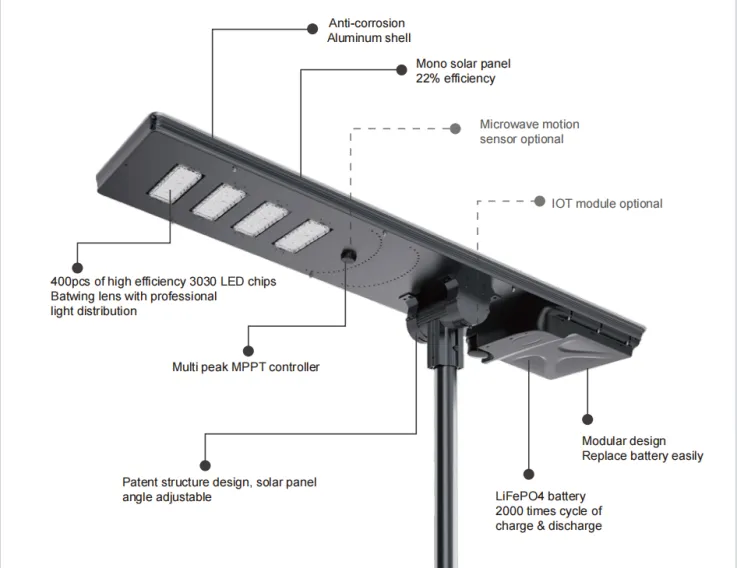
Low energy consumption in a solar street lighting system should not be confused with weak illumination. The goal is not to dim the lamp blindly, but to improve how efficiently the system converts and uses stored energy.
High-luminous-efficiency LEDs can deliver stronger road illumination with less power. At the same time, proper lens design and light distribution help focus the output on the road surface, pedestrian path, or parking area instead of wasting light outside the target zone. An MPPT controller also helps improve charging efficiency so that more solar energy collected during the day is available at night. [3]
Smart control is another key factor. On many roads, traffic and footfall drop significantly late at night, so running at full power for the entire night is often unnecessary. Time-based dimming, motion sensing, or scheduled operating modes can preserve visibility during peak hours while extending battery autonomy during low-demand periods. [4]
For this reason, buyers should not judge a solar street lamp by nominal wattage alone. LED efficiency, battery size, controller quality, optical design, backup days, and lighting mode all influence whether the final system is bright enough and economically configured.
How Can All-in-One Solar Street Lights Reduce Total Procurement Cost by Around 15%?
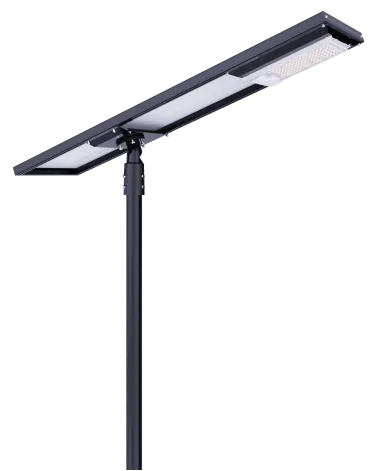
The cost advantage is best understood at the project level, not at the single-lamp level. In many off-grid projects, the integrated design reduces external battery boxes, control cabinets, cabling, and some installation accessories, which immediately trims the procurement list.
Because all-in-one solar street lights do not rely on the municipal grid, they can also reduce trenching, conduit work, distribution equipment, and grid-connection procedures. For remote roads, newly developed parks, rural infrastructure, and large parking areas, these avoided costs can be significant.
A well-matched system can also reduce over-configuration. High-efficiency LEDs, MPPT charging, and intelligent dimming make it easier to size the battery, solar panel, and lamp power more accurately instead of overspending on capacity "just in case."
Installation efficiency is another cost lever. With fewer wiring and assembly steps on site, integrated solar lights can shorten installation time and reduce labor, lifting, and project-management pressure, especially when dozens or hundreds of fixtures are involved.
So when the article says "cost reduced by 15%," the safer and more credible interpretation is this: in the right project conditions, total procurement and installation-related cost can be optimized by around 15%, rather than the price of each lamp automatically dropping by 15%.
Cost component | How all-in-one solar street lights help | Impact on total procurement |
Cables and accessories | Reduce external cables, battery boxes, and control cabinets | Lower material and accessory volume |
Civil construction | Avoid large-scale trenching and grid-connection work | Reduce installation-related costs |
System sizing | Support more accurate matching through efficient LEDs and smart control | Avoid over-specification waste |
On-site installation | Simplify wiring and assembly steps | Shorten delivery time and labor input |
Maintenance | Integrated protective design supports stable outdoor operation | Reduce replacement and service pressure |
Project cost should therefore be judged as a combination of product cost, installation cost, accessory cost, construction time, and long-term maintenance pressure, not as a simple unit-price comparison.
What Should Buyers Confirm Before Bulk Purchasing All-in-One Solar Street Lights?
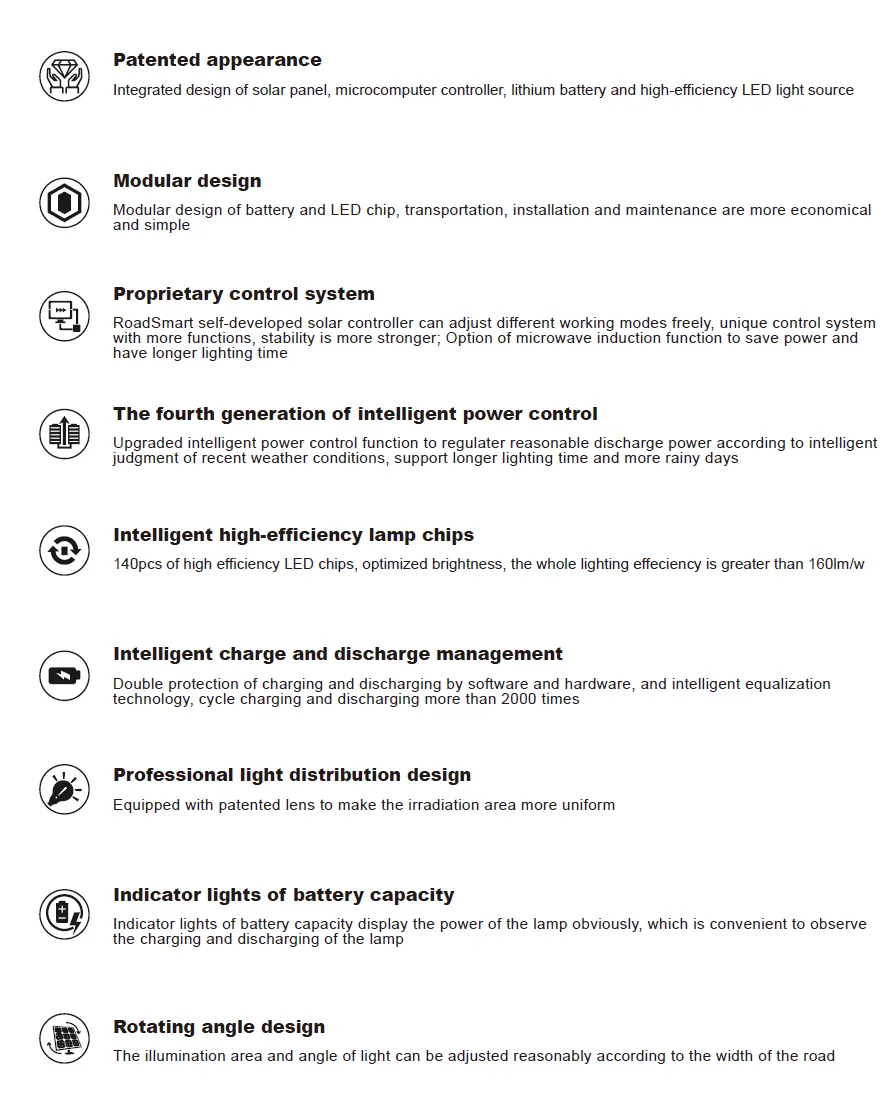
Before requesting a quotation, buyers should confirm at least these parameters: road width, pole height, pole spacing, required lighting hours, local sunshine conditions, backup rainy days, LED luminous efficacy, solar panel power, battery capacity, controller type, lighting mode, IP rating, and warranty terms. [5]
Among these, battery capacity determines how reliably the light can operate through rainy periods; solar panel size affects daytime charging recovery; the controller influences energy-use efficiency; and optical distribution determines whether brightness is delivered where the project actually needs it. IP protection, thermal design, and material quality are equally important for long-term outdoor stability.
For overseas bulk orders, buyers should also evaluate whether the solar street light supplier can support OEM/ODM customization, provide project-based selection advice, share test documents, maintain stable delivery schedules, and respond after the shipment with technical support. The lowest quotation is not always the lowest total cost if the configuration is wrong or after-sales support is weak.
FAQ: Key Questions Buyers Ask Before Ordering
Are 150W all-in-one solar street lights suitable for 8-meter poles?
Sometimes yes, but the correct answer depends on road width, pole spacing, target illumination level, and backup-day requirement. Wattage alone is not enough to confirm suitability for an 8-meter installation.
How many backup rainy days should a solar street light project reserve?
That depends on local climate and the project's tolerance for lighting interruption. Areas with longer rainy seasons or higher reliability requirements usually need more battery and solar-panel reserve than dry, low-risk regions.
Is an all-in-one solar street light always better than a split solar street light?
Not always. All-in-one models are attractive when buyers want faster installation, fewer accessories, and easier deployment. Split systems may still be considered for projects that need more flexible component sizing or more demanding lighting configurations.
What information should buyers send before asking for a quote?
To get a useful quotation, send the project location, road width, pole height, pole spacing, required operating hours, desired backup days, and application scenario. This helps the supplier recommend a more accurate 60W-260W model instead of giving only a rough price by wattage.
Conclusion
For bulk procurement, the better buying question is not "Which solar street lamp is cheapest?" but "Which complete lighting system delivers the required brightness with the lowest total project cost?" In many roads, parking lots, parks, industrial areas, and rural projects, 60W-260W all-in-one solar street lights can be a strong option when the configuration is matched to the site conditions.
If buyers want better conversion from inquiry to usable quotation, they should ask suppliers for a project-based recommendation instead of a price-only reply. Sharing road width, pole height, spacing, sunshine hours, and backup-day requirements makes it easier to compare proposals, avoid overbuying, and reduce procurement risk.
References
- Outdoor Solar Lighting, U.S. Department of Energy, Energy Saver.
- Appendix A. Roadway Lighting Details, Federal Highway Administration (FHWA), Roadway Visibility Research Needs Assessment.
- Purchasing Energy-Efficient Commercial and Industrial LED Luminaires, U.S. Department of Energy.
- Lighting Controls, U.S. Department of Energy, Energy Saver.
- Ingress Protection (IP) Ratings / IEC 60529, International Electrotechnical Commission (IEC).