Solar Street Light Cost Guide: Price Factors, Installation Cost and Project Budget Planning
Sep 10, 2026
Read:338
Source: Yin Zhenkun
Introduction
For municipalities, road contractors, and project buyers, solar street light cost is rarely a single number. A complete solar street lighting system is a combination of LED power, solar panel sizing, battery technology, MPPT controller, pole height and foundation, plus logistics and on-site installation. Each of these variables shifts the total solar street light price by hundreds of dollars per unit, which compounds quickly on a 100- or 500-light project. This guide breaks down every cost factor and shows how RoadSmart helps buyers plan a real project budget for municipal, highway, campus, and commercial solar lighting deployments.
What Determines Solar Street Light Cost?
Solar street light cost is driven by five core variables: LED power and lumen output, solar panel wattage and conversion efficiency, battery capacity and chemistry, MPPT controller technology, and the pole, foundation, and installation work required on site. The table below shows how each variable typically scales the per-unit price of a solar street light.
| Cost Factor | Common Range | Impact on Project Budget |
|---|---|---|
| LED power (30W / 60W / 100W) | 30W – 150W | Larger LED modules raise fixture cost and require bigger solar panels and batteries |
| Solar panel (mono, 18V / 36V) | 60W – 200W | Higher-wattage mono panels improve autonomy but increase material cost |
| Battery (LiFePO4 vs lead-acid) | 12.8V 30Ah – 25.6V 100Ah | LiFePO4 has higher unit cost but lower total cost of ownership |
| MPPT controller & smart features | 10A – 30A, PIR / timer / IoT optional | MPPT adds 10–25% to controller cost but improves energy harvest by 20–30% |
| Pole height and foundation | 4m – 12m hot-dip galvanized steel pole | Pole height, wind load, and concrete foundation can equal 30–50% of total system cost |
When a buyer compares solar street light prices between suppliers, the biggest delta usually comes from battery chemistry and controller technology, not from the LED chip itself. A fixture with a LiFePO4 battery and an MPPT controller will look more expensive on the quotation but will deliver lower maintenance cost and a longer service life than a cheaper unit built with a lead-acid battery and a PWM controller.
LED Power and Lighting Requirements
LED power is the first specification a project engineer will define, and it sets the baseline for every other component. A 30W solar street light is suitable for residential lanes, paths, and courtyards where the required lumen output is around 3,000–4,500 lm. A 60W unit covers secondary roads and parking lots at 7,500–9,000 lm. A 100W or 120W unit is needed for main roads, highways, and industrial zones where lumen output of 12,000–18,000 lm is required to meet the local lighting standard.

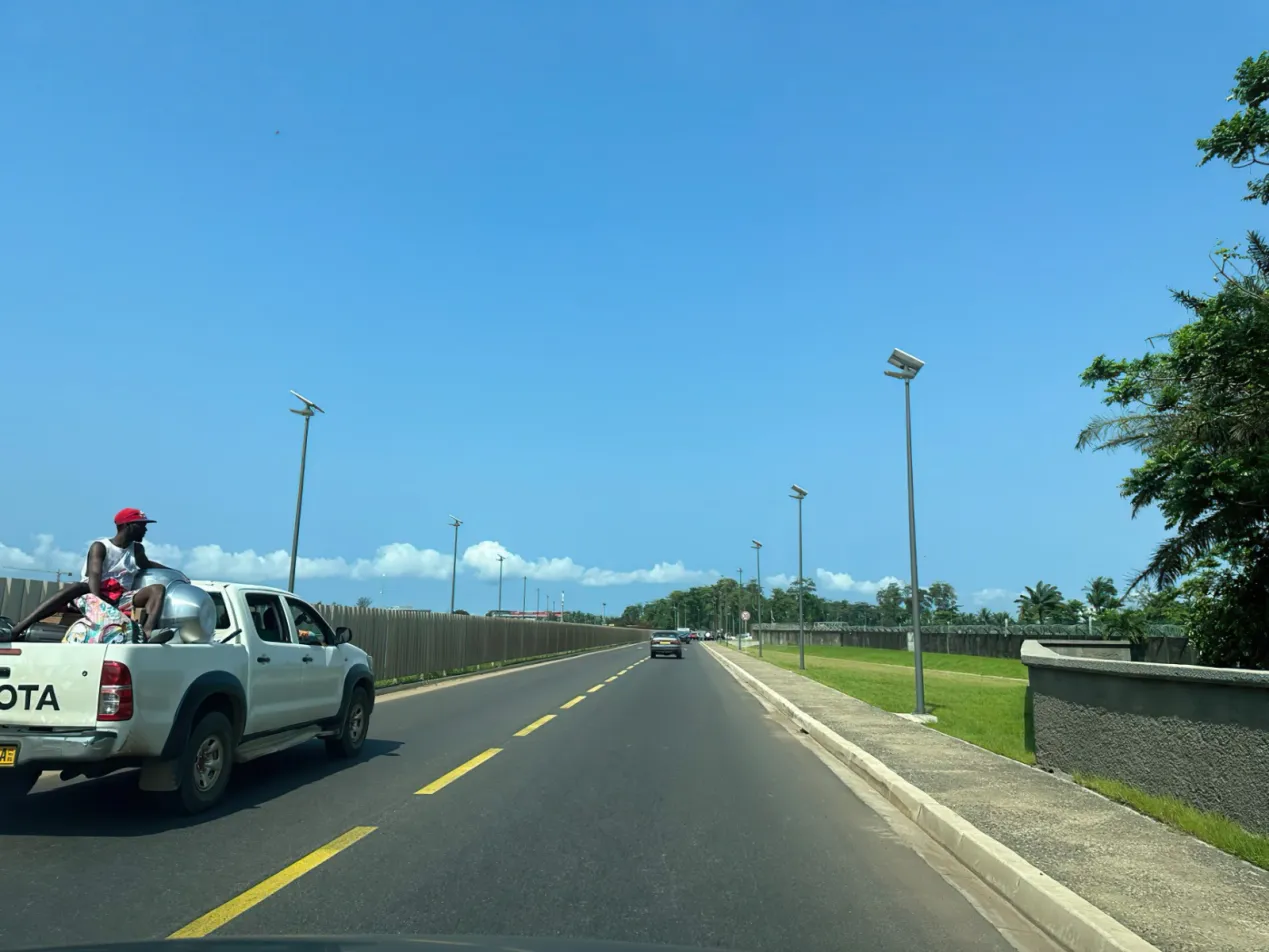
A RoadSmart Solar Sailing Light III deployed on a main road in Ghana — the LED module pairs with an optical lens tuned for road lighting distribution, so more usable light reaches the road surface at lower wattage.
Solar Panel and Battery Configuration
Solar panel sizing and battery capacity are determined by the local Peak Sun Hours (PSH), the daily working hours (typically 10–12 hours including motion-sensor dimming), and the autonomy days required to survive cloudy weather. For most African and Southeast Asian projects, RoadSmart designs systems with 2–3 autonomy days, meaning the battery must store enough energy to power the LED for 2–3 consecutive cloudy days.
LiFePO4 (lithium iron phosphate) is now the standard battery chemistry for solar street lights. Compared with traditional lead-acid batteries, LiFePO4 offers three times the cycle life, a wider operating temperature range, and significantly lower total cost of ownership over a 5–8 year project. RoadSmart integrates the LiFePO4 battery pack inside the fixture housing for an All-in-Two design, which simplifies on-site wiring and reduces installation time.

Controller Technology and Smart Energy Management
The solar charge controller is the brain of a solar street light. There are two main types on the market: PWM (Pulse Width Modulation) and MPPT (Maximum Power Point Tracking). An MPPT controller extracts 20–30% more energy from the solar panel compared to a PWM controller, especially in low-light conditions such as cloudy weather, early morning, and late afternoon. For a project that runs hundreds of lights, this efficiency gain translates directly into smaller panel sizing, smaller battery capacity, and lower total project cost.
Modern solar street light controllers also integrate motion sensors, timers, and IoT connectivity. A typical MPPT controller configuration works as follows: full brightness (100%) during the first 4 hours after sunset, dimmed mode (30–50%) during the middle of the night when traffic is low, and full brightness again in the early morning. This dimming profile can reduce daily energy consumption by 40–60% while maintaining road safety.
For buyers who want to learn more about MPPT controller technology and how RoadSmart integrates it into project-grade solar street lights, our solar street light controller section covers charging efficiency, load profiles, and dimming logic in detail. If you are evaluating factories, our all-in-two factory checklist outlines six engineering criteria to verify before signing a PO.

Solar Street Light Installation Cost Beyond Product Price
Many first-time buyers focus only on the unit price of the solar street light itself and underestimate the installation cost. In reality, installation can represent 30–50% of the total project budget, especially for projects in remote areas or sites with difficult ground conditions. RoadSmart provides complete solar street light solutions that include the fixture, pole, foundation cage, anchor bolts, and installation guidance so project buyers can plan accurately.
Pole, Foundation and Installation Requirements
Pole height is determined by the road width, the spacing between poles, and the local lighting standard. A 6m pole with 30W–60W LED is typical for residential streets and parking lots. An 8m–10m pole with 60W–100W LED is the most common configuration for secondary roads and main urban streets. For highways and major arterial roads, 10m–12m poles with 100W–150W LED are required to meet IES or EN lighting standards.
Foundation work is the part most projects underestimate. A standard concrete foundation for a 6–8m solar street light requires a cage of approximately 300mm x 300mm x 800mm, with M16 anchor bolts embedded in the concrete. For a 10–12m pole, the foundation needs to be deeper and wider to handle the higher wind load. On rocky or sandy ground, additional excavation and anchoring work may be required, which adds to installation cost.

Transportation and Site Conditions
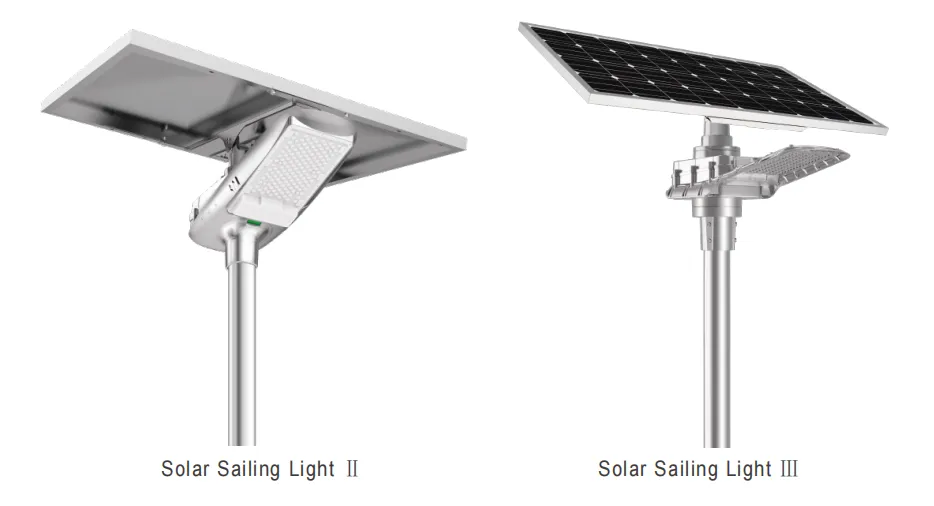
For projects shipped internationally, transportation cost depends on the volume and weight of the order. A RoadSmart Solar Sailing Light II or III unit typically ships in a 1–2 carton package per pole. Sea freight is quoted per CBM, and remote landlocked destinations add inland trucking cost. Site conditions also matter: a flat paved road in a coastal city is much cheaper to install on than a mountainous unpaved road in a high-altitude region.
When you request a quotation from RoadSmart, please share the project location, road type, pole height preference, and any site photos if available. This allows our engineering team to provide an accurate all-in cost estimate, including fixture cost, pole, foundation materials, freight, and installation guidance.
Why Solar Street Light Prices Vary Between Suppliers
The same 60W all-in-one solar street light can be quoted at USD 120 from one supplier and USD 280 from another. For a first-time buyer, this price spread is confusing. The differences usually come down to component quality and system reliability, and to the manufacturing capability and quality control of the supplier.
Component Quality and System Reliability
A solar street light is a system, not a single component. The LED chip, the solar panel cell, the battery cells, and the MPPT controller all need to be matched and integrated correctly. Cheaper suppliers often cut costs by using B-grade LED chips, second-life LiFePO4 cells, or unbranded PWM controllers labeled as MPPT. These cost-cutting choices lead to faster lumen depreciation, shorter battery cycle life, and higher failure rates in the field.
RoadSmart uses branded LED chips (Lumileds, Osram, or Bridgelux depending on project region), Tier-1 mono-crystalline solar cells, A-grade LiFePO4 battery cells from CATL or EVE, and a proprietary MPPT controller designed and assembled in our own factory. Every component is traceable by batch and serial number.
Manufacturing Capability and Quality Control
Working directly with a solar street light manufacturer like RoadSmart gives you three advantages over trading companies: factory-direct pricing, customized engineering, and post-sales accountability. RoadSmart operates a 12,000 m² production facility with SMT lines, battery pack assembly, light source integration, and a 100% aging test process for every unit before shipment. As a solar street light manufacturer with 15+ years of project experience, we have shipped solar street lights to 80+ countries.
All-in-One vs Split Solar Street Light Cost Considerations
Solar street lights are typically configured in two architectures: all-in-one (or all-in-two) and split type. Each architecture has a different cost structure, a different installation method, and a different fit for different project scenarios.
All-in-One Solar Street Light Cost Factors
An all-in-one solar street light integrates the LED module, solar panel, LiFePO4 battery, and MPPT controller into a single compact housing. The main cost advantage is simplified installation: there is no panel-to-battery cable, no separate panel mounting bracket, and no battery box to fix to the pole. For projects with a tight schedule or limited on-site labor, all-in-one reduces installation time by 40–60% compared to split type. The all-in-one architecture is most common in the 20W–80W power range.
Split Solar Street Light Cost Factors
A split solar street light separates the LED lamp head from the solar panel and battery. The solar panel can be mounted at the top of the pole at an angle optimized for the local latitude, while the battery box is mounted lower on the pole for easier service access. Split architecture is the standard choice for higher wattage (80W–150W) projects, for sites with limited sun exposure where a larger panel is required, and for projects where the battery needs to be serviced more frequently.
From a total-cost perspective, split-type solar street lights typically cost 15–25% more in fixture price due to the additional mounting hardware and cabling, but they offer better long-term flexibility for service and upgrades.

How to Evaluate Long-Term Value of a Solar Street Lighting Project
The cheapest solar street light is rarely the lowest total-cost option for a project. To evaluate long-term value, buyers should look beyond the unit quotation and consider reliability and maintenance over a 5–8 year project lifecycle.
System Reliability and Maintenance Considerations
System reliability starts with component matching. An undersized solar panel will force the battery to cycle deeper every night, shortening battery life. An undersized battery will lose capacity faster in hot climates. An under-spec MPPT controller may overheat when running the LED at full brightness. RoadSmart engineers every project with a sizing margin of 20–30% to absorb real-world conditions such as dust on the panel, unexpected cloudy days, and temperature extremes.
Maintenance cost over 5 years should also be factored in. A LiFePO4 battery with 6,000+ cycles will typically not need replacement during the project lifetime, while a cheaper lead-acid battery may need 1–2 replacements. Over 500 lights, this difference alone can shift the total cost of ownership by hundreds of thousands of dollars.
How to Choose the Right Solar Street Light Supplier
Check Manufacturing Experience and Project Capability
Always ask a prospective supplier for: factory photos, production capacity per month, in-house engineering team, export experience in your target market, and reference projects in similar climate zones. A manufacturer with proven project experience in Africa, Southeast Asia, the Middle East, or Latin America will understand the climate-specific challenges your project faces.
Evaluate Technical Support and Customization Ability
For project buyers, technical support before the order is just as important as warranty support after. RoadSmart provides: project-specific Dialux lighting simulation, panel and battery sizing calculation, CAD drawings of the pole and foundation, freight optimization, and on-site or remote installation guidance. Customization options include LED color temperature, pole color and finish, sensor configuration, and OEM branding on the fixture.
Frequently Asked Questions About Solar Street Light Cost
How much does a solar street light cost?
A standard 60W all-in-one solar street light typically costs USD 180–320 per unit for project orders, depending on LED specifications, battery capacity, and pole height. A 100W unit ranges from USD 350–650. Freight, pole, and foundation are quoted separately.
What factors affect solar street light cost the most?
Battery capacity and chemistry, solar panel wattage, and MPPT controller grade have the largest impact on per-unit cost. Pole height and foundation work have the largest impact on total project budget.
Why do solar street light prices vary between suppliers?
Price variation reflects differences in component quality (LED chip brand, battery cell grade, controller design) and in supplier type (factory-direct vs trading company). Cheaper quotations often use B-grade components or omit the controller smart features.
Is a cheaper solar street light better for a project?
Not necessarily. The cheapest unit often uses a lead-acid battery and a PWM controller, which leads to higher maintenance cost and shorter service life. For a 500-light project, the total cost of ownership over 5 years is usually lower with a LiFePO4 + MPPT system, even if the upfront unit price is higher.
Does RoadSmart provide full solar street lighting solutions?
Yes. RoadSmart delivers complete solar street light solutions covering fixture design, pole engineering, foundation drawings, lighting simulation, and installation guidance. We work with municipal buyers, contractors, NGOs, and distributors worldwide.
Conclusion
Solar street light cost is a multi-variable equation, not a single number. A realistic project budget must include the fixture, pole, foundation, freight, and installation. The smartest way to control total cost is to specify the right architecture (all-in-one vs split), choose LiFePO4 + MPPT for long service life, and work with a manufacturer that can engineer the system for your local climate.
For a quotation tailored to your project location, road type, and pole height, share your project details with the RoadSmart engineering team. We will return a complete cost breakdown within 24 hours, including fixture cost, recommended pole and foundation, freight estimate, and installation guidance.