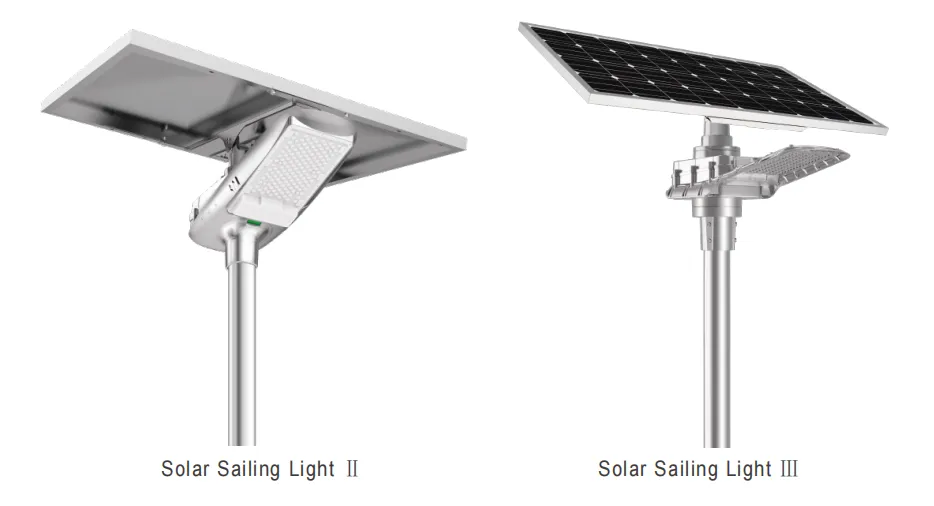
Why Are Parking Lot Lights Turning Blue or Purple?
Sep 28, 2026
Read:162
Source: Yin Zhenkun
Why do some parking lots have purple lights? When fixtures originally designed to produce white light develop a blue or purple tint, a problem with the LED’s phosphor-conversion system may be responsible. In documented cases, separation of the phosphor material has changed the color emitted by otherwise operating fixtures.
However, blue lights in parking lots do not always indicate a fault. Decorative strips on poles and flashing security beacons are different from the main lights illuminating vehicles and pedestrian routes.
Before arranging a replacement, identify where the unusual color originates. Is the main fixture casting purple light across the ground, or is a separate component glowing blue? That distinction determines whether you are looking at a design feature, security equipment, or a lighting problem.
Why LED Parking Lot Lights Change Color
How white LED light becomes blue or purple
Many white LEDs use a blue-emitting chip together with phosphor materials. These materials convert part of the blue light into other wavelengths, creating a mixture that appears white. The U.S. Department of Energy identifies phosphor conversion as a principal method of producing white LED light. DOE LED Basics
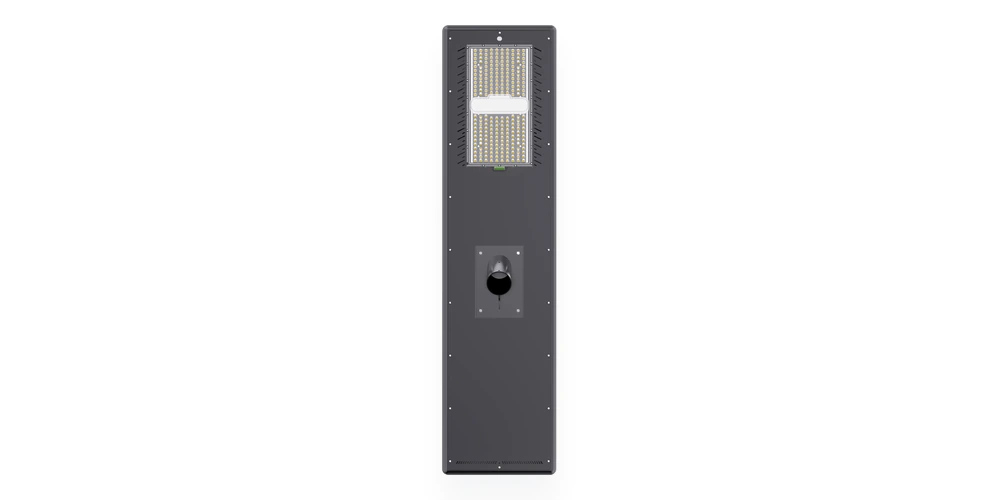
If the conversion materials or their arrangement change, the balance of the emitted light can change too. An LED parking lot light may continue operating while producing a noticeably different color.
Manitoba Hydro documented this problem in affected streetlights, identifying separation of the phosphor coating as the cause of their purple appearance. The utility treated those cases as manufacturing defects and arranged replacements. Manitoba Hydro’s technical explanation
That explanation should not become a diagnosis for every discolored fixture. Different LED packages can develop different failure mechanisms. Confirm the specific cause with the manufacturer or a qualified lighting professional.
Why only some fixtures turn purple
Commercial parking lot lights may have been installed in phases, purchased from different batches, or repaired with different components. Even fixtures with matching housings can have different service histories.
If only part of a site changes color, compare the affected lights’ model numbers, installation dates, and maintenance records. Look for patterns without assuming that every fixture on the property has the same problem.
A record of which lights changed first can also help the supplier investigate. Photograph the wider parking area so the location of each affected fixture is clear.
Cool-white lighting is not the same as discoloration
Some LED parking lot lights look cooler than neighboring lamps from the day they are installed. That may reflect their specified white-light color temperature.
A fixture that originally matched adjacent lights but later develops a strong purple cast presents a different situation. Ask whether the appearance has changed, rather than judging the fixture solely by how blue it looks.
Check the original specification, compare nearby fixtures, and observe the ground beneath the lamp. A change in the illuminated area is more useful evidence than a close-up photograph of an overexposed light source.
Blue Lights in Parking Lots: Identify the Source First
What are the blue lights in parking lots? Depending on the installation, they may be discolored LED fixtures, decorative pole lighting, or beacons associated with security equipment.
Use the location and behavior of the light to narrow down the possibilities.
| What you observe | Possible explanation | Recommended check |
|---|---|---|
| A previously white lamp casts a steady purple pool of light | A change within the LED light source | Compare installation records and contact the supplier |
| Blue or red strips run along a pole while the main lamp appears white | Separate decorative lighting | Check the product design and lighting controls |
| A blue beacon flashes on equipment with cameras or a trailer | A security-system feature | Identify the equipment and ask site management |
| A scene appears blue only in photographs | Camera settings or image processing | Compare direct observation and another image |
| A fixture has always appeared cooler than its neighbors | A different white-light specification | Check its original color-temperature rating |
Check the parking lot light pole and the main fixture separately
A parking lot light pole can support several components. The main luminaire, decorative strips, signs, and other equipment should not be treated as a single light source.
Look at which component produces the color and where that light falls. A narrow blue strip on a pole does not mean the overhead lamp is illuminating the entire parking area with blue light.
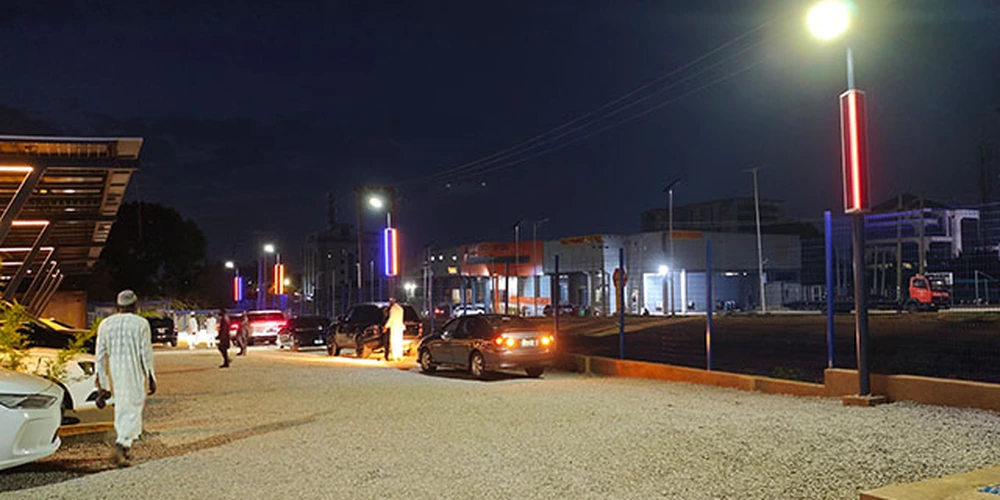
Similarly, a flashing device attached to a pole should be identified before it is reported as a defective LED fixture. Describe its behavior and location when contacting the property manager.
Project example: parking lot lighting with colored pole strips
The project photograph below shows a parking area beside a roadway and buildings. Vehicles occupy the foreground and the edge of the site, while a line of pole-mounted lights extends into the distance.
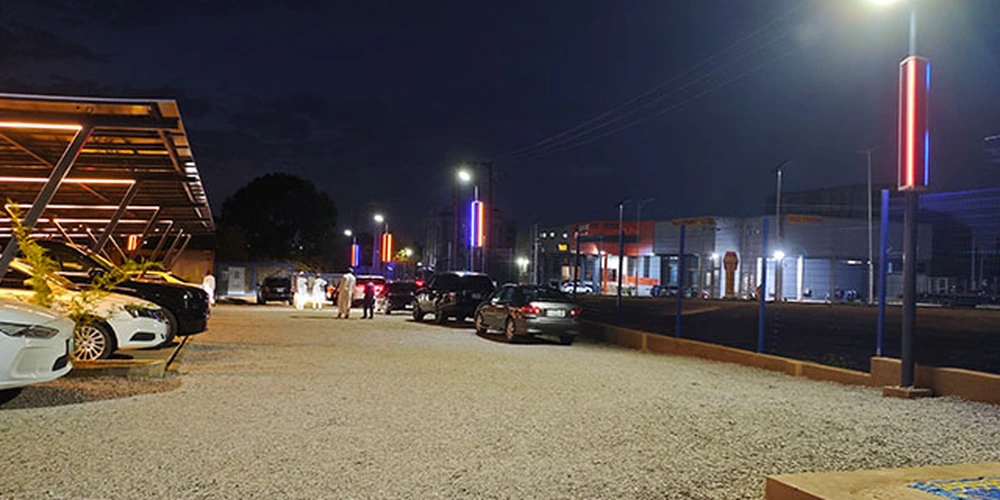
Two lighting elements are visible: bright pole-top fixtures that appear white in the photograph, and narrow red and blue illuminated strips positioned lower on the poles.
The main light sources and colored pole strips are visibly separate in this parking-area installation.
This arrangement illustrates why the phrase “blue parking lot lights” can be ambiguous. Someone approaching the site may notice the blue accents first, while someone assessing the lighting should also examine the main fixtures and the surfaces beneath them.
For projects seeking a similar combination of area illumination and decorative pole lighting, the RoadSmart SP Series solar pole street light is a relevant product to evaluate. Its published design includes three-sided solar panels and decorative color strips, and parking lots are among its listed applications.
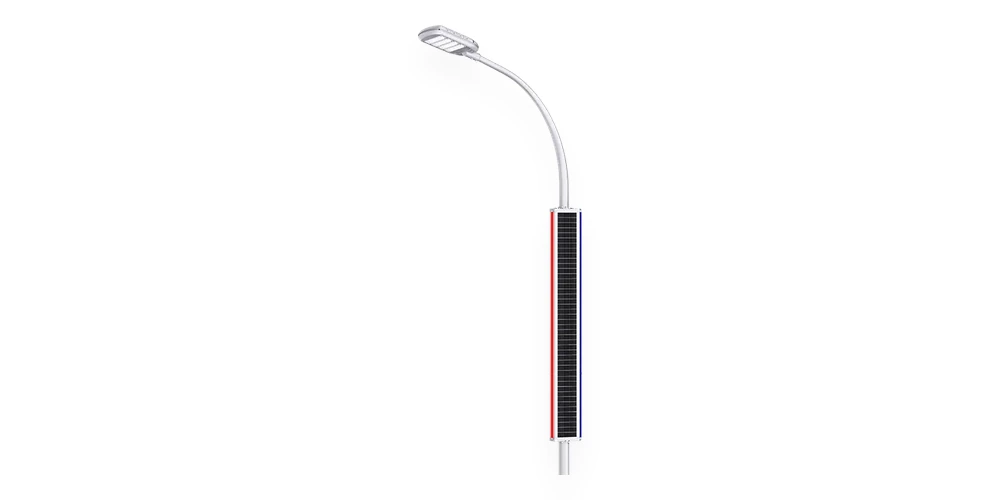
When specifying pole lights for parking lots, describe the functional and decorative elements separately. Confirm the required ground coverage, operating schedule, and maintenance arrangements for each. Attractive colored accents should complement the main lighting rather than serve as evidence of its performance.
Effects on Visibility and Color Recognition
A purple appearance does not reveal the fixture’s measured output, electrical condition, or remaining service life. The practical question is whether the parking lot lighting still meets the site’s needs.
Inspect pedestrian routes and vehicle areas
Review entrances, walking routes, curbs, parking spaces, and vehicle circulation areas. Compare the affected section with nearby areas under normal lighting.
Record any difficulty distinguishing objects, surface changes, or colors. Pay particular attention to places where pedestrians and vehicles share the same space.
Do not evaluate lighting only by looking up at the lamp. A bright-looking light source does not establish that the ground receives suitable illumination.
Check surveillance images separately
Where cameras are installed, review nighttime recordings as well as the live view. If earlier recordings are available, compare similar conditions before and after the reported change.
Look for useful details rather than assuming that an unusual light color makes every camera ineffective. Camera settings, headlights, reflections, and other light sources can complicate the comparison.
A practical review should establish what has changed at that particular site.
Use measurements when performance is uncertain
For commercial parking lot lighting, arrange an appropriate assessment when visibility or compliance is in question. Compare measured conditions with the project specification and applicable local requirements.
Photographs are useful records of appearance and location. They cannot establish illuminance, uniformity, or compliance.
The same principle applies to replacement proposals: product photographs should be supported by photometric information and a layout suited to the property.
Parking Lot Light Repair: Inspection, Warranty, and Replacement
Once the main fixture has been identified as the source of discoloration, document the issue before ordering parts. A structured parking lot lighting repair process helps the supplier recommend the correct remedy.
Record the affected parking lot light fixtures
Prepare a short record containing:
- Pole number or marked position on a site plan.
- Fixture manufacturer, model, and serial number where available.
- Installation date or approximate age.
- Date the color change was first noticed.
- Any associated dimming, flickering, or unexpected switching.
- Photographs of the fixture and surrounding area.
Use consistent descriptions across the site. “Pole 4, main lamp now purple” is more useful than “some lights look strange.”
Confirm maintenance responsibility and warranty coverage
Contact the property owner, facility manager, or organization responsible for the lighting. The party maintaining the adjoining public road may not maintain a private parking area.
Before purchasing replacements, send the supplier the available records and ask whether the model has a known issue. Clarify what a warranty remedy includes: components, complete fixtures, labor, and access equipment may be handled differently.
Request the proposed solution in writing so the maintenance team can verify compatibility and scope.
Match the repair to the fixture’s construction
LED parking lot light fixtures differ in serviceability. A replaceable lamp, a serviceable LED module, and a sealed integrated luminaire may require different remedies.
If the problem is internal to the LED package, cleaning the outside lens will not restore the original light color. Follow the manufacturer’s service instructions rather than attempting to hide the discoloration with an added filter.
Inspection and work at height should be performed by qualified personnel using suitable access equipment. Do not assume that a light remaining operational means its components are safe to handle.
Verify the result at night
After repair or replacement, check the fixture’s operation, appearance, and coverage alongside neighboring lights.
Update the maintenance record with the replacement model and service date. If several fixtures are affected, keep tracking the remaining installation so that new changes can be identified promptly.
Choosing Replacement Parking Lot Lighting Fixtures
Replacing a discolored lamp does not automatically require a complete redesign. Start with the existing mounting arrangement, required coverage, and operating conditions.
Evaluate LED parking lot light fixtures beyond initial brightness
Initial lumen output is only one purchasing consideration. Ask what information is available about color maintenance, operating conditions, and warranty coverage for unacceptable color changes.
DOE reliability research treats changes in light output and changes in color as distinct performance considerations. A long operating-life claim alone does not answer every question about color stability. DOE research on LED maintenance
Confirm the specified color temperature and suitable light distribution. Where practical, assess a sample in the intended setting before ordering a larger quantity.
Match parking lot light poles, optics, and spacing
Existing parking lot light poles influence which replacements are suitable. Check mounting height, bracket compatibility, pole condition, and the proposed fixture’s weight and loading requirements.
The light distribution must also match the site. LED lights for parking lots should illuminate the required spaces and circulation routes without relying on excessive brightness at isolated points.
For a larger replacement program or new parking lot lighting installation, request photometric files and a lighting calculation. Review coverage between poles and at the edges of the site, not just directly beneath each fixture.
Choosing solar parking lot lights for your site
Solar powered parking lot lights are an option to assess where independent power is useful or extending electrical infrastructure would be difficult. Their suitability depends on the site’s energy and lighting requirements.
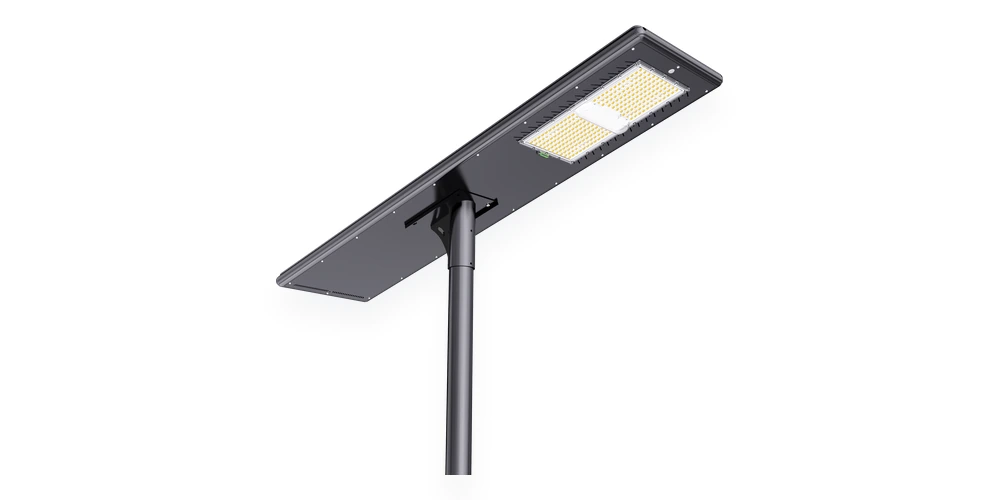
Provide the supplier with:
- Project location and potential shading.
- Parking-area dimensions and proposed pole positions.
- Required lighting hours and control schedule.
- Target lighting performance.
- Expected maintenance access and backup requirements.
Solar parking lot lighting still requires appropriate LED selection and color-quality evaluation. Solar power changes how energy is supplied; it does not prevent every possible LED failure.
For projects combining lighting with decorative pole elements, review the SP Series specifications and configuration options. Select a configuration against the actual site conditions rather than assuming that a visually similar installation requires identical equipment.
Frequently Asked Questions
Are purple parking lot lights installed to deter crime or insects?
The color alone does not establish either purpose. A previously white fixture that becomes purple should be investigated for a technical issue. Purpose-built colored lights should be identified through their design documentation.
What are the blue flashing lights in parking lots?
They may be beacons associated with security equipment. Look for cameras, equipment labels, or a mobile tower, and ask site management if the purpose is unclear. A flashing beacon is different from a steady blue or purple cast coming from the main area light.
Can a solar parking lot light turn blue or purple?
Yes, a solar-powered fixture still uses an LED light source that can develop faults. Identify whether the unusual color comes from the main LED assembly or a separate decorative element before requesting support.
Will changing the color-temperature setting fix the problem?
Only if the appearance results from an intended adjustable setting. Changing a control setting should not be assumed to repair damaged phosphor materials or an internal LED defect. Check the manufacturer’s troubleshooting instructions.
What should I send when requesting a lighting assessment?
Provide the fixture model, installation date, nighttime photographs, and a marked site plan. For replacement planning, include pole heights, spacing, operating hours, and any available lighting measurements. These details help the supplier evaluate both the reported fault and a suitable replacement.