Solar Street Light Tender Specification Checklist for Municipal and EPC Projects
Sep 24, 2026
Read:132
Source: Yin Zhenkun
Quick answer: Prepare a solar street light tender specification covering lighting design, system sizing, product requirements, manufacturer evaluation, BOQ, inspection, warranty, and project acceptance.
What Should a Solar Street Light Tender Specification Include?
A complete solar street light tender specification covers five areas:
- Road and site conditions
- Required lighting performance
- Nightly operating profile and autonomy
- Product, structural, and documentation requirements
- Supply scope, inspection, warranty, and acceptance
LED wattage, solar panel power, and battery capacity alone do not demonstrate that a system can achieve the required illumination, uniformity, and operating time.
For an effective bid comparison, every supplier needs to work from the same road dimensions, lighting criteria, operating profile, environmental conditions, and supply boundary. The product model in the quotation must also match the datasheet, IES or LDT file, lighting calculation, drawings, and test documents.
Municipal Solar Street Light Project Requirements
Begin the tender with the road conditions and required lighting result.
Identify whether the project covers municipal roads, rural roads, residential streets, parking areas, industrial access roads, or public spaces. Record the road width, number of lanes, sidewalks, median, intersections, curves, and locations requiring additional lighting.
Define the proposed pole arrangement, including mounting height, spacing, setback, arm length, tilt, and whether the layout is single-sided, staggered, opposite, or median-mounted.

CIE 115:2010 classifies road-lighting applications according to the visual tasks of motorized traffic, conflict areas, and pedestrian areas. It provides a framework for selecting luminance or illuminance criteria, uniformity, and glare limits. Use the lighting class and performance criteria specified by the local authority or project consultant.
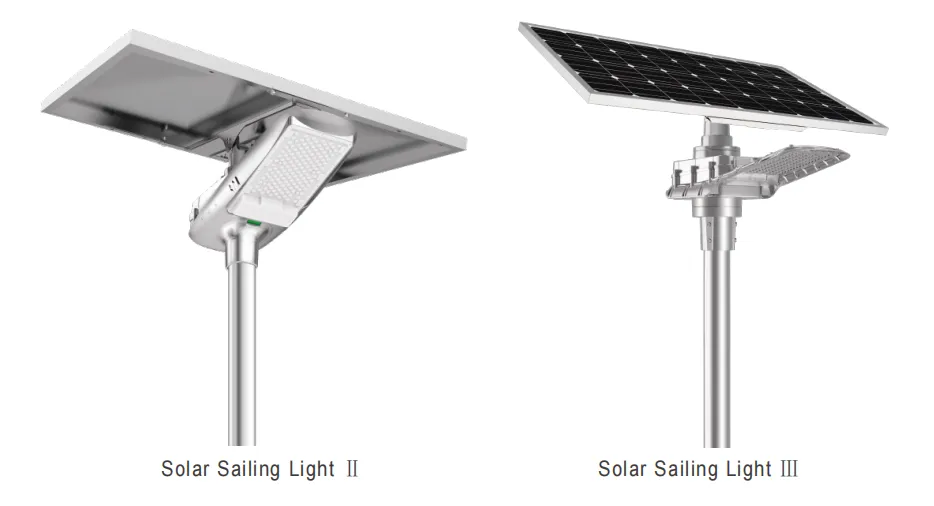
RoadSmart offers different solar street lighting systems, including all-in-one, all-in-two, and split configurations. Match the system structure to the installation method, solar panel orientation, required energy capacity, and maintenance plan.
Solar Street Light Project Input Checklist
| Project input | Required information | Procurement purpose |
|---|---|---|
| Project location | Country, city, coordinates, and project map | Establish the solar and environmental design basis |
| Road conditions | Width, lanes, sidewalks, median, curves, and intersections | Define the lighting calculation area |
| Pole layout | Height, spacing, setback, arm length, tilt, and arrangement | Create a comparable lighting layout |
| Lighting requirements | Applicable standard, road class, lighting level, uniformity, and glare limits | Define the required road-lighting result |
| Operating profile | Hours per night, staged dimming, and sensor functions | Calculate the nightly energy load |
| Autonomy | Required operating hours or nights during low-sun periods | Determine usable battery capacity |
| Environment | Temperature, rainfall, dust, salt exposure, snow, flooding, and shading | Select suitable electrical and mechanical configurations |
| Structural conditions | Design wind speed, soil information, and structural code | Design the pole, anchors, and foundation |
| Supply scope | Equipment, poles, foundations, installation, testing, and spare parts | Make commercial offers comparable |
Where the pole layout or lighting target has not been selected, enter “supplier to propose” and require the bidder to list the assumptions used.
Solar Street Lighting Design and DIALux Report Requirements
The lighting proposal needs to demonstrate that the selected product and pole layout can achieve the specified result on the actual road.
Request an IES or LDT photometric file and a DIALux or Relux calculation prepared with the road dimensions and pole arrangement stated in the tender. The report needs to identify the product model, optical distribution, wattage, mounting height, spacing, tilt, calculation grid, and maintenance factor.
Include the average, minimum, and uniformity results in the report. Projects with luminance or glare requirements also need the values required by the selected road-lighting class.
ANSI/IES LM-79-24 defines procedures for measuring the optical and electrical performance of solid-state lighting products, including luminous flux, input power, intensity distribution, and color quantities.
The main procurement requirement is document consistency. The model, wattage, and optical configuration in the IES or LDT file must match the quotation, product datasheet, and lighting report.
Use a document mapping field in the BOQ to connect each product model to its optic, photometric file, DIALux report, and quantity. Record the filename and revision of each document. A simulation prepared with an unidentified or mismatched photometric file does not provide valid evidence for the proposed product.
Solar Street Light System Sizing and Energy Calculation
Build the system configuration from the actual nightly lighting load.
Record the luminaire input power, brightness level, and operating hours for each stage of the night. Add the energy consumed during each stage, controller consumption, and system losses to calculate the nightly demand. Use that result to size the battery and solar panel.
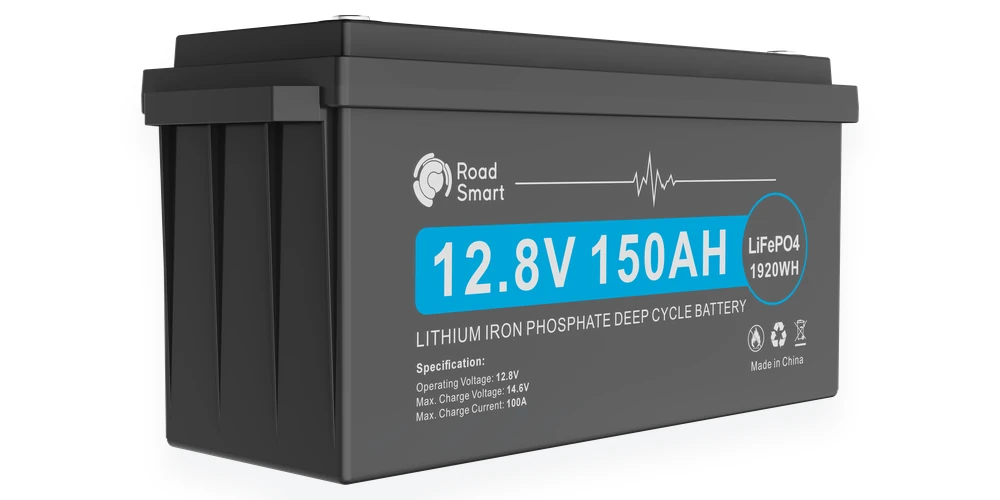
Express battery capacity in both watt-hours and amp-hours. Amp-hours without voltage do not provide a complete energy value. The calculation also needs to identify the battery chemistry, usable energy, depth-of-discharge limit, operating temperature, and controller settings.
Define autonomy as a measurable operating condition. A clear tender clause could state:
Starting from the battery charge condition stated in the tender, the system shall complete three specified nightly operating cycles without useful solar charging.
This gives every bidder the same calculation basis and separates no-charge autonomy from cloudy-weather operation with partial charging.
The calculation also needs to show how the solar panel restores the consumed energy after the low-sun period. Increasing battery capacity without sufficient solar charging delays the energy deficit but does not correct it.
Lighting and Energy Design Evidence
| Design area | Required submission | Review focus |
|---|---|---|
| Photometric performance | Model-specific IES/LDT file | Model, wattage, optic, tilt, and revision |
| Lighting layout | DIALux or Relux report | Road geometry, pole layout, calculation grid, and maintenance factor |
| Lighting results | Average, minimum, uniformity, luminance, or glare values as specified | Compliance with the project lighting criteria |
| Nightly load | Power and operating time for every dimming stage | Total nightly watt-hours |
| Battery configuration | Chemistry, voltage, rated energy, usable energy, and protection settings | Autonomy under the stated operating profile |
| Solar charging | Panel power, voltage, solar input, and charging assumptions | Daily energy balance and recovery period |
| Control strategy | Charging method, dimming schedule, sensor logic, and protections | Compatibility with the battery and luminaire |
| Design assumptions | Temperature, losses, shading, and low-sun conditions | Consistent assumptions across all bids |
Solar Street Light Product Specifications
Connect every product requirement to a datasheet, drawing, or test record.
The LED luminaire documentation needs to identify the model, input power, luminous output, optical distribution, color temperature, operating-temperature range, and photometric file.
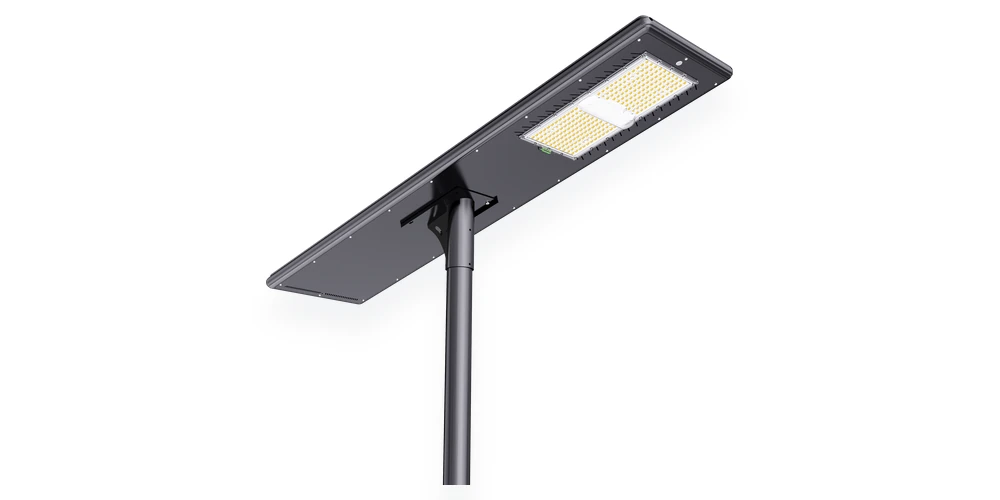
For the solar module, record the rated power, voltage, current, dimensions, and temperature coefficients. Compare these values with the solar charging calculation rather than reviewing panel wattage in isolation.
Battery documentation needs to identify the chemistry, nominal voltage, watt-hour capacity, usable capacity, cell configuration, depth-of-discharge limit, and battery-management settings.
The controller documentation needs to describe the charging method, dimming program, electrical protections, sensor logic, and optional communication functions. Its voltage and current limits must be compatible with the selected panel, battery, and luminaire.
Solar Street Light Component Review Matrix
| Component | Tender specification | Evidence to review |
|---|---|---|
| LED luminaire | Model, power, luminous output, optic, CCT, and operating temperature | Datasheet, photometric file, and lighting report |
| Solar module | Power, voltage, current, dimensions, and temperature coefficients | Datasheet and applicable qualification documents |
| Battery | Chemistry, voltage, rated and usable energy, cell configuration, and protection settings | Battery specification and test information |
| Controller | Charging method, dimming program, protections, and sensor logic | Controller specification and system diagram |
| Product enclosure | Required ingress and impact protection | Report identifying the tested enclosure or product |
| Pole and bracket | Material, dimensions, coating, wind-load basis, and drawings | Structural calculation and fabrication drawing |
| Foundation | Design load, anchor system, soil conditions, and structural code | Foundation calculation and installation drawing |
IP and IK describe different properties. IP covers protection against contact, solid objects, and water, while IK covers resistance to external mechanical impact. The test report needs to identify the enclosure or product model it covers.
Review certificates and test reports by checking the certificate holder, model number, scope, issue date, standard edition, and issuing organization. Record discrepancies in the technical clarification schedule.
Solar Street Light Battery Specification Review
Battery cycle-life claims require defined test conditions.
Record the depth of discharge, ambient temperature, charge and discharge rate, end-of-test remaining capacity, and test method. A standalone cycle number cannot support a meaningful comparison between proposals.
Review the charging and discharging temperature ranges against the project climate. For hot-climate projects, compare the battery charging limit with the temperature expected at the installed location. For cold climates, review low-temperature charging protection and its effect on usable energy.
The procurement review also needs to cover replacement. Record the battery location, access method, connector type, replacement procedure, required tools, and availability of compatible spare parts.
Solar Street Light Pole, Foundation, and Environmental Specifications
The structural review covers the complete installed assembly, including the luminaire, solar panel, battery enclosure, arm, bracket, pole, anchor bolts, and foundation.
State the project design wind speed, structural code, available soil information, and foundation constraints in the tender. Request the corresponding structural calculations and drawings.
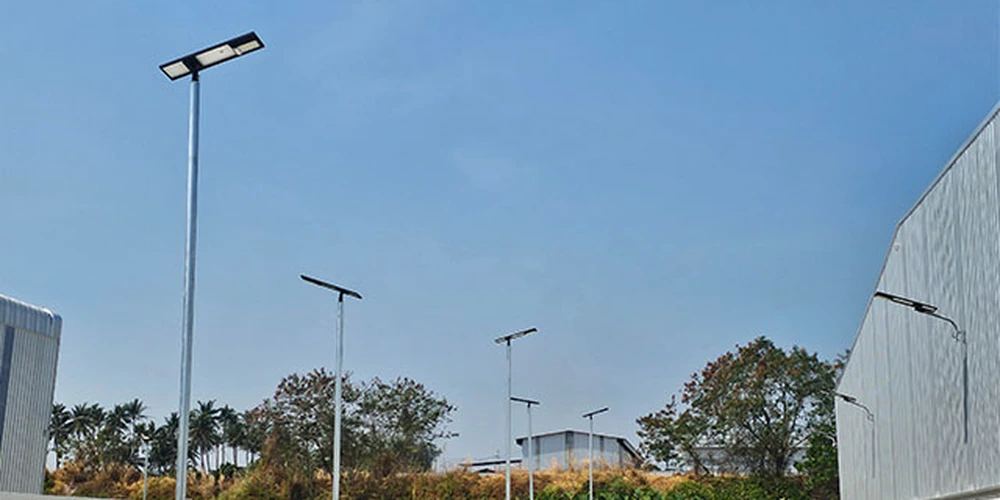
For coastal projects, specify the salt-exposure environment and surface-treatment requirements. Desert projects need provisions for dust accumulation, panel cleaning, and high enclosure temperatures. Flood-prone sites need defined equipment elevations and foundation conditions.
Projects requiring independent panel orientation, higher energy capacity, or component-level maintenance can evaluate split solar street lights. Review them against the same lighting, energy, and structural requirements used for other proposals.
Solar Street Light Manufacturer and Factory Evaluation
A manufacturer evaluation verifies whether the supplier can reproduce the approved configuration across the full order.
Request the production flow, incoming inspection plan, in-process controls, aging tests, final inspection plan, traceability method, and nonconforming-product procedure. Custom projects can include sample approval or first-article inspection before mass production.

RoadSmart’s supplied equipment inventory includes a power tester, EL tester, lithium battery aging cabinet, electronic load, temperature inspection instrument, resistance tester, spectral analyzer, and battery testing equipment.
These devices support photovoltaic, battery, electrical-load, temperature, and optical testing. During the factory audit, connect each relevant device to its test procedure, sampling rate, calibration record, acceptance criteria, and report format.
RoadSmart’s manufacturing and engineering capabilities include in-house R&D, OEM/ODM production, and technical-document support. Verify these capabilities through approved drawings, the project quality plan, model list, inspection records, and technical-file register.
ISO 9001 demonstrates conformity of a quality management system. It does not certify an individual solar street light model. Review management-system certificates and product test documents separately.
Solar Street Light BOQ and Supply Scope
All bidders need to quote against the same supply boundary.
The BOQ needs to identify the luminaire, solar panel, battery, controller, pole, arm, bracket, anchor bolts, foundation cage, cables, connectors, and mounting hardware included in each offer.
State whether transportation, unloading, civil work, installation, commissioning, training, nighttime measurements, project documents, warranty spare parts, monitoring platforms, and communication fees form part of the contract.
Map every BOQ item to an approved product model and configuration. Record optional functions, such as remote monitoring, motion sensing, or alternative dimming programs, together with their technical and commercial effects.
This structure exposes exclusions before price comparison and prevents a light-only quotation from being compared directly with a complete installed system.
Municipal Solar Street Light Project Experience
Project references need to match the road type, climate, and order scale of the tender.
Reference documents can identify the project location, application, supplied system, approximate quantity, and completion period. For confidential projects, suppliers can provide redacted records or another agreed form of verification.
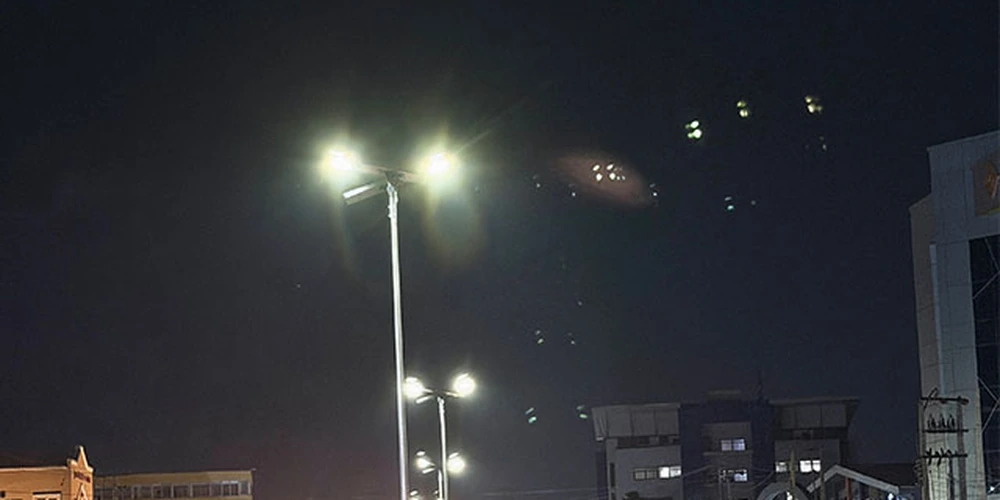
Connect project photographs to identifiable project information, product models, and delivery records. Unidentified photographs serve as presentation material rather than evidence of project delivery.
Model numbers and revisions need to remain consistent across the quotation, BOQ, datasheets, lighting calculations, photometric files, drawings, test records, labels, packing lists, and warranty documents. Resolve inconsistencies through written technical clarification before completing the bid evaluation.
Solar Street Light Inspection and Project Acceptance
Define the inspection and acceptance process before contract award.
Before production, approve the model list, datasheets, drawings, BOQ mapping, lighting calculation, energy configuration, and technical-document register. These documents form the production baseline.
Before shipment, complete the inspections specified in the quality plan. Verify model numbers, configuration, operation, packaging, quantity, and accompanying documents. Record inspection results by production batch or serial-number range.
Site acceptance covers pole installation, panel orientation, mounting, wiring, and controller settings. Where nighttime lighting measurements form part of acceptance, define the measurement conditions, equipment, responsible party, and permitted tolerance.
Factory, Site, and Handover Requirements
| Project stage | Required records | Acceptance purpose |
|---|---|---|
| Before production | Approved models, datasheets, drawings, BOQ mapping, and design calculations | Establish the production baseline |
| During production | Incoming, in-process, aging, and final inspection records | Verify production control |
| Before shipment | Product identification, configuration, function, quantity, and packaging records | Confirm order conformity |
| Site installation | Pole, panel, wiring, mounting, and controller inspection | Verify correct installation |
| Lighting acceptance | Field measurement results under defined conditions | Confirm lighting performance |
| Handover | Final drawings, serial records, controller settings, reports, warranty, spare-parts list, and maintenance instructions | Support operation and future maintenance |
Solar Street Light Warranty and Lifecycle Cost
Define warranty coverage by component.
Record the warranty period and remedy for the luminaire, battery, solar panel, controller, pole, and communication equipment. State the exclusions, required claim evidence, response time, shipping responsibility, repair or replacement procedure, and labor responsibility.
Review spare-parts availability and expected lead time. Identify faults that require replacement of a complete assembly and record any special tools needed for component removal.
Evaluate warranty, maintenance, and spare-parts costs together with the purchase price. These items reveal lifecycle differences that a unit-price comparison cannot show.
Final Solar Street Light Tender Review
Complete the technical evaluation before comparing prices.
Confirm that all bidders used the same road dimensions, lighting criteria, operating profile, environmental conditions, and supply boundary. Check that the lighting report uses a photometric file matching the proposed product. Verify that the energy calculation identifies the load, usable battery energy, solar input, autonomy condition, and recovery period.
Match certificates and test reports to the proposed model. Confirm that the structural calculation covers the complete installed system and that warranty, spare-parts, and acceptance responsibilities are assigned to specific parties.
Request clarification when a submission contains:
- Luminaire wattage without photometric evidence
- Battery capacity without voltage or usable-energy conditions
- Autonomy without a defined operating profile
- An unidentified or mismatched IES/LDT file
- Certificates covering another product model
- Wind-resistance claims without design conditions
- Warranty terms without component-level coverage
- A quotation that omits poles, foundations, mounting hardware, or commissioning
- Project photographs without verifiable project information
A compliant submission creates a clear relationship between the project requirements, product configuration, technical evidence, quoted scope, and acceptance method.
RoadSmart Solar Street Light Tender Support
RoadSmart supports municipal and EPC projects with product selection, IES/LDT files, DIALux layouts, technical drawings, BOQ mapping, and tender documentation.
For context on wider demand and regional conditions, review our notes on solar street lighting market trends and how they affect public-infrastructure procurement.
For an initial technical review, prepare the project location, road dimensions, proposed pole layout, lighting class or target, nightly operating profile, autonomy requirement, environmental conditions, estimated quantity, and any existing drawings or tender documents.
Submit the project requirements and tender documents for preliminary system configuration and technical-document review.