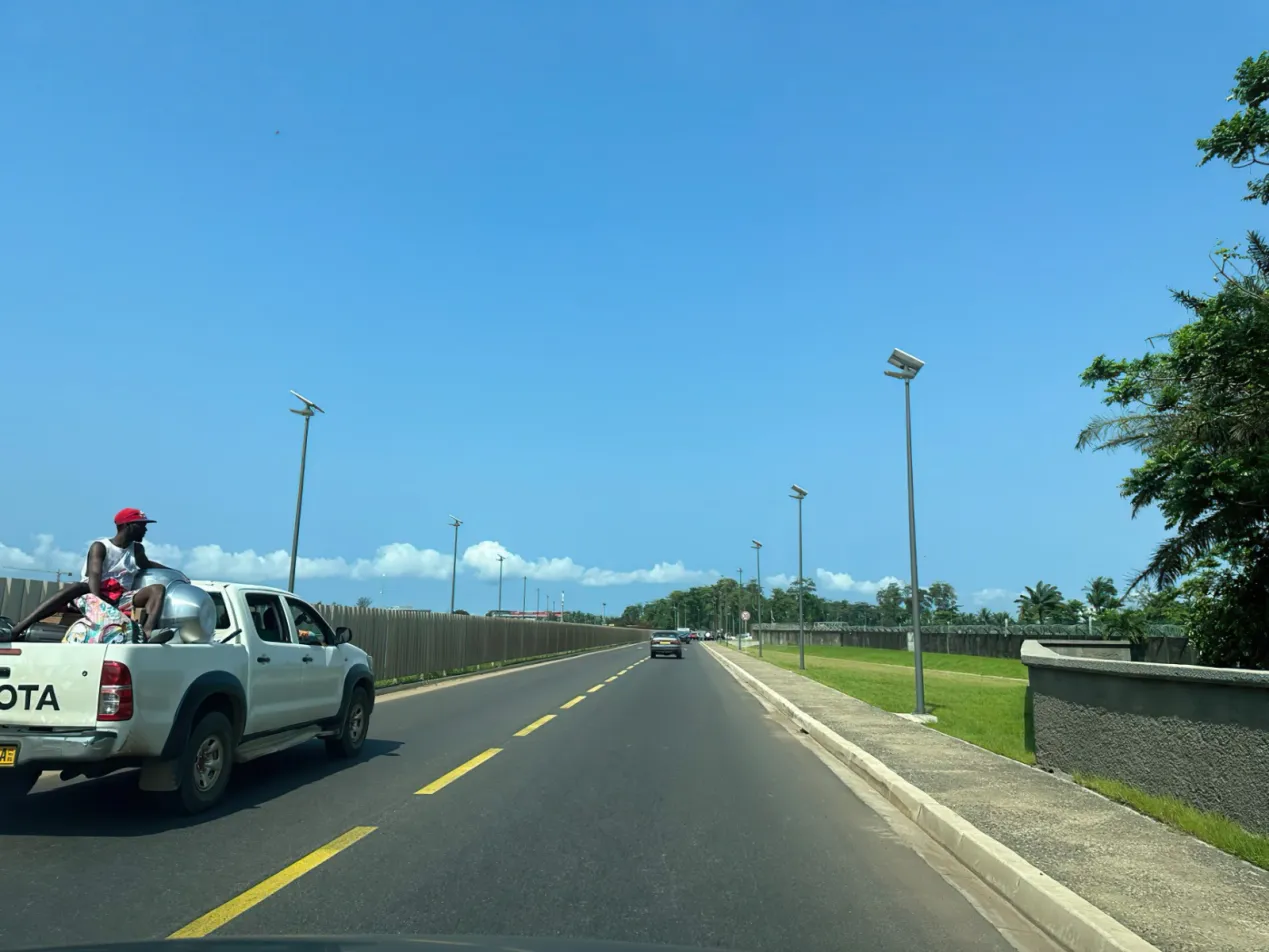
Solar Street Light Specifications Guide: Power, Battery, Panel and Controller
Sep 18, 2026
Read:157
Source: Yin Zhenkun
Quick answer: Choose a solar street light by the illumination the site needs and the hours it must operate. Then check whether the lamp, battery, solar panel and controller can deliver that duty together. A useful supplier comparison keeps the road layout, lighting schedule and cloudy-day requirement the same across every proposal.
A specification sheet contains many figures, but the buying decision depends on how they relate. Lamp power determines part of the nightly load. The battery supplies that load after sunset. The panel replenishes the battery, and the controller changes both charging and light output. If a proposal quotes long operating hours without showing its brightness schedule, or a large battery without showing how it recharges, its headline figures leave the main question unanswered.
How to Read Solar Street Light Specifications for a Project
Begin with the site, rather than a catalogue model. Give suppliers the installation location, road or area width, proposed pole height and spacing, nightly lighting hours, likely shading and the number of consecutive low-sun days to consider. State whether full output is needed throughout the night or whether the light may dim during quieter hours.
The lighting requirement needs similar clarity. A target light level, uniformity requirement or approved project brief gives the supplier something to design toward. Where the project has a local lighting standard or tender requirement, use that document. Without a shared target, two proposals can both claim to run from dusk to dawn while delivering very different light levels.
Solar Street Light Pole Specifications: Check What Will Be Installed
Pole height and spacing affect how light reaches the road; they also determine where the panel can be placed. Compare the pole-top diameter or bracket, luminaire dimensions, panel attachment and proposed orientation with the installation drawings.
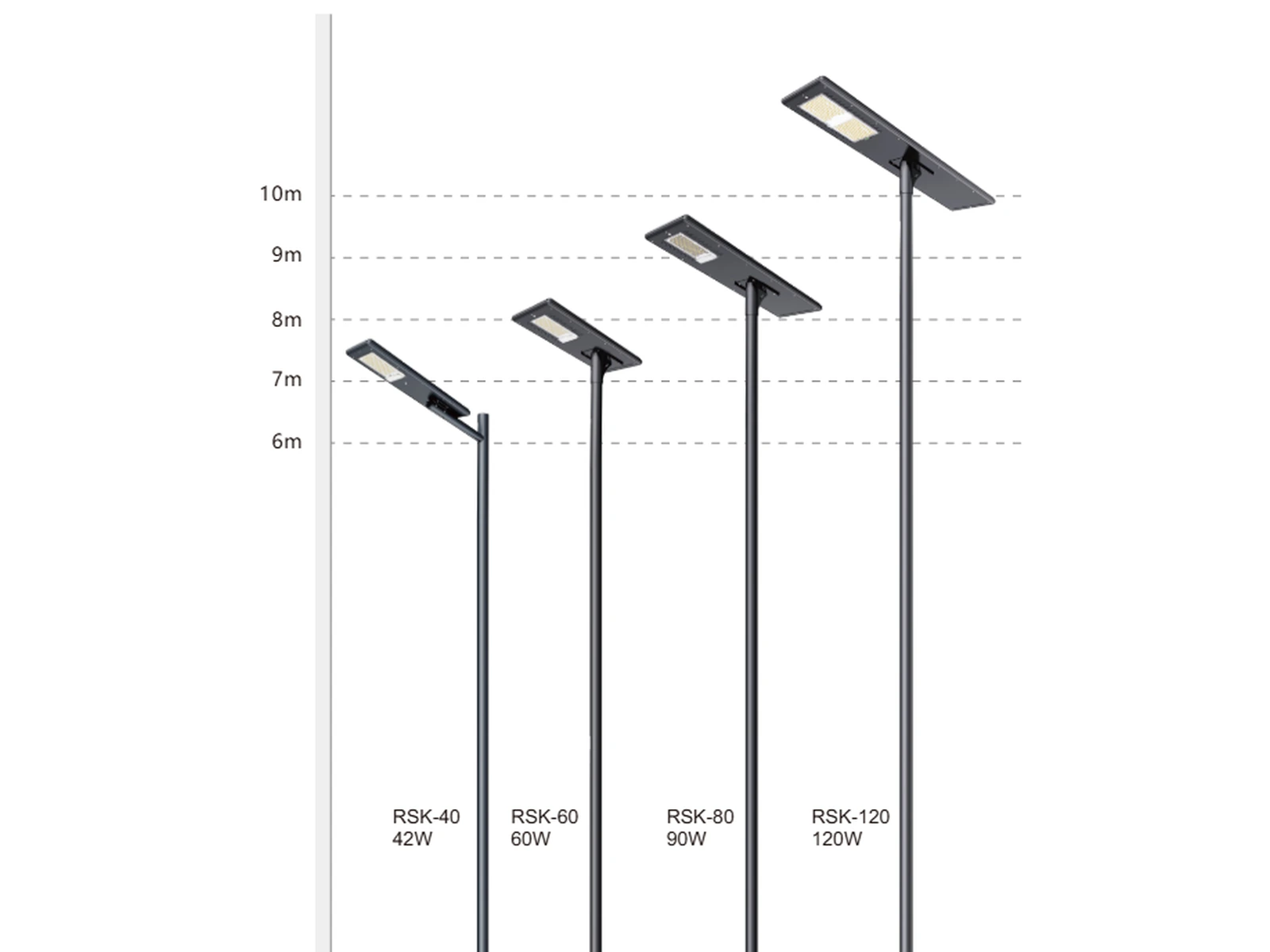
A compatible lamp-to-pole connection does not settle the whole structural design. If the pole, bracket and luminaire come from different suppliers, identify who checks their combined loading and the foundation. This is especially relevant when a separate panel adds wind area away from the lamp head.
LED Solar Street Light Specifications: Choose Power from the Lighting Result
LED input power, measured in watts, describes electrical consumption. Luminaire output, measured in lumens, describes the light emitted by the assembled fixture. Neither figure alone describes the light on a road. The optical distribution, mounting height, tilt and spacing determine how much reaches each part of the surface.
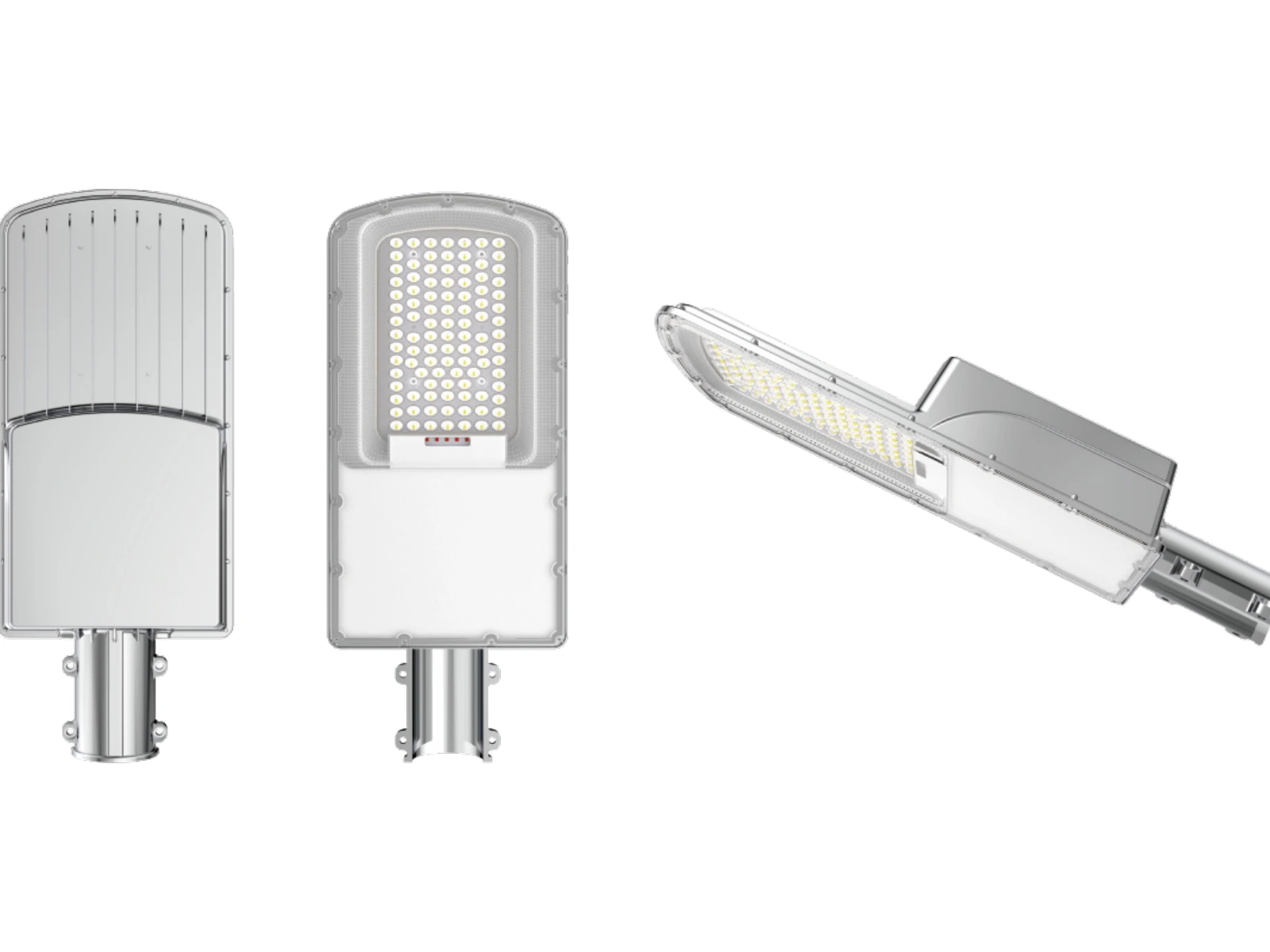
The useful comparison is a lighting layout based on the proposed fixture and the actual site geometry. It can show whether the design reaches the required light level and whether dark gaps remain between poles. When reviewing a solar LED street light, check that the photometric data belongs to the proposed luminaire rather than a different lamp using similar LED chips.
Also distinguish LED-chip lumens from whole-luminaire lumens. A lens, cover and thermal design can affect the output of the assembled fixture. If one quotation reports chip output and another reports luminaire output, the numbers are not on the same basis. Ask suppliers to state which value they are providing before ranking models by brightness.
Turn the Operating Schedule into Nightly Energy Use
A lamp may run at several power levels during one night. For each period, multiply its actual input power by its operating hours; add the periods to obtain nightly watt-hours. A motion sensor introduces another assumption: how often the light is expected to move from its background level to higher output.
For example, 40 W for four hours followed by 20 W for eight hours uses (40 × 4) + (20 × 8) = 320 Wh at the lamp in one night. This is an illustrative calculation, not a product specification. A quotation stating only “12 hours of lighting” does not reveal whether it was calculated at 20 W, 40 W or a changing output.
The lighting layout and energy calculation should describe the same schedule. A supplier may show an excellent road result at full power but calculate battery life using much lower output for most of the night. Both documents can be individually correct while failing to describe the same service.
Solar Street Light Battery Specifications: Compare Usable Energy
Battery capacity is most easily compared in watt-hours (Wh). If the sheet lists amp-hours (Ah), multiply that figure by nominal voltage to obtain rated Wh. Two batteries with the same Ah value may store different amounts of energy when their voltages differ.
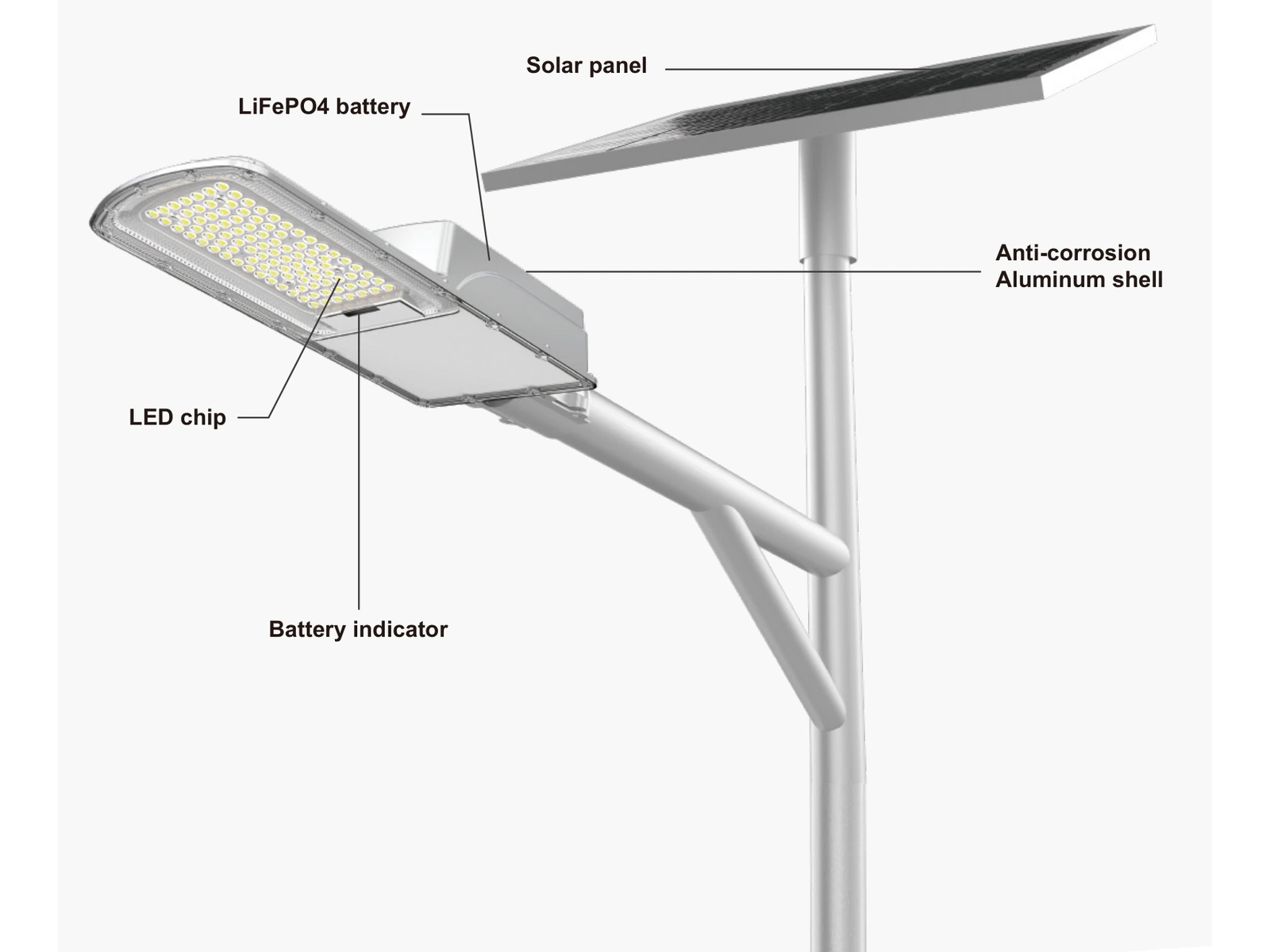
Rated energy is not all available to the lamp. Battery management limits the permitted discharge, while temperature and electrical losses also affect delivery. For this reason, compare the proposed battery’s chemistry, voltage, rated Wh and usable-energy assumptions together. A larger advertised capacity is of little help if the quotation never connects it to the lamp’s nightly load.
For replacement projects, battery voltage, chemistry, BMS, capacity and controller settings should be checked together. See ourreplacement battery compatibility checklist.
Read Rainy-Day Autonomy with the Brightness Schedule
Using the 320 Wh nightly example, two nights without useful charging require 640 Wh delivered to the lamp. A battery rated at exactly 640 Wh leaves no room for its usable-energy limit or system losses. The final calculation must account for both, using assumptions appropriate to the proposed battery and operating conditions.
A “five rainy days” claim is therefore a description of a particular lighting schedule, not a standalone battery feature. Find out the starting charge, the output maintained each night and what happens as the battery falls. Dimming may be a sensible way to preserve essential lighting, provided the lower output is acceptable for the road.
Solar Panel Specifications for Street Lights: Check Generation and Recovery
A panel’s watt rating is not its daily energy production. Generation depends on the sunlight available in the design season, panel direction and tilt, shading, temperature and electrical losses. Use the season that puts the project under pressure; a strong annual average can hide a difficult winter or rainy season.
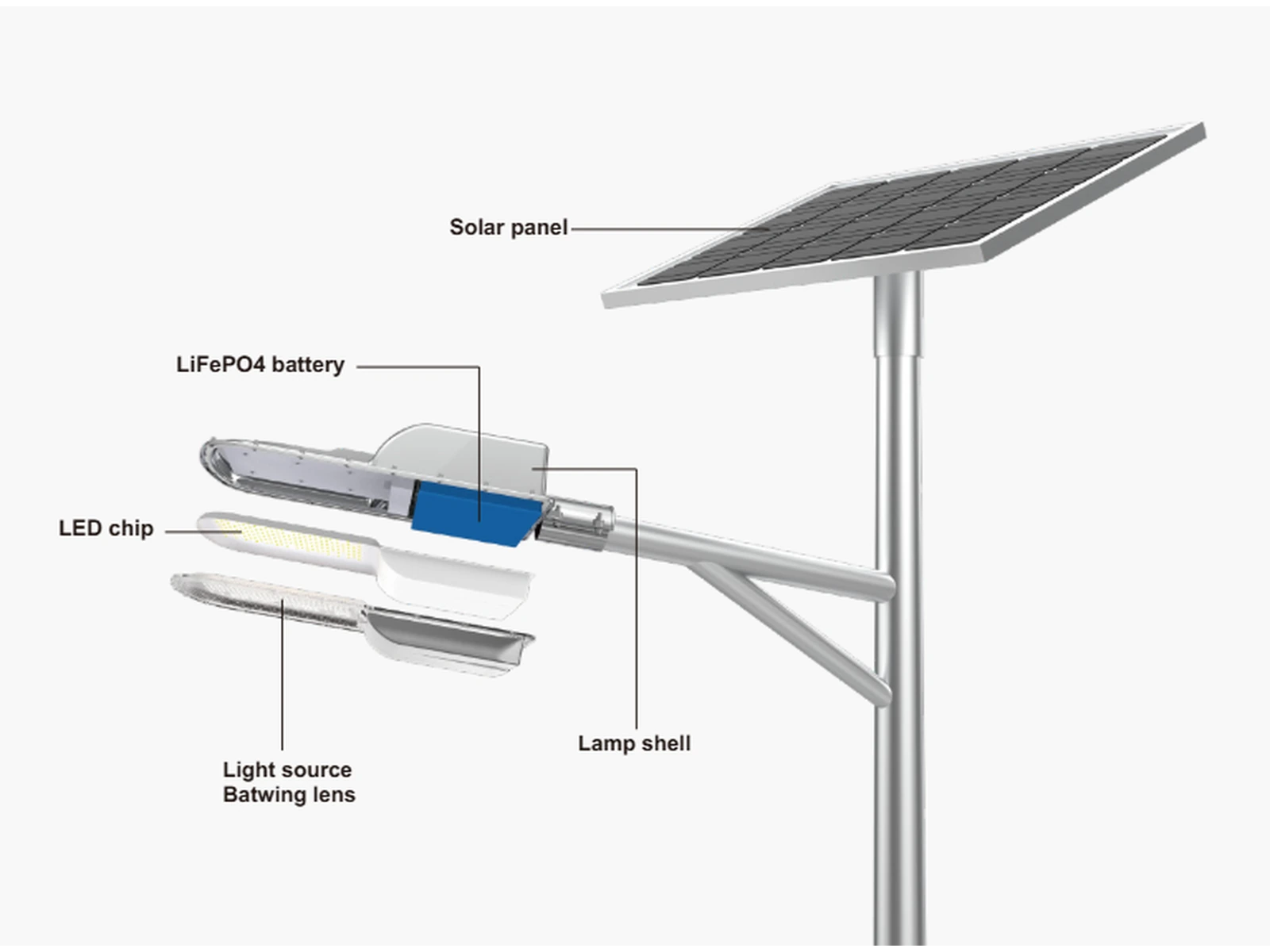
A first-pass estimate multiplies panel watts by design-season peak-sun-hours and a stated system factor. Suppose a 160 W panel receives three peak-sun-hours and the calculation uses a 0.75 factor: 160 × 3 × 0.75 = 360 Wh/day. Against the example lamp’s 320 Wh nightly load, this simplified case leaves only 40 Wh per day.
That narrow difference raises a practical question: how long would the battery take to recover after cloudy weather? It does not prove that 160 W is right or wrong for a real installation. The supplier’s calculation must include its actual panel position, local solar conditions and the energy needed to rebuild reserve.
Check the Panel Position, Not Just Its Rating
A tree or building can undermine an otherwise generous panel rating. Review shade at the proposed pole during the season used for sizing, and make sure the installation drawing matches the orientation assumed in the calculation.
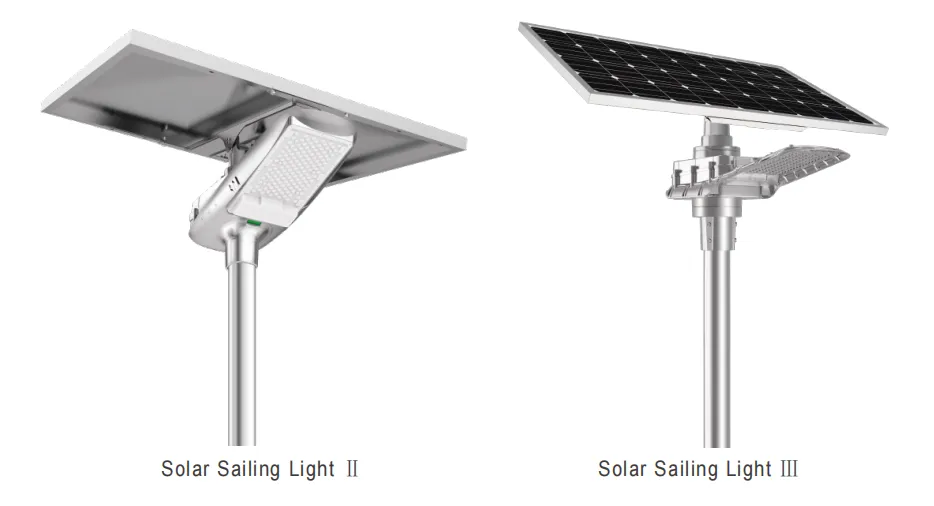
Panel placement also affects the choice of system architecture. An integrated fixture keeps the panel at the lamp location. A split arrangement may place it elsewhere, but introduces a bracket, cable route and connections that need space and maintenance access. The relevant question is which arrangement can collect enough energy where it can actually be installed.
Solar Street Light Controller Specifications: Read the Program
The controller links panel charging, battery protection and the lamp’s operating schedule. Its specification should describe the charging method, applicable electrical limits, protection settings, timed light levels, sensor response and behaviour at low battery charge.
Compare two schedules: an ordinary night and a low-battery night. If the second one reduces output, assess the light that remains rather than treating the longer runtime as an unconditional benefit. For a busy road, that minimum output may matter more than the number of hours printed in a brochure.
All-in-One and Split Solar Street Light Specifications
All-in-one and split systems contain the same essential energy chain, but package it differently. An all-in-one unit places the panel with the lamp, making the chosen lighting position important for charging. A split design lets the panel be positioned separately while adding installation interfaces.
Read an All-in-One Solar Street Light Specification as One Assembly
Check the assembled dimensions and weight, pole interface, panel orientation after mounting, and access to the battery or controller for service. Read the panel, battery and lamp figures for the selected configuration together. Values taken from different models in a series do not describe a buildable system.
An integrated design can be straightforward to mount where the pole has clear sun exposure. Where the best lighting position is shaded, examine the panel’s expected sunlight before trying to solve the issue by choosing a higher lamp or panel rating.
Review the Additional Interfaces of a Split Solar Street Lamp
With a separate panel, show its location, direction, bracket, cable length and connections on the drawing. Clarify who supplies those items and how they will be maintained. These details are part of the proposed charging system, not minor accessories.
A split arrangement may be useful when the road needs a lamp in one position but the panel can collect substantially more sunlight nearby. Its benefit should appear in the site layout and generation calculation, rather than being assumed from the word “split.”
Compare Solar Street Lighting System Specifications on One Basis
The following matrix turns a supplier sheet into a decision record. Use the same site brief and lighting requirement for every proposal. An unsupported entry identifies what still needs clarification.
| Decision | Shared comparison basis | Evidence to review |
|---|---|---|
| Will the road receive the required light? | Road width, pole positions and operating output | Luminaire photometric data and lighting layout |
| What is the nightly load? | Hours and input power at each output level | Timed schedule and Wh per night |
| How much energy can storage deliver? | Voltage, rated Wh and usable-energy assumptions | Battery data and discharge limits |
| Can the panel cover use and restore reserve? | Design season, shade and installed panel position | Daily generation and recovery calculation |
| What happens in prolonged poor weather? | Same starting charge and minimum lighting duty | Night-by-night output and remaining battery estimate |
| Does the installation fit? | Pole, panel, bracket and cable arrangement | Dimensioned drawings and assigned responsibilities |
Look for figures that describe the same system. If the lighting layout assumes one power level, the autonomy claim another and the panel estimate an unshaded position that is not available, comparing their headline numbers will not resolve the conflict.
RoadSmart Product Options to Explore
| Product | Useful selection question |
|---|---|
| RSK series · all-in-one | Does the planned pole position give the integrated panel sufficient sun while placing light where the road needs it? |
| YL series · split | Would a separately positioned panel improve charging at this site, and where would its bracket and cable run? |
| YY series · split | Which available lamp and battery configuration supports the proposed nightly schedule? |
Put the Specifications to Work Before Requesting a Quote
RoadSmart’s project calculator offers a preliminary configuration using road dimensions, lighting hours and other project inputs.
Take that starting point into a supplier discussion with the site location and lighting requirement. The quotation can then be reviewed against four connected documents: a product specification PDF, a lighting layout, the programmed operating schedule and an energy calculation. Together they explain what the road receives, what the lamp consumes and how the system continues operating through poor weather.
FAQ
Is a higher-wattage solar LED street light always brighter on the road?
No. Watts measure electrical input. The assembled fixture’s output and optical distribution, combined with the pole layout, determine the light on the road.
How can I compare batteries shown in Ah and Wh?
Multiply Ah by nominal voltage to calculate rated Wh. Then check how much of that energy the proposed system allows the lamp to use.
What should a solar street light specification PDF contain?
It should identify the proposed configuration’s lamp input and output, panel rating, battery type and capacity, controller functions, dimensions and mounting interface. A lighting layout and energy calculation show how those parts serve the project.
When should I consider a split system?
Consider one when a suitable lamp position gives an integrated panel poor sunlight, and a nearby position can accommodate a separate panel and its cable route.