Are Solar Street Lights Worth It in 2026? Full Cost-Benefit Analysis & Buying Guide
Jun 03, 2026
Read:497
Quick Answer:
Worth buying, but procurement should be based on actual project needs, and products should not be chosen blindly.
In 2026, solar street lights have already become a mainstream choice for outdoor lighting. As the technology continues to mature, and as different countries provide policy support to varying degrees, the cost of use has dropped significantly. Compared with traditional street lights, solar street lights have obvious advantages. They are worry-free and cost-saving, and are suitable for different scenarios such as villages, cities, parks, and remote areas, providing diversified choices for outdoor lighting.
Introduction
Now that it is already 2026, are solar street lights still worth buying? This question almost constantly appears in the minds of every outdoor lighting purchaser, especially those who do not know much about solar street lights and therefore have more concerns. First of all, I can reply to you with certainty: they are worth buying. In order to answer your various doubts and help you make a judgment, this article will explain from three dimensions: the cost, advantages, and key purchasing considerations of solar street lights. It will comprehensively answer whether solar street lights are worth buying, so that you can make a wise choice after reading it.
After reading this article, you will understand the true cost structure, key advantages, and how to determine if solar street lights are the right investment for your specific project.
What Are Solar Power for Street Lights?
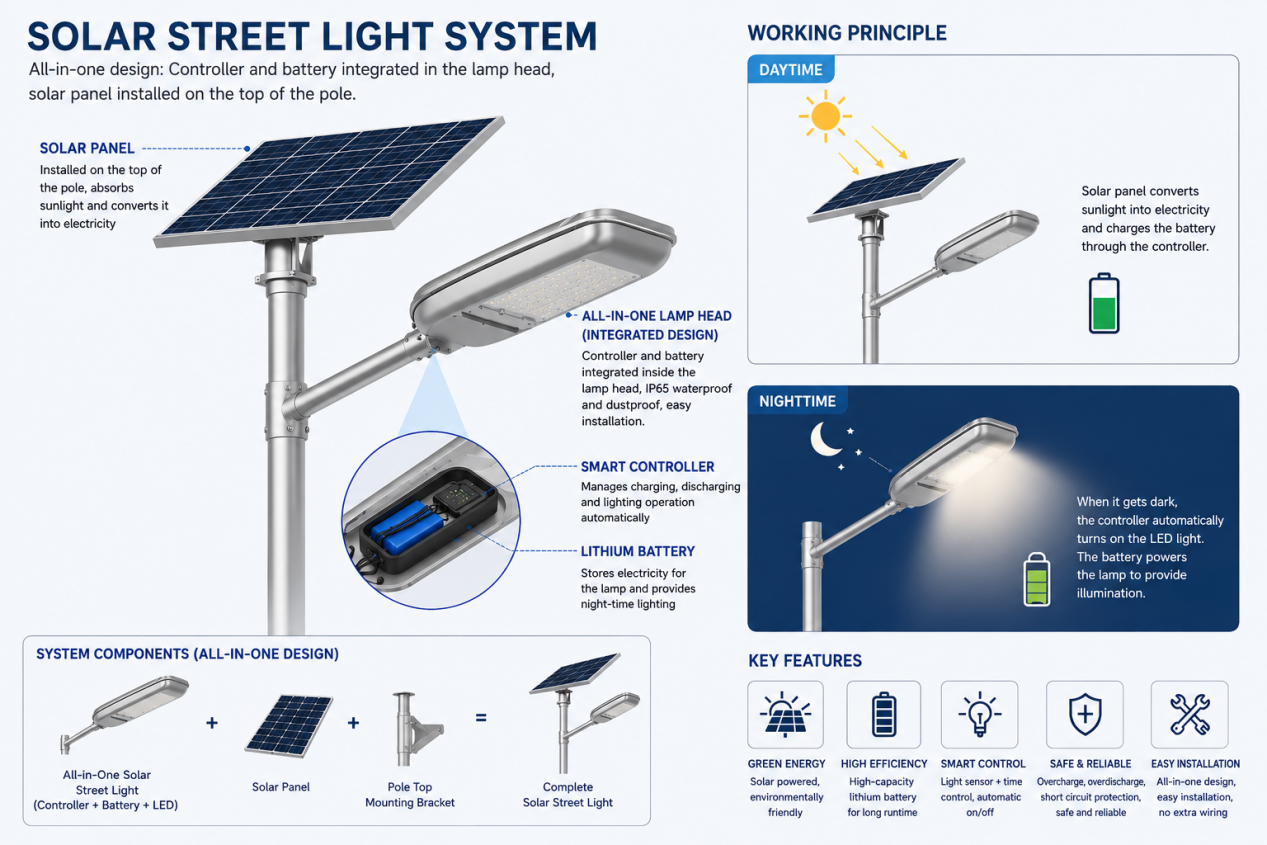
Solar power for street lights, as the name suggests, are lighting systems that can operate independently of the traditional power grid. Through their own system, they can use solar energy to complete independent power generation, energy storage, and lighting. They mainly include core components such as solar photovoltaic panels, LED lamps, batteries, and controllers.
The working principle of solar power for street lights is very simple. They receive solar energy during the day to generate and store power independently, automatically start lighting through the controller at night, automatically cut off power after dawn, and then continue charging. This cycle repeats continuously, forming an independent lighting system.
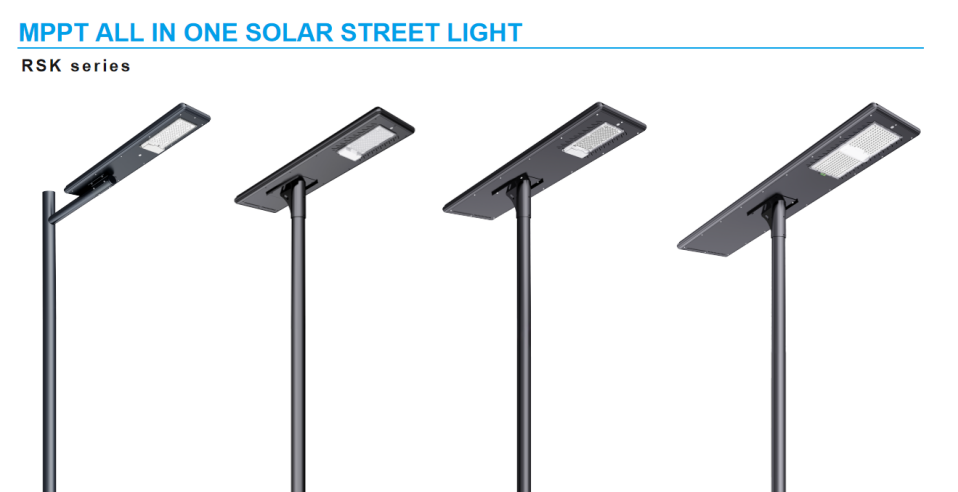
According to different needs, solar power for street lights can also be divided into many different product types. Common ones include integrated solar street lights, split type solar street lights, all-in-one solar street lights, solar garden lights, and so on, which can meet the lighting needs of different scenarios.
Are Solar Street LED Lights Worth Buying?
Once again, I can reply with certainty that solar street led lights are worth buying. Why can this be said with certainty? Because with the continuous maturity, upgrading, and breakthroughs of solar technology, many previous problems, such as poor endurance time and short service life, have already been effectively solved. In addition, the overall cost has decreased, and the comprehensive cost performance is high. Especially in scenarios where power connection is inconvenient, in remote areas, or where construction is difficult, the advantages are very significant.
Solar led street lights form a clear contrast with traditional street lights, specifically in the following aspects:
Comparison Item | Solar LED Street Lights | Traditional Street Lights |
Power Supply Method | Solar power generation, independent power supply | Rely on the municipal power grid |
Installation and Construction | Usually no long-distance wiring is required | Need trenching, cable laying, and power connection |
Electricity Expense | Low daily electricity cost | Long-term electricity costs are generated |
Applicable Areas | Remote areas, new projects, parking lots, park roads | Areas with complete power grid coverage |
Maintenance Focus | Batteries, controllers, solar panels, LED lamps | Cables, circuits, power distribution systems, lamps |
Initial Investment | A single lamp may be relatively high | A single lamp may be relatively low |
Long-Term Cost | More advantageous in suitable scenarios | Electricity costs and line maintenance costs continue to exist |
From the above comparison, it can be seen that solar street led lights have very obvious advantages. However, it should be noted that there are many types of solar street lights, and they need to be selected according to the actual needs of the project.
What Does the Cost of Solar Energy Street Lights Include?
When it comes to procurement, the first thing that cannot be avoided is definitely the procurement cost. Many people feel that solar energy street lights are expensive when purchasing them. But in fact, you cannot only look at the purchase price. What needs to be considered is the cost of the entire cycle. Specifically, it can be divided into the following four parts:
The first is product cost, which is the first quotation we often encounter during procurement. It mainly refers to the price of the solar energy street light itself. The price level depends on the configuration of its core components. Different configurations have a great impact on the price of solar energy street lights. Therefore, selection should be made according to actual needs, and high configurations should not be chosen blindly.
The second is installation cost. Although solar energy street lights do not require large-scale cable laying, different types of solar energy street light products require different levels of installation costs.
The third is operating cost. Solar energy street lights mainly rely on solar power generation, so daily operating costs are very low, and some even have zero electricity consumption cost.
The fourth is maintenance cost. Regular maintenance is required, but the frequency does not need to be too high, and the maintenance cost is relatively low.
The cost advantage of solar energy street lights is reflected in the long-term use process and needs to be considered comprehensively.
Assuming a project with 100 lights over a 10-year period:
- Solar Solution: Purchase $35,000 + Installation $8,000 + Maintenance $5,000 = $48,000
- Traditional Solution: Purchase $20,000 + Installation $30,000 + Electricity $13,000 + Maintenance $8,000 = $71,000
Solar saves approximately $23,000 and becomes “free” to use after 3-5 years.
What Are the Core Advantages of Solar Powered Street Lamps?
Easy Installation
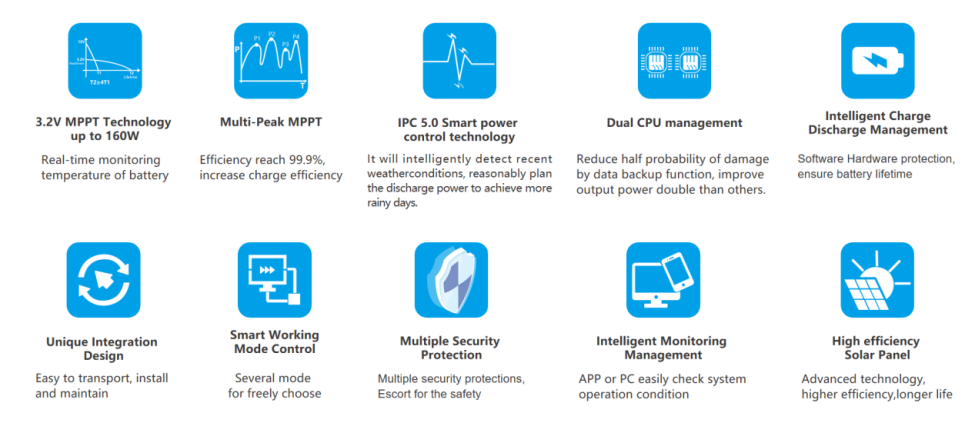
No trenching or wiring required; installation time 15-30 minutes per unit, reducing construction time by over 70%.
Safe and Reliable
No high-voltage cables, eliminating the risk of electric shock; IP67 protection, wind and earthquake resistant.
Long-Term Cost Savings
Zero electricity costs + low maintenance = 30-50% lower TCO than traditional methods over 10 years.
Low-Carbon Trend
Each solar street light reduces CO2 emissions by approximately 0.5-1 ton per year.
What Are the Key Considerations When Buying Solar Powered Street Lamps?
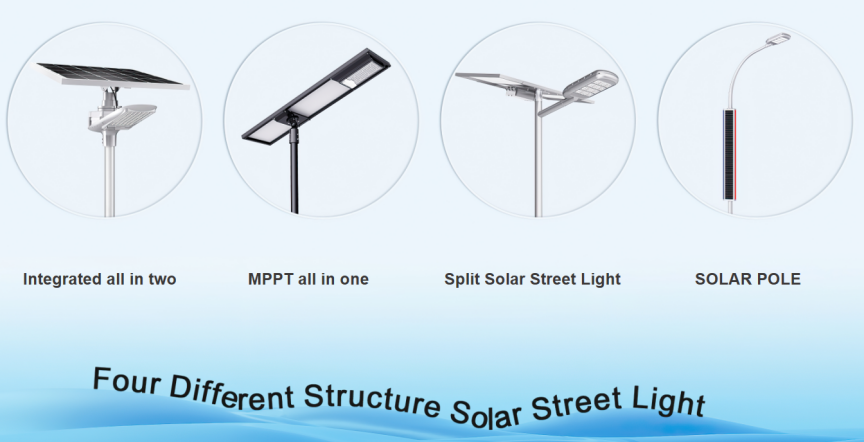
There are many product types of solar powered street lamps, and they need to be purchased according to your own project situation. You can refer to the following key factors:
Project needs: The environment, climate, application scenario, and other factors of different project locations need to be fully considered. Solar powered street lamps include integrated solar street lights, split solar street lights, all-in-one solar street lights, solar garden street lamps, and so on. Different scenarios require different types of solar street lights.
Core configuration: This mainly depends on the core components of the solar powered street lamp, including solar photovoltaic panels, LED luminous efficiency, batteries, controllers, and shell materials. These need to be matched according to project needs. If you are not very clear, you can find a professional solar manufacturer to provide a customized solution, such as a solar street light manufacturer like RoadSmart.
Warranty capability: Solar powered street lamps are a lighting system. The visible lamp body is one aspect, while the invisible entire system is another aspect. It requires very professional strength to support it. Therefore, it is necessary to find a solar street light supplier integrating R&D, production, and sales, so that after-sales service can be worry-free.
Decision Matrix: Is Solar Street Light Right for Your Project?
Your Project Situation | Recommendation | Key Reason |
Off-grid / rural areas with no grid access | ✅ Strongly recommended | Solar is the most economical and often the only feasible lighting solution. |
Areas with grid access but high electricity rates (>$0.15/kWh) | ✅ Recommended | Short payback period (3–4 years) due to electricity savings. |
Urban main roads with stable grid and low electricity rates | ⚠️ Optional | Calculate TCO – traditional or hybrid may be more cost-effective. |
Urgent projects requiring quick lighting | ✅ Recommended | All-in-one solar lights install in 15–30 minutes, no trenching. |
Coastal / high-corrosion / dusty areas | ⚠️ Use specialized models | Must choose IP67 + anti-corrosion coating; RoadSmart offers such options. |
Extremely low budget (lowest price only) | ❌ Not recommended | Cheap solar lights have high failure rates, leading to higher long-term costs. |
Large highway or high-mast projects | ✅ Recommended (split type or high-power all-in-two) | High lumen output, large battery capacity, flexible panel adjustment. |
Existing poles – retrofit projects | ✅ Recommended (all-in-one) | Direct pole mount, no rewiring – ideal for upgrades. |
Conclusion
In 2026, solar street lights have long been a mature, practical, and cost-effective choice for outdoor lighting. They can not only save costs, but also quickly solve actual lighting problems. They are suitable for various different scenarios and are very worth buying. Therefore, if you have a demand for solar powered street lamps, you can purchase them with confidence. You can also choose a mature solar street light supplier to provide one-on-one customized service and tailor a solution for your project. RoadSmart is also a good choice.
Why 2026 is a good year to invest in solar street lights:
- LiFePO4 battery costs have dropped 40% since 2020, making solar more affordable.
- Global energy prices remain high, shortening payback periods.
- Many governments have extended clean energy incentives through 2026-2027.
- Technology maturity means 5-7 rainy days backup is now standard, not premium.