60W vs 120W vs 260W All-in-One Solar Street Lights: How to Choose by Scenario (2026 Guide)
Jun 05, 2026
Read:327
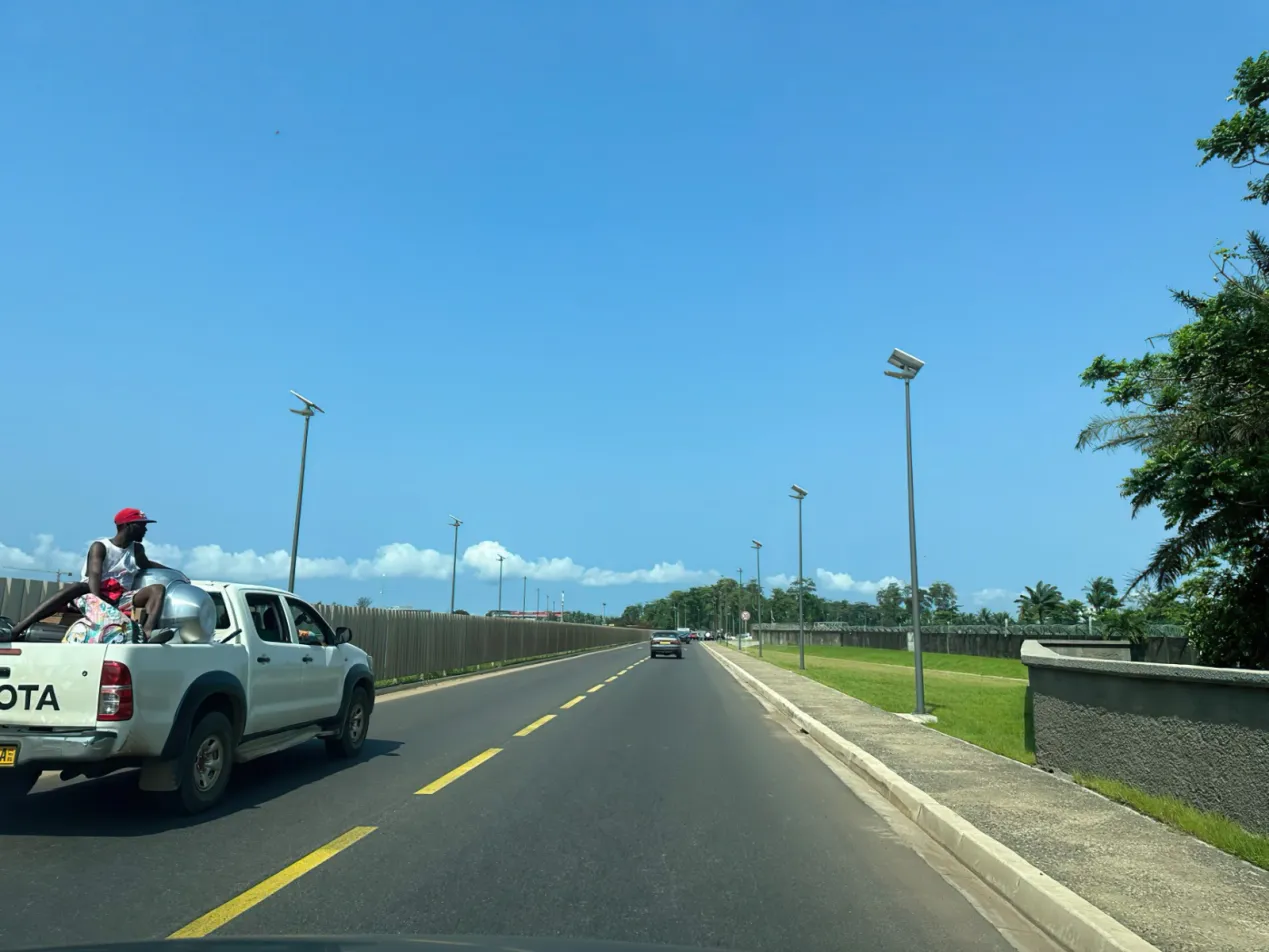
All in one solar street lights have been widely welcomed by the market because of their integrated design, convenient installation, simple maintenance, and other advantages. Among them, the more commonly purchased all in one solar street light models mainly include 60W all in one solar street light, 120W all in one solar street light, 260Wall in one solar street light, and so on.
Power, as a model selection method that the public is very familiar with, is often used to choose brightness based on the size of the value. However, there is a misunderstanding: people believe that the higher the power, the higher the brightness, and therefore the better the light. This is actually a very one-sided view. The power of an all in one solar street light is one standard for measuring brightness, but it is not the only standard. It also depends on the specific lighting range and suitable application scenario, and needs to be judged by combining multiple factors and conditions.
This article will start from several main all-in-one solar street light models, including 60W, 120W, and 260W all in one solar street light, to bring you a comprehensive explanation. It aims to break conventional understanding, so that you no longer rely only on power as a single standard when choosing an all in one solar street light model, but can make a more comprehensive overall consideration and select the most suitable solar street lighting product.
Below, we will first start with the relationship between power and brightness, clearly explain the connection between them, and then look at what kinds of scenarios different power levels are suitable for, as well as how they should be selected.
After reading this guide, you will know exactly which wattage fits your rural road, parking lot, or highway project – without overpaying or under-specifying.
What is the Relationship Between the Brightness and Power of All in One Solarlights?
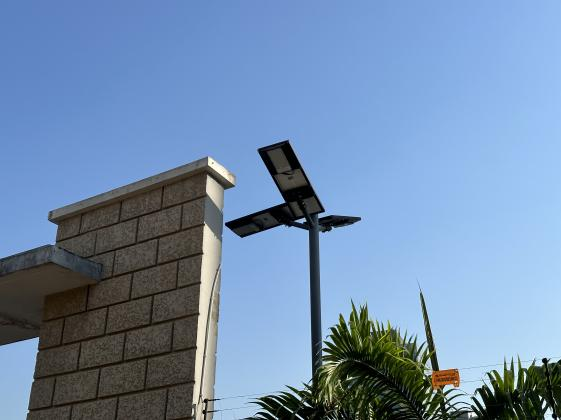
It can be said with certainty that the brightness of an all in one solar light has a very direct relationship with power. The higher the power, the higher the configuration of LED light source, battery, and solar panel required, supporting greater brightness. However, in actual applications, the actual brightness of an all in one solar light is affected not only by power, but also by the following factors:
First is lumen output, also known as luminous flux. This is an important factor affecting actual brightness. The higher the lumen output, the more light the fixture emits, and the higher the brightness of the all in one solar light will be.
Second is luminous efficacy. If the all in one solar light has high luminous efficacy, especially when it is supported by high-quality LED lamp beads, it can achieve a better lighting effect with lower power consumption.
Another factor is light distribution design, installation height, and solar panel configuration. Reasonable light distribution design and installation planning can allow the light to spread evenly across the road surface and achieve the effective illumination range of the all in one solar light to the greatest extent. This can not only save costs, but also improve endurance capacity.
Therefore, when choosing all in one solar lights, power can be used as an initial judgement, but it is also necessary to comprehensively consider factors such as the application scenario, required reasonable brightness, installation and configuration, and budget. In other words, the selection should be reasonable, avoiding both waste and mistakes.
Effective Brightness = LED Wattage × Luminous Efficacy (lm/W) × Optical Efficiency
Examples provided:
- 60W ×160 lm/W × 0.9 = 8,640 lm (Actual luminous flux)
- 60W × 200 lm/W × 0.9 = 10,800 lm (For the same power, products with higher luminous efficacy have 25% higher brightness)
What Kinds of Scenarios are Suitable for Different Power Levels of AIO Solar Street Lights?
After clearly understanding the relationship between power and brightness, what kinds of scenarios are the three commonly purchased aio solar street light models on the market, namely 60W, 120W, and 260W, suitable for? Next, we will analyse them one by one.
1. 60W all in one solar street light: suitable for basic lighting and low-traffic scenarios
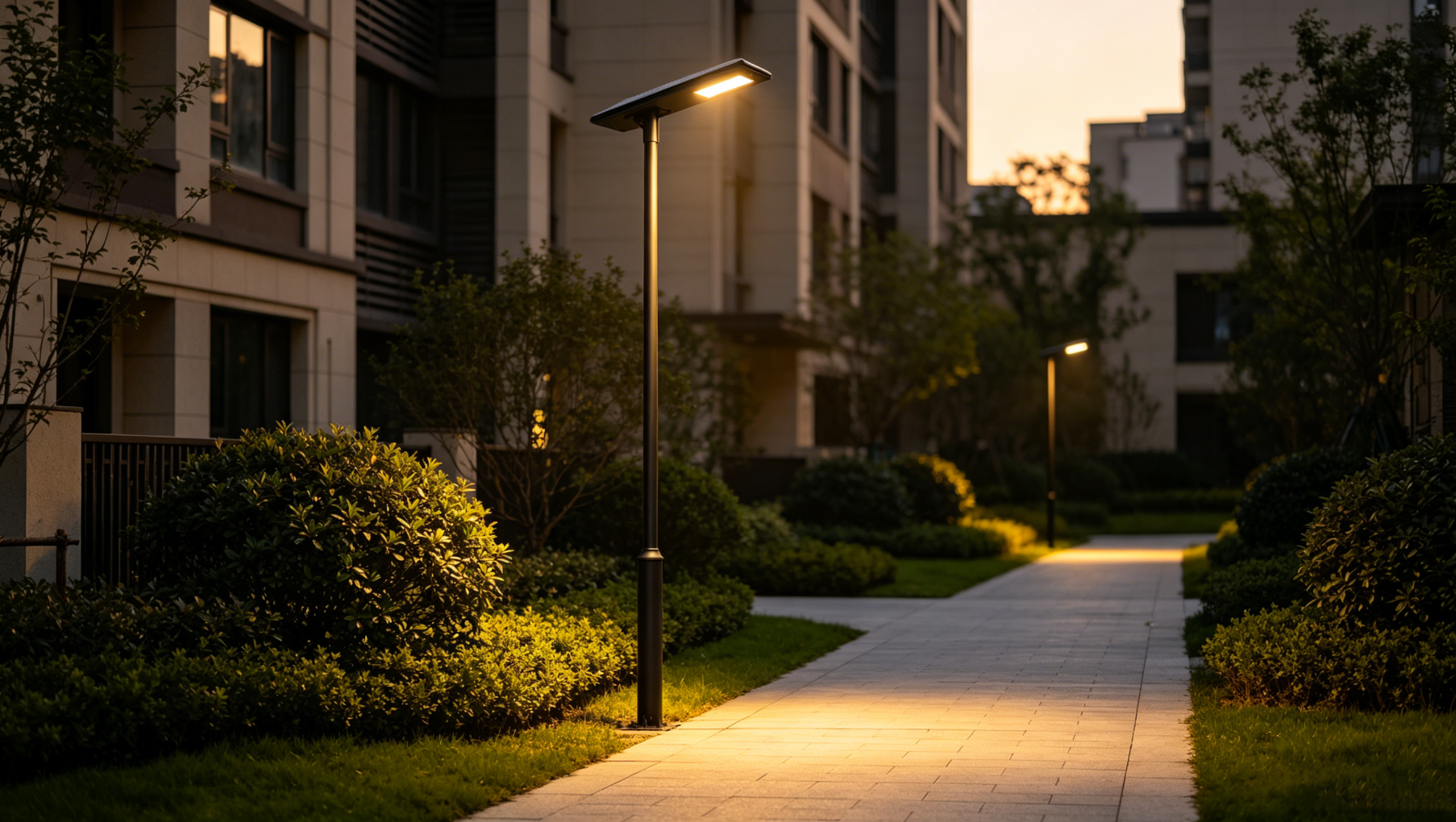
The 60W aio solar street light is a low-power model with moderate brightness. Its significant features are low cost, low energy consumption, and flexible installation. It is suitable for scenarios that require basic lighting, have relatively low brightness requirements, and have fewer pedestrians and vehicles. Common applications include residential community walkways, pedestrian paths, park paths, rural roads, scenic areas, and courtyard paths.
In general, 60W aio solar street lights are suitable for low-pole, narrow-road, and low-traffic-density scenarios, with very high adaptability.
2. 120W all-in-one solar street light: suitable for medium roads and most engineering projects
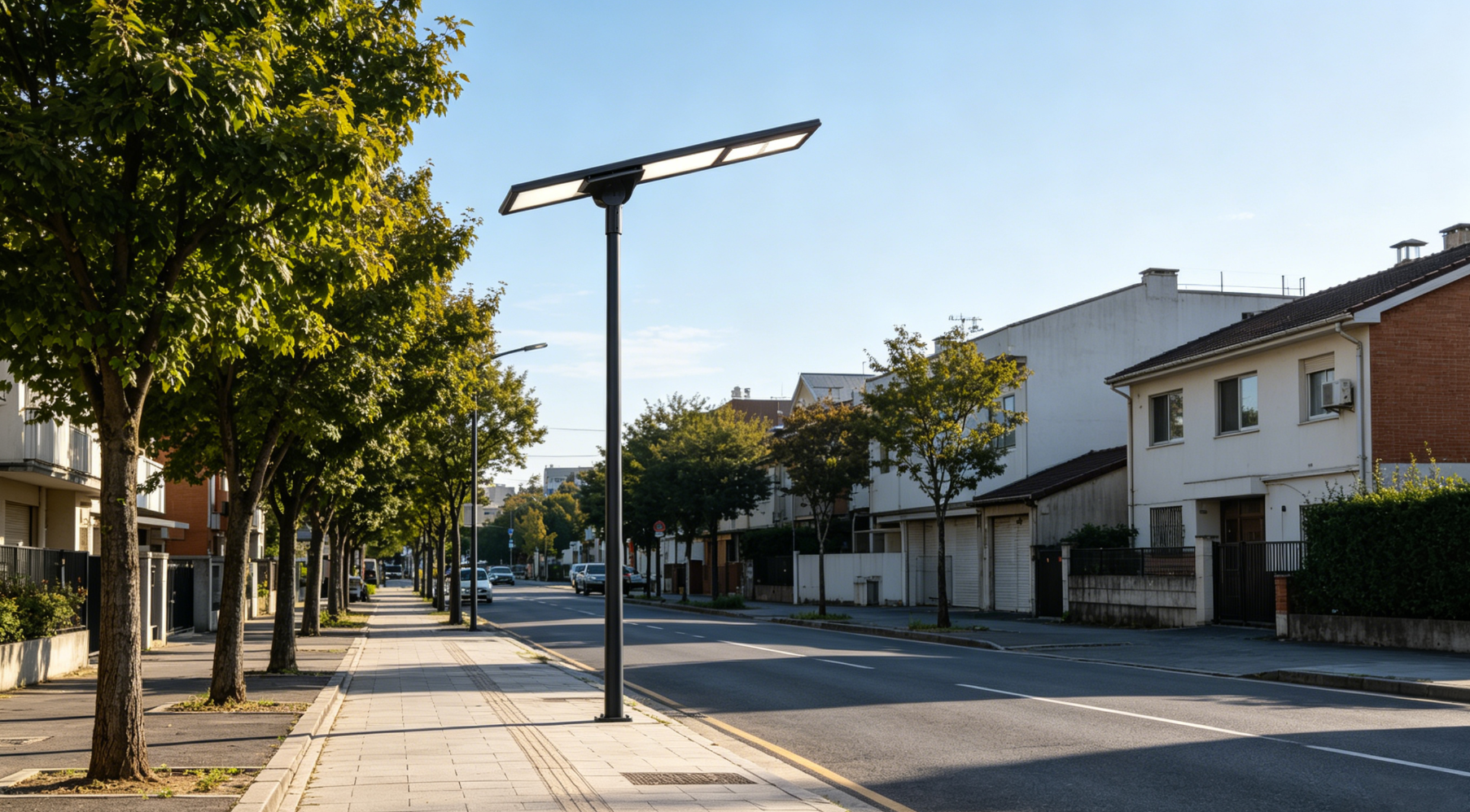
The 120W aio solar street light is generally a power model often selected by users. It has obvious advantages in brightness matching, cost balance, and application range, especially in most outdoor scenarios, such as urban branch roads, main community roads, main rural roads, park roads, parking lots, and other scenarios with a certain flow of people and a need for stable and sufficient lighting.
The 120W aio solar street light sits between 60W and 260W, and is relatively speaking a more reliable middle-ground solution.
3. 260W all-in-one solar street light: suitable for high-brightness, wide-range, and key engineering scenarios
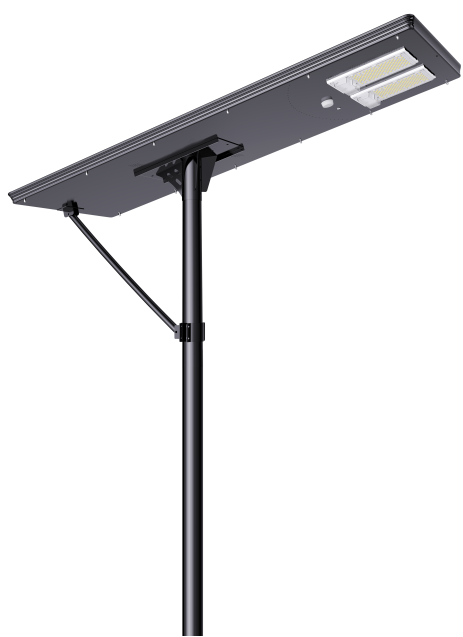
It can be seen from the value itself that this is a high-power aio solar street light. Therefore, the scenarios it is suited to have higher requirements for both brightness and illumination range. It is more suitable for large-scale scenarios, such as urban main roads, high-level auxiliary roads, large squares, large parking lots, main roads in industrial parks, port roads, and other scenarios, especially those with strict brightness requirements.
It is worth noting that 260W aio solar street lights have high energy consumption, so they should be selected reasonably according to the scenario; otherwise, waste can easily occur.
To make comparison easier, the following is a simple summary of the application scenarios for the three major models:
Power | Suitable Roads / Scenarios | Main Features | Selection Advice |
60W | Rural roads, residential community roads, park walkways, pedestrian paths, school roads | Lower cost, flexible installation, suitable for basic lighting | Suitable for narrow roads, low poles, and low-traffic areas |
120W | Urban branch roads, industrial park roads, commercial parking lots, main community roads, main campus roads | Balanced brightness and cost, wide range of application | Suitable for most medium roads and regular engineering projects |
260W | Urban main roads, large parking lots, logistics parks, ports, mining areas, municipal roads | High brightness, large coverage, suitable for high poles and key projects | Suitable for wide roads, high poles, and scenarios with high safety requirements |
Quick Selection Flow:
1. What is your road width? (<6m →60W; 6-12m→120W; >12m→260W)
2. What is your pole height? (5-7m → 60W; 7-10m→ 120W; 10-15m →260W)
3. What is your required illuminance? (basic safety → 60W; standard road → 120W; highway standard →260W)
4. How many rainy days backup needed? (3-5 days →60W may suffice; 5-7 days → 120W/260W recommended)
Conclusion
So, how should all in one solar lights be selected? One point must be made clear: do not only look at power. Instead, the choice should be based on the specific application scenario and project requirements. Always remember that power is one reference, but not the only standard. By comparison, 60W all in one solar street light focuses on economy and practicality, 120W all in one solar street light focuses on overall balance, and 260W all in one solar street light focuses on high brightness and wide-area coverage.
Of course, this is only a simple way of classification. A more professional approach is to comprehensively consider factors such as application scenario, power, lumen output, installation, configuration, and climate environment. Or, more directly, you can submit your requirements to a professional all in one solar street light manufacturer, such as RoadSmart, to obtain a corresponding lighting solution. In this way, reasonable model selection can be ensured, and you can choose an all in one solar light that is truly suitable for the long-term use of the project.
FAQ
Q1: Is a 120W all-in-one solar street light always brighter than a 60W?
A: Not necessarily. Brightness depends on lumens, not just wattage. A high-quality 60W light with 200 lm/W LED chips (12,000 lm) can be brighter than a low-quality 120W light with 80 lm/W chips (9,600 lm). Always compare lumens, not just wattage.
Q2: Can I use a 260W solar street light on a narrow rural road?
A: Technically yes, but it is overkill. A 260W light requires higher poles (10-15m) and wider spacing. On a narrow road, it may cause glare and waste energy. Stick to 60W for rural roads.
Q3: What is the typical installation cost difference between these three wattages?
A: Installation cost is similar for all wattages (all-in-one design, no trenching). The main difference is the product cost. For a 100-light project: 60W (~$18k-25k), 120W (~$28k-45k), 260W (~$45k-65k). Choose based on actual lighting needs, not maximum power.
Q4: Does a higher wattage require a larger solar panel and battery?
A: Yes. Higher wattage LED consumes more energy, so the solar panel and battery must be upsized accordingly. A 260W system typically requires a panel of 390-520W and battery of 960-1,920Wh – significantly larger than a 60W system. Always check the complete system configuration.
Q5: Can RoadSmart provide custom wattages between 60W and 260W?
A: Yes. RoadSmart offers OEM/ODM services for custom wattages (e.g., 80W, 150W, 200W). Contact us with your project requirements for a tailored solution.
Q6: How do I know if 120W is enough for my parking lot?
A: Depends on the lot size and pole layout. A typical 120W light on 8-10m poles spaced 25-35m apart can cover 500-800㎡ with adequate illuminance (10-15 lux). For larger lots or higher security requirements, consider 260W or multiple 120W lights. RoadSmart provides free DIALux simulation to verify.